Library
Browse and search books
350 novels found
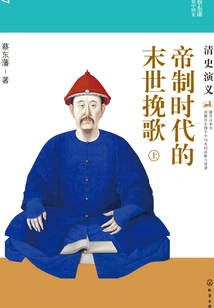
帝制时代的末世挽歌:清史演义(上)
Cai Dongfan
This book is a popular romance of Qing history "Cai Dongfan Talks about Chinese History", with a total of 100 chapters. From the entry of the Later Jin Dynasty and the establishment of the Qing Dynasty, to the prosperity of Kangxi and Qianlong, the prosperity and decline, to the continuous civil strife, the Taiping Heavenly Kingdom, and finally the Westernization Movement and the demise of the Qing Dynasty, it brilliantly interprets the rise and fall of the Qing Dynasty from the founding of Manchuria to the Revolution of 1911 over 260 years, and reproduces the historical picture of divisions, mergers, and chaos during this period. The author draws extensively from official history, occasionally from officials and wild officials, and his narrative is plain, smooth, and methodical; he makes self-evaluations and annotations, and his language is humorous and both reasonable and reasonable. Reading through this book, it is like a historical picture of the Qing Dynasty slowly unfolding before your eyes. Sometimes it is fierce and fierce, sometimes it is gentle and affectionate, sometimes it is civil strife, sometimes it is a game of loyalty and traitor... It makes people dizzy and full of emotions.
This book is a popular romance of Qing history "Cai Dongfan Talks about Chinese History", with a total of 100 chapters. From the entry of the Later Jin Dynasty and the establishment of the Qing Dynasty, to the prosperity of Kangxi and Qianlong, the prosperity and decline, to the continuous civil strife, the Taiping Heavenly Kingdom, and finally the Westernization Movement and the demise of the Qing Dynasty, it brilliantly interprets the rise and fall of the Qing Dynasty from the founding of Manchuria to the Revolution of 1911 over 260 years, and reproduces the historical picture of divisions, mergers, and chaos during this period. The author draws extensively from official history, occasionally from officials and wild officials, and his narrative is plain, smooth, and methodical; he makes self-evaluations and annotations, and his language is humorous and both reasonable and reasonable. Reading through this book, it is like a historical picture of the Qing Dynasty slowly unfolding before your eyes. Sometimes it is fierce and fierce, sometimes it is gentle and affectionate, sometimes it is civil strife, sometimes it is a game of loyalty and traitor... It makes people dizzy and full of emotions.
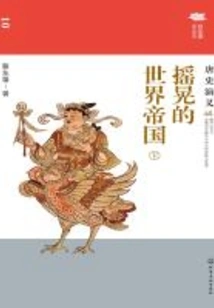
摇晃的世界帝国:唐史演义(下)
Cai Dongfan
This book is a popular romance about the history of the Tang Dynasty, "Cai Dongfan Talks about Chinese History", with a total of 100 chapters in two volumes. From the Xuanwu Gate Change to the Zhenguan Rule, from Empress Wu becoming emperor to the prosperous Kaiyuan Dynasty, from the Anshi Rebellion to Zhu Wen's usurpation of the Tang Dynasty, it wonderfully interprets the rise and fall of the Tang Dynasty in 289 years. The author draws extensively from official history, occasionally from officials and wild officials, and his narrative is plain, smooth, and methodical; he makes self-evaluations and annotations, and his language is humorous and both reasonable and reasonable. Reading through this book, it is like a historical picture of the Tang Dynasty unfolding slowly before your eyes. Sometimes it is a fierce battle, sometimes it is gentle and affectionate, sometimes it is a dispute between countries, sometimes it is a game of loyalty and traitor... It makes people dizzy and full of emotions.
This book is a popular romance about the history of the Tang Dynasty, "Cai Dongfan Talks about Chinese History", with a total of 100 chapters in two volumes. From the Xuanwu Gate Change to the Zhenguan Rule, from Empress Wu becoming emperor to the prosperous Kaiyuan Dynasty, from the Anshi Rebellion to Zhu Wen's usurpation of the Tang Dynasty, it wonderfully interprets the rise and fall of the Tang Dynasty in 289 years. The author draws extensively from official history, occasionally from officials and wild officials, and his narrative is plain, smooth, and methodical; he makes self-evaluations and annotations, and his language is humorous and both reasonable and reasonable. Reading through this book, it is like a historical picture of the Tang Dynasty unfolding slowly before your eyes. Sometimes it is a fierce battle, sometimes it is gentle and affectionate, sometimes it is a dispute between countries, sometimes it is a game of loyalty and traitor... It makes people dizzy and full of emotions.
中国历代通俗演义:唐史演义(下)
Cai Dongfan
This set of 21 volumes covers popular romances in 11 historical stages: the Early Han Dynasty, the Later Han Dynasty, the Two Jin Dynasties, Northern and Southern History, the Five Dynasties, Tang, Song, Yuan, Ming, Qing, and the Republic of China. Starting from the first emperor of Qin to the Republic of China, totaling 2166 years, the emperor has written more than six million words. The system is complete, the content is rich, and the priorities are clear. According to the official history, all words have their own origins, and miscellaneous histories are not false accusations. The language is elegant and clean, self-note and self-evaluation, and both rational and interesting. Because he is known as "a historian of a generation, a magic pen for thousands of years", Xun is a model of popular history and a must-read for beginners of history. This book narrates the historical facts of the 290 years of the Tang Dynasty, from prosperity to decline, and experienced the disasters of women, eunuchs, and feudal lords. It has plain views, rich content, methodical exposition, elegant language, self-evaluation and self-annotation, and is both rational and interesting. It is regarded as a classic of popular history. The book is careful in selecting materials, mainly focusing on authentic history and side by side with unofficial history, allowing people to get started with the history of the nation.
This set of 21 volumes covers popular romances in 11 historical stages: the Early Han Dynasty, the Later Han Dynasty, the Two Jin Dynasties, Northern and Southern History, the Five Dynasties, Tang, Song, Yuan, Ming, Qing, and the Republic of China. Starting from the first emperor of Qin to the Republic of China, totaling 2166 years, the emperor has written more than six million words. The system is complete, the content is rich, and the priorities are clear. According to the official history, all words have their own origins, and miscellaneous histories are not false accusations. The language is elegant and clean, self-note and self-evaluation, and both rational and interesting. Because he is known as "a historian of a generation, a magic pen for thousands of years", Xun is a model of popular history and a must-read for beginners of history. This book narrates the historical facts of the 290 years of the Tang Dynasty, from prosperity to decline, and experienced the disasters of women, eunuchs, and feudal lords. It has plain views, rich content, methodical exposition, elegant language, self-evaluation and self-annotation, and is both rational and interesting. It is regarded as a classic of popular history. The book is careful in selecting materials, mainly focusing on authentic history and side by side with unofficial history, allowing people to get started with the history of the nation.
中国历代通俗演义:两晋演义(下)
Cai Dongfan
This set of 21 volumes covers popular romances in 11 historical stages: the Early Han Dynasty, the Later Han Dynasty, the Two Jin Dynasties, Northern and Southern History, the Five Dynasties, Tang, Song, Yuan, Ming, Qing, and the Republic of China. Starting from the first emperor of Qin to the Republic of China, totaling 2166 years, the emperor has written more than six million words. The system is complete, the content is rich, and the priorities are clear. According to the official history, all words have their own origins, and miscellaneous histories are not false accusations. The language is elegant and clean, self-note and self-evaluation, and both rational and interesting. Because he is known as "a historian of a generation, a magic pen for thousands of years", Xun is a model of popular history and a must-read for beginners of history. This book is the Jin Dynasty part.
This set of 21 volumes covers popular romances in 11 historical stages: the Early Han Dynasty, the Later Han Dynasty, the Two Jin Dynasties, Northern and Southern History, the Five Dynasties, Tang, Song, Yuan, Ming, Qing, and the Republic of China. Starting from the first emperor of Qin to the Republic of China, totaling 2166 years, the emperor has written more than six million words. The system is complete, the content is rich, and the priorities are clear. According to the official history, all words have their own origins, and miscellaneous histories are not false accusations. The language is elegant and clean, self-note and self-evaluation, and both rational and interesting. Because he is known as "a historian of a generation, a magic pen for thousands of years", Xun is a model of popular history and a must-read for beginners of history. This book is the Jin Dynasty part.
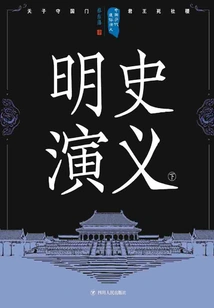
中国历代通俗演义:明史演义(下)
Cai Dongfan
This set of 21 volumes covers popular romances in 11 historical stages: the Early Han Dynasty, the Later Han Dynasty, the Two Jin Dynasties, Northern and Southern History, the Five Dynasties, Tang, Song, Yuan, Ming, Qing, and the Republic of China. Starting from the first emperor of Qin to the Republic of China, totaling 2166 years, the emperor has written more than six million words. The system is complete, the content is rich, and the priorities are clear. According to the official history, all words have their own origins, and miscellaneous histories are not false accusations. The language is elegant and clean, self-note and self-evaluation, and both rational and interesting. Because he is known as "a historian of a generation, a magic pen for thousands of years", Xun is a model of popular history and a must-read for beginners of history. This book is the Ming Dynasty part.
This set of 21 volumes covers popular romances in 11 historical stages: the Early Han Dynasty, the Later Han Dynasty, the Two Jin Dynasties, Northern and Southern History, the Five Dynasties, Tang, Song, Yuan, Ming, Qing, and the Republic of China. Starting from the first emperor of Qin to the Republic of China, totaling 2166 years, the emperor has written more than six million words. The system is complete, the content is rich, and the priorities are clear. According to the official history, all words have their own origins, and miscellaneous histories are not false accusations. The language is elegant and clean, self-note and self-evaluation, and both rational and interesting. Because he is known as "a historian of a generation, a magic pen for thousands of years", Xun is a model of popular history and a must-read for beginners of history. This book is the Ming Dynasty part.
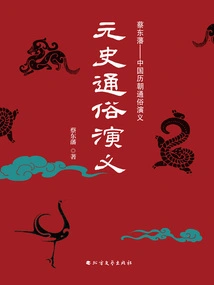
Popular Romance of the Yuan Dynasty
General Fiction元史通俗演义
Cai Dongfan
This book narrates about 160 years of history from the establishment of the Mongol Empire by Temujin, to the renaming of the Yuan Dynasty by Kublai Khan, and the demise of the Yuan Dynasty. It focuses on recording major historical events such as the rise of Mongolia, Genghis Khan's Western Expedition, Ogedai's destruction of the Jin Dynasty, Kublai Khan's unification of the country, the Red Turban Uprising, and Zhu Yuanzhang's Northern Expedition.
This book narrates about 160 years of history from the establishment of the Mongol Empire by Temujin, to the renaming of the Yuan Dynasty by Kublai Khan, and the demise of the Yuan Dynasty. It focuses on recording major historical events such as the rise of Mongolia, Genghis Khan's Western Expedition, Ogedai's destruction of the Jin Dynasty, Kublai Khan's unification of the country, the Red Turban Uprising, and Zhu Yuanzhang's Northern Expedition.
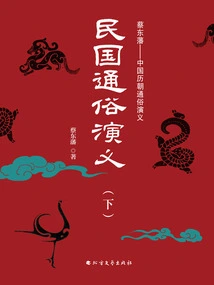
Popular Romance of the Republic of China (part 2)
General Fiction民国通俗演义(下)
Cai Dongfan
Beginning in 1916, Cai Dongfan spent ten years completing "Popular Romance of Chinese Dynasties". In the form of a chapter-style historical romance novel, he recorded the major historical events and important historical figures that occurred in China during the 2166 years from Qin Shihuang to the Republic of China (1920). "Popular Romance of the Republic of China: Popular Romance of the Republic of China (Set Volume 1, 2)" is one of them. The whole book reproduces the history of the Republic of China in the form of chapter novels, describing in detail the beginning and end of major historical events such as the Revolution of 1911, Sun Yat-sen's resignation, Yuan Shikai's proclaimed emperor, Cai E's attack on Yuan, Zhang Xun's restoration, the May Fourth Movement, and Sun Yat-sen's reorganization of the Kuomintang.
Beginning in 1916, Cai Dongfan spent ten years completing "Popular Romance of Chinese Dynasties". In the form of a chapter-style historical romance novel, he recorded the major historical events and important historical figures that occurred in China during the 2166 years from Qin Shihuang to the Republic of China (1920). "Popular Romance of the Republic of China: Popular Romance of the Republic of China (Set Volume 1, 2)" is one of them. The whole book reproduces the history of the Republic of China in the form of chapter novels, describing in detail the beginning and end of major historical events such as the Revolution of 1911, Sun Yat-sen's resignation, Yuan Shikai's proclaimed emperor, Cai E's attack on Yuan, Zhang Xun's restoration, the May Fourth Movement, and Sun Yat-sen's reorganization of the Kuomintang.
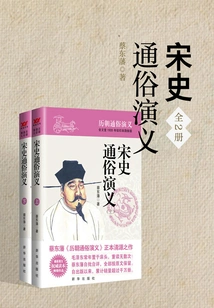
Popular Romance of the Past Dynasties: Popular Romance of Song Dynasty (complete Collection)
General Fiction历朝通俗演义:宋史通俗演义(全集)
Cai Dongfan
This book is the simplified version of "The Popular Romance of Cai Dongfan's Past Dynasties" printed by Huiwentang in 1935. The Song Dynasty inherited the Five Dynasties and Ten Kingdoms and the Yuan Dynasty. After a long journey through the Five Dynasties and Ten Kingdoms, the late Zhou general Zhao Kuangyin wore a yellow robe and established the Song Dynasty. In the early Northern Song Dynasty, in order to avoid the separatism of feudal vassal towns and the chaos of eunuchs since the late Tang Dynasty, the government adopted a policy of emphasizing culture and suppressing military force. On the one hand, it strengthened the centralization of power, and on the other hand, the economy and culture prospered unprecedentedly. Song Zhenzong and Song Renzong entered a prosperous period. Later, Jin soldiers invaded the south in a large scale. Strong neighbors in the north of the Great Wall continued to have foreign troubles. Half of the country was lost in the Jingkang disaster. After Jingkang, Emperor Gaozong and Zhao Gou rebuilt the empire in Suzhou and Hangzhou under heaven, and lost the illusion of returning to China.
This book is the simplified version of "The Popular Romance of Cai Dongfan's Past Dynasties" printed by Huiwentang in 1935. The Song Dynasty inherited the Five Dynasties and Ten Kingdoms and the Yuan Dynasty. After a long journey through the Five Dynasties and Ten Kingdoms, the late Zhou general Zhao Kuangyin wore a yellow robe and established the Song Dynasty. In the early Northern Song Dynasty, in order to avoid the separatism of feudal vassal towns and the chaos of eunuchs since the late Tang Dynasty, the government adopted a policy of emphasizing culture and suppressing military force. On the one hand, it strengthened the centralization of power, and on the other hand, the economy and culture prospered unprecedentedly. Song Zhenzong and Song Renzong entered a prosperous period. Later, Jin soldiers invaded the south in a large scale. Strong neighbors in the north of the Great Wall continued to have foreign troubles. Half of the country was lost in the Jingkang disaster. After Jingkang, Emperor Gaozong and Zhao Gou rebuilt the empire in Suzhou and Hangzhou under heaven, and lost the illusion of returning to China.
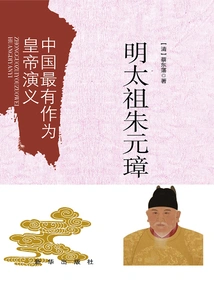
The Romance of China's Most Promising Emperor: Zhu Yuanzhang, Taizu of the Ming Dynasty
General Fiction中国最有作为皇帝演义:明太祖朱元璋
Cai Dongfan
The "Romances of China's Most Promising Emperors" series of books selects eight most promising emperors in Chinese history from the "Popular Romance of Chinese Dynasties" written by Mr. Cai Dongfan (based on the 1935 Huiwentang printed version, retaining the author's annotations) and compiles them into a book. This series of books has both historical and literary qualities. It "takes official history as the basis and strives for certainty; it uses anecdotes as the weft and does not make false accusations." Readers can not only read history but also appreciate legendary stories, which is the best of both worlds. This book is one of them. It tells the life of Zhu Yuanzhang, the founder of the Ming Dynasty, including his birth as a commoner, the struggle against the Yuan Dynasty, the unification of Jiangnan, the establishment of the Ming Dynasty, the rule of Hongwu, and his death due to labor. Zhu Yuanzhang expelled the barbarians, eliminated the rebellion, saved the Han nation, pacified the world, restored China, and established the Ming Dynasty.
The "Romances of China's Most Promising Emperors" series of books selects eight most promising emperors in Chinese history from the "Popular Romance of Chinese Dynasties" written by Mr. Cai Dongfan (based on the 1935 Huiwentang printed version, retaining the author's annotations) and compiles them into a book. This series of books has both historical and literary qualities. It "takes official history as the basis and strives for certainty; it uses anecdotes as the weft and does not make false accusations." Readers can not only read history but also appreciate legendary stories, which is the best of both worlds. This book is one of them. It tells the life of Zhu Yuanzhang, the founder of the Ming Dynasty, including his birth as a commoner, the struggle against the Yuan Dynasty, the unification of Jiangnan, the establishment of the Ming Dynasty, the rule of Hongwu, and his death due to labor. Zhu Yuanzhang expelled the barbarians, eliminated the rebellion, saved the Han nation, pacified the world, restored China, and established the Ming Dynasty.
中国历代通俗演义:民国演义(下)
Cai Dongfan
"The Romance of the Republic of China" records the beginning and end of major historical events such as the Revolution of 1911, Sun Yat-sen's resignation, Yuan Shikai's proclaimed emperor, Cai E's campaign against Yuan, Zhang Xun's restoration, the May Fourth Movement, Sun Yat-sen's reorganization of the Kuomintang, and other major historical events. This book tells the history from "Chapter 12: The consul officer transferred the fleet to the special area and submitted a submission" to "Chapter 160: Raising military pay and restoring the law of donating officers, the end result should rely on American soldiers." The government of the Republic of China was extremely corrupt, resulting in a mess of domestic and foreign affairs. Warlords and factions were proliferating, and each caused trouble. Officials frequently take leave of absence and resign, one party sings while the other takes the stage, the North and the South are divided, each has his own right and each is not his own, the beans are fried, and only the people feel pity for them...
"The Romance of the Republic of China" records the beginning and end of major historical events such as the Revolution of 1911, Sun Yat-sen's resignation, Yuan Shikai's proclaimed emperor, Cai E's campaign against Yuan, Zhang Xun's restoration, the May Fourth Movement, Sun Yat-sen's reorganization of the Kuomintang, and other major historical events. This book tells the history from "Chapter 12: The consul officer transferred the fleet to the special area and submitted a submission" to "Chapter 160: Raising military pay and restoring the law of donating officers, the end result should rely on American soldiers." The government of the Republic of China was extremely corrupt, resulting in a mess of domestic and foreign affairs. Warlords and factions were proliferating, and each caused trouble. Officials frequently take leave of absence and resign, one party sings while the other takes the stage, the North and the South are divided, each has his own right and each is not his own, the beans are fried, and only the people feel pity for them...
Romance of the Republic of China (4)
General Fiction民国演义(四)
Cai Dongfan
"The Romance of the Republic of China" is the Republic of China part of "Popular Romance of Chinese Dynasties". The book adopts the chapter style and tells the history of the Republic of China in a detailed and simple way. It has been widely praised by people since its publication. It records the beginning and end of major historical events such as the Revolution of 1911, Sun Yat-sen's resignation, Yuan Shikai's proclaimed emperor, Cai E's attack on Yuan, Zhang Xun's restoration, the May Fourth Movement, Sun Yat-sen's reorganization of the Kuomintang, and other major historical events. This book is the fourth volume.
"The Romance of the Republic of China" is the Republic of China part of "Popular Romance of Chinese Dynasties". The book adopts the chapter style and tells the history of the Republic of China in a detailed and simple way. It has been widely praised by people since its publication. It records the beginning and end of major historical events such as the Revolution of 1911, Sun Yat-sen's resignation, Yuan Shikai's proclaimed emperor, Cai E's attack on Yuan, Zhang Xun's restoration, the May Fourth Movement, Sun Yat-sen's reorganization of the Kuomintang, and other major historical events. This book is the fourth volume.
蔡东藩经典历史小说:民国演义(21)
Cai Dongfan
This book is a must-read historical novel of the Republic of China. The author is Cai Dongfan, a famous historian and novelist of the Republic of China. This book describes in relatively detail the beginning and end of major historical events such as the Revolution of 1911, Sun Yat-sen's resignation, Yuan Shikai's proclaimed emperor, Cai E's campaign against Yuan, Zhang Xun's restoration, the May Fourth Movement, Sun Yat-sen's reorganization of the Kuomintang, and other major historical events. This book is the Republic of China part of "Popular Romance of Chinese History". "Popular Romance of Chinese History" dates from the Qin and Han dynasties to the Republic of China. Two thousand years of Chinese history are vividly displayed in front of us. The book tells the history of the Republic of China in a detailed and easy-to-understand way, and has been widely praised by people since its publication. The work is based on historical facts and side by side with unofficial history. It is prudent in selecting materials, has plain viewpoints, is rich in content, has a methodical narrative, elegant language, self-evaluation and self-annotation, and has both reason and interest. It is regarded as a classic of popular history and is deeply favored by readers. In the selection and use of historical materials, Cai Dongfan mainly focused on "official history" and also collected anecdotes and anecdotes. He claimed that the historical romance he compiled "takes official history as the classic and strives for certainty; uses anecdotes as the latitude and does not make false accusations." He is extremely cautious in the use of historical materials such as anecdotes and anecdotes, and often requires "several rounds of textual research."
This book is a must-read historical novel of the Republic of China. The author is Cai Dongfan, a famous historian and novelist of the Republic of China. This book describes in relatively detail the beginning and end of major historical events such as the Revolution of 1911, Sun Yat-sen's resignation, Yuan Shikai's proclaimed emperor, Cai E's campaign against Yuan, Zhang Xun's restoration, the May Fourth Movement, Sun Yat-sen's reorganization of the Kuomintang, and other major historical events. This book is the Republic of China part of "Popular Romance of Chinese History". "Popular Romance of Chinese History" dates from the Qin and Han dynasties to the Republic of China. Two thousand years of Chinese history are vividly displayed in front of us. The book tells the history of the Republic of China in a detailed and easy-to-understand way, and has been widely praised by people since its publication. The work is based on historical facts and side by side with unofficial history. It is prudent in selecting materials, has plain viewpoints, is rich in content, has a methodical narrative, elegant language, self-evaluation and self-annotation, and has both reason and interest. It is regarded as a classic of popular history and is deeply favored by readers. In the selection and use of historical materials, Cai Dongfan mainly focused on "official history" and also collected anecdotes and anecdotes. He claimed that the historical romance he compiled "takes official history as the classic and strives for certainty; uses anecdotes as the latitude and does not make false accusations." He is extremely cautious in the use of historical materials such as anecdotes and anecdotes, and often requires "several rounds of textual research."
Romance of Yuan Dynasty 5
General Fiction元史演义5
Cai Dongfan
This book tells the history from Temujin, the founder of the Yuan Dynasty, to the escape of Emperor Shun of the Yuan Dynasty, and reproduces the magnanimity of the Mongols and the historical destiny of the empire's prosperity, decline and eventual disintegration. The whole book has a chapter-like structure, which is relaxed and relaxed, with self-commentary and self-annotation. It is full of wit and humor. It integrates literature and history and is worth reading.
This book tells the history from Temujin, the founder of the Yuan Dynasty, to the escape of Emperor Shun of the Yuan Dynasty, and reproduces the magnanimity of the Mongols and the historical destiny of the empire's prosperity, decline and eventual disintegration. The whole book has a chapter-like structure, which is relaxed and relaxed, with self-commentary and self-annotation. It is full of wit and humor. It integrates literature and history and is worth reading.
蔡东藩经典历史小说:民国演义(2)
Cai Dongfan
This book is a must-read historical novel of the Republic of China. The author is Cai Dongfan, a famous historian and novelist of the Republic of China. This book describes in relatively detail the beginning and end of major historical events such as the Revolution of 1911, Sun Yat-sen's resignation, Yuan Shikai's proclaimed emperor, Cai E's campaign against Yuan, Zhang Xun's restoration, the May Fourth Movement, Sun Yat-sen's reorganization of the Kuomintang, and other major historical events. This book is the Republic of China part of "Popular Romance of Chinese History". "Popular Romance of Chinese History" dates from the Qin and Han dynasties to the Republic of China. Two thousand years of Chinese history are vividly displayed in front of us. The book tells the history of the Republic of China in a detailed and easy-to-understand way, and has been widely praised by people since its publication. The work is based on historical facts and side by side with unofficial history. It is prudent in selecting materials, has plain viewpoints, is rich in content, has a methodical narrative, elegant language, self-evaluation and self-annotation, and has both reason and interest. It is regarded as a classic of popular history and is deeply favored by readers. In the selection and use of historical materials, Cai Dongfan mainly focused on "official history" and also collected anecdotes and anecdotes. He claimed that the historical romance he compiled "takes official history as the classic and strives for certainty; uses anecdotes as the latitude and does not make false accusations." He is extremely cautious in the use of historical materials such as anecdotes and anecdotes, and often requires "several rounds of textual research."
This book is a must-read historical novel of the Republic of China. The author is Cai Dongfan, a famous historian and novelist of the Republic of China. This book describes in relatively detail the beginning and end of major historical events such as the Revolution of 1911, Sun Yat-sen's resignation, Yuan Shikai's proclaimed emperor, Cai E's campaign against Yuan, Zhang Xun's restoration, the May Fourth Movement, Sun Yat-sen's reorganization of the Kuomintang, and other major historical events. This book is the Republic of China part of "Popular Romance of Chinese History". "Popular Romance of Chinese History" dates from the Qin and Han dynasties to the Republic of China. Two thousand years of Chinese history are vividly displayed in front of us. The book tells the history of the Republic of China in a detailed and easy-to-understand way, and has been widely praised by people since its publication. The work is based on historical facts and side by side with unofficial history. It is prudent in selecting materials, has plain viewpoints, is rich in content, has a methodical narrative, elegant language, self-evaluation and self-annotation, and has both reason and interest. It is regarded as a classic of popular history and is deeply favored by readers. In the selection and use of historical materials, Cai Dongfan mainly focused on "official history" and also collected anecdotes and anecdotes. He claimed that the historical romance he compiled "takes official history as the classic and strives for certainty; uses anecdotes as the latitude and does not make false accusations." He is extremely cautious in the use of historical materials such as anecdotes and anecdotes, and often requires "several rounds of textual research."
蔡东藩历史小说:清史演义(12)
Cai Dongfan
This book is a must-read historical novel of the Qing Dynasty. It mainly tells the history of 294 years starting from the Manchu Qing Dynasty and ending with the abdication of Emperor Xuantong. For readers who like the history of the Qing Dynasty, this book is not to be missed. After the Manchus entered the customs, they became the second foreign power after the Mongols, and the territory of modern China was roughly determined. While the Western world was undergoing rapid changes due to the Industrial Revolution, the stagnant Qing Empire closed its doors to the outside world. The Opium War brought Chinese history into the category of modern history. For the next half century, the Qing Empire suffered from internal and external troubles. Although reforms such as the Westernization Movement and the Restoration were implemented later, they ended due to the obstruction of the conservative forces. The anti-foreign movement of the Boxer Rebellion led to the invasion of the Eight-Power Allied Forces, and the Qing Empire was unable to revive after the Boxer Indemnity. The Battle of Wuchang not only ended the Qing Empire's national lineage, but also ended the imperial era of more than two thousand years.
This book is a must-read historical novel of the Qing Dynasty. It mainly tells the history of 294 years starting from the Manchu Qing Dynasty and ending with the abdication of Emperor Xuantong. For readers who like the history of the Qing Dynasty, this book is not to be missed. After the Manchus entered the customs, they became the second foreign power after the Mongols, and the territory of modern China was roughly determined. While the Western world was undergoing rapid changes due to the Industrial Revolution, the stagnant Qing Empire closed its doors to the outside world. The Opium War brought Chinese history into the category of modern history. For the next half century, the Qing Empire suffered from internal and external troubles. Although reforms such as the Westernization Movement and the Restoration were implemented later, they ended due to the obstruction of the conservative forces. The anti-foreign movement of the Boxer Rebellion led to the invasion of the Eight-Power Allied Forces, and the Qing Empire was unable to revive after the Boxer Indemnity. The Battle of Wuchang not only ended the Qing Empire's national lineage, but also ended the imperial era of more than two thousand years.
蔡东藩经典历史小说:民国演义(11)
Cai Dongfan
This book is a must-read historical novel of the Republic of China. The author is Cai Dongfan, a famous historian and novelist of the Republic of China. This book describes in relatively detail the beginning and end of major historical events such as the Revolution of 1911, Sun Yat-sen's resignation, Yuan Shikai's proclaimed emperor, Cai E's campaign against Yuan, Zhang Xun's restoration, the May Fourth Movement, Sun Yat-sen's reorganization of the Kuomintang, and other major historical events. This book is the Republic of China part of "Popular Romance of Chinese History". "Popular Romance of Chinese History" dates from the Qin and Han dynasties to the Republic of China. Two thousand years of Chinese history are vividly displayed in front of us. The book tells the history of the Republic of China in a detailed and easy-to-understand way, and has been widely praised by people since its publication. The work is based on historical facts and side by side with unofficial history. It is prudent in selecting materials, has plain viewpoints, is rich in content, has a methodical narrative, elegant language, self-evaluation and self-annotation, and has both reason and interest. It is regarded as a classic of popular history and is deeply favored by readers. In the selection and use of historical materials, Cai Dongfan mainly focused on "official history" and also collected anecdotes and anecdotes. He claimed that the historical romance he compiled "takes official history as the classic and strives for certainty; uses anecdotes as the latitude and does not make false accusations." He is extremely cautious in the use of historical materials such as anecdotes and anecdotes, and often requires "several rounds of textual research."
This book is a must-read historical novel of the Republic of China. The author is Cai Dongfan, a famous historian and novelist of the Republic of China. This book describes in relatively detail the beginning and end of major historical events such as the Revolution of 1911, Sun Yat-sen's resignation, Yuan Shikai's proclaimed emperor, Cai E's campaign against Yuan, Zhang Xun's restoration, the May Fourth Movement, Sun Yat-sen's reorganization of the Kuomintang, and other major historical events. This book is the Republic of China part of "Popular Romance of Chinese History". "Popular Romance of Chinese History" dates from the Qin and Han dynasties to the Republic of China. Two thousand years of Chinese history are vividly displayed in front of us. The book tells the history of the Republic of China in a detailed and easy-to-understand way, and has been widely praised by people since its publication. The work is based on historical facts and side by side with unofficial history. It is prudent in selecting materials, has plain viewpoints, is rich in content, has a methodical narrative, elegant language, self-evaluation and self-annotation, and has both reason and interest. It is regarded as a classic of popular history and is deeply favored by readers. In the selection and use of historical materials, Cai Dongfan mainly focused on "official history" and also collected anecdotes and anecdotes. He claimed that the historical romance he compiled "takes official history as the classic and strives for certainty; uses anecdotes as the latitude and does not make false accusations." He is extremely cautious in the use of historical materials such as anecdotes and anecdotes, and often requires "several rounds of textual research."
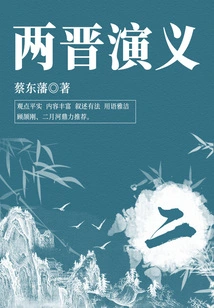
蔡东藩经典历史小说:两晋演义(2)
Cai Dongfan
"The Romance of the Two Jin Dynasties" is one of the "Popular Romance of the Past Dynasties". This book uses a chapter structure, popular articles, and witty comments to truly reproduce the magnificent historical evolution of Chinese civilization and narrate the rise and fall of the Jin Dynasty. It started from Sima Yan in the Wei Dynasty and ended in the Liu Song Dynasty in the Jin Dynasty, which lasted for 156 years. The Western Jin Dynasty ended nearly a century of division. However, the Eight Kings Rebellion depleted the country's capital, and the Hu people, who were mixed with the Han people, took the opportunity to attack one after another, leading to the fall of the Western Jin Dynasty. The Eastern Jin Dynasty rebuilt in Jiangdong, accumulated energy, and launched the difficult task of the Northern Expedition, but its strength was lost due to internal power struggles. General Liu Yu stood out and made two Northern Expeditions to recapture Chang'an. After that, he deposed two emperors one after another, founded the Song Dynasty, and fell to the Eastern Jin Dynasty. This book is easy to understand and has witty comments. It is a good helper for understanding history.
"The Romance of the Two Jin Dynasties" is one of the "Popular Romance of the Past Dynasties". This book uses a chapter structure, popular articles, and witty comments to truly reproduce the magnificent historical evolution of Chinese civilization and narrate the rise and fall of the Jin Dynasty. It started from Sima Yan in the Wei Dynasty and ended in the Liu Song Dynasty in the Jin Dynasty, which lasted for 156 years. The Western Jin Dynasty ended nearly a century of division. However, the Eight Kings Rebellion depleted the country's capital, and the Hu people, who were mixed with the Han people, took the opportunity to attack one after another, leading to the fall of the Western Jin Dynasty. The Eastern Jin Dynasty rebuilt in Jiangdong, accumulated energy, and launched the difficult task of the Northern Expedition, but its strength was lost due to internal power struggles. General Liu Yu stood out and made two Northern Expeditions to recapture Chang'an. After that, he deposed two emperors one after another, founded the Song Dynasty, and fell to the Eastern Jin Dynasty. This book is easy to understand and has witty comments. It is a good helper for understanding history.
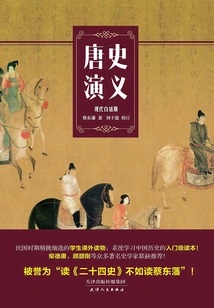
Tang History Romance
General Fiction唐史演义
Cai Dongfan
"The Romance of Tang History" is a chapter-style historical romance novel, which is the Tang Dynasty part of Cai Dongfan's "Popular Romance of Chinese History" series. This book has a total of one hundred chapters, telling the story of Li Yuan and his son's troops stationed in Chang'an, the unification of the Tang Dynasty, the rule of Zhenguan, Wu Zetian's rise to the Tang Dynasty and the establishment of the Zhou Dynasty, the prosperous period of Kaiyuan and the Anshi Rebellion, as well as the eunuch monopoly, separatist feudal towns, Huangchao Uprising, and the demise of the Tang Dynasty in the Mid-Tang Dynasty, etc., Which is a glorious three-hundred-year history.
"The Romance of Tang History" is a chapter-style historical romance novel, which is the Tang Dynasty part of Cai Dongfan's "Popular Romance of Chinese History" series. This book has a total of one hundred chapters, telling the story of Li Yuan and his son's troops stationed in Chang'an, the unification of the Tang Dynasty, the rule of Zhenguan, Wu Zetian's rise to the Tang Dynasty and the establishment of the Zhou Dynasty, the prosperous period of Kaiyuan and the Anshi Rebellion, as well as the eunuch monopoly, separatist feudal towns, Huangchao Uprising, and the demise of the Tang Dynasty in the Mid-Tang Dynasty, etc., Which is a glorious three-hundred-year history.
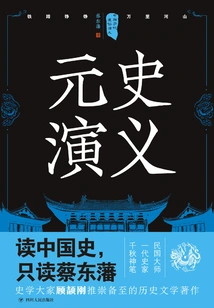
中国历代通俗演义:元史演义(再版)
Cai Dongfan
Mr. Cai Dongfan's "Popular Romance of Chinese Dynasties" was written from the Qin and Han dynasties to the Republic of China. It has more than 1,000 chapters and more than 5 million words, covering nearly 2,200 years of history. After this book was published, it has been widely welcomed and praised. In the mid-1930s, I called Li Kenong to purchase two copies of this book to meet the needs of Yan'an cadres in learning Chinese history. This book always stands beside the bed in the bedroom. The famous historian Zide Geng believes that although this book has shortcomings as a piece of historical knowledge, the content is rich enough and the narrative is systematic. The famous novelist Yue Erhe believes that this book can only be said to be a medium-sized work in terms of literature, but reading this book can help you gain an introduction to national history, and it is unique to this book and has no other branches. "The Romance of Song History" is the Song History part. "The Romance of Song History" was compiled by Cai Dongfan.
Mr. Cai Dongfan's "Popular Romance of Chinese Dynasties" was written from the Qin and Han dynasties to the Republic of China. It has more than 1,000 chapters and more than 5 million words, covering nearly 2,200 years of history. After this book was published, it has been widely welcomed and praised. In the mid-1930s, I called Li Kenong to purchase two copies of this book to meet the needs of Yan'an cadres in learning Chinese history. This book always stands beside the bed in the bedroom. The famous historian Zide Geng believes that although this book has shortcomings as a piece of historical knowledge, the content is rich enough and the narrative is systematic. The famous novelist Yue Erhe believes that this book can only be said to be a medium-sized work in terms of literature, but reading this book can help you gain an introduction to national history, and it is unique to this book and has no other branches. "The Romance of Song History" is the Song History part. "The Romance of Song History" was compiled by Cai Dongfan.
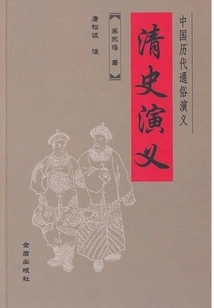
Romance of Qing History
General Fiction清史演义
Cai Dongfan
This book narrates the history of the Qing Dynasty for more than 290 years in the form of a novel. The book more objectively reflects the spectacular scenes of the Kangxi and Qianlong reign of the Qing Dynasty, and also reveals to a certain extent the corruption and decline after the Xianfeng Dynasty. The annotations made by Mr. Tang Songbo are concise and appropriate.
This book narrates the history of the Qing Dynasty for more than 290 years in the form of a novel. The book more objectively reflects the spectacular scenes of the Kangxi and Qianlong reign of the Qing Dynasty, and also reveals to a certain extent the corruption and decline after the Xianfeng Dynasty. The annotations made by Mr. Tang Songbo are concise and appropriate.
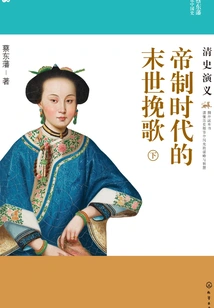
帝制时代的末世挽歌:清史演义(下)
Cai Dongfan
This book is a popular romance of Qing history "Cai Dongfan Talks about Chinese History", with a total of 100 chapters. From the entry of the Later Jin Dynasty and the establishment of the Qing Dynasty, to the prosperity of Kangxi and Qianlong, the prosperity and decline, to the continuous civil strife, the Taiping Heavenly Kingdom, and finally the Westernization Movement and the demise of the Qing Dynasty, it brilliantly interprets the rise and fall of the Qing Dynasty from the founding of Manchuria to the Revolution of 1911 over 260 years, and reproduces the historical picture of divisions, mergers, and chaos during this period. The author draws extensively from official history, occasionally from officials and wild officials, and his narrative is plain, smooth, and methodical; he makes self-evaluations and annotations, and his language is humorous and both reasonable and reasonable. Reading through this book, it is like a historical picture of the Qing Dynasty slowly unfolding before your eyes. Sometimes it is fierce and fierce, sometimes it is gentle and affectionate, sometimes it is civil strife, sometimes it is a game of loyalty and traitor... It makes people dizzy and full of emotions.
This book is a popular romance of Qing history "Cai Dongfan Talks about Chinese History", with a total of 100 chapters. From the entry of the Later Jin Dynasty and the establishment of the Qing Dynasty, to the prosperity of Kangxi and Qianlong, the prosperity and decline, to the continuous civil strife, the Taiping Heavenly Kingdom, and finally the Westernization Movement and the demise of the Qing Dynasty, it brilliantly interprets the rise and fall of the Qing Dynasty from the founding of Manchuria to the Revolution of 1911 over 260 years, and reproduces the historical picture of divisions, mergers, and chaos during this period. The author draws extensively from official history, occasionally from officials and wild officials, and his narrative is plain, smooth, and methodical; he makes self-evaluations and annotations, and his language is humorous and both reasonable and reasonable. Reading through this book, it is like a historical picture of the Qing Dynasty slowly unfolding before your eyes. Sometimes it is fierce and fierce, sometimes it is gentle and affectionate, sometimes it is civil strife, sometimes it is a game of loyalty and traitor... It makes people dizzy and full of emotions.
蔡东藩六史:明
Cai Dongfan
From the Qin and Han Dynasties to the Republic of China, the book has more than a thousand chapters and more than 5 million words, covering nearly 2,200 years of history. It mainly focuses on historical history and side by side with unofficial history. It draws materials carefully, has plain views, rich content, well-narrated narratives, elegant language, self-evaluation and self-annotation, and has both reason and interest. It is regarded as a classic of popular history.
From the Qin and Han Dynasties to the Republic of China, the book has more than a thousand chapters and more than 5 million words, covering nearly 2,200 years of history. It mainly focuses on historical history and side by side with unofficial history. It draws materials carefully, has plain views, rich content, well-narrated narratives, elegant language, self-evaluation and self-annotation, and has both reason and interest. It is regarded as a classic of popular history.
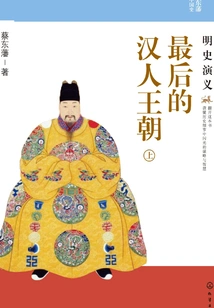
最后的汉人王朝:明史演义(上)
Cai Dongfan
This book is a popular romance of the Ming Dynasty called "Cai Dongfan Talks about the History of China". It has one hundred chapters in two volumes, starting from the establishment of the Ming Dynasty and the prosperous age of Yongle, to the rule of Renxuan, the civil war, to the continuous civil strife, the northern captives and the southern Japanese, and finally Wanli's neglect of government and the loss of the country by Sizong. The author draws extensively from official history, occasionally from officials and wild officials, and his narrative is plain, smooth, and methodical; he makes self-evaluations and annotations, and his language is humorous and both reasonable and reasonable. Reading through this book, it is like a historical picture of the Ming Dynasty slowly unfolding before your eyes. Sometimes it is fierce and iron, sometimes it is gentle and affectionate, sometimes it is civil strife, sometimes it is a game of loyalty and traitor... It makes people dizzy and full of emotions.
This book is a popular romance of the Ming Dynasty called "Cai Dongfan Talks about the History of China". It has one hundred chapters in two volumes, starting from the establishment of the Ming Dynasty and the prosperous age of Yongle, to the rule of Renxuan, the civil war, to the continuous civil strife, the northern captives and the southern Japanese, and finally Wanli's neglect of government and the loss of the country by Sizong. The author draws extensively from official history, occasionally from officials and wild officials, and his narrative is plain, smooth, and methodical; he makes self-evaluations and annotations, and his language is humorous and both reasonable and reasonable. Reading through this book, it is like a historical picture of the Ming Dynasty slowly unfolding before your eyes. Sometimes it is fierce and iron, sometimes it is gentle and affectionate, sometimes it is civil strife, sometimes it is a game of loyalty and traitor... It makes people dizzy and full of emotions.
蔡东藩六史:前汉
Cai Dongfan
Starting from Qin Shihuang's unification of the six kingdoms and ending with Wang Mang's usurpation of the Han Dynasty, there are a hundred chapters, which truly reproduce the rise and fall of the unified Qin Empire, the changes between Chu and Han, and the magnificent history of the Han Empire at its peak.
Starting from Qin Shihuang's unification of the six kingdoms and ending with Wang Mang's usurpation of the Han Dynasty, there are a hundred chapters, which truly reproduce the rise and fall of the unified Qin Empire, the changes between Chu and Han, and the magnificent history of the Han Empire at its peak.
南北朝
Cai Dongfan
The "Cai Dongfan Chinese History" series is the vernacular version of Cai Dongfan's historical novels. The book contains more than a thousand chapters, covering several spring and autumn periods, starting from Qin Shihuang to 1920. It records a total of 2166 years of history, with a total of 11 parts, 1040 chapters, and about 6.03 Million words. Its content spans a long time, has a large number of characters, and is huge in length, making it the best of all historical novels. He is known as "a historian of a generation and a magic pen for thousands of years".
The "Cai Dongfan Chinese History" series is the vernacular version of Cai Dongfan's historical novels. The book contains more than a thousand chapters, covering several spring and autumn periods, starting from Qin Shihuang to 1920. It records a total of 2166 years of history, with a total of 11 parts, 1040 chapters, and about 6.03 Million words. Its content spans a long time, has a large number of characters, and is huge in length, making it the best of all historical novels. He is known as "a historian of a generation and a magic pen for thousands of years".
中国历代通俗演义:唐史演义(下)(再版)
Cai Dongfan
"The Romance of the Tang Dynasty" compiled by Cai Dongfan is one of the popular romances in the history of China. "The Romance of the Tang Dynasty" narrates the historical facts of the Tang Dynasty from prosperity to decline in 290 years, and experienced the disasters of women, eunuchs, and feudal lords. It has plain views, rich content, legal exposition, elegant language, self-evaluation and self-annotation, and has both reason and interest. It is a classic of popular history.
"The Romance of the Tang Dynasty" compiled by Cai Dongfan is one of the popular romances in the history of China. "The Romance of the Tang Dynasty" narrates the historical facts of the Tang Dynasty from prosperity to decline in 290 years, and experienced the disasters of women, eunuchs, and feudal lords. It has plain views, rich content, legal exposition, elegant language, self-evaluation and self-annotation, and has both reason and interest. It is a classic of popular history.
三百年的大融合:南北史演义(上)
Cai Dongfan
This book is a popular romance of the Northern and Southern Dynasties "Cai Dongfan Talks about the History of China", with a total of one hundred chapters in two volumes. From Liu Yu's usurpation of the Jin Dynasty to the rule of Yuanjia, from the Battle of Zhongli to the Rebellion of Hou Jing, from the reforms of Emperor Xiaowen to the Emperor Yang Jianjian, it wonderfully interprets the rise and fall of the Southern and Northern Dynasties in the past two hundred years. The author draws extensively from official history, occasionally from officials and wild officials, and his narrative is plain, smooth, and methodical; he makes self-evaluations and annotations, and his language is humorous and both reasonable and reasonable. Reading through this book, it is like a historical picture unfolding slowly before your eyes. Sometimes it is a fierce battle, sometimes it is gentle and affectionate, sometimes it is a dispute between countries, sometimes it is a game of loyalty and traitor... It makes people dizzy and full of emotions.
This book is a popular romance of the Northern and Southern Dynasties "Cai Dongfan Talks about the History of China", with a total of one hundred chapters in two volumes. From Liu Yu's usurpation of the Jin Dynasty to the rule of Yuanjia, from the Battle of Zhongli to the Rebellion of Hou Jing, from the reforms of Emperor Xiaowen to the Emperor Yang Jianjian, it wonderfully interprets the rise and fall of the Southern and Northern Dynasties in the past two hundred years. The author draws extensively from official history, occasionally from officials and wild officials, and his narrative is plain, smooth, and methodical; he makes self-evaluations and annotations, and his language is humorous and both reasonable and reasonable. Reading through this book, it is like a historical picture unfolding slowly before your eyes. Sometimes it is a fierce battle, sometimes it is gentle and affectionate, sometimes it is a dispute between countries, sometimes it is a game of loyalty and traitor... It makes people dizzy and full of emotions.
马背上的王朝:元史演义
Cai Dongfan
This book is a popular romance about the history of the Yuan Dynasty, "Cai Dongfan Talks about the History of China", with a total of sixty chapters. From the unification of Mongolia, the expansion of the Jin Dynasty, to the transfer of the Khanate, the attack and annihilation of the Southern Song Dynasty, to the frequent chaos and the loss of Emperor Hui, it wonderfully interprets the historical events of the Yuan Dynasty for nearly 100 years. The author draws extensively from official history, occasionally from officials and wild officials, and his narrative is plain, smooth, and methodical; he makes self-evaluations and annotations, and his language is humorous and both reasonable and reasonable. Reading through this book, it is like a historical picture of the Yuan Dynasty slowly unfolding before your eyes. Sometimes it is fierce and iron, sometimes it is gentle and affectionate, sometimes it is civil strife, sometimes it is a game of loyalty and traitor... It makes people dizzy and full of emotions.
This book is a popular romance about the history of the Yuan Dynasty, "Cai Dongfan Talks about the History of China", with a total of sixty chapters. From the unification of Mongolia, the expansion of the Jin Dynasty, to the transfer of the Khanate, the attack and annihilation of the Southern Song Dynasty, to the frequent chaos and the loss of Emperor Hui, it wonderfully interprets the historical events of the Yuan Dynasty for nearly 100 years. The author draws extensively from official history, occasionally from officials and wild officials, and his narrative is plain, smooth, and methodical; he makes self-evaluations and annotations, and his language is humorous and both reasonable and reasonable. Reading through this book, it is like a historical picture of the Yuan Dynasty slowly unfolding before your eyes. Sometimes it is fierce and iron, sometimes it is gentle and affectionate, sometimes it is civil strife, sometimes it is a game of loyalty and traitor... It makes people dizzy and full of emotions.
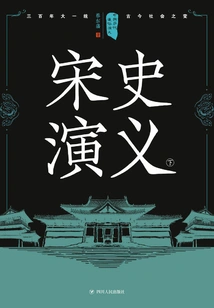
中国历代通俗演义:宋史演义(下)
Cai Dongfan
This set of 21 volumes covers popular romances in 11 historical stages: the Early Han Dynasty, the Later Han Dynasty, the Two Jin Dynasties, Northern and Southern History, the Five Dynasties, Tang, Song, Yuan, Ming, Qing, and the Republic of China. Starting from the first emperor of Qin to the Republic of China, totaling 2166 years, the emperor has written more than six million words. The system is complete, the content is rich, and the priorities are clear. According to the official history, all words have their own origins, and miscellaneous histories are not false accusations. The language is elegant and clean, self-note and self-evaluation, and both rational and interesting. Because he is known as "a historian of a generation, a magic pen for thousands of years", Xun is a model of popular history and a must-read for beginners of history. This book is the part of the pilgrimage.
This set of 21 volumes covers popular romances in 11 historical stages: the Early Han Dynasty, the Later Han Dynasty, the Two Jin Dynasties, Northern and Southern History, the Five Dynasties, Tang, Song, Yuan, Ming, Qing, and the Republic of China. Starting from the first emperor of Qin to the Republic of China, totaling 2166 years, the emperor has written more than six million words. The system is complete, the content is rich, and the priorities are clear. According to the official history, all words have their own origins, and miscellaneous histories are not false accusations. The language is elegant and clean, self-note and self-evaluation, and both rational and interesting. Because he is known as "a historian of a generation, a magic pen for thousands of years", Xun is a model of popular history and a must-read for beginners of history. This book is the part of the pilgrimage.
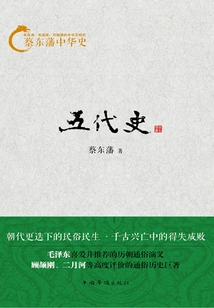
蔡东藩中华史:五代史
Cai Dongfan
When Mao Zedong came to Beijing from Yan'an, he ordered his subordinates to bring him a set of books, and this was it! It can be said that this set of books is Mao Zedong's introduction to Chinese history. With more than 2,000 years of history from the Qin Dynasty to the Republic of China, Cai Dongfan used official history as the classic and anecdotes as the weft, and used the language of "The Romance of the Three Kingdoms", which is not very profound in writing and not very vulgar in language, to write this most complete set of historical novels in China. From the creation of "Popular Romance of Qing History" in 1915 to the publication of "Popular Romance of Later Han Dynasty" in 1926, the entire set of "Popular Romance of Historical Dynasties" took ten years to complete. In addition to being very story-telling and interesting, this set of novels also attaches great importance to the authenticity of historical materials. Not only can it be used as a general leisure reading, but it can also be used as a reference book for history lovers.
When Mao Zedong came to Beijing from Yan'an, he ordered his subordinates to bring him a set of books, and this was it! It can be said that this set of books is Mao Zedong's introduction to Chinese history. With more than 2,000 years of history from the Qin Dynasty to the Republic of China, Cai Dongfan used official history as the classic and anecdotes as the weft, and used the language of "The Romance of the Three Kingdoms", which is not very profound in writing and not very vulgar in language, to write this most complete set of historical novels in China. From the creation of "Popular Romance of Qing History" in 1915 to the publication of "Popular Romance of Later Han Dynasty" in 1926, the entire set of "Popular Romance of Historical Dynasties" took ten years to complete. In addition to being very story-telling and interesting, this set of novels also attaches great importance to the authenticity of historical materials. Not only can it be used as a general leisure reading, but it can also be used as a reference book for history lovers.
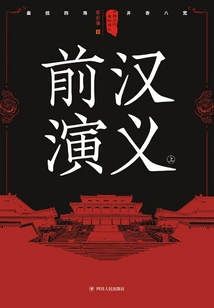
中国历代通俗演义:前汉演义(上)
Cai Dongfan
This set of 21 volumes covers popular romances in 11 historical stages: the Early Han Dynasty, the Later Han Dynasty, the Two Jin Dynasties, Northern and Southern History, the Five Dynasties, Tang, Song, Yuan, Ming, Qing, and the Republic of China. Starting from the first emperor of Qin to the Republic of China, totaling 2166 years, the emperor has written more than six million words. The system is complete, the content is rich, and the priorities are clear. According to the official history, all words have their own origins, and miscellaneous histories are not false accusations. The language is elegant and clean, self-note and self-evaluation, and both rational and interesting. Because he is known as "a historian of a generation, a magic pen for thousands of years", Xun is a model of popular history and a must-read for beginners of history. This book is the Western Han Dynasty part.
This set of 21 volumes covers popular romances in 11 historical stages: the Early Han Dynasty, the Later Han Dynasty, the Two Jin Dynasties, Northern and Southern History, the Five Dynasties, Tang, Song, Yuan, Ming, Qing, and the Republic of China. Starting from the first emperor of Qin to the Republic of China, totaling 2166 years, the emperor has written more than six million words. The system is complete, the content is rich, and the priorities are clear. According to the official history, all words have their own origins, and miscellaneous histories are not false accusations. The language is elegant and clean, self-note and self-evaluation, and both rational and interesting. Because he is known as "a historian of a generation, a magic pen for thousands of years", Xun is a model of popular history and a must-read for beginners of history. This book is the Western Han Dynasty part.
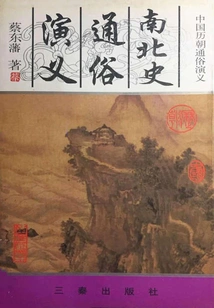
南北史通俗演义
Cai Dongfan
The Southern and Northern Dynasties were a period of division in Chinese history, starting from AD 420 when Liu Yu usurped the Eastern Jin Dynasty to establish the Southern Dynasties and Song Dynasty, and ending in AD 589 when the Sui Dynasty destroyed Chen Dynasty in the Southern Dynasties. This period inherited the Eastern Jin Dynasty, the Five Hu and Sixteen Kingdoms, and the Sui Dynasty at the bottom. Although the northern and southern powers had their own dynasties, they maintained a long-term confrontation, so they were called the Southern and Northern Dynasties. The "Popular Romance of the Southern and Northern Dynasties" written by Cai Dongfan introduces the wars, rise and fall between the countries during the Southern and Northern Dynasties when they were surviving and dying.
The Southern and Northern Dynasties were a period of division in Chinese history, starting from AD 420 when Liu Yu usurped the Eastern Jin Dynasty to establish the Southern Dynasties and Song Dynasty, and ending in AD 589 when the Sui Dynasty destroyed Chen Dynasty in the Southern Dynasties. This period inherited the Eastern Jin Dynasty, the Five Hu and Sixteen Kingdoms, and the Sui Dynasty at the bottom. Although the northern and southern powers had their own dynasties, they maintained a long-term confrontation, so they were called the Southern and Northern Dynasties. The "Popular Romance of the Southern and Northern Dynasties" written by Cai Dongfan introduces the wars, rise and fall between the countries during the Southern and Northern Dynasties when they were surviving and dying.
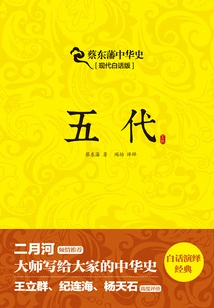
Five Generations
History五代
Cai Dongfan
The "History of China by Cai Dongfan" series is the vernacular version of Cai Dongfan's historical romances. The book contains more than a thousand chapters, covering several spring and autumn periods, starting from Qin Shihuang to 1920. It records a total of 2166 years of history, with a total of 11 parts, 1040 chapters, and about 6.05 Million words. Its content spans a long time, has a large number of characters, and is huge in length, making it the best of all historical novels. He is known as "a historian of a generation and a magic pen for thousands of years".
The "History of China by Cai Dongfan" series is the vernacular version of Cai Dongfan's historical romances. The book contains more than a thousand chapters, covering several spring and autumn periods, starting from Qin Shihuang to 1920. It records a total of 2166 years of history, with a total of 11 parts, 1040 chapters, and about 6.05 Million words. Its content spans a long time, has a large number of characters, and is huge in length, making it the best of all historical novels. He is known as "a historian of a generation and a magic pen for thousands of years".
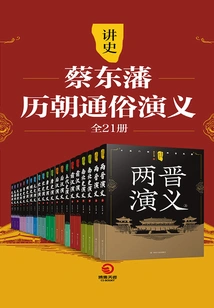
讲史:蔡东藩历朝通俗演义(全21册)
Cai Dongfan
This set of 21 volumes covers popular romances in 11 historical stages: the Early Han Dynasty, the Later Han Dynasty, the Two Jin Dynasties, Northern and Southern History, the Five Dynasties, Tang, Song, Yuan, Ming, Qing, and the Republic of China. Starting from the first emperor of Qin to the Republic of China, totaling 2166 years, the emperor has written more than six million words. The system is complete, the content is rich, and the priorities are clear. According to the official history, all words have their own origins, and miscellaneous histories are not false accusations. The language is elegant and clean, self-note and self-evaluation, and both rational and interesting. Because he is known as "a historian of a generation, a magic pen for thousands of years", Xun is a model of popular history and a must-read for beginners of history.
This set of 21 volumes covers popular romances in 11 historical stages: the Early Han Dynasty, the Later Han Dynasty, the Two Jin Dynasties, Northern and Southern History, the Five Dynasties, Tang, Song, Yuan, Ming, Qing, and the Republic of China. Starting from the first emperor of Qin to the Republic of China, totaling 2166 years, the emperor has written more than six million words. The system is complete, the content is rich, and the priorities are clear. According to the official history, all words have their own origins, and miscellaneous histories are not false accusations. The language is elegant and clean, self-note and self-evaluation, and both rational and interesting. Because he is known as "a historian of a generation, a magic pen for thousands of years", Xun is a model of popular history and a must-read for beginners of history.
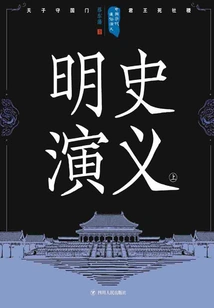
中国历代通俗演义:明史演义(上)
Cai Dongfan
This set of 21 volumes covers popular romances in 11 historical stages: the Early Han Dynasty, the Later Han Dynasty, the Two Jin Dynasties, Northern and Southern History, the Five Dynasties, Tang, Song, Yuan, Ming, Qing, and the Republic of China. Starting from the first emperor of Qin to the Republic of China, totaling 2166 years, the emperor has written more than six million words. The system is complete, the content is rich, and the priorities are clear. According to the official history, all words have their own origins, and miscellaneous histories are not false accusations. The language is elegant and clean, self-note and self-evaluation, and both rational and interesting. Because he is known as "a historian of a generation, a magic pen for thousands of years", Xun is a model of popular history and a must-read for beginners of history. This book is the Ming Dynasty part.
This set of 21 volumes covers popular romances in 11 historical stages: the Early Han Dynasty, the Later Han Dynasty, the Two Jin Dynasties, Northern and Southern History, the Five Dynasties, Tang, Song, Yuan, Ming, Qing, and the Republic of China. Starting from the first emperor of Qin to the Republic of China, totaling 2166 years, the emperor has written more than six million words. The system is complete, the content is rich, and the priorities are clear. According to the official history, all words have their own origins, and miscellaneous histories are not false accusations. The language is elegant and clean, self-note and self-evaluation, and both rational and interesting. Because he is known as "a historian of a generation, a magic pen for thousands of years", Xun is a model of popular history and a must-read for beginners of history. This book is the Ming Dynasty part.
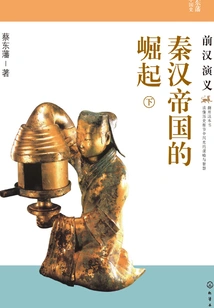
秦汉帝国的崛起:前汉演义(下)
Cai Dongfan
This book is a popular historical romance of the Qin and pre-Han Dynasty, "Cai Dongfan Talks about Chinese History", with a total of 100 chapters in two volumes. From the unification of China by Qin Shihuang, the conflict between Chu and Han, to the establishment of the Western Han Dynasty, the rule of Wenjing, to the chaos of the Seven Kingdoms, the prosperity of Han Dynasty, and finally the dictatorship of foreign relatives and the usurpation of the Han Dynasty by Wang Mang, it brilliantly interprets the rise and fall of the Qin and Han Dynasty in the past 270 years, and reproduces the historical picture of divisions, mergers, and chaos during this period. The author draws extensively from official history, occasionally from officials and wild officials, and his narrative is plain, smooth, and methodical; he makes self-evaluations and annotations, and his language is humorous and both reasonable and reasonable. Reading through this book, it is like a historical picture of the Qin and Han dynasties slowly unfolding in front of you. Sometimes it is a fierce battle, sometimes it is gentle and affectionate, sometimes it is a dispute between countries, sometimes it is a game of loyalty and traitor... It makes people dizzy and full of emotions.
This book is a popular historical romance of the Qin and pre-Han Dynasty, "Cai Dongfan Talks about Chinese History", with a total of 100 chapters in two volumes. From the unification of China by Qin Shihuang, the conflict between Chu and Han, to the establishment of the Western Han Dynasty, the rule of Wenjing, to the chaos of the Seven Kingdoms, the prosperity of Han Dynasty, and finally the dictatorship of foreign relatives and the usurpation of the Han Dynasty by Wang Mang, it brilliantly interprets the rise and fall of the Qin and Han Dynasty in the past 270 years, and reproduces the historical picture of divisions, mergers, and chaos during this period. The author draws extensively from official history, occasionally from officials and wild officials, and his narrative is plain, smooth, and methodical; he makes self-evaluations and annotations, and his language is humorous and both reasonable and reasonable. Reading through this book, it is like a historical picture of the Qin and Han dynasties slowly unfolding in front of you. Sometimes it is a fierce battle, sometimes it is gentle and affectionate, sometimes it is a dispute between countries, sometimes it is a game of loyalty and traitor... It makes people dizzy and full of emotions.
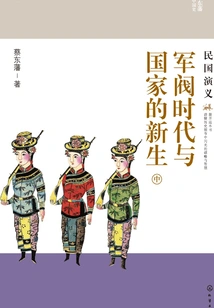
The Age of Warlords and the Rebirth of the Country: Romance of the Republic of China (part 2)
General Fiction军阀时代与国家的新生:民国演义(中)
Cai Dongfan
This book is a popular romance of the Republic of China, "Cai Dongfan Talks about the History of China", with a total of 160 chapters in the first, middle and second volumes. From the Revolution of 1911 and Yuan's proclaiming the emperor, to Cai E's rebellion against Yuan and Zhang Xun's restoration, to the May Fourth Movement and Sun Yat-sen's reorganization of the Kuomintang, it wonderfully interprets the historical events of more than ten years from the establishment of the Republic of China to 1924, when Sun Yat-sen pledged to fight for the Northern Expedition. The author draws extensively from official history, occasionally from officials and wild officials, and his narrative is plain, smooth, and methodical; he makes self-evaluations and annotations, and his language is humorous and both reasonable and reasonable. The last forty chapters were continued by Xu Genfu, which also continued the characteristics of Cai Dongfan's writings. Reading through this book, it is like a historical picture of the early years of the Republic of China slowly unfolding in front of you. Sometimes it is a fierce battle, sometimes it is gentle and affectionate, sometimes it is a dispute between warlords, sometimes it is a game of loyalty and traitor... It makes people dizzy and full of emotions.
This book is a popular romance of the Republic of China, "Cai Dongfan Talks about the History of China", with a total of 160 chapters in the first, middle and second volumes. From the Revolution of 1911 and Yuan's proclaiming the emperor, to Cai E's rebellion against Yuan and Zhang Xun's restoration, to the May Fourth Movement and Sun Yat-sen's reorganization of the Kuomintang, it wonderfully interprets the historical events of more than ten years from the establishment of the Republic of China to 1924, when Sun Yat-sen pledged to fight for the Northern Expedition. The author draws extensively from official history, occasionally from officials and wild officials, and his narrative is plain, smooth, and methodical; he makes self-evaluations and annotations, and his language is humorous and both reasonable and reasonable. The last forty chapters were continued by Xu Genfu, which also continued the characteristics of Cai Dongfan's writings. Reading through this book, it is like a historical picture of the early years of the Republic of China slowly unfolding in front of you. Sometimes it is a fierce battle, sometimes it is gentle and affectionate, sometimes it is a dispute between warlords, sometimes it is a game of loyalty and traitor... It makes people dizzy and full of emotions.
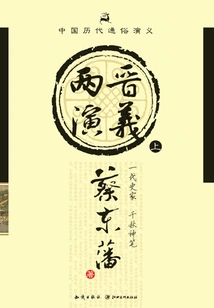
中国历代通俗演义:两晋演义(上)
Cai Dongfan
"The Romance of the Two Jin Dynasties" begins with Sima Yan's dynasty in the Wei Dynasty and ends with Liu Yu's dynasty in the Jin Dynasty, with a total of one hundred chapters. It truly reproduces the split situation of the Five Hus and Sixteen Kingdoms during the decline of the Han Dynasty in the Central Plains and the exchanges and integration among the ethnic minorities. This book tells the history from "the first time to worship Sima Kaiji in the southern suburbs and set up the East Palace to avoid disasters" to "the fiftieth time to select generals in Liangzhou to defeat the enemy and to build palaces and fishermen, Shi Shi's prostitution". The internal affairs of the Western Jin Dynasty fell into disrepair, chaos invaded, and eventually fell. If the husband's internal affairs are in disrepair, internal strife will inevitably arise. If internal strife arises, foreign aggression will take advantage of it. Insects grow on decaying trees, and ants infiltrate into walls. It seems that there are always external dangers, but after all, they are like snipers and clams, and only then can there be fishermen...
"The Romance of the Two Jin Dynasties" begins with Sima Yan's dynasty in the Wei Dynasty and ends with Liu Yu's dynasty in the Jin Dynasty, with a total of one hundred chapters. It truly reproduces the split situation of the Five Hus and Sixteen Kingdoms during the decline of the Han Dynasty in the Central Plains and the exchanges and integration among the ethnic minorities. This book tells the history from "the first time to worship Sima Kaiji in the southern suburbs and set up the East Palace to avoid disasters" to "the fiftieth time to select generals in Liangzhou to defeat the enemy and to build palaces and fishermen, Shi Shi's prostitution". The internal affairs of the Western Jin Dynasty fell into disrepair, chaos invaded, and eventually fell. If the husband's internal affairs are in disrepair, internal strife will inevitably arise. If internal strife arises, foreign aggression will take advantage of it. Insects grow on decaying trees, and ants infiltrate into walls. It seems that there are always external dangers, but after all, they are like snipers and clams, and only then can there be fishermen...
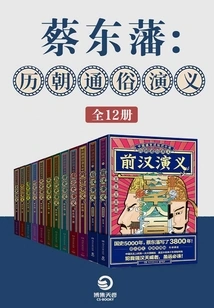
蔡东藩:历朝通俗演义(全12册)
Cai Dongfan
The series of Chinese general history knowledge novels "Popular Romance of the Past Dynasties". The author's narration is plain, smooth, methodical, the language is interesting, and it is both reasonable and reasonable. Read this book and learn about the history of China from the conflicts between nations, the tenderness and the game between good and evil! The book comes with a long version of the "Reading Mind Map" reviewed by historian experts. It aims to present the historical change process in a panoramic manner through big data. It is based on the creative concept of "interpreting the genetic code of the Chinese nation and revealing the essence and true meaning of Chinese people's wisdom". It is of great help to learning history and increasing the literacy of classic traditional culture.
The series of Chinese general history knowledge novels "Popular Romance of the Past Dynasties". The author's narration is plain, smooth, methodical, the language is interesting, and it is both reasonable and reasonable. Read this book and learn about the history of China from the conflicts between nations, the tenderness and the game between good and evil! The book comes with a long version of the "Reading Mind Map" reviewed by historian experts. It aims to present the historical change process in a panoramic manner through big data. It is based on the creative concept of "interpreting the genetic code of the Chinese nation and revealing the essence and true meaning of Chinese people's wisdom". It is of great help to learning history and increasing the literacy of classic traditional culture.
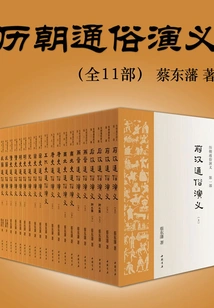
Popular Romance of the Past Dynasties (11 in Total)
General Fiction历朝通俗演义(全11部)
Cai Dongfan
With more than 2,000 years of history from the Qin Dynasty to the Republic of China, Cai Dongfan used official history as the classic and anecdotes as the weft, and used the language of "The Romance of the Three Kingdoms", which is not very profound in writing and not very vulgar in language, to write this most complete set of historical novels in China. From the creation of "Popular Romance of Qing History" in 1915 to the publication of "Popular Romance of Later Han Dynasty" in 1926, the entire set of "Popular Romance of Historical Dynasties" took ten years to complete. In addition to being very story-telling and interesting, this set of novels also attaches great importance to the authenticity of historical materials. Not only can it be used as a general leisure reading, but it can also be used as a reference book for history lovers.
With more than 2,000 years of history from the Qin Dynasty to the Republic of China, Cai Dongfan used official history as the classic and anecdotes as the weft, and used the language of "The Romance of the Three Kingdoms", which is not very profound in writing and not very vulgar in language, to write this most complete set of historical novels in China. From the creation of "Popular Romance of Qing History" in 1915 to the publication of "Popular Romance of Later Han Dynasty" in 1926, the entire set of "Popular Romance of Historical Dynasties" took ten years to complete. In addition to being very story-telling and interesting, this set of novels also attaches great importance to the authenticity of historical materials. Not only can it be used as a general leisure reading, but it can also be used as a reference book for history lovers.
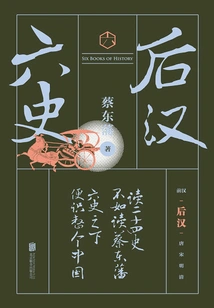
六史:后汉演义
Cai Dongfan
"Six Histories" records the panoramic views and secret details of the six most representative turning dynasties in Chinese history, from their rise to their decline. The system is complete, the content is rich, and the priorities are clear. It combines the majestic spirit of history with the interest of grass and snakes. It respects historical facts and has sophisticated diction. It has many but lifelike characters. In the midst of laughter and curses, it writes the breadth and splendor of history. It is recognized as a masterpiece of epic history.
"Six Histories" records the panoramic views and secret details of the six most representative turning dynasties in Chinese history, from their rise to their decline. The system is complete, the content is rich, and the priorities are clear. It combines the majestic spirit of history with the interest of grass and snakes. It respects historical facts and has sophisticated diction. It has many but lifelike characters. In the midst of laughter and curses, it writes the breadth and splendor of history. It is recognized as a masterpiece of epic history.
中国历代通俗演义:前汉演义
Cai Dongfan
"The Romance of the Former Han Dynasty" compiled by Cai Dongfan is a masterpiece of romance with official history as its backbone and anecdotes as its weft, with a special style and self-commented annotations. The writing style of the book is friendly and natural, and easy to understand.
"The Romance of the Former Han Dynasty" compiled by Cai Dongfan is a masterpiece of romance with official history as its backbone and anecdotes as its weft, with a special style and self-commented annotations. The writing style of the book is friendly and natural, and easy to understand.
中国历代通俗演义:元史演义
Cai Dongfan
"The Romance of the Yuan Dynasty" compiled by Cai Dongfan is one of the "Popular Romance of Chinese Dynasties". With a chapter-by-chapter structure, popular articles, and witty comments, this book truly reproduces the magnificent historical evolution of Chinese civilization and narrates the rise and fall of the Yuan Dynasty. Since Tiemujin (Genghis Khan) unified the Mongolian tribes, Kublai Khan named the country Yuan, until Zhu Yuanzhang established the Ming Dynasty. The writing is smooth and the story is vivid.
"The Romance of the Yuan Dynasty" compiled by Cai Dongfan is one of the "Popular Romance of Chinese Dynasties". With a chapter-by-chapter structure, popular articles, and witty comments, this book truly reproduces the magnificent historical evolution of Chinese civilization and narrates the rise and fall of the Yuan Dynasty. Since Tiemujin (Genghis Khan) unified the Mongolian tribes, Kublai Khan named the country Yuan, until Zhu Yuanzhang established the Ming Dynasty. The writing is smooth and the story is vivid.
南北史演义
Cai Dongfan
After the Han and Jin Dynasties, foreigners gradually came to China and lived in the interior. Subsequently, the Five Hus and Sixteen Kingdoms rose and fell one after another. Later, the weak preyed on the strong, swallowed each other up, moved around, and combined the sixteen kingdoms into one big country, called the Northern Wei Dynasty. Later, internal strife broke out again in the Northern Wei Dynasty. The east was divided and the west was divided, and there was no time to take care of Jiangnan, so Jiangnan was still preserved. When the Eastern Wei Dynasty was changed to the Northern Qi Dynasty, the Western Wei Dynasty was changed to the Northern Zhou Dynasty, and the Western Territory was divided into three parts. The Zhou Dynasty was the strongest, Qi was the second, and Jiangnan was the weakest. The tripartite war lasted for several years. Qi was merged with the Zhou Dynasty, but only two-tenths of Jiangnan remained, almost all belonging to the Northern Zhou Dynasty. A great prime minister, Yang Jian, was chosen. He usurped the Zhou Dynasty and re-annexed the south of the Yangtze River. He accepted Zhou Chan and destroyed the Chen family, and actually unified the Central Plains and merged the north and the south. Li Yanshou of the Tang Dynasty wrote a history of the north and south respectively. Song, Qi, Liang, and Chen belong to the south, and Wei, Qi, Zhou, and Sui belong to the north. The meaning is very strict. Not only is the Yang family's business, it evolved from the cicada of the Northern Zhou Dynasty, it can belong to the history of the north. Even the friendship between the Yang family and his son does not look like a real person who governs the world. The boy performed the story according to the example, imitated the genre of the story, and compiled a "Romance of the History of the North and the South".
After the Han and Jin Dynasties, foreigners gradually came to China and lived in the interior. Subsequently, the Five Hus and Sixteen Kingdoms rose and fell one after another. Later, the weak preyed on the strong, swallowed each other up, moved around, and combined the sixteen kingdoms into one big country, called the Northern Wei Dynasty. Later, internal strife broke out again in the Northern Wei Dynasty. The east was divided and the west was divided, and there was no time to take care of Jiangnan, so Jiangnan was still preserved. When the Eastern Wei Dynasty was changed to the Northern Qi Dynasty, the Western Wei Dynasty was changed to the Northern Zhou Dynasty, and the Western Territory was divided into three parts. The Zhou Dynasty was the strongest, Qi was the second, and Jiangnan was the weakest. The tripartite war lasted for several years. Qi was merged with the Zhou Dynasty, but only two-tenths of Jiangnan remained, almost all belonging to the Northern Zhou Dynasty. A great prime minister, Yang Jian, was chosen. He usurped the Zhou Dynasty and re-annexed the south of the Yangtze River. He accepted Zhou Chan and destroyed the Chen family, and actually unified the Central Plains and merged the north and the south. Li Yanshou of the Tang Dynasty wrote a history of the north and south respectively. Song, Qi, Liang, and Chen belong to the south, and Wei, Qi, Zhou, and Sui belong to the north. The meaning is very strict. Not only is the Yang family's business, it evolved from the cicada of the Northern Zhou Dynasty, it can belong to the history of the north. Even the friendship between the Yang family and his son does not look like a real person who governs the world. The boy performed the story according to the example, imitated the genre of the story, and compiled a "Romance of the History of the North and the South".
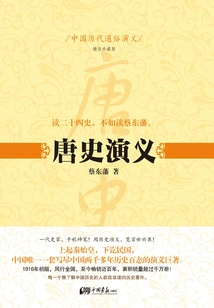
中国历代通俗演义:唐史演义
Cai Dongfan
This is one of the series of books "Popular Romance of Chinese Dynasties" written by Cai Dongfan. "History of the Tang Dynasty" compiled by Cai Dongfan narrates the historical facts of the Tang Dynasty during its 290 years from prosperity to decline, and experienced disasters such as women's disasters, castration disasters, and feudal lordship disasters. It has plain views, rich content, methodical exposition, elegant language, self-evaluation and self-annotation, and is both rational and interesting. It is regarded as a classic of popular history. The book is careful in selecting materials, mainly focusing on authentic history and side by side with unofficial history, allowing people to get started with the history of the nation.
This is one of the series of books "Popular Romance of Chinese Dynasties" written by Cai Dongfan. "History of the Tang Dynasty" compiled by Cai Dongfan narrates the historical facts of the Tang Dynasty during its 290 years from prosperity to decline, and experienced disasters such as women's disasters, castration disasters, and feudal lordship disasters. It has plain views, rich content, methodical exposition, elegant language, self-evaluation and self-annotation, and is both rational and interesting. It is regarded as a classic of popular history. The book is careful in selecting materials, mainly focusing on authentic history and side by side with unofficial history, allowing people to get started with the history of the nation.
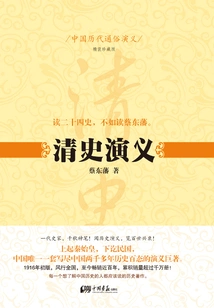
中国历代通俗演义:清史演义
Cai Dongfan
"The Romance of the Qing Dynasty": As far back as the Zhao and Song Dynasties, after the Jin State was destroyed, the remaining Jurchen survivors fled to the northeast and hid on the seashore. Taking the meaning of "residents under Changbai Mountain", they named themselves "Aixinjueluo Clan" and established the Manchukuo Kingdom, so the whole family was renamed "Manchu". After hundreds of years and several generations, a man of outstanding wisdom and courage appeared in the clan, and another 268 years of Qing Dynasty history was rehearsed. The Qing Dynasty unified the Central Plains, and the general path is eternal and endless, and it can rest with the sky. Unexpectedly, the foreign ships had strong guns and powerful guns, and they repeatedly invaded the country. They cut off territory today and paid compensation tomorrow. Tired to the Qing Dynasty, the monarchs and ministers were distracted by one thing and neglected the other, and the country's power gradually declined. Unexpectedly, the foreign troubles were not over, but the internal troubles arose again. Wuchang launched an attack, and the provinces responded, and the Qing Dynasty was overthrown...
"The Romance of the Qing Dynasty": As far back as the Zhao and Song Dynasties, after the Jin State was destroyed, the remaining Jurchen survivors fled to the northeast and hid on the seashore. Taking the meaning of "residents under Changbai Mountain", they named themselves "Aixinjueluo Clan" and established the Manchukuo Kingdom, so the whole family was renamed "Manchu". After hundreds of years and several generations, a man of outstanding wisdom and courage appeared in the clan, and another 268 years of Qing Dynasty history was rehearsed. The Qing Dynasty unified the Central Plains, and the general path is eternal and endless, and it can rest with the sky. Unexpectedly, the foreign ships had strong guns and powerful guns, and they repeatedly invaded the country. They cut off territory today and paid compensation tomorrow. Tired to the Qing Dynasty, the monarchs and ministers were distracted by one thing and neglected the other, and the country's power gradually declined. Unexpectedly, the foreign troubles were not over, but the internal troubles arose again. Wuchang launched an attack, and the provinces responded, and the Qing Dynasty was overthrown...
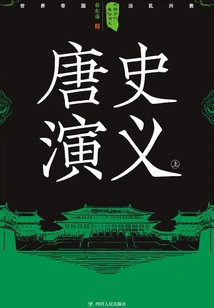
中国历代通俗演义:唐史演义(上)
Cai Dongfan
This set of 21 volumes covers popular romances in 11 historical stages: the Early Han Dynasty, the Later Han Dynasty, the Two Jin Dynasties, Northern and Southern History, the Five Dynasties, Tang, Song, Yuan, Ming, Qing, and the Republic of China. Starting from the first emperor of Qin to the Republic of China, totaling 2166 years, the emperor has written more than six million words. The system is complete, the content is rich, and the priorities are clear. According to the official history, all words have their own origins, and miscellaneous histories are not false accusations. The language is elegant and clean, self-note and self-evaluation, and both rational and interesting. Because he is known as "a historian of a generation, a magic pen for thousands of years", Xun is a model of popular history and a must-read for beginners of history. This book narrates the historical facts of the 290 years of the Tang Dynasty, from prosperity to decline, and experienced the disasters of women, eunuchs, and feudal lords. It has plain views, rich content, methodical exposition, elegant language, self-evaluation and self-annotation, and is both rational and interesting. It is regarded as a classic of popular history. The book is careful in selecting materials, mainly focusing on authentic history and side by side with unofficial history, allowing people to get started with the history of the nation.
This set of 21 volumes covers popular romances in 11 historical stages: the Early Han Dynasty, the Later Han Dynasty, the Two Jin Dynasties, Northern and Southern History, the Five Dynasties, Tang, Song, Yuan, Ming, Qing, and the Republic of China. Starting from the first emperor of Qin to the Republic of China, totaling 2166 years, the emperor has written more than six million words. The system is complete, the content is rich, and the priorities are clear. According to the official history, all words have their own origins, and miscellaneous histories are not false accusations. The language is elegant and clean, self-note and self-evaluation, and both rational and interesting. Because he is known as "a historian of a generation, a magic pen for thousands of years", Xun is a model of popular history and a must-read for beginners of history. This book narrates the historical facts of the 290 years of the Tang Dynasty, from prosperity to decline, and experienced the disasters of women, eunuchs, and feudal lords. It has plain views, rich content, methodical exposition, elegant language, self-evaluation and self-annotation, and is both rational and interesting. It is regarded as a classic of popular history. The book is careful in selecting materials, mainly focusing on authentic history and side by side with unofficial history, allowing people to get started with the history of the nation.
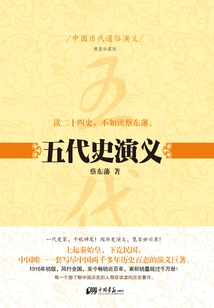
中国历代通俗演义:五代史演义
Cai Dongfan
"History of the Five Dynasties" is a masterpiece of popular history that is popular at home and abroad. The great historian Cai Dongfan's official history is the classic and anecdotes are the weft. The chapter-like structure, popular writing style, and witty comments truly reproduce the magnificent process of the historical evolution of Chinese civilization. It describes the folk customs and people's livelihood under the changes of the Five Dynasties and Ten Kingdoms period, and understands the bloody battles on the battlefield, palace intrigues, and the wisdom of survival in the rise and fall of the ages.
"History of the Five Dynasties" is a masterpiece of popular history that is popular at home and abroad. The great historian Cai Dongfan's official history is the classic and anecdotes are the weft. The chapter-like structure, popular writing style, and witty comments truly reproduce the magnificent process of the historical evolution of Chinese civilization. It describes the folk customs and people's livelihood under the changes of the Five Dynasties and Ten Kingdoms period, and understands the bloody battles on the battlefield, palace intrigues, and the wisdom of survival in the rise and fall of the ages.
六史:唐史演义
Cai Dongfan
"Six Histories" records the panoramic views and secret details of the six most representative turning dynasties in Chinese history, from their rise to their decline. The system is complete, the content is rich, and the priorities are clear. It combines the majestic spirit of history with the interest of grass and snakes. It respects historical facts and has sophisticated diction. It has many but lifelike characters. In the midst of laughter and curses, it writes the breadth and splendor of history. It is recognized as a masterpiece of epic history.
"Six Histories" records the panoramic views and secret details of the six most representative turning dynasties in Chinese history, from their rise to their decline. The system is complete, the content is rich, and the priorities are clear. It combines the majestic spirit of history with the interest of grass and snakes. It respects historical facts and has sophisticated diction. It has many but lifelike characters. In the midst of laughter and curses, it writes the breadth and splendor of history. It is recognized as a masterpiece of epic history.