Library
Browse and search novels
3 novels found
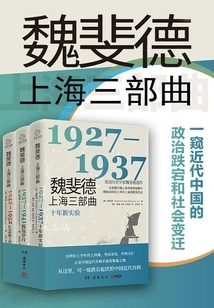
魏斐德上海三部曲(全集)
(u. S.) Wei Feide
This book systematically describes the process by which the Kuomintang government relied on police force to achieve initial rule over Shanghai from 1927 to 1937, and clarifies many historical issues during this decade: such as the relationship between the central system and local forces; the role of secret organizations and criminal groups in corroding party and government agencies; The evolution of Shanghai's political organization under the pressure of invasion and occupation, etc... "Wilfield's Shanghai Trilogy: 1937-1941": This book vividly reproduces the political and social situation of Shanghai as an "isolated island" from the 1937 Songhu Battle to the outbreak of the "Pearl Harbor Incident" at the end of 1941. It involves the anti-Japanese activities of the Kuomintang's "Blue Clothes Society" in Shanghai, the assassinations of pro-Japanese elements by the "military reunification", the bloody revenge of the Japanese puppets, the reign of terror of the Wang puppet regime, the ugly social phenomena in the "bad soil" area in western Shanghai, etc... With a unique perspective and informative materials, the book reproduces the entangled struggles and bloody storms of various forces in Shanghai's "isolated island" period. "Wilfield's Shanghai Trilogy: 1942-1952": This book tells the story of the establishment of secret party branches and other underground activities carried out by the Chinese Communist Party in Shanghai from the Japanese occupation of the Shanghai Concession in 1942 until the entire War of Liberation. As well as a series of transformation campaigns carried out by the people's power on Shanghai's municipal administration, police system and the entire society in the early days of Shanghai's liberation - such as closing the underground black market and cracking down on the opium trade; suppressing counterrevolutionaries, deporting refugees, reforming prostitutes, dancers and drug addicts, etc.
This book systematically describes the process by which the Kuomintang government relied on police force to achieve initial rule over Shanghai from 1927 to 1937, and clarifies many historical issues during this decade: such as the relationship between the central system and local forces; the role of secret organizations and criminal groups in corroding party and government agencies; The evolution of Shanghai's political organization under the pressure of invasion and occupation, etc... "Wilfield's Shanghai Trilogy: 1937-1941": This book vividly reproduces the political and social situation of Shanghai as an "isolated island" from the 1937 Songhu Battle to the outbreak of the "Pearl Harbor Incident" at the end of 1941. It involves the anti-Japanese activities of the Kuomintang's "Blue Clothes Society" in Shanghai, the assassinations of pro-Japanese elements by the "military reunification", the bloody revenge of the Japanese puppets, the reign of terror of the Wang puppet regime, the ugly social phenomena in the "bad soil" area in western Shanghai, etc... With a unique perspective and informative materials, the book reproduces the entangled struggles and bloody storms of various forces in Shanghai's "isolated island" period. "Wilfield's Shanghai Trilogy: 1942-1952": This book tells the story of the establishment of secret party branches and other underground activities carried out by the Chinese Communist Party in Shanghai from the Japanese occupation of the Shanghai Concession in 1942 until the entire War of Liberation. As well as a series of transformation campaigns carried out by the people's power on Shanghai's municipal administration, police system and the entire society in the early days of Shanghai's liberation - such as closing the underground black market and cracking down on the opium trade; suppressing counterrevolutionaries, deporting refugees, reforming prostitutes, dancers and drug addicts, etc.
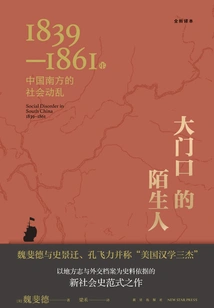
大门口的陌生人:1839-1861年中国南方的社会动乱
(u. S.) Wei Feide
This book is Professor Wei Feide's doctoral thesis, an academic work that studies China's transformation into modern times in the late Qing Dynasty. The author begins "Strangers at the Gate" with the famous "Sanyuanli" incident at home and abroad, and then examines and studies the anti-British movement centered in Guangzhou during and after the Opium War. This book reconstructs and reproduces the regiment training movement, the functions of the gentry class, the court's response, the British forces' forced entry into Guangzhou, and their trade with China, etc., And provides an in-depth analysis of this series of complex events and phenomena. While restoring historical facts, the author reveals the causes of various phenomena and the causal relationships between them. This short work contains extremely rich and important historical themes.
This book is Professor Wei Feide's doctoral thesis, an academic work that studies China's transformation into modern times in the late Qing Dynasty. The author begins "Strangers at the Gate" with the famous "Sanyuanli" incident at home and abroad, and then examines and studies the anti-British movement centered in Guangzhou during and after the Opium War. This book reconstructs and reproduces the regiment training movement, the functions of the gentry class, the court's response, the British forces' forced entry into Guangzhou, and their trade with China, etc., And provides an in-depth analysis of this series of complex events and phenomena. While restoring historical facts, the author reveals the causes of various phenomena and the causal relationships between them. This short work contains extremely rich and important historical themes.
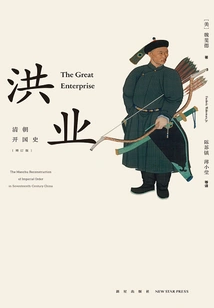
洪业:清朝开国史
(u. S.) Wei Feide
Professor Wei Feide's historical masterpiece "Hong Ye: The Founding of the Qing Dynasty" tells the story of a very dramatic historical stage in the history of Chinese dynasties - the end of the Ming Dynasty in 1644 and the consolidation of the Qing Dynasty in the following 20 years. From the grand background of politics, economy, culture, society, nation, and national defense, the author provides an overall dissection and perspective on the process of how one empire fell into trouble and how another empire reestablished order and became strong. In this book, Wei Feide hopes to present the "Hongye" through the reconstruction of the Chinese imperial order in the early Qing Dynasty to reveal a series of important changes that had occurred in Chinese society before the arrival of Western forces in the Opium War in 1840.
Professor Wei Feide's historical masterpiece "Hong Ye: The Founding of the Qing Dynasty" tells the story of a very dramatic historical stage in the history of Chinese dynasties - the end of the Ming Dynasty in 1644 and the consolidation of the Qing Dynasty in the following 20 years. From the grand background of politics, economy, culture, society, nation, and national defense, the author provides an overall dissection and perspective on the process of how one empire fell into trouble and how another empire reestablished order and became strong. In this book, Wei Feide hopes to present the "Hongye" through the reconstruction of the Chinese imperial order in the early Qing Dynasty to reveal a series of important changes that had occurred in Chinese society before the arrival of Western forces in the Opium War in 1840.