Library
Browse and search books
3 novels found
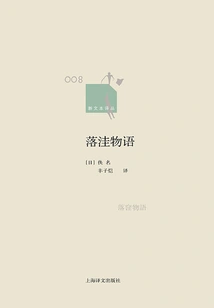
The Story of Luowa (new Text Translation Series)
General Fiction落洼物语(新文本译丛)
(japan) Anonymous
The writing date of "The Story of Luoka" is generally believed to be around the end of the tenth century. The author is unknown and is presumed to be a man of relatively low status. The story describes that the daughter of Minamoto Tadayori Nagoya was neglected by her stepmother and was forced to live in a low-lying house, known as "Lokaku". Luokawa met a major general, and they lived a happy life after marriage. The stepmother held a grudge and severely attacked the servant who had pulled the strings. After Tadayori Minamoto passed away, her stepmother completely lost power. The major general forgave her when he saw that his stepmother had repented. "The Story of Rakubo" completely adopts the creative method of classical realism and faithfully reflects a corner of aristocratic life. On the one hand, it promotes the idea of karma and retribution that good will be rewarded with good and evil will be rewarded with evil. On the other hand, it also proposes a new moral code and values for aristocratic society, highlighting the valuable spirit of loyalty to love.
The writing date of "The Story of Luoka" is generally believed to be around the end of the tenth century. The author is unknown and is presumed to be a man of relatively low status. The story describes that the daughter of Minamoto Tadayori Nagoya was neglected by her stepmother and was forced to live in a low-lying house, known as "Lokaku". Luokawa met a major general, and they lived a happy life after marriage. The stepmother held a grudge and severely attacked the servant who had pulled the strings. After Tadayori Minamoto passed away, her stepmother completely lost power. The major general forgave her when he saw that his stepmother had repented. "The Story of Rakubo" completely adopts the creative method of classical realism and faithfully reflects a corner of aristocratic life. On the one hand, it promotes the idea of karma and retribution that good will be rewarded with good and evil will be rewarded with evil. On the other hand, it also proposes a new moral code and values for aristocratic society, highlighting the valuable spirit of loyalty to love.
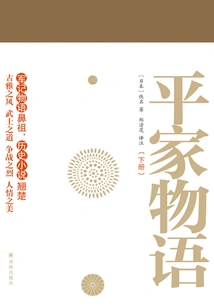
The Tale of the Heike (volume 2)
General Fiction平家物语(下册)
(japan) Anonymous
The origin of Junki Monogatari, the leader in historical novels, the quaint style, the way of the samurai, the ferocity of battle, and the beauty of human love. The full text of 600,000 words, Zhou Zuoren's unfinished work, finally came to the full picture after forty years of sharpening a sword. Lin Wenyue wrote and highly recommended it. The translation model "The Tale of the Heike" is a war-themed historical novel that has created many widely praised samurai models. In the history of Japanese literature, it is listed as two major story classics along with "The Tale of Genji", one literary and one martial, Chrysanthemum and Sword, which has a profound influence. The book narrates the sad process of the Heian Dynasty, when the Taira family and the Genji family were competing for the throne and enjoying all the glory, but whether the Taiji could survive, and each family was annihilated one after another. Reveals the principle that all actions are impermanent, and those who prosper will inevitably decline; the cause and effect of karma, human relationships, and principles are all contained in it. Under the concise and elegant stylistic layout, the outstanding characters, the extraordinary plot, the elegant behavior of the nobles, the chastity and death of the warriors, and the evocative female anecdotes are all touching. This book was written by Professor Zheng Qingmao, who has been deeply involved in Chinese and Chinese literature for 60 years. Based on the classic "Jue Yiben", it took many years to complete the Chinese translation and add detailed annotations. The translation is accompanied by precious color scrolls, chronology, genealogy, maps, etc. It is indeed a rigorously produced literary masterpiece.
The origin of Junki Monogatari, the leader in historical novels, the quaint style, the way of the samurai, the ferocity of battle, and the beauty of human love. The full text of 600,000 words, Zhou Zuoren's unfinished work, finally came to the full picture after forty years of sharpening a sword. Lin Wenyue wrote and highly recommended it. The translation model "The Tale of the Heike" is a war-themed historical novel that has created many widely praised samurai models. In the history of Japanese literature, it is listed as two major story classics along with "The Tale of Genji", one literary and one martial, Chrysanthemum and Sword, which has a profound influence. The book narrates the sad process of the Heian Dynasty, when the Taira family and the Genji family were competing for the throne and enjoying all the glory, but whether the Taiji could survive, and each family was annihilated one after another. Reveals the principle that all actions are impermanent, and those who prosper will inevitably decline; the cause and effect of karma, human relationships, and principles are all contained in it. Under the concise and elegant stylistic layout, the outstanding characters, the extraordinary plot, the elegant behavior of the nobles, the chastity and death of the warriors, and the evocative female anecdotes are all touching. This book was written by Professor Zheng Qingmao, who has been deeply involved in Chinese and Chinese literature for 60 years. Based on the classic "Jue Yiben", it took many years to complete the Chinese translation and add detailed annotations. The translation is accompanied by precious color scrolls, chronology, genealogy, maps, etc. It is indeed a rigorously produced literary masterpiece.
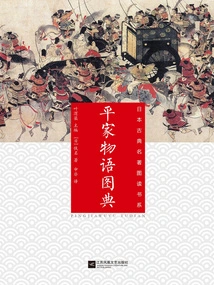
Heike Story Illustrated Dictionary
General Fiction平家物语图典
(japan) Anonymous
"The Tale of the Heike" is a Japanese war-themed historical novel. It takes the historical chronology as the main axis and from the perspective of the Heike family, narrates in detail the entire process of the Genji and Heike families' struggle for power. This book excerpts and translates the wonderful chapters of "The Tale of the Heike" for readers to read and understand initially; it is also accompanied by a large number of exquisite illustrations, so that readers can have a deeper understanding of the plot of the story more intuitively while reading.
"The Tale of the Heike" is a Japanese war-themed historical novel. It takes the historical chronology as the main axis and from the perspective of the Heike family, narrates in detail the entire process of the Genji and Heike families' struggle for power. This book excerpts and translates the wonderful chapters of "The Tale of the Heike" for readers to read and understand initially; it is also accompanied by a large number of exquisite illustrations, so that readers can have a deeper understanding of the plot of the story more intuitively while reading.