Library
Browse and search books
2 novels found
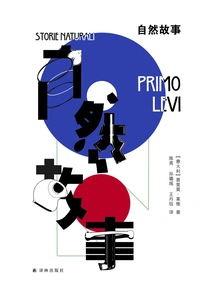
Nature Stories (by Primo Levi)
General Fiction自然故事(普里莫·莱维作品)
(italian) Primo Levi
When "Natural Stories" was first published, Primo Levi used the pen name "Damiano Marabella". He used fifteen interesting stories to involve readers in a future driven by technological frenzy: Dr. Monte Santo, who returned to the small town from the war, invented a memory trigger, and the past will never be buried; The poet bought a poetry machine and stopped writing poems himself; Dr. Loeb discovered the law of human evolution, and it turns out that we are all larvae; having a real replicator, whether it is replicating diamonds or wives, only requires simple consumables... Our world has cracks, reason is sleeping, and monsters are awakening. The technical concepts involved in the book have been repeatedly reproduced in subsequent film and television literary works, including Stanislav Lem's novel "Robot Master" and the film "The Prestige" directed by Nolan.
When "Natural Stories" was first published, Primo Levi used the pen name "Damiano Marabella". He used fifteen interesting stories to involve readers in a future driven by technological frenzy: Dr. Monte Santo, who returned to the small town from the war, invented a memory trigger, and the past will never be buried; The poet bought a poetry machine and stopped writing poems himself; Dr. Loeb discovered the law of human evolution, and it turns out that we are all larvae; having a real replicator, whether it is replicating diamonds or wives, only requires simple consumables... Our world has cracks, reason is sleeping, and monsters are awakening. The technical concepts involved in the book have been repeatedly reproduced in subsequent film and television literary works, including Stanislav Lem's novel "Robot Master" and the film "The Prestige" directed by Nolan.
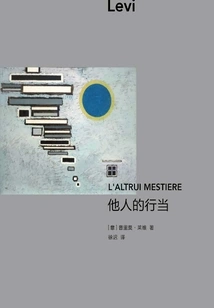
Other People's Trade
Literature他人的行当
(italian) Primo Levi
If "The Drowned and the Saved" is Levi in absolute pain, then "Other People's Trade" is Levi in absolute joy. "Other People's Trades" collects 43 essays written by Primo Levi from 1969 to 1985. In these witty and charming words, Levi not only examines his own profession as a writer and chemist, but also pays attention to the professions of others. In Levi's own words, this is the fruit of his "more than ten years of wandering as a curious amateur... An infringement of other people's professions, a raid on the boundless territories of zoology, astronomy and linguistics". He shuttles between science and humanities, exploring the objects that fascinate him: his house, insects, imaginary animals, children's games, the language of chemists, the obscure texts of French writer Rabelais, German poets Trakl and Paul Celan, returning to school at the age of 60... This book is erudite and humorous, warm and temperate. It not only shows his unique thinking on human civilization, but also conveys his belief that although our era is full of problems and dangers, it is not boring. The "Levi Works" series also includes "The Drowned and the Rescued", "The Wrench", "This Is Auschwitz: Evidence 1945-1986", "The Uncertain Moment: Selected Poems of Levi", "The Truce" and "If Not Now, When?" "Moments of Reprieve", "Voices of Memory: Interviews with Levi 1961-1987", "I Talking to You: Conversations between Levi and Tessio", etc.
If "The Drowned and the Saved" is Levi in absolute pain, then "Other People's Trade" is Levi in absolute joy. "Other People's Trades" collects 43 essays written by Primo Levi from 1969 to 1985. In these witty and charming words, Levi not only examines his own profession as a writer and chemist, but also pays attention to the professions of others. In Levi's own words, this is the fruit of his "more than ten years of wandering as a curious amateur... An infringement of other people's professions, a raid on the boundless territories of zoology, astronomy and linguistics". He shuttles between science and humanities, exploring the objects that fascinate him: his house, insects, imaginary animals, children's games, the language of chemists, the obscure texts of French writer Rabelais, German poets Trakl and Paul Celan, returning to school at the age of 60... This book is erudite and humorous, warm and temperate. It not only shows his unique thinking on human civilization, but also conveys his belief that although our era is full of problems and dangers, it is not boring. The "Levi Works" series also includes "The Drowned and the Rescued", "The Wrench", "This Is Auschwitz: Evidence 1945-1986", "The Uncertain Moment: Selected Poems of Levi", "The Truce" and "If Not Now, When?" "Moments of Reprieve", "Voices of Memory: Interviews with Levi 1961-1987", "I Talking to You: Conversations between Levi and Tessio", etc.