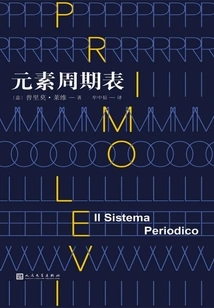
Periodic Table of Elements
by R
About This Novel
"Periodic Table of Elements" is a collection of essays by Italian writer Primo Levi with a strong style. It has autobiographical elements, but also combines fables, imagination, and even history. By explaining the characteristics of twenty-one elements, the author narrates his own growth and life before and after World War II, and conducts a profound and moving inquiry into the hidden relationship between human morality and the material world. The two identities of chemist and Auschwitz survivor coexist so strongly in Levi. For Levi, chemistry was "a political school". The material world of chemistry presented him with many subtle ethical and moral metaphors, helping him face the various displacements he experienced as an Italian Jew during the fascist years. Levi used the inert gas "argon" as a metaphor for the separation between the Jewish community where he grew up and other ethnic groups in the Piedmont region; he used "mercury", an unstable and volatile gas, to refer to the Italian intellectuals who followed Hitler at the time; and the element "zinc", which is "inert and requires impurities to carry out chemical reactions", effectively satirized Hitler's absurd statement that "Jews are an impurity that must be removed". The stories of "cerium", "vanadium" and "gold" vaguely restore the painful memory of the author's experience as a "chemical engineer" in Auschwitz; and Levi's views on life are also fully revealed in the last chapter "Carbon". The author uses a super-historical perspective to restore the transmission and circulation of a carbon atom among all things in the world and the human body. Every reader is forced to face the same thinking as Levi: Since life is the accident and reorganization of matter, then must life be nothingness?
Official Sources
What Readers Think
Rating
Community(0)
Rating
Community(0)
