Library
Browse and search books
6 novels found
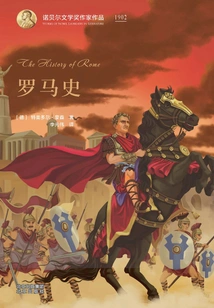
诺贝尔文学奖作家作品:罗马史
(germany) Theodor Monson
The grandeur of "History of Rome" and the author's superb knowledge even made his political enemy Bismarck express his admiration for him in person. This book draws on extensive and rigorous materials, has appropriate complexity and simplicity, and the writing style is clean and gorgeous. It is good at depicting characters, and the narrative is vivid and dramatic, so it has high literary value. This book is an abbreviated version of "History of Rome", retaining the framework of Mommsen's original Roman history. The first volume describes in detail the history of Rome from ancient times to the end of the Republic, and the second volume records the history of the Roman provinces during the imperial period.
The grandeur of "History of Rome" and the author's superb knowledge even made his political enemy Bismarck express his admiration for him in person. This book draws on extensive and rigorous materials, has appropriate complexity and simplicity, and the writing style is clean and gorgeous. It is good at depicting characters, and the narrative is vivid and dramatic, so it has high literary value. This book is an abbreviated version of "History of Rome", retaining the framework of Mommsen's original Roman history. The first volume describes in detail the history of Rome from ancient times to the end of the Republic, and the second volume records the history of the Roman provinces during the imperial period.
History of Rome (volume 2)
History罗马史(第二卷)
(germany) Theodor Monson
The second volume of "History of Rome" mainly tells the history from the abolition of the Roman monarchy to the unification of Italy. The book is divided into nine chapters. The first three chapters mainly cover Roman internal affairs issues and the struggle for political power in the hundreds of years after the abolition of the monarchy. Chapters 4 to 7 mainly describe the wars that Rome experienced in the process of unifying Italy and the history of the Romans' struggle against the aggression of other nations. Chapters 8 to 9 mainly describe some of Rome's legal, religious, economic, cultural, artistic and scientific policies after the unification of Italy. The main content of Monson's volume "History of Rome" is to describe the process of Rome's unification of the entire Italy, so he focused a lot of his writing on Rome's foreign wars. And he also focused on describing Rome being invaded by the Gauls and razing the city to the ground after the occupation. After countless bloody battles, the Romans finally unified the entire Italian peninsula. Rome's rule expanded to the interior of Lower Italy and the entire east coast of Italy, roughly from the Ionian Sea to the Celtic border. Rome's rule further expanded, and the competition with surrounding areas became more intense.
The second volume of "History of Rome" mainly tells the history from the abolition of the Roman monarchy to the unification of Italy. The book is divided into nine chapters. The first three chapters mainly cover Roman internal affairs issues and the struggle for political power in the hundreds of years after the abolition of the monarchy. Chapters 4 to 7 mainly describe the wars that Rome experienced in the process of unifying Italy and the history of the Romans' struggle against the aggression of other nations. Chapters 8 to 9 mainly describe some of Rome's legal, religious, economic, cultural, artistic and scientific policies after the unification of Italy. The main content of Monson's volume "History of Rome" is to describe the process of Rome's unification of the entire Italy, so he focused a lot of his writing on Rome's foreign wars. And he also focused on describing Rome being invaded by the Gauls and razing the city to the ground after the occupation. After countless bloody battles, the Romans finally unified the entire Italian peninsula. Rome's rule expanded to the interior of Lower Italy and the entire east coast of Italy, roughly from the Ionian Sea to the Celtic border. Rome's rule further expanded, and the competition with surrounding areas became more intense.
History of Rome (volume 1)
History罗马史(第一卷)
(germany) Theodor Monson
The first volume of "History of Rome" covers the initial stage of the formation of Rome to the end of the royal period. The work does not tell the historical process of Rome, because the content of this volume only involves the prehistory and early formation of the Italian Peninsula, without any written materials to support it. The first volume of "History of Rome" starts from the geographical situation of the Italian peninsula, and talks about the earliest primitive immigrants and the composition and relationships of the ethnic groups, the family form of the immigrant society, the earliest community forms and organizational relationships, their development and their relationships and exchanges with neighboring ethnic groups such as the ancient Greeks, Phoenicians, and Aeolians in Asia Minor, and the early urban construction of Rome and their production, life, trade, sacrifice, architecture, art, etc. The author of this book is proficient in linguistic research. Without textual data for verification, he makes use of the preserved roots of the original language and uses ancient Greek, ancient Latin, ancient Sanskrit, ancient Hebrew and many other ancient language words and the evolution of their roots to explain the spread and mutual influence of various famous objects. The use of a large number of annotations demonstrates the author's rich knowledge accumulation. Therefore, the "History of Rome" is a rare informative encyclopedia for researchers, providing readers with a large amount of research materials. As a German, Mommsen laid a solid scientific foundation for the work with his German rational thinking and rigorous logic. It is a classic historical research work.
The first volume of "History of Rome" covers the initial stage of the formation of Rome to the end of the royal period. The work does not tell the historical process of Rome, because the content of this volume only involves the prehistory and early formation of the Italian Peninsula, without any written materials to support it. The first volume of "History of Rome" starts from the geographical situation of the Italian peninsula, and talks about the earliest primitive immigrants and the composition and relationships of the ethnic groups, the family form of the immigrant society, the earliest community forms and organizational relationships, their development and their relationships and exchanges with neighboring ethnic groups such as the ancient Greeks, Phoenicians, and Aeolians in Asia Minor, and the early urban construction of Rome and their production, life, trade, sacrifice, architecture, art, etc. The author of this book is proficient in linguistic research. Without textual data for verification, he makes use of the preserved roots of the original language and uses ancient Greek, ancient Latin, ancient Sanskrit, ancient Hebrew and many other ancient language words and the evolution of their roots to explain the spread and mutual influence of various famous objects. The use of a large number of annotations demonstrates the author's rich knowledge accumulation. Therefore, the "History of Rome" is a rare informative encyclopedia for researchers, providing readers with a large amount of research materials. As a German, Mommsen laid a solid scientific foundation for the work with his German rational thinking and rigorous logic. It is a classic historical research work.
History of Rome (volume 4)
History罗马史(第四卷)
(germany) Theodor Monson
The fourth volume of "History of Rome" is divided into thirteen chapters. It mainly talks about the internal and external troubles of the Roman Republic, which began to decline. The reforms of the two Gracchus and the reforms of Drusus failed to save Rome from decline. Rome, which had experienced the Jugurtha War, the Mithridates War and the League War, did not regain its glory. Instead, warlords such as Marius and Sulla gradually emerged. Warlords stormed the city of Rome and began to rule. In addition, like each previous volume, there are always special chapters on literature, art, and economics at the end of each volume. In addition to political and military history, there is also sufficient social history material. The fourth volume of "History of Rome" cites a large number of data and original documents of Cato and others, as well as relevant works of well-known authors at the time, such as playwrights and orators. This provides very rich materials for researchers engaged in Roman history and provides readers with a large number of reference elements. As a German, Mommsen laid a solid scientific foundation for the work with his German rational thinking and rigorous logic. It can be regarded as a classic historical research work.
The fourth volume of "History of Rome" is divided into thirteen chapters. It mainly talks about the internal and external troubles of the Roman Republic, which began to decline. The reforms of the two Gracchus and the reforms of Drusus failed to save Rome from decline. Rome, which had experienced the Jugurtha War, the Mithridates War and the League War, did not regain its glory. Instead, warlords such as Marius and Sulla gradually emerged. Warlords stormed the city of Rome and began to rule. In addition, like each previous volume, there are always special chapters on literature, art, and economics at the end of each volume. In addition to political and military history, there is also sufficient social history material. The fourth volume of "History of Rome" cites a large number of data and original documents of Cato and others, as well as relevant works of well-known authors at the time, such as playwrights and orators. This provides very rich materials for researchers engaged in Roman history and provides readers with a large number of reference elements. As a German, Mommsen laid a solid scientific foundation for the work with his German rational thinking and rigorous logic. It can be regarded as a classic historical research work.
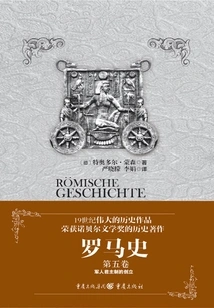
History of Rome (volume 5)
History罗马史(第五卷)
(germany) Theodor Monson
The fifth volume of "History of Rome" mainly involves the establishment of the military monarchy in the late Roman Republic, and studies the transformation process of Rome from a republic to a monarchy, that is, the Roman Empire. In the late Roman Republic, three military oligarchs emerged: Pompey, Caesar and Crassus. Through the conquest of Syria in eastern Asia, Rome's eastern border has expanded to Asia Minor and the Mesopotamia region, and its conqueror Pompey gained the highest honor and status; through the conquest of the Celts in northwest Gaul and the blocking of the Germans, Caesar became a famous hero; through the suppression of the slave rebellion of Spartacus, Crassus rose to fame. These three men all held heavy armies at the same time and became powerful rulers in Rome. At the same time, the former aristocratic Senate was declining day by day. Coupled with the constant fighting and strife within it, the power of the traditional aristocracy continued to decline. The Citizens' Assembly was useless except for being used by the military. Roman society was irrevocably evolving towards a dictatorial military monarchy. With this evolution, Rome's politics, economy, culture, law, etc. All experienced a series of changes. The fifth volume of "History of Rome" continues the author's inertia and cites a large number of data and original documents, as well as relevant works of ancient Roman playwrights and poets. This provides very rich materials for researchers engaged in Roman history and provides readers with a large number of reference elements. As a German, Mommsen laid a solid scientific foundation for the work with his German rational thinking and rigorous logic. It is a classic historical research work.
The fifth volume of "History of Rome" mainly involves the establishment of the military monarchy in the late Roman Republic, and studies the transformation process of Rome from a republic to a monarchy, that is, the Roman Empire. In the late Roman Republic, three military oligarchs emerged: Pompey, Caesar and Crassus. Through the conquest of Syria in eastern Asia, Rome's eastern border has expanded to Asia Minor and the Mesopotamia region, and its conqueror Pompey gained the highest honor and status; through the conquest of the Celts in northwest Gaul and the blocking of the Germans, Caesar became a famous hero; through the suppression of the slave rebellion of Spartacus, Crassus rose to fame. These three men all held heavy armies at the same time and became powerful rulers in Rome. At the same time, the former aristocratic Senate was declining day by day. Coupled with the constant fighting and strife within it, the power of the traditional aristocracy continued to decline. The Citizens' Assembly was useless except for being used by the military. Roman society was irrevocably evolving towards a dictatorial military monarchy. With this evolution, Rome's politics, economy, culture, law, etc. All experienced a series of changes. The fifth volume of "History of Rome" continues the author's inertia and cites a large number of data and original documents, as well as relevant works of ancient Roman playwrights and poets. This provides very rich materials for researchers engaged in Roman history and provides readers with a large number of reference elements. As a German, Mommsen laid a solid scientific foundation for the work with his German rational thinking and rigorous logic. It is a classic historical research work.
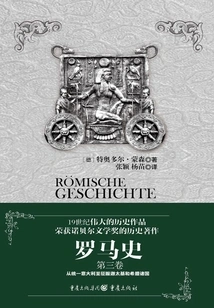
History of Rome (volume 3)
History罗马史(第三卷)
(germany) Theodor Monson
The third volume of "Roman History" mainly tells the story from the unification of Rome to the conquest of Carthage and the Greek countries, and the two Punic Wars with Carthage for the dominance of the western Mediterranean; and the Eastern War with Macedonia and Antioch for the eastern Mediterranean. The book describes in detail the course of the war, Rome's missteps and military exploits, as well as the relationship between the Roman Republic and surrounding ethnic city-states. The study of war occupies three-quarters of this volume, and then the writing shifts to a more detailed study of the internal political structure, economic structure, and foreign trade of the Roman Republic, and an in-depth comparative study of Roman beliefs and customs, literature and art, and its exchanges with Greek culture. The third volume of "History of Rome" cites a large number of data and original documents of Cato and others, as well as relevant works of ancient Roman playwrights and poets. This provides very rich materials for researchers engaged in Roman history and provides readers with a large number of reference elements. As a German, Mommsen laid a solid scientific foundation for the work with his German rational thinking and rigorous logic. It is a classic historical research work.
The third volume of "Roman History" mainly tells the story from the unification of Rome to the conquest of Carthage and the Greek countries, and the two Punic Wars with Carthage for the dominance of the western Mediterranean; and the Eastern War with Macedonia and Antioch for the eastern Mediterranean. The book describes in detail the course of the war, Rome's missteps and military exploits, as well as the relationship between the Roman Republic and surrounding ethnic city-states. The study of war occupies three-quarters of this volume, and then the writing shifts to a more detailed study of the internal political structure, economic structure, and foreign trade of the Roman Republic, and an in-depth comparative study of Roman beliefs and customs, literature and art, and its exchanges with Greek culture. The third volume of "History of Rome" cites a large number of data and original documents of Cato and others, as well as relevant works of ancient Roman playwrights and poets. This provides very rich materials for researchers engaged in Roman history and provides readers with a large number of reference elements. As a German, Mommsen laid a solid scientific foundation for the work with his German rational thinking and rigorous logic. It is a classic historical research work.