Library
Browse and search books
2 novels found

权力意志与永恒轮回(译文经典)
(germany) Nietzsche
Nietzsche is a controversial philosopher who is widely known but little known in China. He has unique life experiences and ideological characteristics. He is a university professor, but he denies the work of other professors who are dedicated to education; he is a philosopher, but he opposes with great vigor the philosophies that appeared before him; he refutes the tradition, but at the same time he becomes a part of the tradition. Editor Günter Wolfrat is an internationally renowned expert on Nietzsche. He selected and compiled this work from the 5,000 pages of Nietzsche's posthumous manuscripts from Volumes 7 to 13 of the KSA Edition (KSA), not according to system, but strictly according to chronology. The first principle of the selection is to pay special attention to passages in Nietzsche's philosophy involving keywords such as "will", "will to power", "eternal recurrence" and "nihilism"; important figures that Nietzsche came into contact with in his life, such as Schopenhauer and Wagner; and issues that Nietzsche often thought about, such as ancient Greek and Roman culture, Christianity, art and morality. The second principle of selection is to strive for objectivity and even present a critical reading perspective. Reading this philosophical manuscript is like appreciating "the diary written by an intellectual." Wolfart's findings from studying Nietzsche's thoughts are also attached. Reading this book allows us to see the truest Nietzsche, and it also enables us to understand Nietzsche's "experimental philosophy" spirit concretely, intuitively, and without restraint. It is an excellent book for beginners and researchers of Nietzsche's philosophy.
Nietzsche is a controversial philosopher who is widely known but little known in China. He has unique life experiences and ideological characteristics. He is a university professor, but he denies the work of other professors who are dedicated to education; he is a philosopher, but he opposes with great vigor the philosophies that appeared before him; he refutes the tradition, but at the same time he becomes a part of the tradition. Editor Günter Wolfrat is an internationally renowned expert on Nietzsche. He selected and compiled this work from the 5,000 pages of Nietzsche's posthumous manuscripts from Volumes 7 to 13 of the KSA Edition (KSA), not according to system, but strictly according to chronology. The first principle of the selection is to pay special attention to passages in Nietzsche's philosophy involving keywords such as "will", "will to power", "eternal recurrence" and "nihilism"; important figures that Nietzsche came into contact with in his life, such as Schopenhauer and Wagner; and issues that Nietzsche often thought about, such as ancient Greek and Roman culture, Christianity, art and morality. The second principle of selection is to strive for objectivity and even present a critical reading perspective. Reading this philosophical manuscript is like appreciating "the diary written by an intellectual." Wolfart's findings from studying Nietzsche's thoughts are also attached. Reading this book allows us to see the truest Nietzsche, and it also enables us to understand Nietzsche's "experimental philosophy" spirit concretely, intuitively, and without restraint. It is an excellent book for beginners and researchers of Nietzsche's philosophy.
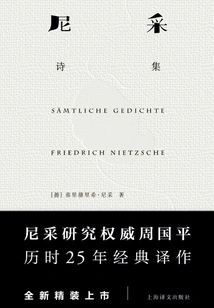
Collected Poems of Nietzsche
Literature尼采诗集
(germany) Nietzsche
Nietzsche never published a collection of his poems during his lifetime. Most of the poems included in the book "Collected Poems of Nietzsche" were selected by the translator from the large octavo edition of "The Complete Works of Nietzsche", and most of them are poems written by Nietzsche in his mature period. Among them, "Jokes, Trickery and Revenge" and "Song of the Uncrowned Prince" were translated from Volume 5 and published as prefaces and appendices to the book "The Science of Joy" during Nietzsche's lifetime. Most of the poems in "Ode to Dionysus", "Aphorisms and Songs of Zarathustra" and "Lyrics" and "Aphorisms" were translated from Volume 8 and were published after Nietzsche's death. The "Supplement" contains six early poems by Nietzsche and eight later poems scattered in various volumes or other books. Many years later, the translator purchased a relatively complete German version of "The Collected Poems of Nietzsche" compiled and compiled by others, and selected and supplemented fifteen poems from it. In this way, the whole book has a total of 296 poems, which is a relatively complete Chinese translation of the "Collected Poems of Nietzsche".
Nietzsche never published a collection of his poems during his lifetime. Most of the poems included in the book "Collected Poems of Nietzsche" were selected by the translator from the large octavo edition of "The Complete Works of Nietzsche", and most of them are poems written by Nietzsche in his mature period. Among them, "Jokes, Trickery and Revenge" and "Song of the Uncrowned Prince" were translated from Volume 5 and published as prefaces and appendices to the book "The Science of Joy" during Nietzsche's lifetime. Most of the poems in "Ode to Dionysus", "Aphorisms and Songs of Zarathustra" and "Lyrics" and "Aphorisms" were translated from Volume 8 and were published after Nietzsche's death. The "Supplement" contains six early poems by Nietzsche and eight later poems scattered in various volumes or other books. Many years later, the translator purchased a relatively complete German version of "The Collected Poems of Nietzsche" compiled and compiled by others, and selected and supplemented fifteen poems from it. In this way, the whole book has a total of 296 poems, which is a relatively complete Chinese translation of the "Collected Poems of Nietzsche".