Library
Browse and search books
9 novels found
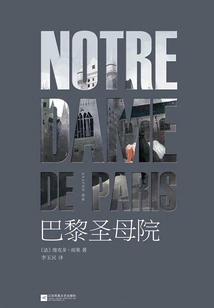
Notre Dame De Paris
General Fiction巴黎圣母院
(french) Victor Hugo
"Notre Dame de Paris" was such a success that when Michelet wrote "History of the Middle Ages" in 1833, he mentioned this ancient church and wrote: "Someone left a deep lion's paw print on this building. From now on, no one will touch it rashly."... Esmeralda, Claude, Frollo, and especially Casimordo have all become legendary figures almost like Jean Valjean.
"Notre Dame de Paris" was such a success that when Michelet wrote "History of the Middle Ages" in 1833, he mentioned this ancient church and wrote: "Someone left a deep lion's paw print on this building. From now on, no one will touch it rashly."... Esmeralda, Claude, Frollo, and especially Casimordo have all become legendary figures almost like Jean Valjean.
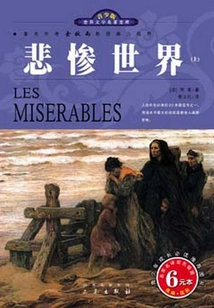
Les Misérables
General Fiction悲惨世界
(french) Victor Hugo
"Les Misérables" is a magnificent masterpiece by the famous French writer Hugo. It took more than thirty years to complete. It is a novel that can represent Hugo's thoughts and artistic style. With outstanding artistic charm, the book reveals the tragic fate and painful situation of the poor people by describing the tragic life history of the protagonist Jean Valjean, and presents a brilliant picture of modern French social and political life from the French Revolution in 1793 to the Paris People's Uprising in 1832. It reflects Hugo's extraordinary talent in narrative to the greatest extent and is a model of the combination of realism and romanticism in the history of world literature.
"Les Misérables" is a magnificent masterpiece by the famous French writer Hugo. It took more than thirty years to complete. It is a novel that can represent Hugo's thoughts and artistic style. With outstanding artistic charm, the book reveals the tragic fate and painful situation of the poor people by describing the tragic life history of the protagonist Jean Valjean, and presents a brilliant picture of modern French social and political life from the French Revolution in 1793 to the Paris People's Uprising in 1832. It reflects Hugo's extraordinary talent in narrative to the greatest extent and is a model of the combination of realism and romanticism in the history of world literature.
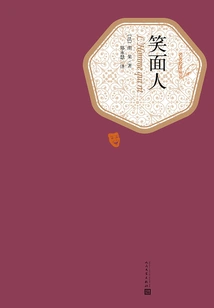
Laughing Man
General Fiction笑面人
(french) Victor Hugo
This is a tragedy that happened under the rule of the British aristocracy. The son of a noble senator was betrayed by the king to a child trafficker during the Restoration. After undergoing disfigurement surgery, he became a deformed Laughing Man and made a living by performing arts. After he became an adult, he was confirmed as the heir to the privileges of the aristocracy, and his title was restored due to conflicts in the court. However, he still maintained his innocence and kindness. He spoke generously for the people in the House of Lords, causing himself to fall from the heights of power to the bottom, and finally died following his beloved.
This is a tragedy that happened under the rule of the British aristocracy. The son of a noble senator was betrayed by the king to a child trafficker during the Restoration. After undergoing disfigurement surgery, he became a deformed Laughing Man and made a living by performing arts. After he became an adult, he was confirmed as the heir to the privileges of the aristocracy, and his title was restored due to conflicts in the court. However, he still maintained his innocence and kindness. He spoke generously for the people in the House of Lords, causing himself to fall from the heights of power to the bottom, and finally died following his beloved.
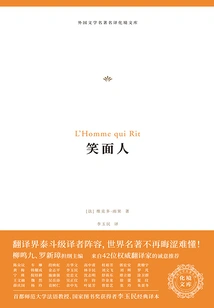
The Smiling Man (huajing Library)
General Fiction笑面人(化境文库)
(french) Victor Hugo
The story tells the story of Britain at the turn of the 17th and 18th centuries. Due to the power struggle within the royal family, Guan Bolan, who was born in the aristocracy, fell into the hands of child traffickers when he was a child and was disfigured and became the "Laughing Man". Guan Bolan, who was abandoned at the beach, rescued a baby girl in the snow. He and the baby girl he rescued, Daya, were taken in by the homeless man "I Am a Bear". Guan Bolan and Deya gradually fell in love when they grew up, and formed a deep friendship with I Am a Bear and his domesticated wolf "He Moren". However, the unexpected discovery of Guan Bolan's life experience by the court's eye and eye, Barkil Fedro, brought Guan Bolan back to the aristocratic circle from the bottom. From now on, the Laughing Man will face a more cruel world...
The story tells the story of Britain at the turn of the 17th and 18th centuries. Due to the power struggle within the royal family, Guan Bolan, who was born in the aristocracy, fell into the hands of child traffickers when he was a child and was disfigured and became the "Laughing Man". Guan Bolan, who was abandoned at the beach, rescued a baby girl in the snow. He and the baby girl he rescued, Daya, were taken in by the homeless man "I Am a Bear". Guan Bolan and Deya gradually fell in love when they grew up, and formed a deep friendship with I Am a Bear and his domesticated wolf "He Moren". However, the unexpected discovery of Guan Bolan's life experience by the court's eye and eye, Barkil Fedro, brought Guan Bolan back to the aristocratic circle from the bottom. From now on, the Laughing Man will face a more cruel world...
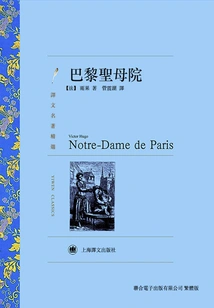
Notre Dame De Paris
General Fiction巴黎圣母院
(french) Victor Hugo
Hugo (1802-1885), a famous French novelist and poet. "Notre Dame de Paris" is his masterpiece novel. The gypsy girl Esmeralda is performing on the street, and Froed, the deputy bishop of Notre Dame Church, wants to take possession of her...
Hugo (1802-1885), a famous French novelist and poet. "Notre Dame de Paris" is his masterpiece novel. The gypsy girl Esmeralda is performing on the street, and Froed, the deputy bishop of Notre Dame Church, wants to take possession of her...

1993 (selected Translations of Famous Works)
General Fiction九三年(译文名著精选)
(french) Victor Hugo
In the novel, Hugo created three central characters: the Marquis de Landenac, the leader of the Vendée rebels, his grandnephew, Guo Wan, the commander of the Republican Army who suppressed the rebellion, and Simourdain, Guo Wan's tutor and commissioner of the Public Security Commission. He developed an intricate plot around them, depicting the historical scene of the desperate struggle between the bourgeoisie and the feudal forces in 1793. At the end of the novel: Landenac discovered his conscience and returned to the burning castle to rescue the three children. Guo Wan was moved by his uncle's humanitarian spirit and was willing to trade his own head for Landenac's life. Simourdan shot himself while Guo Wan's head fell to the ground.
In the novel, Hugo created three central characters: the Marquis de Landenac, the leader of the Vendée rebels, his grandnephew, Guo Wan, the commander of the Republican Army who suppressed the rebellion, and Simourdain, Guo Wan's tutor and commissioner of the Public Security Commission. He developed an intricate plot around them, depicting the historical scene of the desperate struggle between the bourgeoisie and the feudal forces in 1793. At the end of the novel: Landenac discovered his conscience and returned to the burning castle to rescue the three children. Guo Wan was moved by his uncle's humanitarian spirit and was willing to trade his own head for Landenac's life. Simourdan shot himself while Guo Wan's head fell to the ground.
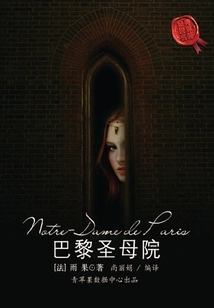
Notre Dame De Paris
General Fiction巴黎圣母院
(french) Victor Hugo
The novel "Notre Dame de Paris" artistically reproduces the true history of the reign of French King Louis XI more than 400 years ago, how the palace and the church colluded to oppress the people, and how the people fought heroically against the two forces. The rebel gypsy girl Esmeralda and the ugly disabled person Quasimodo in the novel are presented to readers as the embodiment of true beauty, while what people see in the archdeacon Frollo and the noble soldier Phoebus are cruel, empty hearts and sinful lusts. The author organically connects evocative stories with vivid and rich dramatic scenes, making this novel highly readable. The novel has a strong romantic color and uses contrasting writing techniques. It is an artistic example of applying the contrast principle of romanticism.
The novel "Notre Dame de Paris" artistically reproduces the true history of the reign of French King Louis XI more than 400 years ago, how the palace and the church colluded to oppress the people, and how the people fought heroically against the two forces. The rebel gypsy girl Esmeralda and the ugly disabled person Quasimodo in the novel are presented to readers as the embodiment of true beauty, while what people see in the archdeacon Frollo and the noble soldier Phoebus are cruel, empty hearts and sinful lusts. The author organically connects evocative stories with vivid and rich dramatic scenes, making this novel highly readable. The novel has a strong romantic color and uses contrasting writing techniques. It is an artistic example of applying the contrast principle of romanticism.
Victor Hugo's Literature
Literature雨果论文学
(french) Victor Hugo
As a leader of the French Romantic Movement in the 19th century, Hugo was a highly accomplished Romantic writer in the history of literature. His theoretical texts were not only important theoretical documents of the Romantic movement at that time, but also a theoretical specimen of Romantic literary and artistic thought. They still have significance as ideological materials for us today. "Hugo on Literature" selects eleven of Hugo's literary reviews, prefaces, etc., Which helps us understand the romantic literary movement and this genre, especially the creative method of positive romanticism. Hugo put forward the idea of "beauty serves truth" and believed that the poet's social responsibility is to promote ideals and educate the people. This is one of the differences between positive romanticism and negative romanticism.
As a leader of the French Romantic Movement in the 19th century, Hugo was a highly accomplished Romantic writer in the history of literature. His theoretical texts were not only important theoretical documents of the Romantic movement at that time, but also a theoretical specimen of Romantic literary and artistic thought. They still have significance as ideological materials for us today. "Hugo on Literature" selects eleven of Hugo's literary reviews, prefaces, etc., Which helps us understand the romantic literary movement and this genre, especially the creative method of positive romanticism. Hugo put forward the idea of "beauty serves truth" and believed that the poet's social responsibility is to promote ideals and educate the people. This is one of the differences between positive romanticism and negative romanticism.

Les Miserables (All 3 Volumes)
General Fiction悲惨世界(全3册)
(french) Victor Hugo
"Les Misérables" is a novel written by Hugo during his exile. It is his masterpiece and one of the treasures of the world's literary treasure house. Through the tragic experiences of Jean Valjean and others and a series of touching deeds after Jean Valjean was inspired by Bishop Bian Furu, "Les Misérables" profoundly exposes and criticizes the decadent nature and evil phenomena of French feudal autocratic society in the 19th century. It expresses compassion and sympathy for the exploitation, fraud and cruel persecution suffered by the poor people under the weight of feudalism.
"Les Misérables" is a novel written by Hugo during his exile. It is his masterpiece and one of the treasures of the world's literary treasure house. Through the tragic experiences of Jean Valjean and others and a series of touching deeds after Jean Valjean was inspired by Bishop Bian Furu, "Les Misérables" profoundly exposes and criticizes the decadent nature and evil phenomena of French feudal autocratic society in the 19th century. It expresses compassion and sympathy for the exploitation, fraud and cruel persecution suffered by the poor people under the weight of feudalism.