It's a pretty good story about ascending to the throne, with a strong female character and a great heroine. Some of them are enjoyable and some are not.
The title "heiress" sounds wonderful. When a woman is called an heiress, it often means that she is the incredibly lucky person who has no brothers and is loved by her parents. But when she becomes an heiress, the fate she faces is to climb to the top or fall to the bottom, with no middle way. During her childhood and adolescence, she had to sacrifice the carefree and happy time that ordinary noble girls have, work ten times and a hundred times harder than boys of the same age to fulfill her responsibilities, and bear heavier responsibilities than male heirs. She must be stronger, more tenacious, and better than her competitors, coveters, and enemies. Otherwise, she will become a gorgeous trophy after the death of her parents and accept her life that has fallen to the bottom. And even if she is an excellent heir, she is at risk of being replaced by her new brother at any time. As long as her parents give birth to a son, she will lose everything she owns and have to learn to be a man's good wife again after tasting the wonderful taste of power. This may be more painful than failure on the road to power.
The heroine did not ascend the throne, but was the queen mother for decades, but she raised a granddaughter, the empress, and the princess became the heir apparent, and finally ascended the throne.
The heroine's thinking about society particularly struck a chord with me. It is really based on the independent thinking of women in feudal society. It is very true: "Everyone will die, forget their past and be reincarnated again. How can I be sure that I will become my son's daughter and enjoy his glory and wealth for eternity, instead of becoming his slave and being trampled and trampled on by him like an ant?"
"And if I become his slave, wouldn't everything I did in my previous life to maintain his power for eternity seem too ridiculous?"
The real highlights are at the back, but in order not to spoil the story, I won't post it. It was really inspiring. After reading the article, I seriously reflected on myself and gained a lot.
The princess ascends the throne. The background is similar to that of the late Tang Dynasty. It is well written and may shatter some people's fantasies about male characters. There is also true love between men and women in it. However, the heroine only has one lover and no children. In the end, due to the flaws when she ascended the throne, she established a clan son as her heir apparent.
The heroine is neither a saint nor a white lotus, she is not even lovable, and her character is not very good. She is full of murderous intentions on her way to seize power. She also made many mistakes in the beginning, which is biased towards the real world, and the author's writing style is dark and melancholic.
The ending is rushed, with one chapter having a hundred chapters. It feels like the author put the last fifth of the outline in the last chapter. She may have been tired of writing, but the plot is not unfinished.
I was very moved. The heroine made a fortune in the Yellow Turban uprising, deceived the counselor system, and finally ascended to the throne.
Masculine
The male protagonist, the female protagonist summons the player to ancient times, and finally ascends to the throne. The only daughter succeeds to the throne. The male protagonist is a person from another dimension without a clan. His professional position is like a Feng Shui master or a Taoist priest. A good husband.
The setting is a Western fantasy, and the composition of the royal family is more like that of the Carolingians of the Frankish Kingdom. They are all evil people and there are no good people in a moral sense. The heroine is not a feminist, she only wants power, no matter whether it is a man or a woman, she will take action when she gets in the way, and she will use what she can. She is not kind to both men and women. This is not a feminist novel. Let me reiterate, it is not a feminist novel. The heroine ascends the throne with an only son. The heroine also said that having a boy is more conducive to the stability of her rule, so she does not expect to give birth to a daughter.
The ending was rushed, and I wrote a hundred chapters into the last chapter. I feel like the author didn't want to write it anymore. The previous chapter was very good.
Patriarchal society
The heroine is a princess, with a western fantasy background, and all the characters are villains. The outline is a bit broken and the ending is rushed, but it is very tense and the plot is very interesting.
Male background
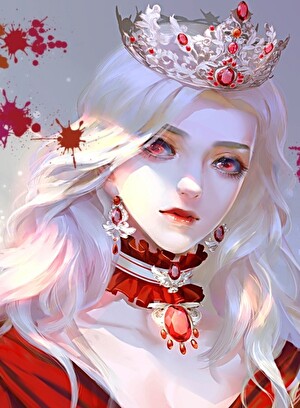 How to Reject Love as a Queen
60.8kFavorites89.2kClicks/ch56.4kNutrition
How to Reject Love as a Queen
60.8kFavorites89.2kClicks/ch56.4kNutrition
 Start with a Quilt and Dominate the World!
16.1kFavorites27kClicks/ch18.8kNutrition
Start with a Quilt and Dominate the World!
16.1kFavorites27kClicks/ch18.8kNutrition
 Queen Matilda
4.6kFavorites3.7kClicks/ch4.8kNutrition
Queen Matilda
4.6kFavorites3.7kClicks/ch4.8kNutrition
 Married an Old Emperor
104.4kFavorites161kClicks/ch141.6kNutrition
Married an Old Emperor
104.4kFavorites161kClicks/ch141.6kNutrition
 The Beauty Is by Your Side
52kFavorites98kClicks/ch134.8kNutrition
The Beauty Is by Your Side
52kFavorites98kClicks/ch134.8kNutrition
The Heroine Rules the World 3.4kFavorites9.7kClicks/ch6.7kNutrition
 [Three Kingdoms] Can't Counselors Ascend the Throne?
187.3kFavorites325.2kClicks/ch825kNutrition
[Three Kingdoms] Can't Counselors Ascend the Throne?
187.3kFavorites325.2kClicks/ch825kNutrition
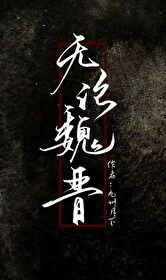 Regardless of Wei and Jin
147.8kFavorites325.7kClicks/ch553.7kNutrition
Regardless of Wei and Jin
147.8kFavorites325.7kClicks/ch553.7kNutrition
 Men Only Affect How Quickly I Draw My Sword
51.6kFavorites102.7kClicks/ch87.9kNutrition
Men Only Affect How Quickly I Draw My Sword
51.6kFavorites102.7kClicks/ch87.9kNutrition
Millennium Queen 6.6kFavorites17.5kClicks/ch13.8kNutrition
The Tragedy of Bloody Mary 2.6kFavorites10.3kClicks/ch666Nutrition