With a more relaxed and funny style, Guan Yue is a type with a strong sense of justice. As the fourth member of a high school, he does not violate the rules (another idealism) and breaks the original plot by choosing a more coincidental approach.
A very cute love story, which creates a smart and gentle image of Miyamura. The writing style is very smooth and natural. The plot mainly revolves around the love affair, with less involvement in the main plot. The original plot is solved relatively easily. The fact that Miyamura learned the reversal technique before Gojou should be considered a minor flaw, but the explanation is reasonable.
Amamiya Ai has a high IQ and suggested publishing a book "The Skill of Language". He almost relied on himself to obtain information and survive to the ending. The emotional line does not account for much, and he was not aware of the cp in the early stage. The ending is a little hasty, but the flaws are not concealed.
The gentle and elegant version of undercover Zhufu is quite different from the original image. The description style is more inclined to storytelling, the plot is slightly more paradigmatic, the character creation is unclear except for Zhufu himself, and the intermittent psychological description sublimation is a bit strange and abrupt.
Perhaps only Utopia can redeem the tragedy of the curse worldview being deeply embedded in the underlying logic. The highlights of Miyazaki and Gojo were not covered up, and they also showed the brilliance of other original characters. The writing is meandering and elegant, and the subtitles of each section are very appropriate. The description makes people know the ending and still mourn the irreversible past. The wording is not intended to be close to Japanese light novels or translations of Japanese literature, but the atmosphere created does have a sense of physical sadness.
The plot is very interlocking and fills in some pitfalls of the original work. It is easy for the exe to become unresponsive in the middle stage. The author has indeed constructed Akamatsu with intelligence ≈ Dazai, and the psychological description and profile description may account for slightly more.
Thin door! Bo Ye is a kitten with white fur and green eyes that everyone loves. It is a very funny book that equally persecutes and flatters everyone in the original book (and possibly the readers).
The pulling and testing of the two descending valleys in the early stage was very well written, but in the later stage it was a bit too much and the logic declined. The final fairy tale chapter has a flavor that I don't really like, and it feels like it's just a "story".
The article's views on the relationship between ordinary people and cursed spirits are worth exploring. The process of the protagonist group gradually exploring the world of curse spirits and magic is very interesting. The emotional line does not account for much but the development context is clear.
The style has been obvious since the original book. The author's writing has a sense of restraint, so restrained that the writing has obvious emotional breakpoints. The protagonist's character is well positioned but the frontal description is thin, and the background structure is slightly empty and large.
The author has a very special transition technique, with a strong sense of cinema, and the scenes are portrayed as if they are before your eyes. Matsuda's own character traits are vividly and prominently depicted, and the emotions (words) of the police academy team are also very interesting. The logic is rigorous and supplements the logic behind questions such as the ambiguous base wine code in the original work.
The wonderful character portrayal has been completed for the second time. The emotional line between Sara and Hagiwara is smooth and reasonable. "Love is against instinct." The overall story is full of laughs and warm emotions (the relationship between Hasegawa Momo and the girl in the same store during her period is also worth reading).
 Can an Electronic Conjurer Use the Keyboard to Remove Electronic Spell Spirits?
47.3kFavorites90.5kClicks/ch35.2kNutrition
Can an Electronic Conjurer Use the Keyboard to Remove Electronic Spell Spirits?
47.3kFavorites90.5kClicks/ch35.2kNutrition
 What Should I Do If I Suddenly Become the Strongest?
62.7kFavorites149.9kClicks/ch83.2kNutrition
What Should I Do If I Suddenly Become the Strongest?
62.7kFavorites149.9kClicks/ch83.2kNutrition
 I Talked My Way into the Top Management of Red and Black
43.1kFavorites97.4kClicks/ch49kNutrition
I Talked My Way into the Top Management of Red and Black
43.1kFavorites97.4kClicks/ch49kNutrition
 Officer Zhufu Wants Highlights
12.8kFavorites12.3kClicks/ch33.6kNutrition
Officer Zhufu Wants Highlights
12.8kFavorites12.3kClicks/ch33.6kNutrition
 Special Level Cursed Spirit Gojo-Kun
27.8kFavorites49.6kClicks/ch30kNutrition
Special Level Cursed Spirit Gojo-Kun
27.8kFavorites49.6kClicks/ch30kNutrition
 What Should I Do If I Have Too Much Black History and Are Called to My Door?
74.1kFavorites192.6kClicks/ch525.6kNutrition
What Should I Do If I Have Too Much Black History and Are Called to My Door?
74.1kFavorites192.6kClicks/ch525.6kNutrition
 After the Undercover System Had a Convulsion, I Changed the Suspicion Value
165.5kFavorites336.7kClicks/ch1.4MNutrition
After the Undercover System Had a Convulsion, I Changed the Suspicion Value
165.5kFavorites336.7kClicks/ch1.4MNutrition
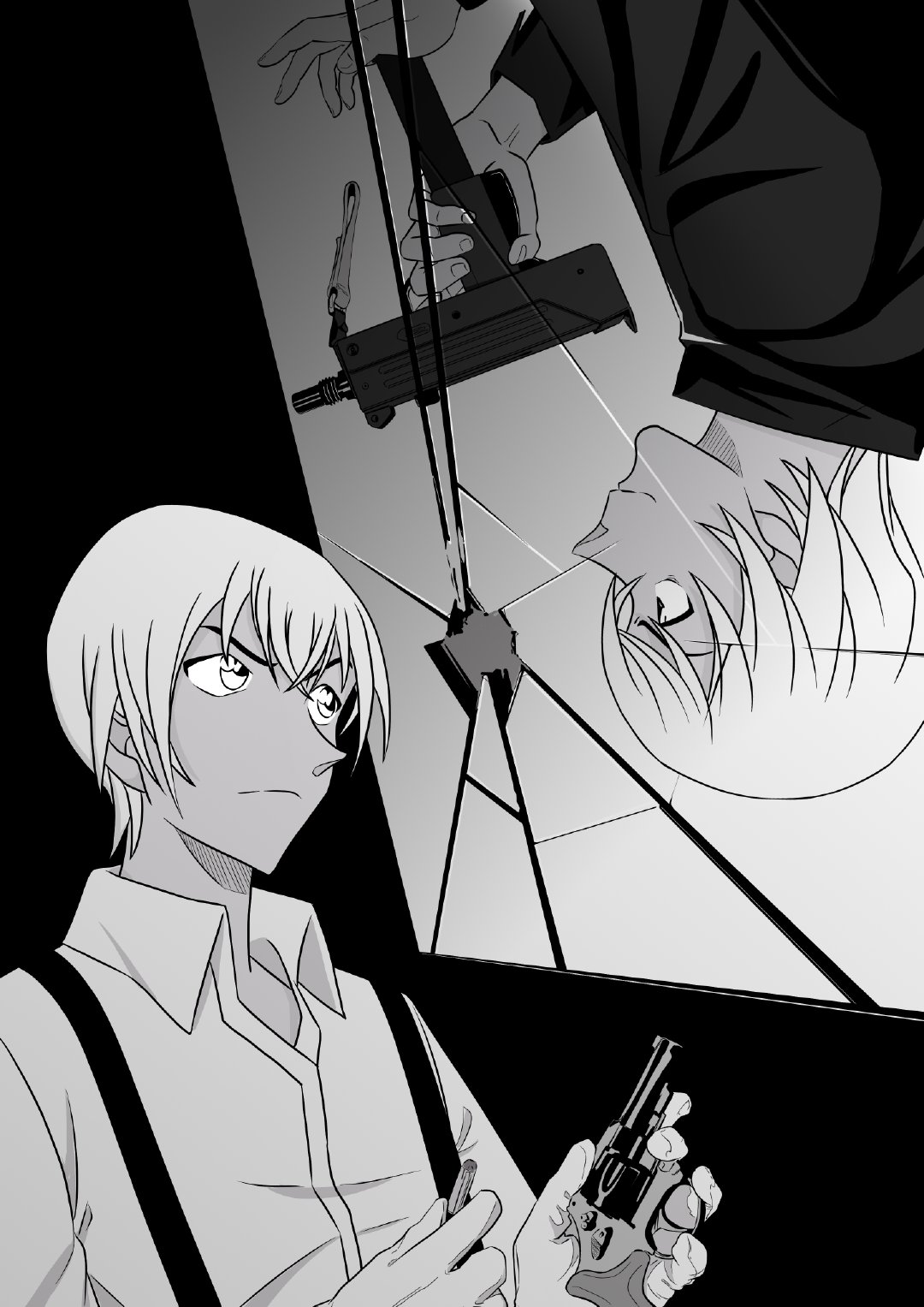 Mixing Real and Fake Bourbon
22.8kFavorites39.3kClicks/ch12.8kNutrition
Mixing Real and Fake Bourbon
22.8kFavorites39.3kClicks/ch12.8kNutrition
 The Correct Use of Scientific Spells
22.6kFavorites38.1kClicks/ch30.1kNutrition
The Correct Use of Scientific Spells
22.6kFavorites38.1kClicks/ch30.1kNutrition
 How to Raise Animals Scientifically
9.4kFavorites9kClicks/ch17.2kNutrition
How to Raise Animals Scientifically
9.4kFavorites9kClicks/ch17.2kNutrition
 Matsuda, Matsuda
50kFavorites94.8kClicks/ch264.9kNutrition
Matsuda, Matsuda
50kFavorites94.8kClicks/ch264.9kNutrition
 Miss Curse's Science of Evolution
19.2kFavorites32.9kClicks/ch50.8kNutrition
Miss Curse's Science of Evolution
19.2kFavorites32.9kClicks/ch50.8kNutrition