[The full novel is complete!!!!! Please check out my upcoming novel, The Tenth Year After Transmigration, also known as Tales of My Eunuch Husband. The blurb is at the end, so please scroll down and take a look. Sending love~]
(A spoiled, proud little princess X a haughty, aristocratic young lord who pretends to be proper)
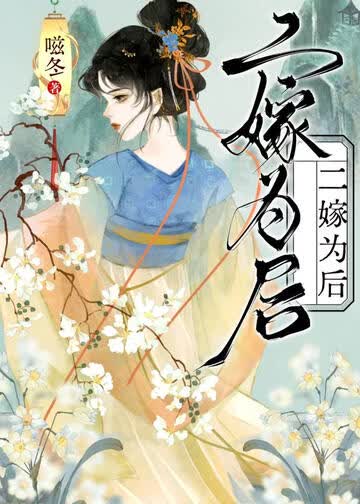
Li Yunru and Yan Ning were forced together against their will.
Before the coup, Emperor Qixuan offered military control of Jiangzuo as a dowry and sent his most beloved youngest daughter, Princess Liyang Li Yunru, to marry into the Yan family.
The Yan family was the foremost of the four great aristocratic houses. Their legitimate son, Yan Sanlang, was renowned as a refined and upright gentleman. His daughter would be safe if she married into the family, even if they were not a perfectly harmonious couple.
But he had underestimated the aristocracy's cold-heartedness. When the hare is dead, the hounds are cooked. Once a new ruler took power, and there was no longer any advantage to be gained from the alliance, the pearl he had once treasured in his palm became dirt on someone else's hand.
Not long after Emperor Xuan's departure, the Yan family began scheming to bring a new bride into the household and make Yan Sanlang divorce his wife and marry again.
After a year of marriage, they had developed some affection for each other. In the wedding hall, Li Yunru's eyes were bloodshot as she demanded of her husband, "Do you truly intend to bring your cousin into the household? Do you really mean to divorce your wife and marry again?"
Yan Ning married Princess Liyang, Li Yunru, but had little affection for her.
The princess was spoiled and willful, but beautiful, radiant as a peony in spring and delicate as a begonia after rain. And in bed, every time she called him "husband," her voice melted him to the bone.
He was happy to indulge and dote on her. They were a loving couple, a talented man and a beautiful woman, and their romance became a celebrated tale in Jiankang.
Who could have guessed she would grow arrogant from his favor and publicly humiliate him in the wedding hall one day, angrily confronting her husband?
He had always been someone others catered to. He had never been through anything like that before. In the heat of the moment, he agreed to her demand, thinking he would explain everything to her in private afterward.
But that very day, word spread that she had died of grief, jumping off a cliff on her way home. Her body was never found.
For three years he wandered in a daze. He built her a burial mound with only her clothes, and swore he would never marry again.
Three years later, peach blossoms bloomed at a mountain temple.
Invited by a friend to visit the gardens, he saw a graceful young woman beneath a peach tree. Her cheeks were rosy, her eyes full of laughter, as she frolicked and bickered with several men. Her manner seemed familiar, though the memory was hazy.
His friend exclaimed, "I never thought there could be someone so similar in this world! What a marvel. It's a pity she's so wanton and improper. Otherwise, I might take her as a second wife!"
Only he knew she was no lookalike. She was the wife who had leapt from a cliff for love three years ago...
And as for his friend's concerns?
The proud aristocrat raised an eyebrow and sneered at the men around her. "So what if there are a few? Keeping her is the real challenge!"
His friend was astonished. "Changjun, are you going to join them?"
The next day, everyone in Jiankang knew that the elegant and refined Young Master Yan had gone mad, trying to make a threesome for love... No, one, two, three, four, five... Who could tell how many he was trying to make it with?
Reader's guide:
1. The setting is fictional, though it takes some inspiration from the Wei and Jin dynasties. The author knows little about history, so only the general framework is borrowed. The details are not historically researched.
2. Romance-focused, both leads have only been with each other, physically and emotionally. The plot includes misunderstandings and melodrama, all in service of the romance and not a reflection of the author's personal values.
3. In the context of the time, the female lead will inevitably be in a disadvantaged position at times. Some angst is only there to further her growth and the romance. Readers who dislike the setup or find it upsetting should proceed with caution.
Also: Please add my upcoming novel, The Tenth Year After Transmigration, to your reading list! I'm begging, pleading, and doing everything I can to be cute!
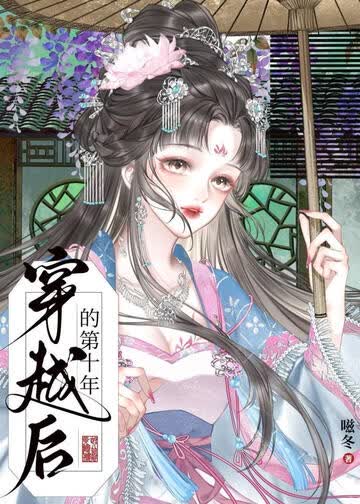
It's been ten years since Maisui transmigrated, and she still hasn't found a way back to the modern world.
The father who raised her fell gravely ill and could no longer provide for her, so he sold her to a wealthy family in the county as a maid.
The family was said to be very powerful. The master worked as an official in the capital, but the household was small, with only the madam, a concubine, a young master, and a girl about her age.
The madam said Maisui was too young for hard labor, so she assigned her to serve as the young master's reader.
The young master was handsome and well-mannered, kind and gentle to others. He never minded her clumsiness or her inability to serve him well, and even taught her to read and write.
Maisui felt as though she had landed in a nest of good fortune.
But her good luck didn't last. Three years later, news came from the capital: the master had committed a grave offense, and the family was to be confiscated.
On the day the family was seized,
the madam took Maisui to the high official who had arrived and said, "This girl is an orphan and is not among the three generations of the Ji family. I beg you to show mercy and let her go."
The official glanced at Maisui and waved for her to leave.
Maisui refused to go.
She followed the prison cart, trudging through the mud and wearing holes in her shoes on the long journey to the capital.
She thought, Surely there are so many powerful people in the capital. One of them must know where she can go to seek justice and save them.
But she was wrong. There was no such place.
It took more than half a year to get from the county to the capital, but the family was still sentenced to execution after the autumn harvest.
Only the young master survived, but he was sentenced to castration.
The day before his punishment,
Maisui stood outside the Hall of Peace and Joy for a long time. At last, she went inside and stood beside the young master, taking off her clothes one by one. "I'm grown up now. I can bear an heir for the Ji family."
The young master smiled bitterly. He picked up her clothes one by one and put them back on her. "You're still young. You don't understand anything. Go outside, forget everything that happened in the Ji household, and live a good life."
On the day Maisui married, Ji Xuan was being executed.
The bridal sedan and the prison cart passed each other.
That day... they both thought the other would be happy.
Theme: Remain true to yourself even in adversity






The tie is not even close to death. I feel like I can't get up or get down. It's uncomfortable 😭
Watching this movie always reminds me of Tang Disheng's The Flower of the Emperor It's just that obviously the Yan family is in a lot of trouble. What's the use of talking about love? When the other party is in such a state of desolation, who are you showing off your high posture to? It's the same as ridiculing and despising her.
I really like this ending 💪
Du Sanniang is so interesting~
The first part is okay, but the second part is unreadable.
Which play are you planning to perform 🍉 Jia Baoyu was crazy enough to marry Zhou Zhiruo?
"The temperament is lost in everyone." This is a big bug for the author~ Wrong meaning
How many chapters did you buy without skipping a beat? Where is the content of the copy? The heroine didn't fake her death at all.
The sister hurriedly drove her home and asked her to listen to her mother and marry the person she didn't want to marry. The heroine loves her for nothing... He knows what the heroine cares about, and he still says such nonsense to stimulate the heroine...
Come on, come on, when will you write about your death escape?