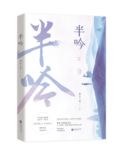
When Shiniang entered the palace, the whole household came to see her off. Looking at her uncle, father, and brothers kneeling at her feet, she gently raised a hand to stop them and sighed softly. "Don't worry. Take care." Then she climbed into the carriage with her maid and left.
Over the next thirteen years, she rose from a low-ranking Selected Attendant to one of the four second-rank Consorts, enjoying the emperor's favor all the while. Her family also soared to prominence on the strength of her favor, becoming famous throughout the capital.
As her beauty faded and the emperor's favor waned, only power could bring her comfort. From favored consort to Noble Consort with real authority over the inner palace, she spent eight years laying her plans, step by step, until she reached the pinnacle of power.
The author, who admits she's terrible at writing blurbs, would like to say: this is really just the story of a girl who rose from a seventh-rank Selected Attendant to a first-rank Noble Consort.
~★~☆~★~☆~★~☆~★~☆~★~☆~★~☆~★~☆~★~☆~★~☆~
Xiaxia's next novel, please add it to your reading list!
The second installment in the Great Liang Saga, the story of Mu Yao
The third installment in the Great Liang Saga, the story of Mu Jinghan
Xiaxia's rebirth novel
Ranks and numbers of consorts in the novel: Ranks and numbers of consorts in the Great Liang harem
Rank
Above rank: Empress
First rank: Noble Consorts (two)
First subrank: Four Ladies
Second rank: Four Consorts (Shu Consort, Hui Consort, De Consort, Xian Consort)
Second subrank: Three Noble Concubines (Shuyuan, Shuyi, Shurong)
Third rank: Six Concubines (Zhaoyuan, Zhaoyi, Zhaorong, Xiuyuan, Xiuyi, Xiurong)
Third subrank: Three Noble Ladies (Jieyu, Ronghua, Rongyi)
Fourth rank: Three Shun Ladies (Shunhua, Shunyi, Shunrong)
Fourth subrank: Three Attendants (Chonghua, Chongyi, Chongrong)
Fifth rank: Three Ladies (Wanyi, Fangyi, Fenyi)
Fifth subrank: Six Beauties (Noble Lady, Beauty, Talented Lady, Good Lady, Pure Lady, Attendant)
Sixth rank: Attendant-in-Waiting (no fixed number)
Sixth subrank: Lady (no fixed number)
Seventh rank: Selected Attendant (no fixed number)
Seventh subrank: Court Lady (no fixed number)
Eighth rank: Palace Woman (no fixed number)
Eighth subrank: Chosen Woman (promoted from palace maid)
Ninth rank: Promising Woman (promoted from palace maid)
Please support my author page:
Premise:
Generally speaking, in the feudal dynasty, the person who enjoys the title of eldest princess is the aunt of the current emperor, and the eldest princess is the direct sister of the current emperor.
The writing is so sad that I can't even cry
The writing is so sad that I can't even cry
Come on ↖(^ω^)↗↖(^ω^)↗!
I want to watch the extra story about Shiniang and Emperor Zha (maybe they meet again in the next life or something like that)
It's not easy to follow this article for more than a year.
Come on ↖(^ω^)↗↖(^ω^)↗↖(^ω^)↗!
Come on ↖(^ω^)↗↖(^ω^)↗!
Come on ↖(^ω^)↗↖(^ω^)↗!
Okay, I cried when I read it... Is the new article a modern version of Emperor Shiniang? Even if it's not the case, consider writing one. The emotional drama in this article is too subtle.







Generally speaking, in the feudal dynasty, the person who enjoys the title of eldest princess is the aunt of the current emperor, and the eldest princess is the direct sister of the current emperor.
The writing is so sad that I can't even cry
The writing is so sad that I can't even cry
Come on ↖(^ω^)↗↖(^ω^)↗!
I want to watch the extra story about Shiniang and Emperor Zha (maybe they meet again in the next life or something like that)
It's not easy to follow this article for more than a year.
Come on ↖(^ω^)↗↖(^ω^)↗↖(^ω^)↗!
Come on ↖(^ω^)↗↖(^ω^)↗!
Come on ↖(^ω^)↗↖(^ω^)↗!
Okay, I cried when I read it... Is the new article a modern version of Emperor Shiniang? Even if it's not the case, consider writing one. The emotional drama in this article is too subtle.