Fanqie library
Browse
- Titles
- 372
Every Fanqie book we index, searchable by title, author or tag.
-
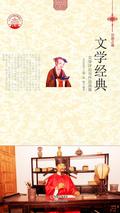 Literary Classics
This book is divided into three parts: A Collection of Chinese Literature - Anthology of Ancient Commentaries, Essence of Strange Essays - Anthology of Ancient Poems, and Collection of Poems - Anthology of Ancient Poems. The specific content includes: political and cultural treatises - Dianluo; the earliest collection of poems and essays - Zhaoming's Selected Works; the first collection of poetry - The Book of Songs, etc.
—Reads8.5Score—Shelves
Literary Classics
This book is divided into three parts: A Collection of Chinese Literature - Anthology of Ancient Commentaries, Essence of Strange Essays - Anthology of Ancient Poems, and Collection of Poems - Anthology of Ancient Poems. The specific content includes: political and cultural treatises - Dianluo; the earliest collection of poems and essays - Zhaoming's Selected Works; the first collection of poetry - The Book of Songs, etc.
—Reads8.5Score—Shelves
-
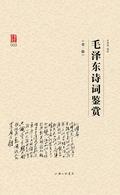 Appreciation of Mao Zedong's Poetry (Yili Library)
The book "Appreciation of Mao Zedong's Poems" selects Mao Zedong's poems, calligraphy, couplets, letters and other content. The explanations, annotations and comments on the poems are based on the principles of seeking truth, truth, novelty and beauty to fully demonstrate the most touching charm of the ideological and artistic nature of Mao Zedong's poems. At the same time, it is combined with Mao Zedong's poetry and handwriting to show the essence of Mao Zedong's calligraphy. In addition, a sel
—Reads9.5Score—Shelves
Appreciation of Mao Zedong's Poetry (Yili Library)
The book "Appreciation of Mao Zedong's Poems" selects Mao Zedong's poems, calligraphy, couplets, letters and other content. The explanations, annotations and comments on the poems are based on the principles of seeking truth, truth, novelty and beauty to fully demonstrate the most touching charm of the ideological and artistic nature of Mao Zedong's poems. At the same time, it is combined with Mao Zedong's poetry and handwriting to show the essence of Mao Zedong's calligraphy. In addition, a sel
—Reads9.5Score—Shelves
-
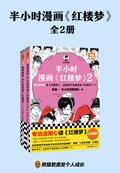 Half-Hour Comic "A Dream of Red Mansions" (2 Volumes in Total)
Zhuanzhi has no patience to read "Dream of Red Mansions"! The half-hour comic team led by Chen Lei (pen name: Brother Huan) clarified the character relationships and story line of "A Dream of Red Mansions" through humorous language and hand-drawn comics - how did Jia's company go bankrupt, and how tragic was Bao Dai's love? First meeting with Bao Dai: I am deeply impressed, and I will be able to see each other in the future! Concubine Yuan's marriage: Jia's company takes large orders, makes plan
—Reads9.5Score—Shelves
Half-Hour Comic "A Dream of Red Mansions" (2 Volumes in Total)
Zhuanzhi has no patience to read "Dream of Red Mansions"! The half-hour comic team led by Chen Lei (pen name: Brother Huan) clarified the character relationships and story line of "A Dream of Red Mansions" through humorous language and hand-drawn comics - how did Jia's company go bankrupt, and how tragic was Bao Dai's love? First meeting with Bao Dai: I am deeply impressed, and I will be able to see each other in the future! Concubine Yuan's marriage: Jia's company takes large orders, makes plan
—Reads9.5Score—Shelves
-
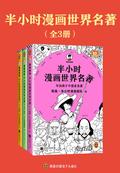 Half-Hour Comic World Masterpiece (Three Volumes in Total)
There are three reasons why children don't like to read classics: there are too many words; the plot is too complicated; and they don't know what the author wants to express. The half-hour comic team led by Chen Lei (pseudonym: Brother Huan), through humorous language and hand-drawn comics, not only makes the brick-thick classics instantly relaxed and interesting, but also explains to children the history, society, thoughts, and human nature behind the classics. "Jane Eyre" is actually an orphan
—Reads9.5Score—Shelves
Half-Hour Comic World Masterpiece (Three Volumes in Total)
There are three reasons why children don't like to read classics: there are too many words; the plot is too complicated; and they don't know what the author wants to express. The half-hour comic team led by Chen Lei (pseudonym: Brother Huan), through humorous language and hand-drawn comics, not only makes the brick-thick classics instantly relaxed and interesting, but also explains to children the history, society, thoughts, and human nature behind the classics. "Jane Eyre" is actually an orphan
—Reads9.5Score—Shelves
-
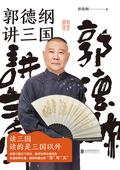 Guo Degang Talks About the Three Kingdoms
Guo Degang's 2022 blockbuster work interprets the Three Kingdoms for the first time, creating a newer, more readable, and more interesting story of the Three Kingdoms. You will be addicted after reading one page, suitable for all ages. When Guo Degang talks about the Three Kingdoms, he talks about the people of the Three Kingdoms, the people's hearts, feelings, and humanity in the Three Kingdoms. Why did Cao Cao become a great hero? General He Jin's actions determined his tragic life; how brothe
—Reads9.4Score—Shelves
Guo Degang Talks About the Three Kingdoms
Guo Degang's 2022 blockbuster work interprets the Three Kingdoms for the first time, creating a newer, more readable, and more interesting story of the Three Kingdoms. You will be addicted after reading one page, suitable for all ages. When Guo Degang talks about the Three Kingdoms, he talks about the people of the Three Kingdoms, the people's hearts, feelings, and humanity in the Three Kingdoms. Why did Cao Cao become a great hero? General He Jin's actions determined his tragic life; how brothe
—Reads9.4Score—Shelves
-
 Analysis of the Classic Dream of Red Mansions: a Compulsory Course for Level 10 of Red Mansions
What crime did the four major families commit that led to the ending of "The white land is so clean"? What were the reasons for the decline of the Jia family? Why did Yuanchun die? Why didn't Qin Keqing resist Jia Zhen? What are the sad details in the Red Mansion? This book will answer them all for you one by one!
—Reads9.6Score—Shelves
Analysis of the Classic Dream of Red Mansions: a Compulsory Course for Level 10 of Red Mansions
What crime did the four major families commit that led to the ending of "The white land is so clean"? What were the reasons for the decline of the Jia family? Why did Yuanchun die? Why didn't Qin Keqing resist Jia Zhen? What are the sad details in the Red Mansion? This book will answer them all for you one by one!
—Reads9.6Score—Shelves
-
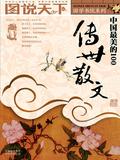 The 100 Most Beautiful Chinese Proses Handed Down from Generation to Generation
"China's 100 Most Beautiful Essays handed down from generation to generation" selects 100 exquisite essays from ancient times to the present, accompanied by pictures with ancient charm and elegance. It walks slowly from the hustle and bustle, like a long-lost friend, packing up anecdotes along the way, full of beautiful scenery, and quietly sharing it with you. Being close to it, you will forget the trivial tasks during the day and indulge in this moment of tranquility. If you get close to it, y
—Reads9.2Score—Shelves
The 100 Most Beautiful Chinese Proses Handed Down from Generation to Generation
"China's 100 Most Beautiful Essays handed down from generation to generation" selects 100 exquisite essays from ancient times to the present, accompanied by pictures with ancient charm and elegance. It walks slowly from the hustle and bustle, like a long-lost friend, packing up anecdotes along the way, full of beautiful scenery, and quietly sharing it with you. Being close to it, you will forget the trivial tasks during the day and indulge in this moment of tranquility. If you get close to it, y
—Reads9.2Score—Shelves
-
 Awesome Chinese Language Book: Fantasy and Reality
The "Great Chinese Book" series of books is edited by Ye Kai, a Chinese education expert. It is divided into five volumes in the form of thematic reading. The selected texts have unique perspectives, diverse styles, and unique introductory analysis, which can effectively help young people open the only way to learn Chinese. The theme of this volume is "Fantasy and Reality", which is divided into four parts: "Fantasy", "Metamorphosis", "Animal Novels" and "People and Things". It includes essays a
—Reads8.0Score—Shelves
Awesome Chinese Language Book: Fantasy and Reality
The "Great Chinese Book" series of books is edited by Ye Kai, a Chinese education expert. It is divided into five volumes in the form of thematic reading. The selected texts have unique perspectives, diverse styles, and unique introductory analysis, which can effectively help young people open the only way to learn Chinese. The theme of this volume is "Fantasy and Reality", which is divided into four parts: "Fantasy", "Metamorphosis", "Animal Novels" and "People and Things". It includes essays a
—Reads8.0Score—Shelves
-
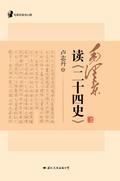 Mao Zedong's Reading Experience: Mao Zedong's Reading of the Twenty-Four Histories
The book "Mao Zedong's Reading Experience: Mao Zedong Reading Twenty-Four Histories" is part of Mao Zedong's reading experience. Mao Zedong had a profound literacy in Chinese studies, which benefited from his lifelong interest in Chinese historical classics. The whole book tells the story of Mao Zedong's profound study of the Twenty-Four Histories. He used correct Marxist positions, concepts and methods to analyze, criticize and interrogate phenomena. His views and methods were deeply embedded i
—Reads9.5Score—Shelves
Mao Zedong's Reading Experience: Mao Zedong's Reading of the Twenty-Four Histories
The book "Mao Zedong's Reading Experience: Mao Zedong Reading Twenty-Four Histories" is part of Mao Zedong's reading experience. Mao Zedong had a profound literacy in Chinese studies, which benefited from his lifelong interest in Chinese historical classics. The whole book tells the story of Mao Zedong's profound study of the Twenty-Four Histories. He used correct Marxist positions, concepts and methods to analyze, criticize and interrogate phenomena. His views and methods were deeply embedded i
—Reads9.5Score—Shelves
-
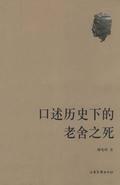 The Death of Lao She in Oral History
Have some of the "Death of Lao She" that people knew before become, to some extent, another form of "Homer's epic" compiled in a highly stylized form with fixed "characteristic adjectives", or a "puzzle of the past"? How much "historical truth" is preserved in it. The significance of "The Death of Lao She" in oral history is that its multiple narratives of the same event present multiple aspects that are different from the "past". There are "coexistences, mutual interferences, and contradictions
—Reads8.6Score—Shelves
The Death of Lao She in Oral History
Have some of the "Death of Lao She" that people knew before become, to some extent, another form of "Homer's epic" compiled in a highly stylized form with fixed "characteristic adjectives", or a "puzzle of the past"? How much "historical truth" is preserved in it. The significance of "The Death of Lao She" in oral history is that its multiple narratives of the same event present multiple aspects that are different from the "past". There are "coexistences, mutual interferences, and contradictions
—Reads8.6Score—Shelves
-
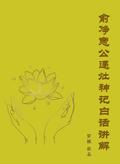 Yu Jingyi's Vernacular Explanation of "The Story of Gong's Encounter with the Stove God"
"The Story of Yu Jingyi Gong Encountering the Stove God" is a famous article about persuading good deeds circulated in the Qing Dynasty. It tells the story of Yu Jingyi Gong who did good deeds in his early years but had a bad fate. When he met the Stove God's enlightenment by chance, he realized that he had serious evil intentions - although he did good deeds, he was utilitarian and arrogant towards others. After being warned by the Kitchen God, he repented, changed his "pure mind" to "pure hear
—Reads8.7Score—Shelves
Yu Jingyi's Vernacular Explanation of "The Story of Gong's Encounter with the Stove God"
"The Story of Yu Jingyi Gong Encountering the Stove God" is a famous article about persuading good deeds circulated in the Qing Dynasty. It tells the story of Yu Jingyi Gong who did good deeds in his early years but had a bad fate. When he met the Stove God's enlightenment by chance, he realized that he had serious evil intentions - although he did good deeds, he was utilitarian and arrogant towards others. After being warned by the Kitchen God, he repented, changed his "pure mind" to "pure hear
—Reads8.7Score—Shelves
-
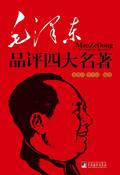 Mao Zedong's Comments on the Four Great Classics
"Mao Zedong Criticized the Four Great Classics" (including "Mao Zedong Criticized the Romance of the Three Kingdoms", "Mao Zedong Criticized the Dream of Red Mansions", "Mao Zedong Criticized the Water Margin" and "Mao Zedong Criticized Journey to the West"), in fact, this is not entirely A book simply about Mao Zedong's criticism of the Four Great Classics. It also includes all aspects of Mao Zedong's criticism of the Four Great Classics (including ideological content, artistic form, etc.), And
—Reads9.4Score—Shelves
Mao Zedong's Comments on the Four Great Classics
"Mao Zedong Criticized the Four Great Classics" (including "Mao Zedong Criticized the Romance of the Three Kingdoms", "Mao Zedong Criticized the Dream of Red Mansions", "Mao Zedong Criticized the Water Margin" and "Mao Zedong Criticized Journey to the West"), in fact, this is not entirely A book simply about Mao Zedong's criticism of the Four Great Classics. It also includes all aspects of Mao Zedong's criticism of the Four Great Classics (including ideological content, artistic form, etc.), And
—Reads9.4Score—Shelves
-
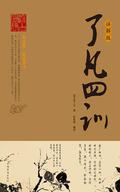 The Four Trainings of Liaofan: Detailed Explanation
"The Four Precepts of Liaofan" is a book on cultivating virtue, establishing life, cultivating oneself and governing the world. The full text is divided into four parts. The author Yuan Liaofan used his lifelong knowledge and cultivation to integrate the thoughts of Confucianism, Taoism and Buddhism. He used his own personal experience and combined with a large number of real and vivid examples to warn the world not to be bound by the word "fate", but to constantly strive for self-improvement an
—Reads9.6Score—Shelves
The Four Trainings of Liaofan: Detailed Explanation
"The Four Precepts of Liaofan" is a book on cultivating virtue, establishing life, cultivating oneself and governing the world. The full text is divided into four parts. The author Yuan Liaofan used his lifelong knowledge and cultivation to integrate the thoughts of Confucianism, Taoism and Buddhism. He used his own personal experience and combined with a large number of real and vivid examples to warn the world not to be bound by the word "fate", but to constantly strive for self-improvement an
—Reads9.6Score—Shelves
-
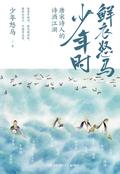 Youth in Fresh Clothes and Angry Horses: the Poem and Wine of Tang and Song Dynasty Poets
Tang poetry and Song lyrics are the pinnacle of the beauty of Chinese characters. What is the story behind each famous piece? How can each of the big shots be so happy and happy? If you read poetry from a different angle, you will find a different poetic meaning. The super angry young man Luo Binwang, the eternal love sage Du Fu, the counterattack master Gao Shi, the perfect male god Wang Wei, the literary uncle Meng Haoran, the prodigal son Wen Tingyun, the heroine Li Qingzhao, the all-round ge
—Reads9.6Score—Shelves
Youth in Fresh Clothes and Angry Horses: the Poem and Wine of Tang and Song Dynasty Poets
Tang poetry and Song lyrics are the pinnacle of the beauty of Chinese characters. What is the story behind each famous piece? How can each of the big shots be so happy and happy? If you read poetry from a different angle, you will find a different poetic meaning. The super angry young man Luo Binwang, the eternal love sage Du Fu, the counterattack master Gao Shi, the perfect male god Wang Wei, the literary uncle Meng Haoran, the prodigal son Wen Tingyun, the heroine Li Qingzhao, the all-round ge
—Reads9.6Score—Shelves
-
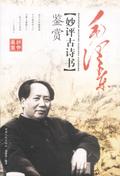 Appreciation of Mao Zedong's Wonderful Comments on Ancient Poems and Books
This book is divided into three parts: the first is an introduction to the work; the second is Mao Zedong's comments (mainly selected from Mao Zedong's speeches, conversations, poems, articles, letters, comments, etc.); The third is appreciation, which is a brief analysis of the quoted original text and an analysis of Mao Zedong's comments.
—Reads9.5Score—Shelves
Appreciation of Mao Zedong's Wonderful Comments on Ancient Poems and Books
This book is divided into three parts: the first is an introduction to the work; the second is Mao Zedong's comments (mainly selected from Mao Zedong's speeches, conversations, poems, articles, letters, comments, etc.); The third is appreciation, which is a brief analysis of the quoted original text and an analysis of Mao Zedong's comments.
—Reads9.5Score—Shelves
-
 Ancient Wen Guan Zhi (Full Translation in Vernacular)
"Guwen Guanzhi" is an ancient Chinese reading book compiled and selected for the school by Wu Chucai and Wu Tiaohou's uncle and nephew during the Kangxi period of the Qing Dynasty. The title of the book "Guanzhi" means "the breathtaking views", implying that the selected articles represent the highest level of classical Chinese writing. The book consists of twelve volumes, arranged in chronological order, and contains 222 masterpieces from the Eastern Zhou Dynasty to the late Ming Dynasty over t
—Reads8.2Score—Shelves
Ancient Wen Guan Zhi (Full Translation in Vernacular)
"Guwen Guanzhi" is an ancient Chinese reading book compiled and selected for the school by Wu Chucai and Wu Tiaohou's uncle and nephew during the Kangxi period of the Qing Dynasty. The title of the book "Guanzhi" means "the breathtaking views", implying that the selected articles represent the highest level of classical Chinese writing. The book consists of twelve volumes, arranged in chronological order, and contains 222 masterpieces from the Eastern Zhou Dynasty to the late Ming Dynasty over t
—Reads8.2Score—Shelves
-
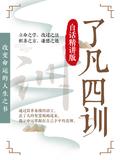 The Four Lessons from Liaofan: Concise Vernacular Version
"Liao Fan's Four Instructions" is a classic of persuading good deeds written by the Ming Dynasty thinker Yuan Liao Fan. The book is based on the author's own experience and is divided into four parts: the study of establishing destiny, the method of correction, the method of accumulating good deeds, and the effect of modesty. Through dialogue with Zen Master Yungu, reflection and correction of his own behavior, and detailed methods of doing good deeds and accumulating virtue, Yuan Liaofan system
—Reads9.5Score—Shelves
The Four Lessons from Liaofan: Concise Vernacular Version
"Liao Fan's Four Instructions" is a classic of persuading good deeds written by the Ming Dynasty thinker Yuan Liao Fan. The book is based on the author's own experience and is divided into four parts: the study of establishing destiny, the method of correction, the method of accumulating good deeds, and the effect of modesty. Through dialogue with Zen Master Yungu, reflection and correction of his own behavior, and detailed methods of doing good deeds and accumulating virtue, Yuan Liaofan system
—Reads9.5Score—Shelves
-
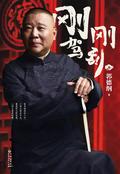 Just Arrived
Guo Degang vividly depicts the various aspects of China's secular world by telling stories that happened in the marketplace, and humorously tells the ups and downs of the world. Praising the true and praising the beautiful, stabbing at the greed and stabbing at the cruelty are all penetrating into the wood. The story tells the truth, humanity, and knowledge, and also has the Guo-style joking style that the common people love to hear. The laughter and curses are all turned into articles, which ca
—Reads9.4Score—Shelves
Just Arrived
Guo Degang vividly depicts the various aspects of China's secular world by telling stories that happened in the marketplace, and humorously tells the ups and downs of the world. Praising the true and praising the beautiful, stabbing at the greed and stabbing at the cruelty are all penetrating into the wood. The story tells the truth, humanity, and knowledge, and also has the Guo-style joking style that the common people love to hear. The laughter and curses are all turned into articles, which ca
—Reads9.4Score—Shelves
-
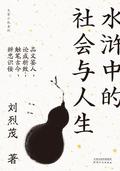 Society and Life in Water Margin
"Water Margin" is one of the well-known classical masterpieces and contains rich Chinese social and cultural traditions. Since its publication, this book has been one of the most classic works of appreciation, despite its interpretation and research. The author, Mr. Liu Liemao, was the director of the Institute of Ancient Literature at Sun Yat-sen University and has extensive research on Chinese classical novels. The whole book is concise and concise, with clear logic. The content involves the l
—Reads9.2Score—Shelves
Society and Life in Water Margin
"Water Margin" is one of the well-known classical masterpieces and contains rich Chinese social and cultural traditions. Since its publication, this book has been one of the most classic works of appreciation, despite its interpretation and research. The author, Mr. Liu Liemao, was the director of the Institute of Ancient Literature at Sun Yat-sen University and has extensive research on Chinese classical novels. The whole book is concise and concise, with clear logic. The content involves the l
—Reads9.2Score—Shelves
-
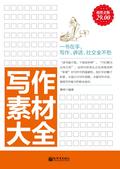 Complete Collection of Writing Materials
Daily accumulation is the fundamental way to open up writing ideas, enrich writing content, and improve writing ability. So, how do we accumulate materials? The first is to accumulate writing language, techniques and other "indirect materials" that have been successfully used by predecessors through extensive reading. To this end, we can usually excerpt some beautiful sentences and fragments, and excerpt and cut out better material examples; the second is to accumulate direct materials in life t
—Reads9.0Score—Shelves
Complete Collection of Writing Materials
Daily accumulation is the fundamental way to open up writing ideas, enrich writing content, and improve writing ability. So, how do we accumulate materials? The first is to accumulate writing language, techniques and other "indirect materials" that have been successfully used by predecessors through extensive reading. To this end, we can usually excerpt some beautiful sentences and fragments, and excerpt and cut out better material examples; the second is to accumulate direct materials in life t
—Reads9.0Score—Shelves
-
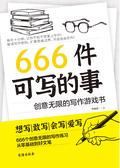 666 Things to Write About
This is a fantastic creative writing book. It can let you regain the joy of writing with a pen if you are eager to write but don't know where to start. It can provide you with a steady stream of inspiration. It can instantly bring you from a boring state to a writing state. The book contains 666 imaginative writing exercises to help you awaken your stagnant imagination, open your senses, and achieve story creation from zero to one.
—Reads9.3Score—Shelves
666 Things to Write About
This is a fantastic creative writing book. It can let you regain the joy of writing with a pen if you are eager to write but don't know where to start. It can provide you with a steady stream of inspiration. It can instantly bring you from a boring state to a writing state. The book contains 666 imaginative writing exercises to help you awaken your stagnant imagination, open your senses, and achieve story creation from zero to one.
—Reads9.3Score—Shelves
-
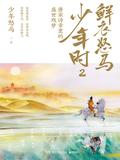 Youth in Fresh Clothes and Angry Horses 2: Remaining Dreams of a Prosperous Age in Tang and Song Dynasty Poems
Most of the events recorded by historical writers are like news clips, with a serious lack of emotions and details. Those who influence the course of history often have stories, legends, and last resorts about them, but it is a pity that they cannot be found in history books. And poetry can make characters flesh and blood. From the perspective of poetry, the author of this book takes us back to the historical scene of the Tang and Song Dynasties and meets each name in his heart. For example, Li
—Reads9.5Score—Shelves
Youth in Fresh Clothes and Angry Horses 2: Remaining Dreams of a Prosperous Age in Tang and Song Dynasty Poems
Most of the events recorded by historical writers are like news clips, with a serious lack of emotions and details. Those who influence the course of history often have stories, legends, and last resorts about them, but it is a pity that they cannot be found in history books. And poetry can make characters flesh and blood. From the perspective of poetry, the author of this book takes us back to the historical scene of the Tang and Song Dynasties and meets each name in his heart. For example, Li
—Reads9.5Score—Shelves