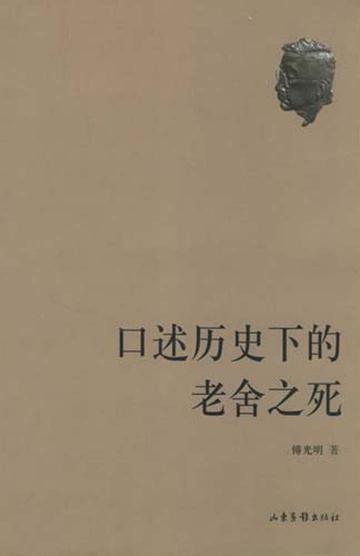
Have some of the "Death of Lao She" that people knew before become, to some extent, another form of "Homer's epic" compiled in a highly stylized form with fixed "characteristic adjectives", or a "puzzle of the past"? How much "historical truth" is preserved in it.
The significance of "The Death of Lao She" in oral history is that its multiple narratives of the same event present multiple aspects that are different from the "past". There are "coexistences, mutual interferences, and contradictions" between different voices; there are often "occlusions" between different voices; perhaps some people are trying to use their own voices as solo singers to simply bring history to an end. I used to be puzzled by this, but now I realize more clearly that this "Rashomon"-style historical reality is at least one of the meanings of history. ——Fu Guangming
Reader comments
This book gave me a more comprehensive understanding of Lao She's death. As the book says, everyone may have different accounts of the same event, which makes history more complicated and interesting. I thought of my friends and relatives around me, who all have different opinions on the same thing, which made me understand the point of view in the book better. I also disliked some of the characters mentioned in the book, and they made things more complicated. But this book is really good and gave me a new understanding of history!

This book gave me a more comprehensive understanding of Lao She's death. As the book says, everyone may have different accounts of the same event, which makes history more complicated and interesting. I thought of my friends and relatives around me, who all have different opinions on the same thing, which made me understand the point of view in the book better. I also disliked some of the characters mentioned in the book, and they made things more complicated. But this book is really good and gave me a new understanding of history!