Fanqie library
Browse
- Titles
- 1.3k
Every Fanqie book we index, searchable by title, author or tag.
-
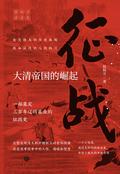 Conquest: the Rise of the Qing Empire
Why was the Battle of Saerhu a key battle that determined the fate of the Ming and Qing Dynasties? How did the one-year itch between Emperor Chongzhen and Yuan Chonghuan change the war situation? How did the Hongguang regime perish in tragedy and despair? What are the little-known stories behind the Battle of Yaksa and the Treaty of Nerchinsk? What profound impact did the Qing Dynasty's war to consolidate its territory have on later generations? From the Battle of Sarhu to the Battle of Daling R
—Reads8.6Score—Shelves
Conquest: the Rise of the Qing Empire
Why was the Battle of Saerhu a key battle that determined the fate of the Ming and Qing Dynasties? How did the one-year itch between Emperor Chongzhen and Yuan Chonghuan change the war situation? How did the Hongguang regime perish in tragedy and despair? What are the little-known stories behind the Battle of Yaksa and the Treaty of Nerchinsk? What profound impact did the Qing Dynasty's war to consolidate its territory have on later generations? From the Battle of Sarhu to the Battle of Daling R
—Reads8.6Score—Shelves
-
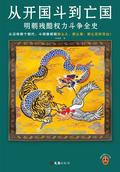 From the Founding of the Country to Its Fall: the Complete History of the Brutal Power Struggle in the Ming Dynasty
The Ming Dynasty was the dynasty with the most intense power struggle in Chinese history. Throughout the entire dynasty, the emperor fought against his cabinet ministers, his cabinet ministers fought against his cabinet ministers, and his cabinet ministers fought against their eunuchs. The struggle was so cruel and varied that it was "breathtaking". The endless internal fighting also exhausted the national power of the Ming Dynasty. Jiajing Etiquette Discussion: The emperor fights against his ca
—Reads9.2Score—Shelves
From the Founding of the Country to Its Fall: the Complete History of the Brutal Power Struggle in the Ming Dynasty
The Ming Dynasty was the dynasty with the most intense power struggle in Chinese history. Throughout the entire dynasty, the emperor fought against his cabinet ministers, his cabinet ministers fought against his cabinet ministers, and his cabinet ministers fought against their eunuchs. The struggle was so cruel and varied that it was "breathtaking". The endless internal fighting also exhausted the national power of the Ming Dynasty. Jiajing Etiquette Discussion: The emperor fights against his ca
—Reads9.2Score—Shelves
-
 Remains of the Ming Dynasty (Free Public Edition Book)
This book describes the historical events of the Southern Ming Dynasty. The first volume describes the origin and end of Li Zicheng's uprising, the second and third volumes describe the beginning and end of the Hongguang regime, and the fourth volume describes the beginning and end of the Longwu and Yongli regimes. Well organized and complete from beginning to end. In particular, he criticized the political corruption of Ma Shiying and Ruan Dacheng during the reign of King Fu, and he spoke bitte
—Reads8.5Score—Shelves
Remains of the Ming Dynasty (Free Public Edition Book)
This book describes the historical events of the Southern Ming Dynasty. The first volume describes the origin and end of Li Zicheng's uprising, the second and third volumes describe the beginning and end of the Hongguang regime, and the fourth volume describes the beginning and end of the Longwu and Yongli regimes. Well organized and complete from beginning to end. In particular, he criticized the political corruption of Ma Shiying and Ruan Dacheng during the reign of King Fu, and he spoke bitte
—Reads8.5Score—Shelves
-
 A Brief Account of the Fall of the Ming Dynasty (Free Public Edition Book)
"A Brief Account of the Fall of the Ming Dynasty" records the historical facts of the fall of the Ming Dynasty. The first volume describes the benevolent deeds of Emperor Chongzhen and his ministers Zhou Yanru and Wen Ti. It also describes the story of Sun Chengzong, Hong Chengchou, Lu Xiangsheng, Yang Sichang, Sun Chuanting, Cai Maode, Zhou Yuji, Qin Liangyu and others encircling and suppressing the peasant army of Li Zicheng and Zhang Xianzhong, as well as the beginning and end of the peasant
—Reads8.5Score—Shelves
A Brief Account of the Fall of the Ming Dynasty (Free Public Edition Book)
"A Brief Account of the Fall of the Ming Dynasty" records the historical facts of the fall of the Ming Dynasty. The first volume describes the benevolent deeds of Emperor Chongzhen and his ministers Zhou Yanru and Wen Ti. It also describes the story of Sun Chengzong, Hong Chengchou, Lu Xiangsheng, Yang Sichang, Sun Chuanting, Cai Maode, Zhou Yuji, Qin Liangyu and others encircling and suppressing the peasant army of Li Zicheng and Zhang Xianzhong, as well as the beginning and end of the peasant
—Reads8.5Score—Shelves
-
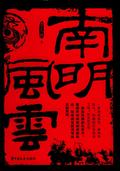 Nanming Fengyun
This book is a popular work about the history of the Southern Ming Dynasty. It is written in a humorous way and is similar in style to "Those Things in the Ming Dynasty". The full text generally begins with the chaos after the death of Emperor Chongzhen in 1644 and ends with the murder of Emperor Yongli in 1662. It mainly tells the history of the three periods of Hongguang, Longwu and Yongli in the Southern Ming Dynasty, and incidentally mentions the regimes of King Lu and Shaowu. While describi
—Reads9.2Score—Shelves
Nanming Fengyun
This book is a popular work about the history of the Southern Ming Dynasty. It is written in a humorous way and is similar in style to "Those Things in the Ming Dynasty". The full text generally begins with the chaos after the death of Emperor Chongzhen in 1644 and ends with the murder of Emperor Yongli in 1662. It mainly tells the history of the three periods of Hongguang, Longwu and Yongli in the Southern Ming Dynasty, and incidentally mentions the regimes of King Lu and Shaowu. While describi
—Reads9.2Score—Shelves
-
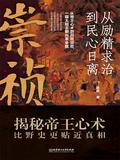 Chongzhen: from Exerting Efforts to Seek Governance to the Increasing Disunity of the People
At the end of the Ming Dynasty, the Jurchens outside Shanhaiguan rose up, and the fire of civil unrest within the Shanhaiguan ignited throughout the hinterland of the Central Plains. Emperor Chongzhen, the last king of the Ming Dynasty, led his ministers to fight the fire everywhere like a fire captain. However, contrary to expectations, Emperor Chongzhen's hard work and vigilance failed to usher in the dawn of resurgence for the crumbling empire. Instead, the fire of national subjugation became
—Reads8.5Score—Shelves
Chongzhen: from Exerting Efforts to Seek Governance to the Increasing Disunity of the People
At the end of the Ming Dynasty, the Jurchens outside Shanhaiguan rose up, and the fire of civil unrest within the Shanhaiguan ignited throughout the hinterland of the Central Plains. Emperor Chongzhen, the last king of the Ming Dynasty, led his ministers to fight the fire everywhere like a fire captain. However, contrary to expectations, Emperor Chongzhen's hard work and vigilance failed to usher in the dawn of resurgence for the crumbling empire. Instead, the fire of national subjugation became
—Reads8.5Score—Shelves
-
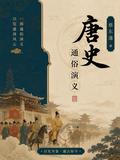 Tang History Popular Romance
[Introductory historical books, general history of the Tang Dynasty, chapter novels, non-threshold official history stories, heroes of the Sui and Tang Dynasties] If you want to read the complete history of the Tang Dynasty without reading boring history books, this book "Popular Romance of the Tang Dynasty" is perfectly suitable for novices in history. It is written in a half-text and half-text popular style, and hundreds of stories connect the entire period of the Li and Tang Dynasties. From t
—Reads8.4Score—Shelves
Tang History Popular Romance
[Introductory historical books, general history of the Tang Dynasty, chapter novels, non-threshold official history stories, heroes of the Sui and Tang Dynasties] If you want to read the complete history of the Tang Dynasty without reading boring history books, this book "Popular Romance of the Tang Dynasty" is perfectly suitable for novices in history. It is written in a half-text and half-text popular style, and hundreds of stories connect the entire period of the Li and Tang Dynasties. From t
—Reads8.4Score—Shelves
-
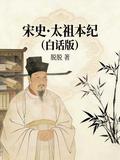 History of the Song Dynasty·the Benji of Taizu (Vernacular Version)
Zhao Kuangyin: The drama queen wearing a yellow robe, or the true emperor who will end the troubled times? A dragon chair, two mutinies, and three unsolved mysteries - this is the power script left by Song Taizu Zhao Kuangyin to future generations. On that morning in Chenqiaoyi in 960 AD, when his subordinates put the yellow robe on him, was the 33-year-old general's face panicked, or was it filled with the expected calmness? He directed the most famous "passive usurpation" in Chinese history, b
—Reads8.2Score—Shelves
History of the Song Dynasty·the Benji of Taizu (Vernacular Version)
Zhao Kuangyin: The drama queen wearing a yellow robe, or the true emperor who will end the troubled times? A dragon chair, two mutinies, and three unsolved mysteries - this is the power script left by Song Taizu Zhao Kuangyin to future generations. On that morning in Chenqiaoyi in 960 AD, when his subordinates put the yellow robe on him, was the 33-year-old general's face panicked, or was it filled with the expected calmness? He directed the most famous "passive usurpation" in Chinese history, b
—Reads8.2Score—Shelves
-
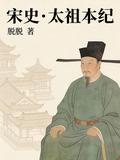 History of the Song Dynasty·the Anthology of Taizu
He may be the founding emperor who is the best at "acting" in Chinese history. In 960 AD, Chen Qiaoyi's carefully planned "forced accession to the throne" made Zhao Kuangyin rise from the general of the Later Zhou Dynasty to the founding monarch of the Song Dynasty. Over a glass of wine, he relieved the founding hero of the country from military power; under the sound of an ax and the shadow of a candle, his mysterious death remains an unsolved case for thousands of years. Some people say that h
—Reads8.2Score—Shelves
History of the Song Dynasty·the Anthology of Taizu
He may be the founding emperor who is the best at "acting" in Chinese history. In 960 AD, Chen Qiaoyi's carefully planned "forced accession to the throne" made Zhao Kuangyin rise from the general of the Later Zhou Dynasty to the founding monarch of the Song Dynasty. Over a glass of wine, he relieved the founding hero of the country from military power; under the sound of an ax and the shadow of a candle, his mysterious death remains an unsolved case for thousands of years. Some people say that h
—Reads8.2Score—Shelves
-
 Collected Works of Liu Song
Liu Song (1321-1381) was born in Taihe, Jiangxi Province at the end of the Yuan Dynasty and the beginning of the Ming Dynasty. His original name was Chu and his courtesy name was Zigao. In the third year of Hongwu's reign, he was awarded the title of "Fangsi Langzhong" in the Ministry of War. He was relegated to work, and he was found and released. In the thirteenth year, he was summoned to worship the Minister of Rites and promoted to Minister of the Ministry of Personnel. Looking for an offici
—Reads8.5Score—Shelves
Collected Works of Liu Song
Liu Song (1321-1381) was born in Taihe, Jiangxi Province at the end of the Yuan Dynasty and the beginning of the Ming Dynasty. His original name was Chu and his courtesy name was Zigao. In the third year of Hongwu's reign, he was awarded the title of "Fangsi Langzhong" in the Ministry of War. He was relegated to work, and he was found and released. In the thirteenth year, he was summoned to worship the Minister of Rites and promoted to Minister of the Ministry of Personnel. Looking for an offici
—Reads8.5Score—Shelves
-
 Essentials of Good Customs
"Essentials of Good Customs" is a classic on rural political education and agricultural guidance written by Wang Jie, a minister of the Yuan Dynasty. When Wang Jie served as the general manager of Shunde Road, he wrote this book based on imperial edicts and local governance needs, using the "Thirty-Three Things" as the code of conduct promoted by local society, taking into account the dual goals of "farming" and "educational education." The book clearly states at the beginning: "The thirty-three
—Reads8.3Score—Shelves
Essentials of Good Customs
"Essentials of Good Customs" is a classic on rural political education and agricultural guidance written by Wang Jie, a minister of the Yuan Dynasty. When Wang Jie served as the general manager of Shunde Road, he wrote this book based on imperial edicts and local governance needs, using the "Thirty-Three Things" as the code of conduct promoted by local society, taking into account the dual goals of "farming" and "educational education." The book clearly states at the beginning: "The thirty-three
—Reads8.3Score—Shelves
-
 Collected Works of Wei Xi
Wei Xi (March 2, 1624 - November 17, 1680) was a prose writer in the late Ming and early Qing dynasties. Together with Wang Wan and Hou Fangyu, he was known as the three major prose writers in the early Qing Dynasty. His nickname is Uncle Bing, his nickname is Uncle, and his nickname is Yuzhai. A native of Ningdu, Jiangxi Province, he lived in seclusion in Shaoting, Cuiweifeng during the late Ming Dynasty. He was known as Mr. Shaoting. Later, he traveled to the south of the Yangtze River, met fr
—Reads8.6Score—Shelves
Collected Works of Wei Xi
Wei Xi (March 2, 1624 - November 17, 1680) was a prose writer in the late Ming and early Qing dynasties. Together with Wang Wan and Hou Fangyu, he was known as the three major prose writers in the early Qing Dynasty. His nickname is Uncle Bing, his nickname is Uncle, and his nickname is Yuzhai. A native of Ningdu, Jiangxi Province, he lived in seclusion in Shaoting, Cuiweifeng during the late Ming Dynasty. He was known as Mr. Shaoting. Later, he traveled to the south of the Yangtze River, met fr
—Reads8.6Score—Shelves