Fanqie library
Browse
- Titles
- 1.6k
Every Fanqie book we index, searchable by title, author or tag.
-
 Acupuncture Secretary
Chinese traditional cultural thoughts have a long history and are highly original, original and literary. The early ideological forms were very distinctive, with extensive and profound contents such as religious theology, Chinese medicine classics, ancient military art, Confucianism, Taoism, Buddhism and hundreds of schools of thought, Feng Shui metaphysics, Twenty-Four Histories, customs and geography, etc. This series of "Original Books on Classic Chinese Studies and Essence Culture" retains t
—Reads8.8Score—Shelves
Acupuncture Secretary
Chinese traditional cultural thoughts have a long history and are highly original, original and literary. The early ideological forms were very distinctive, with extensive and profound contents such as religious theology, Chinese medicine classics, ancient military art, Confucianism, Taoism, Buddhism and hundreds of schools of thought, Feng Shui metaphysics, Twenty-Four Histories, customs and geography, etc. This series of "Original Books on Classic Chinese Studies and Essence Culture" retains t
—Reads8.8Score—Shelves
-
 Four Key Points of Diagnosing the Heart
This work "Essentials of the Four Mental Diagnostics" is written by Wu Qian
—Reads8.6Score—Shelves
Four Key Points of Diagnosing the Heart
This work "Essentials of the Four Mental Diagnostics" is written by Wu Qian
—Reads8.6Score—Shelves
-
 Chen's Fragrance Book
An important work on ancient incense culture. Written by Chen Jing of Song Dynasty. Jing Zi Zhong, a native of Henan Prefecture, Xijing in the late Northern Song Dynasty. "Chen's Incense Pu" is a collection and integration of a large number of incense manuals in the early Song Dynasty, including "Fragrance Pu" written by 11 families including Shen Li and Hong Chu. It is compiled into one book with complicated citations. The four volumes of the book record the spices at that time, introducing the
—Reads8.9Score—Shelves
Chen's Fragrance Book
An important work on ancient incense culture. Written by Chen Jing of Song Dynasty. Jing Zi Zhong, a native of Henan Prefecture, Xijing in the late Northern Song Dynasty. "Chen's Incense Pu" is a collection and integration of a large number of incense manuals in the early Song Dynasty, including "Fragrance Pu" written by 11 families including Shen Li and Hong Chu. It is compiled into one book with complicated citations. The four volumes of the book record the spices at that time, introducing the
—Reads8.9Score—Shelves
-
 Differentiation and Treatment Methods for Seventy-Two Syndromes
"Methods of Differentiation and Treatment of Seventy-two Symptoms" is a book published by Traditional Chinese Medicine Ancient Books Publishing House in 2015. The fever in Xixi is superficial heat, and the wind-cold is severe on the patient's skin; this means that the superficial heat is fine and the inside is fine, and the solution is quick without sweating.
—Reads8.5Score—Shelves
Differentiation and Treatment Methods for Seventy-Two Syndromes
"Methods of Differentiation and Treatment of Seventy-two Symptoms" is a book published by Traditional Chinese Medicine Ancient Books Publishing House in 2015. The fever in Xixi is superficial heat, and the wind-cold is severe on the patient's skin; this means that the superficial heat is fine and the inside is fine, and the solution is quick without sweating.
—Reads8.5Score—Shelves
-
 Illustration of Pulse-Jue Finger-Palm Disease Pattern
"Illustrated Description of Pulse Jue Zhizhi Palm Disease Patterns" was written by Li Gao, a famous doctor in the Jin and Yuan Dynasties. It is a precious medical classic that combines pulse theory, pathogenesis and diagrams. The book is not large in length, but its content is exquisite. It simplifies the originally profound art of pulse diagnosis and transforms deficiency into form, allowing doctors to "know the disease by looking at the picture and identify the cause by pressing the pulse."
—Reads8.7Score—Shelves
Illustration of Pulse-Jue Finger-Palm Disease Pattern
"Illustrated Description of Pulse Jue Zhizhi Palm Disease Patterns" was written by Li Gao, a famous doctor in the Jin and Yuan Dynasties. It is a precious medical classic that combines pulse theory, pathogenesis and diagrams. The book is not large in length, but its content is exquisite. It simplifies the originally profound art of pulse diagnosis and transforms deficiency into form, allowing doctors to "know the disease by looking at the picture and identify the cause by pressing the pulse."
—Reads8.7Score—Shelves
-
 Collection of Cleansing of Wrongs
"The Collection of Cleansing Wrongs", a forensic work, also known as "The Records of Cleansing Wrongdoes" and "The Collection of Records of Cleansing Wrongs by Song Ti Xing", 4 volumes. It was written by Song Ci (Hui Fu) of the Southern Song Dynasty and completed in the seventh year of Chunyou (1247). The book is composed of 53 items including general introduction to examination, injury examination, autopsy, injury identification, and bone examination. It also discusses in detail the procedures
—Reads9.3Score—Shelves
Collection of Cleansing of Wrongs
"The Collection of Cleansing Wrongs", a forensic work, also known as "The Records of Cleansing Wrongdoes" and "The Collection of Records of Cleansing Wrongs by Song Ti Xing", 4 volumes. It was written by Song Ci (Hui Fu) of the Southern Song Dynasty and completed in the seventh year of Chunyou (1247). The book is composed of 53 items including general introduction to examination, injury examination, autopsy, injury identification, and bone examination. It also discusses in detail the procedures
—Reads9.3Score—Shelves
-
 Forty-Six Mandarin Ducks
This book is a public book and is not subject to copyright restrictions. Chinese civilization has a long history and its traditional culture is as bright as stars. These classic works condense the wisdom of doing things for thousands of years and bring together the essence of human thought. They are specially processed and organized to facilitate readers' reading and communication.
—Reads8.3Score—Shelves
Forty-Six Mandarin Ducks
This book is a public book and is not subject to copyright restrictions. Chinese civilization has a long history and its traditional culture is as bright as stars. These classic works condense the wisdom of doing things for thousands of years and bring together the essence of human thought. They are specially processed and organized to facilitate readers' reading and communication.
—Reads8.3Score—Shelves
-
 Taishang Cave Xuan San Dong Kaitian Feng Lei Yu Steps Control Demon God Curse Sutra
Chinese classical religious classics are shining classics and outstanding works in the treasure house of Chinese traditional culture. They are expressed in various forms and reflect the glorious picture of Chinese classical literary works.
—Reads8.2Score—Shelves
Taishang Cave Xuan San Dong Kaitian Feng Lei Yu Steps Control Demon God Curse Sutra
Chinese classical religious classics are shining classics and outstanding works in the treasure house of Chinese traditional culture. They are expressed in various forms and reflect the glorious picture of Chinese classical literary works.
—Reads8.2Score—Shelves
-
 Taishang Zhengyi Read the Instrument
Compiled by Du Guangting in the late Tang Dynasty, it is an adaptation of the early Tianshi Dao Yueluyi. One roll. Original source: "Orthodox Taoist Canon", Cave God Department's Majesty and Ceremony Category.
—Reads8.2Score—Shelves
Taishang Zhengyi Read the Instrument
Compiled by Du Guangting in the late Tang Dynasty, it is an adaptation of the early Tianshi Dao Yueluyi. One roll. Original source: "Orthodox Taoist Canon", Cave God Department's Majesty and Ceremony Category.
—Reads8.2Score—Shelves
-
 Supreme Master Zhengyi Explains the Secret of the Five-Tone Curse
Taishang Zhengyi explains the secret of the five-tone curse. The original author was not mentioned, but it originated from the Ming Dynasty. The original source is the first part of "Zhengtong Tao Zang".
—Reads8.3Score—Shelves
Supreme Master Zhengyi Explains the Secret of the Five-Tone Curse
Taishang Zhengyi explains the secret of the five-tone curse. The original author was not mentioned, but it originated from the Ming Dynasty. The original source is the first part of "Zhengtong Tao Zang".
—Reads8.3Score—Shelves
-
 The Secret of Taiqing's Alchemy Cultivation
The secret of Taiqing's elixir cultivation. Unsigned author. One roll. Original source: Derivatives of the Dongshen Tribe in "The Orthodox Taoist Canon".
—Reads8.1Score—Shelves
The Secret of Taiqing's Alchemy Cultivation
The secret of Taiqing's elixir cultivation. Unsigned author. One roll. Original source: Derivatives of the Dongshen Tribe in "The Orthodox Taoist Canon".
—Reads8.1Score—Shelves
-
 Sutra of No Life
—Reads8.6Score—Shelves
Sutra of No Life
Sutra of No Life
—Reads8.6Score—Shelves
-
 The Essentials of Enlightenment and the Taoism
The Samadhi Sutra of Treasure Tathagata asked by Zhendhara
—Reads9.3Score—Shelves
The Essentials of Enlightenment and the Taoism
The Samadhi Sutra of Treasure Tathagata asked by Zhendhara
—Reads9.3Score—Shelves
-
 Annotated Volume of the Jade Sutra of the Huangting Neijing
Chinese traditional cultural thoughts have a long history and are highly original, original and literary. The early ideological forms were very distinctive, with extensive and profound contents such as religious theology, Chinese medicine classics, ancient military art, Confucianism, Taoism, Buddhism and hundreds of schools of thought, Feng Shui metaphysics, Twenty-Four Histories, customs and geography, etc. This series of "Original Books on Classic Chinese Studies and Essence Culture" retains t
—Reads8.6Score—Shelves
Annotated Volume of the Jade Sutra of the Huangting Neijing
Chinese traditional cultural thoughts have a long history and are highly original, original and literary. The early ideological forms were very distinctive, with extensive and profound contents such as religious theology, Chinese medicine classics, ancient military art, Confucianism, Taoism, Buddhism and hundreds of schools of thought, Feng Shui metaphysics, Twenty-Four Histories, customs and geography, etc. This series of "Original Books on Classic Chinese Studies and Essence Culture" retains t
—Reads8.6Score—Shelves
-
 Liuren's Secrets of Fate
This work "The Secret of Liu Ren Lun" is written by Anonymous
—Reads8.4Score—Shelves
Liuren's Secrets of Fate
This work "The Secret of Liu Ren Lun" is written by Anonymous
—Reads8.4Score—Shelves
-
 Da Liu Ren Heart Mirror
The Eight-volume "Da Liu Ren Heart Mirror" was written by Xu Daofu of the Tang Dynasty. From the Song Dynasty to the Yuan Dynasty, the Ren family has regarded it as a model, because it imitated the classics and composed songs, and it has been used everywhere. Xu Daofu's nickname is "Buyu Zi". According to the preface of "Heart Mirror", it is known that he was born during the reign of Emperor Suzong of the Tang Dynasty. According to Zheng Qiao's "Tongzhi", there are three volumes of "Xinjing Ge",
—Reads8.5Score—Shelves
Da Liu Ren Heart Mirror
The Eight-volume "Da Liu Ren Heart Mirror" was written by Xu Daofu of the Tang Dynasty. From the Song Dynasty to the Yuan Dynasty, the Ren family has regarded it as a model, because it imitated the classics and composed songs, and it has been used everywhere. Xu Daofu's nickname is "Buyu Zi". According to the preface of "Heart Mirror", it is known that he was born during the reign of Emperor Suzong of the Tang Dynasty. According to Zheng Qiao's "Tongzhi", there are three volumes of "Xinjing Ge",
—Reads8.5Score—Shelves
-
 Ceres Chapter
The ancient sage emperors who ruled the world were the first to teach the divine ways silently. Those who have a family in the world will not spread their ways. It ended with Yu, and then scattered among the people outside the country. They all passed it on orally without writing it down. By the Zhou Dynasty, Lao had written five thousand poems. His words were profoundly ancient, and his purpose was mysterious. He was neither divine nor holy. Who can match it? The imperial bandits and Zhuang Zho
—Reads8.8Score—Shelves
Ceres Chapter
The ancient sage emperors who ruled the world were the first to teach the divine ways silently. Those who have a family in the world will not spread their ways. It ended with Yu, and then scattered among the people outside the country. They all passed it on orally without writing it down. By the Zhou Dynasty, Lao had written five thousand poems. His words were profoundly ancient, and his purpose was mysterious. He was neither divine nor holy. Who can match it? The imperial bandits and Zhuang Zho
—Reads8.8Score—Shelves
-
 Da Liu Ren Bi Fa Fu
"Da Liu Ren Bi Fa Fu" is a classic work in the field of Liu Ren Shu and is known as a treasure book of Ren studies. This book systematically summarizes the essence of the Liuren prediction method, and proposes detailed prediction methods and one hundred prediction methods, covering many aspects such as promotion, planning, avoiding disasters, and predicting pregnancy. It is highly practical and rich in content. As an important achievement of ancient Chinese magic, "Daliu Renbi Fa Fu" not only di
—Reads9.2Score—Shelves
Da Liu Ren Bi Fa Fu
"Da Liu Ren Bi Fa Fu" is a classic work in the field of Liu Ren Shu and is known as a treasure book of Ren studies. This book systematically summarizes the essence of the Liuren prediction method, and proposes detailed prediction methods and one hundred prediction methods, covering many aspects such as promotion, planning, avoiding disasters, and predicting pregnancy. It is highly practical and rich in content. As an important achievement of ancient Chinese magic, "Daliu Renbi Fa Fu" not only di
—Reads9.2Score—Shelves
-
 The Key Points of the Tai Chi Master's Sutras on Applying the Lingbao Purple Ring and Majestic Appearances
One roll. Original source: "Orthodox Taoist Canon" Dongxuan Department of Majesty and Ceremony.
—Reads7.9Score—Shelves
The Key Points of the Tai Chi Master's Sutras on Applying the Lingbao Purple Ring and Majestic Appearances
One roll. Original source: "Orthodox Taoist Canon" Dongxuan Department of Majesty and Ceremony.
—Reads7.9Score—Shelves
-
 A Brief Explanation of the Chapter on Returning to the Source
Chapter 81 of "Returning to the Source" was written by Song Xinglin Shi Zhenren. Xinglin came from the sect of Ziyang Zhang Zhenren and was the second ancestor of the Southern Sect. He pityed people for studying and seeking the Tao but did not know how to realize it themselves, so he wrote this article three times to teach people the way to return to the origin.
—Reads8.6Score—Shelves
A Brief Explanation of the Chapter on Returning to the Source
Chapter 81 of "Returning to the Source" was written by Song Xinglin Shi Zhenren. Xinglin came from the sect of Ziyang Zhang Zhenren and was the second ancestor of the Southern Sect. He pityed people for studying and seeking the Tao but did not know how to realize it themselves, so he wrote this article three times to teach people the way to return to the origin.
—Reads8.6Score—Shelves
-
 Great Dane's Treatise on Lead and Mercury
Great Dane saw mercury. Written by Tang Jin Fu Po. One roll. Original source: "Orthodox Taoist Canon" Dongshenbu Zhongjie.
—Reads8.2Score—Shelves
Great Dane's Treatise on Lead and Mercury
Great Dane saw mercury. Written by Tang Jin Fu Po. One roll. Original source: "Orthodox Taoist Canon" Dongshenbu Zhongjie.
—Reads8.2Score—Shelves
-
 Sanyuan Zonglu
"Sanyuan Zonglu" is a work handed down from generation to generation by Liu Hongquan, a master of arithmetic in the Ming Dynasty. The book is divided into three parts: Zhai Yuan, Marriage Yuan, and Tomb Yuan. They respectively detail the good and bad fortunes of the Yangzhai, the marriage of men and women, and the taboos for burial in the Yinzhai. The content of this book is extensive and profound, integrating astronomy, geography, humanities and society. It is an essential auspicious book for a
—Reads9.4Score—Shelves
Sanyuan Zonglu
"Sanyuan Zonglu" is a work handed down from generation to generation by Liu Hongquan, a master of arithmetic in the Ming Dynasty. The book is divided into three parts: Zhai Yuan, Marriage Yuan, and Tomb Yuan. They respectively detail the good and bad fortunes of the Yangzhai, the marriage of men and women, and the taboos for burial in the Yinzhai. The content of this book is extensive and profound, integrating astronomy, geography, humanities and society. It is an essential auspicious book for a
—Reads9.4Score—Shelves
-
 Taiyi Golden Mirror Sutra
[Historical China's first interpretation of the first secretary of imperial rule] [Jiang Ziya, Zhang Liang, Zhuge Liang and other wizards who govern the country are all proficient in the science of Taiyi] Taiyi number is one of the highest levels of prediction in ancient China, and it is a royal secret that has been passed down for thousands of years. As a reference for governing the country and military strategies, the Taiyi number was used by ancient emperors in many fields such as astronomica
—Reads8.6Score—Shelves
Taiyi Golden Mirror Sutra
[Historical China's first interpretation of the first secretary of imperial rule] [Jiang Ziya, Zhang Liang, Zhuge Liang and other wizards who govern the country are all proficient in the science of Taiyi] Taiyi number is one of the highest levels of prediction in ancient China, and it is a royal secret that has been passed down for thousands of years. As a reference for governing the country and military strategies, the Taiyi number was used by ancient emperors in many fields such as astronomica
—Reads8.6Score—Shelves
-
 Marrow Cleansing Sutra
This work "Marrow Cleansing Sutra" is written by an unknown author
—Reads8.5Score—Shelves
Marrow Cleansing Sutra
This work "Marrow Cleansing Sutra" is written by an unknown author
—Reads8.5Score—Shelves
-
 Notes on Lu Zu's Zhixuan Poems
I was a master of Confucianism, and when I was taking the examination, I met the Zhengyang Immortal who pitied Yan Yan and pointed me to build a great road, so I gave up my fame. I had doubts at first, but later Meng pointed it out and I realized. I visited the Holy Master again, climbed mountains and waded in rivers, swam to Zhongnan, and asked about the root cause. Not blaming him for his previous mistakes, he taught me "The Supreme Sutra of Immeasurable Measures" and "Secrets of the Alchemy R
—Reads9.3Score—Shelves
Notes on Lu Zu's Zhixuan Poems
I was a master of Confucianism, and when I was taking the examination, I met the Zhengyang Immortal who pitied Yan Yan and pointed me to build a great road, so I gave up my fame. I had doubts at first, but later Meng pointed it out and I realized. I visited the Holy Master again, climbed mountains and waded in rivers, swam to Zhongnan, and asked about the root cause. Not blaming him for his previous mistakes, he taught me "The Supreme Sutra of Immeasurable Measures" and "Secrets of the Alchemy R
—Reads9.3Score—Shelves
-
 Dachengjieyao
Qigong monograph. A collection of Buddhism and Taoism. This book collects the essence of more than 160 ancient alchemy books, such as "Hui Ming Jing", "Golden Immortal Evidence", "Singing the True Words of the Tao", "Heavenly Righteous Principles", "The Harmony of Immortals and Buddhas", "Xing Ming Gui", "Lingbao Bifa", "Golden Elixir Heart Method", etc. It focuses on the purpose of cultivating both life and life in Zong Taoism, and systematically discusses the entire cultivation process from bu
—Reads9.1Score—Shelves
Dachengjieyao
Qigong monograph. A collection of Buddhism and Taoism. This book collects the essence of more than 160 ancient alchemy books, such as "Hui Ming Jing", "Golden Immortal Evidence", "Singing the True Words of the Tao", "Heavenly Righteous Principles", "The Harmony of Immortals and Buddhas", "Xing Ming Gui", "Lingbao Bifa", "Golden Elixir Heart Method", etc. It focuses on the purpose of cultivating both life and life in Zong Taoism, and systematically discusses the entire cultivation process from bu
—Reads9.1Score—Shelves
-
 Beidi Said That Huoluo Qiyuan Jing
Beidi said that Huoluo Qi Yuan Jing. Author unknown. The two classics are in the same volume. Original source: the first part of "Orthodox Taoist Canon".
—Reads8.1Score—Shelves
Beidi Said That Huoluo Qiyuan Jing
Beidi said that Huoluo Qi Yuan Jing. Author unknown. The two classics are in the same volume. Original source: the first part of "Orthodox Taoist Canon".
—Reads8.1Score—Shelves
-
 Wine Classic
"Jiu Jing", also known as "Beishan Wine Jing", was written by Zhu Hu (zi Yizhong), a native of the Northern Song Dynasty. He once opened a winery in Hangzhou and had rich experience in wine making. The "Jiu Jing" contains 13 types of distiller's yeast. In addition to the traditional rice wine, there are also wind and exposure songs. All the compositions used raw materials and added various herbal medicines. This shows that the technology of making wine in the Northern Song Dynasty was much more
—Reads8.9Score—Shelves
Wine Classic
"Jiu Jing", also known as "Beishan Wine Jing", was written by Zhu Hu (zi Yizhong), a native of the Northern Song Dynasty. He once opened a winery in Hangzhou and had rich experience in wine making. The "Jiu Jing" contains 13 types of distiller's yeast. In addition to the traditional rice wine, there are also wind and exposure songs. All the compositions used raw materials and added various herbal medicines. This shows that the technology of making wine in the Northern Song Dynasty was much more
—Reads8.9Score—Shelves
-
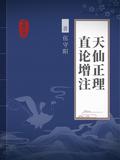 An Additional Note on the Direct Theory of Immortal Righteousness
This work "Additional Notes on Immortal Zhengli Zhilun" is written by Wu Shouyang
—Reads8.3Score—Shelves
An Additional Note on the Direct Theory of Immortal Righteousness
This work "Additional Notes on Immortal Zhengli Zhilun" is written by Wu Shouyang
—Reads8.3Score—Shelves
-
 Zimen Boxing Pu
Chinese traditional cultural thoughts have a long history and are highly original, original and literary. The early ideological forms were very distinctive, with extensive and profound contents such as religious theology, Chinese medicine classics, ancient military art, Confucianism, Taoism, Buddhism and hundreds of schools of thought, Feng Shui metaphysics, Twenty-Four Histories, customs and geography, etc. This series of "Original Books on Classic Chinese Studies and Essence Culture" retains t
—Reads8.4Score—Shelves
Zimen Boxing Pu
Chinese traditional cultural thoughts have a long history and are highly original, original and literary. The early ideological forms were very distinctive, with extensive and profound contents such as religious theology, Chinese medicine classics, ancient military art, Confucianism, Taoism, Buddhism and hundreds of schools of thought, Feng Shui metaphysics, Twenty-Four Histories, customs and geography, etc. This series of "Original Books on Classic Chinese Studies and Essence Culture" retains t
—Reads8.4Score—Shelves
-
 Theory of Warm Epidemic
It is another epoch-making treatise on exogenous diseases in the history of medicine 1,400 years after "Treatise on Febrile Diseases" was written. It recognized for the first time that febrile disease is infected with hostility and is contagious, and pioneered the theory of febrile disease. Many later treatises on febrile diseases were influenced and inspired by this book.
—Reads8.7Score—Shelves
Theory of Warm Epidemic
It is another epoch-making treatise on exogenous diseases in the history of medicine 1,400 years after "Treatise on Febrile Diseases" was written. It recognized for the first time that febrile disease is infected with hostility and is contagious, and pioneered the theory of febrile disease. Many later treatises on febrile diseases were influenced and inspired by this book.
—Reads8.7Score—Shelves
-
 Medical Insights (Free Public Edition Book)
Comprehensive medical work, written by Cheng Guopeng of the Qing Dynasty.
—Reads9.0Score—Shelves
Medical Insights (Free Public Edition Book)
Comprehensive medical work, written by Cheng Guopeng of the Qing Dynasty.
—Reads9.0Score—Shelves
-
 Elbow Emergency Remedy
"Elbow Prescription for Emergency", an ancient Chinese medicine prescription book. It is China's first clinical first aid manual. Monographs on Traditional Chinese Medicine Therapeutics. 8 Volumes, 70 articles. Written by Ge Hong during the Eastern Jin Dynasty. The original name is "The Recipe for Saving Soldiers from the Back of the Elbow", which is shortened to "The Recipe from the Back of the Elbow". This book is compiled by the author from his original work "Yuhan Prescriptions" (a total of
—Reads9.2Score—Shelves
Elbow Emergency Remedy
"Elbow Prescription for Emergency", an ancient Chinese medicine prescription book. It is China's first clinical first aid manual. Monographs on Traditional Chinese Medicine Therapeutics. 8 Volumes, 70 articles. Written by Ge Hong during the Eastern Jin Dynasty. The original name is "The Recipe for Saving Soldiers from the Back of the Elbow", which is shortened to "The Recipe from the Back of the Elbow". This book is compiled by the author from his original work "Yuhan Prescriptions" (a total of
—Reads9.2Score—Shelves
-
 Traditional Chinese Medicine Collection: Shengji
[A medical masterpiece compiled by the official Imperial Hospital of the Song Dynasty] [A historical medical document with research value] [Compiled by the Song Dynasty government by collecting medical prescriptions from the people and doctors at that time, combined with secret recipes stored in the "inner government", and compiled by the Taiyuan Hospital] The book contains nearly 20,000 medical prescriptions in 200 volumes. The first list of items such as luck, narrative examples, and governanc
—Reads8.9Score—Shelves
Traditional Chinese Medicine Collection: Shengji
[A medical masterpiece compiled by the official Imperial Hospital of the Song Dynasty] [A historical medical document with research value] [Compiled by the Song Dynasty government by collecting medical prescriptions from the people and doctors at that time, combined with secret recipes stored in the "inner government", and compiled by the Taiyuan Hospital] The book contains nearly 20,000 medical prescriptions in 200 volumes. The first list of items such as luck, narrative examples, and governanc
—Reads8.9Score—Shelves
-
 Tang Rongchuan's Complete Medical Book
"Tang Rongchuan Medical Encyclopedia" is a masterpiece of the medical essence of Tang Rongchuan (Tang Zonghai), a great medical master in the Qing Dynasty, covering eight of his medical masterpieces. The book not only systematically presents Tang Rongchuan's unique insights into the integration of traditional Chinese and Western medicine, but also profoundly reveals his exquisite discussion on the treatment of blood syndromes. The book pays equal attention to theory and clinical practice, has un
—Reads9.3Score—Shelves
Tang Rongchuan's Complete Medical Book
"Tang Rongchuan Medical Encyclopedia" is a masterpiece of the medical essence of Tang Rongchuan (Tang Zonghai), a great medical master in the Qing Dynasty, covering eight of his medical masterpieces. The book not only systematically presents Tang Rongchuan's unique insights into the integration of traditional Chinese and Western medicine, but also profoundly reveals his exquisite discussion on the treatment of blood syndromes. The book pays equal attention to theory and clinical practice, has un
—Reads9.3Score—Shelves
-
 Doctors' Secret Method for Pulses
The book is divided into two volumes with a total of seventy-eight articles. It systematically explains the theory of pulse theory, focusing on analyzing the corresponding relationship between the three pulses of the left and right hands: Cun, Guan and Chi and the qi and blood of the internal organs.
—Reads9.4Score—Shelves
Doctors' Secret Method for Pulses
The book is divided into two volumes with a total of seventy-eight articles. It systematically explains the theory of pulse theory, focusing on analyzing the corresponding relationship between the three pulses of the left and right hands: Cun, Guan and Chi and the qi and blood of the internal organs.
—Reads9.4Score—Shelves
-
 The Complete Book of Jingyue
The sixty-four volumes of "Jingyue Complete Book" were written by Zhang Jingyue in the Ming Dynasty. Published in 1624. "The Complete Book of Jingyue" is a comprehensive work that records Zhang Jingyue's lifelong treatment experience and academic achievements in traditional Chinese medicine. There are 64 volumes in total and more than 1 million words. The whole book includes Chuanzhonglu, Pulse Shenzhang, Treatise on Febrile Diseases, Miscellaneous Syndrome, Women's Regulations, Pediatric Regula
—Reads9.4Score—Shelves
The Complete Book of Jingyue
The sixty-four volumes of "Jingyue Complete Book" were written by Zhang Jingyue in the Ming Dynasty. Published in 1624. "The Complete Book of Jingyue" is a comprehensive work that records Zhang Jingyue's lifelong treatment experience and academic achievements in traditional Chinese medicine. There are 64 volumes in total and more than 1 million words. The whole book includes Chuanzhonglu, Pulse Shenzhang, Treatise on Febrile Diseases, Miscellaneous Syndrome, Women's Regulations, Pediatric Regula
—Reads9.4Score—Shelves
-
 Ji Xiao's New Book
Ancient Chinese literary classics have a variety of artistic expression techniques and are a colorful, magnificent and glorious picture of Chinese classical literature.
—Reads8.6Score—Shelves
Ji Xiao's New Book
Ancient Chinese literary classics have a variety of artistic expression techniques and are a colorful, magnificent and glorious picture of Chinese classical literature.
—Reads8.6Score—Shelves
-
 Ge Xianweng Tai Chi Chong Xuan Zhi Dao Xin Biography
The Ren pulse starts below the middle pole, above the hairline, along the abdomen, up to the Guanyuan, to the throat, passes through the middle and rises upward, enters the brain from the void and stops at the intersection of the gums (i. E. Between the lower teeth), which belongs to the sea of yin pulses. The Du Vein starts from the lowermost acupuncture point, goes from the spine, ascends to Fengfu, enters the top of the brain, follows the forehead to the pillar of the nose, where the Qi pas
—Reads9.2Score—Shelves
Ge Xianweng Tai Chi Chong Xuan Zhi Dao Xin Biography
The Ren pulse starts below the middle pole, above the hairline, along the abdomen, up to the Guanyuan, to the throat, passes through the middle and rises upward, enters the brain from the void and stops at the intersection of the gums (i. E. Between the lower teeth), which belongs to the sea of yin pulses. The Du Vein starts from the lowermost acupuncture point, goes from the spine, ascends to Fengfu, enters the top of the brain, follows the forehead to the pillar of the nose, where the Qi pas
—Reads9.2Score—Shelves
-
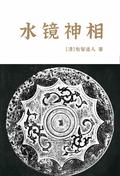 Water Mirror
"Shuijing Shenxiang" is a collection of the essence of physiognomy in the past dynasties, compiled by Taoist Youji in the late Ming and early Qing dynasties. On the basis of his rich personal practical experience, Taoist Youji integrated and rearranged the theories of famous physiognomists from the Han Dynasty to Yuan Liuzhuang of the Ming Dynasty. Among them, "Facial Physiology" involves more than a hundred kinds of shapes such as mouth, nose, ears, eyes, eyebrows, etc., "General Theory of Head
—Reads8.9Score—Shelves
Water Mirror
"Shuijing Shenxiang" is a collection of the essence of physiognomy in the past dynasties, compiled by Taoist Youji in the late Ming and early Qing dynasties. On the basis of his rich personal practical experience, Taoist Youji integrated and rearranged the theories of famous physiognomists from the Han Dynasty to Yuan Liuzhuang of the Ming Dynasty. Among them, "Facial Physiology" involves more than a hundred kinds of shapes such as mouth, nose, ears, eyes, eyebrows, etc., "General Theory of Head
—Reads8.9Score—Shelves
-
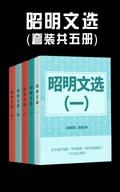 Selected Works of Zhaoming (Set of Five Volumes)
"Selected Works of Zhaoming", also known as "Selected Works", is an earlier collection of poems and essays in China. It contains more than 700 poems and essays by more than 130 authors from the Zhou Dynasty to the Six Dynasties before Liang Dynasty. It was compiled and selected by Xiao Tong, the eldest son of Emperor Wu of the Southern Dynasties Liang Dynasty, organized by literati. The content of this book can be roughly divided into three major categories: Fu, poetry, and essays, which are fu
—Reads9.0Score—Shelves
Selected Works of Zhaoming (Set of Five Volumes)
"Selected Works of Zhaoming", also known as "Selected Works", is an earlier collection of poems and essays in China. It contains more than 700 poems and essays by more than 130 authors from the Zhou Dynasty to the Six Dynasties before Liang Dynasty. It was compiled and selected by Xiao Tong, the eldest son of Emperor Wu of the Southern Dynasties Liang Dynasty, organized by literati. The content of this book can be roughly divided into three major categories: Fu, poetry, and essays, which are fu
—Reads9.0Score—Shelves
-
 First Aid Remedy
Medical writings. Volume Two. Compiled by Zhang Shiche of Ming Dynasty. Published in 1550. This book is based on the author's additions, deletions and revisions of practical and effective single prescriptions in Anonymous' "First Aid Prescriptions". The content is mainly about first aid. The whole book is divided into 39 chapters including Five Absolute Deaths, Consumption Winds, Typhoid Epidemics, and Various Poisons. Published together with "Wonderful Prescriptions for Health Preservation".
—Reads9.1Score—Shelves
First Aid Remedy
Medical writings. Volume Two. Compiled by Zhang Shiche of Ming Dynasty. Published in 1550. This book is based on the author's additions, deletions and revisions of practical and effective single prescriptions in Anonymous' "First Aid Prescriptions". The content is mainly about first aid. The whole book is divided into 39 chapters including Five Absolute Deaths, Consumption Winds, Typhoid Epidemics, and Various Poisons. Published together with "Wonderful Prescriptions for Health Preservation".
—Reads9.1Score—Shelves
-
 Longevity and Longevity
"Shou Shi Bao Yuan" was written by Gong Tingxian of the Ming Dynasty. It was written in the 43rd year of Wanli (1615) and has 10 volumes in total. Among them, Volume 1 is basic theory, Volume 2 to Volume 6 are miscellaneous syndromes in internal medicine, Volume 7 is gynecology, Volume 8 is pediatrics, Volume 9 is surgery, Volume 10 is folk single prescriptions, miscellaneous treatments, first aid, moxibustion and other prescriptions. This book is a companion book to "Rejuvenation from All Disea
—Reads9.1Score—Shelves
Longevity and Longevity
"Shou Shi Bao Yuan" was written by Gong Tingxian of the Ming Dynasty. It was written in the 43rd year of Wanli (1615) and has 10 volumes in total. Among them, Volume 1 is basic theory, Volume 2 to Volume 6 are miscellaneous syndromes in internal medicine, Volume 7 is gynecology, Volume 8 is pediatrics, Volume 9 is surgery, Volume 10 is folk single prescriptions, miscellaneous treatments, first aid, moxibustion and other prescriptions. This book is a companion book to "Rejuvenation from All Disea
—Reads9.1Score—Shelves
-
 Ancient Prescription Huijing
"Gu Fang Huijing", Fang Shu, 5 volumes. A collection of Aixu Laoren in the Qing Dynasty, published in the ninth year of Jiaqing (1804). Volume 1 is the Internal Medicine Department; Volume 2 is the Surgery Department, which is further divided into six categories: boils, wind-phlegm sores, measles and erysipelas, throat, ears and eyes, and bruises; Volume 3 is the Gynecology Department, with the appendix "Dasheng Lun"; Volume 4 is the Pediatrics Department, the first is "Ten Essentials of Childre
—Reads8.7Score—Shelves
Ancient Prescription Huijing
"Gu Fang Huijing", Fang Shu, 5 volumes. A collection of Aixu Laoren in the Qing Dynasty, published in the ninth year of Jiaqing (1804). Volume 1 is the Internal Medicine Department; Volume 2 is the Surgery Department, which is further divided into six categories: boils, wind-phlegm sores, measles and erysipelas, throat, ears and eyes, and bruises; Volume 3 is the Gynecology Department, with the appendix "Dasheng Lun"; Volume 4 is the Pediatrics Department, the first is "Ten Essentials of Childre
—Reads8.7Score—Shelves
-
 The Method of Burning Ointment and Acupuncture Points
Ancient Chinese medicine books are a shining pearl in the treasure house of Chinese medicine. They have high guiding significance and practical value, and have made significant contributions and far-reaching influences on the development of medicine in later generations.
—Reads8.4Score—Shelves
The Method of Burning Ointment and Acupuncture Points
Ancient Chinese medicine books are a shining pearl in the treasure house of Chinese medicine. They have high guiding significance and practical value, and have made significant contributions and far-reaching influences on the development of medicine in later generations.
—Reads8.4Score—Shelves
-
 True Biography of Jin Elixir
The whole book includes 9 "Xijiang Yue Ci", 1 "Gourd Song", 4 "Mingdao Songs" and 1 each of "Introduction to Cultivation", "Brief Introduction to Cultivation", "Five Hundred Words of Golden Pill", and "Song of Clearing Out Evil and Returning to Righteousness". The elixir formulas such as foundation building, medicine obtaining, elixir formation, refining oneself, returning elixir, warming and nourishing, rebirthing, Xuanzhu and so on are discussed in detail.
—Reads8.6Score—Shelves
True Biography of Jin Elixir
The whole book includes 9 "Xijiang Yue Ci", 1 "Gourd Song", 4 "Mingdao Songs" and 1 each of "Introduction to Cultivation", "Brief Introduction to Cultivation", "Five Hundred Words of Golden Pill", and "Song of Clearing Out Evil and Returning to Righteousness". The elixir formulas such as foundation building, medicine obtaining, elixir formation, refining oneself, returning elixir, warming and nourishing, rebirthing, Xuanzhu and so on are discussed in detail.
—Reads8.6Score—Shelves
-
 Shangdongxindan Sutra
Shangdongxindan Jingjue originated from the Tang and Song Dynasties. It was adapted from copies of "Baopuzi Neipian" and "Yellow Emperor Jiuding Shendan Sutra" and other books.
—Reads8.6Score—Shelves
Shangdongxindan Sutra
Shangdongxindan Jingjue originated from the Tang and Song Dynasties. It was adapted from copies of "Baopuzi Neipian" and "Yellow Emperor Jiuding Shendan Sutra" and other books.
—Reads8.6Score—Shelves
-
 Soup Rhymes
"Soup Song Jue" is a treasure of traditional Chinese medicine wisdom. It cleverly summarizes the formulas and main treatments of hundreds of traditional Chinese medicine decoctions in the form of a poem. It is catchy and easy to remember. It is not only the entry key for Chinese medicine students to learn prescriptions, but also a powerful assistant for clinicians to prescribe medicines, allowing people to appreciate the profoundness of Chinese medicine in its rhythm.
—Reads9.4Score—Shelves
Soup Rhymes
"Soup Song Jue" is a treasure of traditional Chinese medicine wisdom. It cleverly summarizes the formulas and main treatments of hundreds of traditional Chinese medicine decoctions in the form of a poem. It is catchy and easy to remember. It is not only the entry key for Chinese medicine students to learn prescriptions, but also a powerful assistant for clinicians to prescribe medicines, allowing people to appreciate the profoundness of Chinese medicine in its rhythm.
—Reads9.4Score—Shelves
-
 Jingshi Dripping Milk Collection
Fan five volumes. It was edited by Sengshan Duozhen in the Qing Dynasty, continued by Shi Yuanjiyun, and published in the 21st year of Kangxi (1682). Collected in Volume 117 of the Xuxu Collection. It is a series of biographies of the Linji sect's unqualified master's lineage tradition. From Wuzhen Normal School and his first heir, Broken Bridge Miao Lun of Jingci Temple in Jingshan, to the seventeenth generation, a total of 238 people, excluding the nine people who were separately included in t
—Reads8.0Score—Shelves
Jingshi Dripping Milk Collection
Fan five volumes. It was edited by Sengshan Duozhen in the Qing Dynasty, continued by Shi Yuanjiyun, and published in the 21st year of Kangxi (1682). Collected in Volume 117 of the Xuxu Collection. It is a series of biographies of the Linji sect's unqualified master's lineage tradition. From Wuzhen Normal School and his first heir, Broken Bridge Miao Lun of Jingci Temple in Jingshan, to the seventeenth generation, a total of 238 people, excluding the nine people who were separately included in t
—Reads8.0Score—Shelves
-
 Wang Xinzhaiyu
—Reads7.9Score—Shelves
Wang Xinzhaiyu
Wang Xinzhaiyu
—Reads7.9Score—Shelves