Fanqie library
Browse
- Titles
- 15
Every Fanqie book we index, searchable by title, author or tag.
-
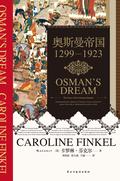 Ottoman Empire: 1299-1923
At its peak in the 16th century, the Ottoman Empire was an empire spanning three continents: Europe, Asia, and Africa. Its every move has a profound impact on the Eurasian continent. However, it gradually declined and became the "sick man of Europe" that was oppressed and exploited by Europe, and finally collapsed after the First World War. This book mainly tells the long history of the Ottoman Turkish Empire from the founding of the country at the end of the 13th century to the great speech of
58Reads8.8Score—Shelves
Ottoman Empire: 1299-1923
At its peak in the 16th century, the Ottoman Empire was an empire spanning three continents: Europe, Asia, and Africa. Its every move has a profound impact on the Eurasian continent. However, it gradually declined and became the "sick man of Europe" that was oppressed and exploited by Europe, and finally collapsed after the First World War. This book mainly tells the long history of the Ottoman Turkish Empire from the founding of the country at the end of the 13th century to the great speech of
58Reads8.8Score—Shelves
-
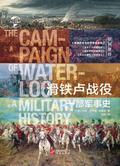 The Battle of Waterloo: a Military History
The uniqueness of "The Battle of Waterloo: A Military History" lies in the authoritativeness of historical sources, the rigor of discussion and the objectivity of conclusions. The author, John Codman Ropes, tries to restore the true local history of the Battle of Waterloo with a very logical and empirical discussion. What was Napoleon's operational vision in the context of the established deployment of the anti-French coalition forces? What huge hidden dangers have been laid by the reorganizatio
26Reads8.9Score—Shelves
The Battle of Waterloo: a Military History
The uniqueness of "The Battle of Waterloo: A Military History" lies in the authoritativeness of historical sources, the rigor of discussion and the objectivity of conclusions. The author, John Codman Ropes, tries to restore the true local history of the Battle of Waterloo with a very logical and empirical discussion. What was Napoleon's operational vision in the context of the established deployment of the anti-French coalition forces? What huge hidden dangers have been laid by the reorganizatio
26Reads8.9Score—Shelves
-
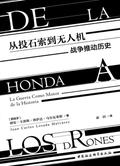 From Slings to Drones: War Drives History
While war is accompanied by huge disasters, it also promotes the progress of human society. In this book, readers will see the impact of war on the course of human history: the accidental combination of wood and thread not only allowed people to hold bows and arrows, but also gave birth to strings, music, and even triggered the initial thinking about dynamics; in order to be one step ahead of the enemy in war communications, people paved roads, changed carriages and horses, designed codes, and r
22Reads8.3Score—Shelves
From Slings to Drones: War Drives History
While war is accompanied by huge disasters, it also promotes the progress of human society. In this book, readers will see the impact of war on the course of human history: the accidental combination of wood and thread not only allowed people to hold bows and arrows, but also gave birth to strings, music, and even triggered the initial thinking about dynamics; in order to be one step ahead of the enemy in war communications, people paved roads, changed carriages and horses, designed codes, and r
22Reads8.3Score—Shelves
-
 World War II (1939-1945): a History of Strategy and Tactics
This book is the concluding work of J. F. C. Fuller, a master of military history, who reflected on the Second World War. Fuller grasped this largest war in human history from a global perspective. He made his own theoretically profound judgments about the contradictions and conflicts between the strategic goals of the participating parties and the specific means to achieve the goals from a strategic perspective from the perspectives of Germany, Britain, the Soviet Union, the United States, Japa
22Reads8.8Score—Shelves
World War II (1939-1945): a History of Strategy and Tactics
This book is the concluding work of J. F. C. Fuller, a master of military history, who reflected on the Second World War. Fuller grasped this largest war in human history from a global perspective. He made his own theoretically profound judgments about the contradictions and conflicts between the strategic goals of the participating parties and the specific means to achieve the goals from a strategic perspective from the perspectives of Germany, Britain, the Soviet Union, the United States, Japa
22Reads8.8Score—Shelves
-
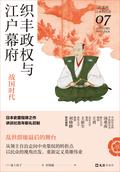 The Oriho Regime and the Edo Shogunate: the Warring States Period (Kodansha History of Japan 07)
This is the end of troubled times and the beginning of two hundred years of peace and prosperity. Since the Onin Rebellion, the flames of war on the Japanese archipelago have been burning for a hundred years. With the destruction of countless old things, the birth of new things, social transformation, and the rise of countless heroes. Oda Nobunaga, Toyotomi Hideyoshi, and Tokugawa Ieyasu came to power one after another, defining the development direction of this era. _X000D_ Oda Nobunaga took th
21Reads8.9Score—Shelves
The Oriho Regime and the Edo Shogunate: the Warring States Period (Kodansha History of Japan 07)
This is the end of troubled times and the beginning of two hundred years of peace and prosperity. Since the Onin Rebellion, the flames of war on the Japanese archipelago have been burning for a hundred years. With the destruction of countless old things, the birth of new things, social transformation, and the rise of countless heroes. Oda Nobunaga, Toyotomi Hideyoshi, and Tokugawa Ieyasu came to power one after another, defining the development direction of this era. _X000D_ Oda Nobunaga took th
21Reads8.9Score—Shelves
-
 Postwar European History (Four Volumes)
"History of Postwar Europe" (set of four volumes) is the representative work of Tony Judt, a well-respected historian and thinker in the world today. It took 20 years to conceive and 10 years to write. It extensively uses documents in 6 languages and covers 34 countries. It takes into account Western and Eastern Europe and covers the entire Europe. It is a historical masterpiece that comprehensively displays the political, economic and cultural changes in modern Europe in the past 60 years. It
16Reads9.0Score—Shelves
Postwar European History (Four Volumes)
"History of Postwar Europe" (set of four volumes) is the representative work of Tony Judt, a well-respected historian and thinker in the world today. It took 20 years to conceive and 10 years to write. It extensively uses documents in 6 languages and covers 34 countries. It takes into account Western and Eastern Europe and covers the entire Europe. It is a historical masterpiece that comprehensively displays the political, economic and cultural changes in modern Europe in the past 60 years. It
16Reads9.0Score—Shelves
-
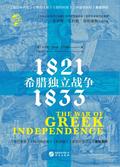 Greek War of Independence: 1821-1833
This book takes the great struggle of Greece to resist the rule of the Ottoman Empire and strive for national independence as the main line, and the great powers' struggle for the Balkan Peninsula as the background. It tells the complex international situation, diplomatic games, and military struggles from 1821 to 1833. It is not only a history of the Greek War of Independence, but also a history of the struggle for hegemony in the Balkans. It profoundly reveals the inevitable relationship betwe
15Reads8.6Score—Shelves
Greek War of Independence: 1821-1833
This book takes the great struggle of Greece to resist the rule of the Ottoman Empire and strive for national independence as the main line, and the great powers' struggle for the Balkan Peninsula as the background. It tells the complex international situation, diplomatic games, and military struggles from 1821 to 1833. It is not only a history of the Greek War of Independence, but also a history of the struggle for hegemony in the Balkans. It profoundly reveals the inevitable relationship betwe
15Reads8.6Score—Shelves
-
 The Retired Emperor: the Final Years of Charles V
Charles V was the emperor of the Holy Roman Empire. In the minds of Europeans, he was the protagonist of the "Era of Habsburg Hegemony" and the beginning of Spain's imperial era. He was the greatest monarch in Europe in the 16th century. During his reign, he launched many foreign wars. In his later years, he retired from the throne and lived in seclusion in a monastery. This book involves the conflicts between European regions during the period of Charles V. The relationship between Charles V an
9Reads7.9Score—Shelves
The Retired Emperor: the Final Years of Charles V
Charles V was the emperor of the Holy Roman Empire. In the minds of Europeans, he was the protagonist of the "Era of Habsburg Hegemony" and the beginning of Spain's imperial era. He was the greatest monarch in Europe in the 16th century. During his reign, he launched many foreign wars. In his later years, he retired from the throne and lived in seclusion in a monastery. This book involves the conflicts between European regions during the period of Charles V. The relationship between Charles V an
9Reads7.9Score—Shelves
-
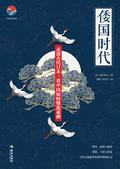 Japanese Period
If you want to understand the status of the archipelago before the founding of Japan, you must make use of the documents from that time. However, there are also many misunderstandings in this literature. In "The Age of the Japanese Kingdom", Professor Hidehiro Okada analyzed the impact of the political trends in mainland China on the Japanese archipelago, specifically explained the content and structure of "Wei Zhi Japanese Biography" and "Nihon Shoki", and from the perspective of world history,
5Reads8.3Score—Shelves
Japanese Period
If you want to understand the status of the archipelago before the founding of Japan, you must make use of the documents from that time. However, there are also many misunderstandings in this literature. In "The Age of the Japanese Kingdom", Professor Hidehiro Okada analyzed the impact of the political trends in mainland China on the Japanese archipelago, specifically explained the content and structure of "Wei Zhi Japanese Biography" and "Nihon Shoki", and from the perspective of world history,
5Reads8.3Score—Shelves
-
 History of Technology in Ancient Greece and Rome (Baker Knowledge Series)
In "History of Technology in Ancient Greece and Rome", Helmut Schneider provides an overview of the importance and development of technology and craftsmanship in ancient Greece and Rome, and presents it to readers in a clear, easy-to-understand, informative and concise way. After briefly introducing the origins of ancient Greek and Roman technology in Egypt and the ancient Near East, the author advances the focus of the discussion to the elaboration of Greek and Roman civilization. He introduced
4Reads8.1Score—Shelves
History of Technology in Ancient Greece and Rome (Baker Knowledge Series)
In "History of Technology in Ancient Greece and Rome", Helmut Schneider provides an overview of the importance and development of technology and craftsmanship in ancient Greece and Rome, and presents it to readers in a clear, easy-to-understand, informative and concise way. After briefly introducing the origins of ancient Greek and Roman technology in Egypt and the ancient Near East, the author advances the focus of the discussion to the elaboration of Greek and Roman civilization. He introduced
4Reads8.1Score—Shelves
-
 The Magnificent Modern History of the World (Part 1)
History is to humanity as a whole what memory is to each of us, explaining what we do now, why we do it, and how we did it in the past. Therefore whoever wants to understand the world must know its history.
3Reads8.7Score—Shelves
The Magnificent Modern History of the World (Part 1)
History is to humanity as a whole what memory is to each of us, explaining what we do now, why we do it, and how we did it in the past. Therefore whoever wants to understand the world must know its history.
3Reads8.7Score—Shelves
-
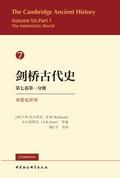 Cambridge Ancient History. Volume 7. Part 1, Hellenistic World
The term "Hellenism" is often used to describe a world in which Greek was the universal language. Greeks moved in droves to the south and east to establish new colonies, or joined mercenary armies in search of wealth, convinced of their status as members of the new ruling class. Discord and conflict inevitably arose as local people and cultures became involved in this creeping Hellenization. Using extensive primary sources, the author examines political events from the death of Alexander to the
3Reads8.0Score—Shelves
Cambridge Ancient History. Volume 7. Part 1, Hellenistic World
The term "Hellenism" is often used to describe a world in which Greek was the universal language. Greeks moved in droves to the south and east to establish new colonies, or joined mercenary armies in search of wealth, convinced of their status as members of the new ruling class. Discord and conflict inevitably arose as local people and cultures became involved in this creeping Hellenization. Using extensive primary sources, the author examines political events from the death of Alexander to the
3Reads8.0Score—Shelves
-
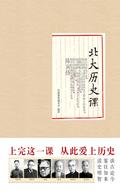 Peking University History Class (Hardcover)
"Peking University History Course" includes two parts: Chinese and world history. Based on the teaching guidance of famous history professors at Peking University, in chronological order, it compiles a vast scroll of five thousand years of Chinese civilization from the myth and legend of the creation of Pangu to the collapse of the last feudal dynasty. The world history section shows a historical overview from the ancient civilization period to the new changes in the world pattern after World Wa
—Reads8.4Score—Shelves
Peking University History Class (Hardcover)
"Peking University History Course" includes two parts: Chinese and world history. Based on the teaching guidance of famous history professors at Peking University, in chronological order, it compiles a vast scroll of five thousand years of Chinese civilization from the myth and legend of the creation of Pangu to the collapse of the last feudal dynasty. The world history section shows a historical overview from the ancient civilization period to the new changes in the world pattern after World Wa
—Reads8.4Score—Shelves
-
 Oxford General Studies: Napoleonic Wars
The Napoleonic Wars are known as the first modern war in human history. They had a profound impact on Europe's military management, political thought, and international relations, and greatly promoted the modernization of Europe. The Napoleonic Wars ushered in military professionalism in Europe. After the Napoleonic Wars, European countries followed Napoleon's example, abolished the mercenary system, and formed professional armed groups; scientific calculations of marching speed, logistics, etc.
—Reads8.5Score—Shelves
Oxford General Studies: Napoleonic Wars
The Napoleonic Wars are known as the first modern war in human history. They had a profound impact on Europe's military management, political thought, and international relations, and greatly promoted the modernization of Europe. The Napoleonic Wars ushered in military professionalism in Europe. After the Napoleonic Wars, European countries followed Napoleon's example, abolished the mercenary system, and formed professional armed groups; scientific calculations of marching speed, logistics, etc.
—Reads8.5Score—Shelves
-
 Nation*******
Sai Lei tells history in a highly anthropomorphic way of the country, transforming the country into a flesh-and-blood, cute and cute image. He removes the details of its history and condenses it into a general development line. He uses humorous language and a simple, popular and imaginative way to tell the development history of various countries in the world, so that readers can understand the general history of each country in the shortest possible time. Israel, which has forged a strong soul
—Reads5.8Score—Shelves
Nation*******
Sai Lei tells history in a highly anthropomorphic way of the country, transforming the country into a flesh-and-blood, cute and cute image. He removes the details of its history and condenses it into a general development line. He uses humorous language and a simple, popular and imaginative way to tell the development history of various countries in the world, so that readers can understand the general history of each country in the shortest possible time. Israel, which has forged a strong soul
—Reads5.8Score—Shelves