Fanqie library
Browse
- Titles
- 6
Every Fanqie book we index, searchable by title, author or tag.
-
 Traveling Through Ancient Times: Savages Are Waiting for Food
Sang Tian unfortunately fell off a cliff during a geological survey in Shennongjia and found that he had traveled back in time to ancient times and was picked up by a group of hunting savages and brought back to the tribe. Outside the cave, there are towering ancient trees and gloomy forests, and the animals and plants are twice as large as in modern times; the savage people in the tribe have low labor standards and low living standards. Therefore, food development, grain collection, farming
584Reads—Score—Shelves
Traveling Through Ancient Times: Savages Are Waiting for Food
Sang Tian unfortunately fell off a cliff during a geological survey in Shennongjia and found that he had traveled back in time to ancient times and was picked up by a group of hunting savages and brought back to the tribe. Outside the cave, there are towering ancient trees and gloomy forests, and the animals and plants are twice as large as in modern times; the savage people in the tribe have low labor standards and low living standards. Therefore, food development, grain collection, farming
584Reads—Score—Shelves
-
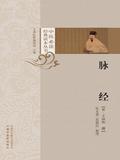 Meridians
"Mai Jing" was written by Wang Shuhe of the Jin Dynasty and was written between 210 and 259 AD. It is the earliest existing monograph on the pulse theory of traditional Chinese medicine in China. Wang Shuhe, named Xi, "had a calm nature, and was especially good at writing. He was well versed in classic prescriptions, was meticulous in diagnosis, and had an insight into the way of self-cultivation (Song Dynasty Lin Yi and others submitted Zha Ziyu)." Using various pulse studies documents he searc
—Reads8.7Score—Shelves
Meridians
"Mai Jing" was written by Wang Shuhe of the Jin Dynasty and was written between 210 and 259 AD. It is the earliest existing monograph on the pulse theory of traditional Chinese medicine in China. Wang Shuhe, named Xi, "had a calm nature, and was especially good at writing. He was well versed in classic prescriptions, was meticulous in diagnosis, and had an insight into the way of self-cultivation (Song Dynasty Lin Yi and others submitted Zha Ziyu)." Using various pulse studies documents he searc
—Reads8.7Score—Shelves
-
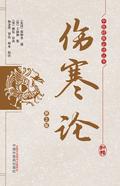 Treatise on Febrile Diseases
"Treatise on Febrile Diseases" was written by Zhang Zhongjing, a famous medical scientist in the Han Dynasty, and has been regarded as a classic work of traditional Chinese medicine throughout the ages. The principles and methods of syndrome differentiation and treatment used in this book have established the norms for the diagnosis and treatment of diseases in traditional Chinese medicine. The experience of diagnosis and treatment based on the combination of principles, methods, prescriptions a
—Reads9.2Score—Shelves
Treatise on Febrile Diseases
"Treatise on Febrile Diseases" was written by Zhang Zhongjing, a famous medical scientist in the Han Dynasty, and has been regarded as a classic work of traditional Chinese medicine throughout the ages. The principles and methods of syndrome differentiation and treatment used in this book have established the norms for the diagnosis and treatment of diseases in traditional Chinese medicine. The experience of diagnosis and treatment based on the combination of principles, methods, prescriptions a
—Reads9.2Score—Shelves
-
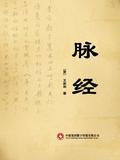 Meridians
"Mai Jing", written by Wang Shuhe of the Western Jin Dynasty. The book has 10 volumes and a total of 97 articles. This book is the earliest extant pulse theory monograph in my country. It collects a large amount of information on pulse theory before the Han Dynasty, describes the characteristics and changes of each pulse in detail, lists the four seasons of internal organs, various miscellaneous diseases, and pulse syndromes of women and children. It organically combines pulse, syndrome, and tre
—Reads9.3Score—Shelves
Meridians
"Mai Jing", written by Wang Shuhe of the Western Jin Dynasty. The book has 10 volumes and a total of 97 articles. This book is the earliest extant pulse theory monograph in my country. It collects a large amount of information on pulse theory before the Han Dynasty, describes the characteristics and changes of each pulse in detail, lists the four seasons of internal organs, various miscellaneous diseases, and pulse syndromes of women and children. It organically combines pulse, syndrome, and tre
—Reads9.3Score—Shelves
-
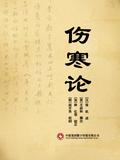 Treatise on Febrile Diseases
"Treatise on Febrile Diseases" was written around the beginning of the third century AD and was compiled by Zhang Ji (Zhang Zhongjing) of the Eastern Han Dynasty. It was originally the typhoid fever part of "Treatise on Febrile and Miscellaneous Diseases" and was once lost. It was collected and compiled by Wang Shuhe during the Jin Dynasty and named "Treatise on Febrile Diseases". It was revised by Lin Yi and others in the Northern Song Dynasty and has been passed down to this day. The book has
—Reads9.5Score—Shelves
Treatise on Febrile Diseases
"Treatise on Febrile Diseases" was written around the beginning of the third century AD and was compiled by Zhang Ji (Zhang Zhongjing) of the Eastern Han Dynasty. It was originally the typhoid fever part of "Treatise on Febrile and Miscellaneous Diseases" and was once lost. It was collected and compiled by Wang Shuhe during the Jin Dynasty and named "Treatise on Febrile Diseases". It was revised by Lin Yi and others in the Northern Song Dynasty and has been passed down to this day. The book has
—Reads9.5Score—Shelves
-
 Meridians
Chinese medical classics are a shining pearl in the treasure house of Chinese medicine. They have high guiding significance and practical value, and have made significant contributions and far-reaching influences on the development of medicine in later generations.
—Reads9.3Score—Shelves
Meridians
Chinese medical classics are a shining pearl in the treasure house of Chinese medicine. They have high guiding significance and practical value, and have made significant contributions and far-reaching influences on the development of medicine in later generations.
—Reads9.3Score—Shelves