Fanqie library
Browse
- Titles
- 4
Every Fanqie book we index, searchable by title, author or tag.
-
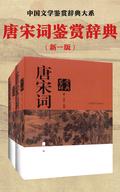 Appreciative Dictionary of Tang and Song Poems (New Edition) (Set of 2 Volumes)
"Appreciative Dictionary of Tang and Song Poems" is one of the major Chinese literature appreciation dictionaries of Shanghai Dictionary Publishing House. The book was first published in 1988 and the second edition was revised in 2011. In terms of selecting the titles and writing the appreciation essays, we invited many well-known domestic ci experts at the time to participate. We selected the titles, wrote the appreciation essays, and compiled appendices with the aim of both popularization and
—Reads9.4Score—Shelves
Appreciative Dictionary of Tang and Song Poems (New Edition) (Set of 2 Volumes)
"Appreciative Dictionary of Tang and Song Poems" is one of the major Chinese literature appreciation dictionaries of Shanghai Dictionary Publishing House. The book was first published in 1988 and the second edition was revised in 2011. In terms of selecting the titles and writing the appreciation essays, we invited many well-known domestic ci experts at the time to participate. We selected the titles, wrote the appreciation essays, and compiled appendices with the aim of both popularization and
—Reads9.4Score—Shelves
-
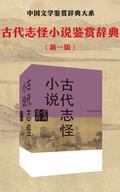 Appreciative Dictionary of Ancient Strange Novels
This book collects 539 supernatural novels from a large number of various notebooks, miscellaneous works, and novels from the Han Dynasty to the Qing Dynasty. Nearly a hundred contemporary Chinese experts and scholars who are engaged in the education and research of ancient literature will be gathered to appreciate and appreciate these ancient novels that either narrate myths and legends or depict gods, ghosts, and monsters, and evaluate their artistic style, literary interest, and literary valu
—Reads9.3Score—Shelves
Appreciative Dictionary of Ancient Strange Novels
This book collects 539 supernatural novels from a large number of various notebooks, miscellaneous works, and novels from the Han Dynasty to the Qing Dynasty. Nearly a hundred contemporary Chinese experts and scholars who are engaged in the education and research of ancient literature will be gathered to appreciate and appreciate these ancient novels that either narrate myths and legends or depict gods, ghosts, and monsters, and evaluate their artistic style, literary interest, and literary valu
—Reads9.3Score—Shelves
-
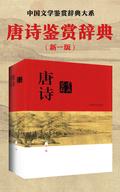 Tang Poetry Appreciation Dictionary (New Edition)
"Tang Poetry Appreciation Dictionary" is the first domestic literature and art appreciation dictionary. Its original compilation style that integrates literary appreciation and reference books has become an inherent model of Chinese literary appreciation dictionaries. "Tang Poetry Appreciation Dictionary" contains more than 1,100 poems by more than 190 poets in the Tang Dynasty, with a total of about 2.3 Million words. Appreciative articles were written by classical literature experts such as Xi
—Reads9.4Score—Shelves
Tang Poetry Appreciation Dictionary (New Edition)
"Tang Poetry Appreciation Dictionary" is the first domestic literature and art appreciation dictionary. Its original compilation style that integrates literary appreciation and reference books has become an inherent model of Chinese literary appreciation dictionaries. "Tang Poetry Appreciation Dictionary" contains more than 1,100 poems by more than 190 poets in the Tang Dynasty, with a total of about 2.3 Million words. Appreciative articles were written by classical literature experts such as Xi
—Reads9.4Score—Shelves
-
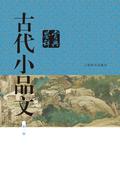 **
This book is one of our Chinese Literature Appreciation Dictionaries (new edition) series. Essays generally refer to short essays with lively and diverse content and informal styles and themes, which are different from long essays with the purpose of applying knowledge to the world. The name of Xiaopin comes from Buddhist scriptures. The more detailed ones are called Dabains, while the shorter ones are called Xiaopins, which have no stylistic meaning. This name began to be used in literature in
—Reads5.8Score—Shelves
**
This book is one of our Chinese Literature Appreciation Dictionaries (new edition) series. Essays generally refer to short essays with lively and diverse content and informal styles and themes, which are different from long essays with the purpose of applying knowledge to the world. The name of Xiaopin comes from Buddhist scriptures. The more detailed ones are called Dabains, while the shorter ones are called Xiaopins, which have no stylistic meaning. This name began to be used in literature in
—Reads5.8Score—Shelves