Fanqie library
Browse
- Titles
- 4
Every Fanqie book we index, searchable by title, author or tag.
-
 Character in Children: Positive Psychology for Parents
People have always paid more attention to the impact of IQ and EQ on children's growth, and have largely ignored the protection and cultivation of personality traits and positive nature. In recent years, more and more studies have found that the key factor in guiding children to live a happy life is "character advantages", and positive education is a beacon that lights up children's character advantages. Professor Peng Kaiping summarized the research results of the past 30 years and extracted se
116Reads9.3Score—Shelves
Character in Children: Positive Psychology for Parents
People have always paid more attention to the impact of IQ and EQ on children's growth, and have largely ignored the protection and cultivation of personality traits and positive nature. In recent years, more and more studies have found that the key factor in guiding children to live a happy life is "character advantages", and positive education is a beacon that lights up children's character advantages. Professor Peng Kaiping summarized the research results of the past 30 years and extracted se
116Reads9.3Score—Shelves
-
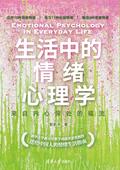 The Psychology of Emotions in Life: the Flow of Happiness from Deep Within
This topic focuses on emotions and happiness, in the form of short stories, divided into three lectures, and a total of thirty short articles. Includes three major topics: what are emotions, how to manage negative emotions, and how to enjoy positive emotions. The main content covers why we should pay attention to emotions, the types, good and bad, value of emotions, the relationship between emotions and smell, touch, color, music, movement, and IQ, the management of negative emotions - anger, je
57Reads9.0Score—Shelves
The Psychology of Emotions in Life: the Flow of Happiness from Deep Within
This topic focuses on emotions and happiness, in the form of short stories, divided into three lectures, and a total of thirty short articles. Includes three major topics: what are emotions, how to manage negative emotions, and how to enjoy positive emotions. The main content covers why we should pay attention to emotions, the types, good and bad, value of emotions, the relationship between emotions and smell, touch, color, music, movement, and IQ, the management of negative emotions - anger, je
57Reads9.0Score—Shelves
-
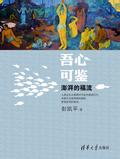 My Heart Can Learn from It: the Surging Flow of Happiness
With the help of modern psychological science, Western psychology has developed by leaps and bounds in recent years. There are too many excellent Western psychology works and popular books on the market. Readers must have questions like this when reading: What does those shocking psychological experiments based on Western people have to do with us Chinese? It seems to be full of logic and science, but is it really applicable to life and work with completely different thinking systems over the pa
31Reads8.9Score—Shelves
My Heart Can Learn from It: the Surging Flow of Happiness
With the help of modern psychological science, Western psychology has developed by leaps and bounds in recent years. There are too many excellent Western psychology works and popular books on the market. Readers must have questions like this when reading: What does those shocking psychological experiments based on Western people have to do with us Chinese? It seems to be full of logic and science, but is it really applicable to life and work with completely different thinking systems over the pa
31Reads8.9Score—Shelves
-
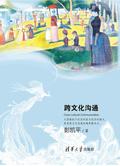 What I Can Learn from My Heart: Cross-Cultural Communication
Different cultures have huge differences in language, customs, cultural psychology, etc. From the dual perspectives of culture and psychology, "My Heart Can Learn: Cross-Cultural Communication" is detailed in four parts: cultural outlook from a global perspective, breakthroughs and overcoming of cross-cultural communication barriers, cross-cultural communication influence and persuasion, and cross-cultural communication innovation and practice. The opening chapter introduces the principles of cr
10Reads8.6Score—Shelves
What I Can Learn from My Heart: Cross-Cultural Communication
Different cultures have huge differences in language, customs, cultural psychology, etc. From the dual perspectives of culture and psychology, "My Heart Can Learn: Cross-Cultural Communication" is detailed in four parts: cultural outlook from a global perspective, breakthroughs and overcoming of cross-cultural communication barriers, cross-cultural communication influence and persuasion, and cross-cultural communication innovation and practice. The opening chapter introduces the principles of cr
10Reads8.6Score—Shelves