Fanqie library
Browse
- Titles
- 7
Every Fanqie book we index, searchable by title, author or tag.
-
 Antifragile: Profiting from Uncertainty
Nietzsche has a famous saying: "What doesn't kill me only makes me stronger." Just as human bones become stronger under weight and pressure, and rumors and riots become more intense under containment and suppression, many things in our lives will also benefit from pressure, chaos, fluctuations and turmoil. Antifragility, as defined by Taleb in his book Antifragility, is the property of things that not only benefit from chaos and volatility, but require such chaos and volatility to survive and th
2.1kReads9.4Score1.2kShelves
Antifragile: Profiting from Uncertainty
Nietzsche has a famous saying: "What doesn't kill me only makes me stronger." Just as human bones become stronger under weight and pressure, and rumors and riots become more intense under containment and suppression, many things in our lives will also benefit from pressure, chaos, fluctuations and turmoil. Antifragility, as defined by Taleb in his book Antifragility, is the property of things that not only benefit from chaos and volatility, but require such chaos and volatility to survive and th
2.1kReads9.4Score1.2kShelves
-
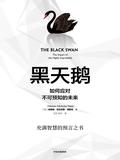 Black Swan
Before the discovery of black swans in Australia, Europeans believed that swans were all white. Black swan was once an idiomatic expression in their speech and writing to refer to things that could not exist. But when the first black swan appeared, this unshakable belief collapsed. The existence of black swans heralds unpredictable major rare events, which often bring unexpected major impacts, but people always turn a blind eye and are accustomed to interpreting them with their own limited life
1kReads9.4Score509Shelves
Black Swan
Before the discovery of black swans in Australia, Europeans believed that swans were all white. Black swan was once an idiomatic expression in their speech and writing to refer to things that could not exist. But when the first black swan appeared, this unshakable belief collapsed. The existence of black swans heralds unpredictable major rare events, which often bring unexpected major impacts, but people always turn a blind eye and are accustomed to interpreting them with their own limited life
1kReads9.4Score509Shelves
-
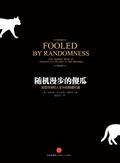 Random Fool
Taleb pointed out in "Random Wandering Fool": Your success may not be because you are better than others, but may be the result of luck. "The Fool Who Walks Randomly" tells you the rules and operation of this random world from a profound and unique perspective. Although randomness cannot be avoided, we can learn to accept it. Just like in the investment market, if a small probability event can bring huge returns, why not continue to bet on this event? If we change our way of thinking and become
495Reads9.4Score257Shelves
Random Fool
Taleb pointed out in "Random Wandering Fool": Your success may not be because you are better than others, but may be the result of luck. "The Fool Who Walks Randomly" tells you the rules and operation of this random world from a profound and unique perspective. Although randomness cannot be avoided, we can learn to accept it. Just like in the investment market, if a small probability event can bring huge returns, why not continue to bet on this event? If we change our way of thinking and become
495Reads9.4Score257Shelves
-
 Asymmetric Risk
About 3,800 years ago, the Code of Hammurabi conveyed to us a law of human evolution—to establish symmetrical relationships in interactions between people to prevent anyone from passing on hidden "tail risks." Throughout the ages, every human law and every teaching has been based on the principle of "symmetry." However, in fact, asymmetric risks have always existed in human history. Taleb proposed that when people face asymmetric risks and external pressures, only by practicing the principle of
480Reads9.4Score274Shelves
Asymmetric Risk
About 3,800 years ago, the Code of Hammurabi conveyed to us a law of human evolution—to establish symmetrical relationships in interactions between people to prevent anyone from passing on hidden "tail risks." Throughout the ages, every human law and every teaching has been based on the principle of "symmetry." However, in fact, asymmetric risks have always existed in human history. Taleb proposed that when people face asymmetric risks and external pressures, only by practicing the principle of
480Reads9.4Score274Shelves
-
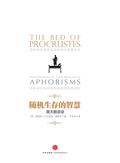 The Wisdom of Random Survival: Black Swan Quotes
Why would we rather use drugs to change a child's brain so that he or she can keep up with the school curriculum than adjust the curriculum to fit the child's nature? Taleb, the author of "Black Swan", expresses his views on this absurd world in the most unexpected way in "The Wisdom of Random Survival". While modern civilization has brought convenience to human life, it has also produced many negative effects - it is accustomed to changing people to adapt to technology, blaming reality for not
26Reads8.7Score—Shelves
The Wisdom of Random Survival: Black Swan Quotes
Why would we rather use drugs to change a child's brain so that he or she can keep up with the school curriculum than adjust the curriculum to fit the child's nature? Taleb, the author of "Black Swan", expresses his views on this absurd world in the most unexpected way in "The Wisdom of Random Survival". While modern civilization has brought convenience to human life, it has also produced many negative effects - it is accustomed to changing people to adapt to technology, blaming reality for not
26Reads8.7Score—Shelves
-
 Wisdom and Magic: Taleb's Black Swan Philosophy
We live in an ever-changing, unpredictable world. The recurring occurrence of black swan events constantly reminds us of the devastating consequences of over-trusting in experience. Taleb believes that every failure of wisdom can be attributed to cutting off the shoes to fit the shoes. In this book, "Wisdom and Magic: Taleb's Black Swan Philosophy", he reveals the secrets of this uncertain world in a beautiful and simple way. Just turning a page at random will make you suddenly enlightened and s
13Reads8.4Score—Shelves
Wisdom and Magic: Taleb's Black Swan Philosophy
We live in an ever-changing, unpredictable world. The recurring occurrence of black swan events constantly reminds us of the devastating consequences of over-trusting in experience. Taleb believes that every failure of wisdom can be attributed to cutting off the shoes to fit the shoes. In this book, "Wisdom and Magic: Taleb's Black Swan Philosophy", he reveals the secrets of this uncertain world in a beautiful and simple way. Just turning a page at random will make you suddenly enlightened and s
13Reads8.4Score—Shelves
-
 Basic Law of Human Stupidity
In the article "Basic Laws of Human Stupidity", Cipolla made a humorous summary of human stupidity from the perspectives of economics, sociology and history, and proposed five laws: First, everyone will always and inevitably underestimate the number of stupid people around them; Second, when someone is stupid The possibility of being stupid (or about to be stupid) has nothing to do with his other characteristics; third, while a stupid person causes losses to others, he also has little gain, and
—Reads8.5Score—Shelves
Basic Law of Human Stupidity
In the article "Basic Laws of Human Stupidity", Cipolla made a humorous summary of human stupidity from the perspectives of economics, sociology and history, and proposed five laws: First, everyone will always and inevitably underestimate the number of stupid people around them; Second, when someone is stupid The possibility of being stupid (or about to be stupid) has nothing to do with his other characteristics; third, while a stupid person causes losses to others, he also has little gain, and
—Reads8.5Score—Shelves