Fanqie library

Browse

Titles
45

Every Fanqie book we index, searchable by title, author or tag.

Filters
Tags
Reset
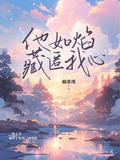
  1. He Hides My Heart Like Fire Modern Romance411k Wordscompleted [Handsome prodigal son & stunning sister] [Secret Love Comes True + Reunion with Ten Sweet Pets in College + Double Cleanliness] Before meeting him, everyone said that Xia Nian was an arrogant and domineering woman, but after meeting him, she restrained her sister-drawing characteristics and made up her mind to study hard, because she liked to be humble and cautious. The rumored Zhou Si was unruly and unruly, and he was the prodigal son of Jiang Lin No. 1 Middle School, but he was also the unsur 907Reads6.9Score113Shelves
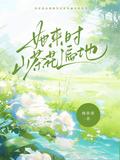
  2. Camellias Were Everywhere When She Came Modern Romance191k Wordscompleted [Handsome and wanton male protagonist & cold and gentle female protagonist] [Female has a crush on a boy➕Three-year age difference➕Small cookies➕Double cleansing] The Lu family and the Shi family were family friends. When she was young, Lu Qingzhi lived in the Shi family for a period of time. She first met him when she was seventeen, and when she saw him again, she was already twenty-one. In just half a year, it took her five years to get close to him. We met again in the courtyard of Shi's hous 209Reads6.6ScoreShelves
  3. The Beginning and End of Life 61k Wordscompleted The issue of life and death is a major concern for everyone and for all religious thoughts at home and abroad, both ancient and modern. As a wise man with extensive experience and knowledge of both China and the West, Nan Huaijin has thought-provoking views on this issue. The book "The Beginning and Ending Station of Life" is a record of Nan Huaijin's answers to his schoolmate Hu Songnian's questions about life and death in 2006. The whole book transcends the limitations of religious thought, us 198Reads9.4ScoreShelves
  4. Rebirth of the Courtyard: I Built a Doomsday Dungeon 223k Wordscompleted The end of the world + rebirth + chronicle + infinite space + decisive killing The world has entered an ice age, and 60% of humans on the earth have died! In the last life, Xu Damao learned the news three days in advance and frantically accumulated supplies. In the end, he was ransacked by He Yuzhu, who had no supplies, and the three elders of the courtyard, and was driven out of the courtyard to freeze to death on the streets. Reborn one month before the end of the world, Xu Damao awakened t 140ReadsScoreShelves
  5. Rebirth Gao Qiqiang: I Really Don't Want to Be the Boss! 246k Wordscompleted There was a gunshot, and Gao Qiqiang thought he was dead! But when he opened his eyes again, he found that he was back in the market killing fish. In his new life, Gao Qiqiang just wants to be an ordinary fishmonger to support his younger siblings in going to college and fall in love with Chen Shuting. Until that day, the two brothers Xiaolong and Xiaohu came to the door again, and everything seemed to be back to where it started! How should Gao Qiqiang, who wants to live his life again and does 79ReadsScoreShelves
  6. Refusing to Remain a Widow, Village Woman Wang Qiaoqiao Rewrites Her Life Modern Romance279k Wordsongoing In the 1960s, 20-year-old Wang Qiaoqiao went on a blind date and fell in love with the handsome Li Aiguo at first sight. On the wedding night, Wang Qiaoqiao waited for Li Aiguo to take off the red hijab, but who knew that when he opened his eyes, it would be another man's face that appeared in front of Wang Qiaoqiao. Only then did Wang Qiaoqiao realize that she had been deceived. It turned out that the Li family had engaged in a fraudulent marriage. The one who wanted to marry her from the be 56ReadsScoreShelves
  7. Talking About Chinese Culture 114k Wordscompleted This book is a record of three speeches given by Mr. Nan Huaijin in 2007 at the invitation of several parties. The contents include: entrepreneur reflections on old and new cultures, Chinese studies and Chinese culture, and casual discussions on Chinese culture and financial issues. This book starts from the concept of wealth in ancient Chinese classics such as "Guanzi", "Huozhi Biography", "Shihuozhi", etc., Analyzes and tells the evolution of finance, enterprise and management systems in the p 54Reads9.4ScoreShelves
  8. The Fierce Wife of the Fool Prince Ancient Romance216k Wordscompleted SWAT Overlord Flower accidentally traveled to a dynasty that did not exist in history. Other women who traveled through time were married to domineering princes or cold-faced emperors. Only Yun Nishang was unlucky, marrying a fool prince. At the beginning, the prince was almost bullied to death by the prince. Okay, let me pamper my prince. Who made me the special police overlord? Just when Yun Nishang was trying her best to protect the fool prince, she suddenly discovered the true face of the fo 42ReadsScoreShelves
  9. Zen Talk 64k Wordscompleted Zen Buddhism is a major sect of Chinese Buddhism. Its unique attitude towards life, values, aesthetic taste and way of thinking have had a profound and widespread influence on the ruling and opposition figures in ancient society, especially the scholar-bureaucrat class, making it indissoluble with the history of Chinese thought and culture. Studying the formation, development and evolution of Zen Buddhism and exploring its characteristics in various periods have therefore become a major topic in 37Reads9.3ScoreShelves
  10. A Brief History of the Development of Chinese Buddhism 98k Wordscompleted This book is a history of Buddhism written by Mr. Nan Huaijin. The book is divided into five chapters, giving a concise and concise description of the society and religion of ancient India, the life story of Sakyamuni, the founder of Buddhism, the rise and fall of Buddhism from the Han Dynasty to the Qing Dynasty, the current situation and thinking of Chinese Buddhism in the twentieth century, and the overview of Buddhism in Asian, European and American countries. The "Zen Jungle System and Chin 24Reads9.3ScoreShelves
  11. Commissary of the Two Worlds: I Send National Luck to the Songhu and Sichuan Troops Urban393k Wordsongoing Hu Jie, 35 years old, owner of a community canteen, his life collapsed. His mother has terminal cancer, his wife is divorcing, and his daughter calls him a "waste." He unscrewed the gas tank and lay on the bed waiting to die. Bite! The two world crossing systems were successfully bound! It can carry 5 kilograms of supplies and travel between modern times and the 1937 Songhu battlefield! Send a box of instant noodles and receive 100,000 yuan - enough for my mother's day of chemotherapy. A cotton- 3ReadsScoreShelves
  12. I Was a Tyrant in the Ming Dynasty, and I Changed My Fate Through Live Broadcast. Historical198k Wordscompleted When I, Lin Fan, transformed into Chongzhen, the treasury only had 13 taels left. The civil and military officials of the entire dynasty wore brocade and cried to me about their poverty. Backhand binding [cross-time and space live broadcast system], I turned the early morning into a reality show: "The Secretary of the Ministry of Revenue, the barrage said that your concubine's bride price is worth half a year's salary of the Liaodong Army?" "Sir Shofu, the banknote in your "The Analects of Conf 2ReadsScoreShelves
  13. Siheyuan: at the Beginning, Send a Stick to the Police Station Urban150k Wordsongoing Ji Dafei, a fan of Siheyuan, saw in the novel that Silly Zhu froze to death on the street, but it was Xu Damao who collected the body for him. Filled with righteous indignation, he vomited a mouthful of blood and threw his head up to the sky. When he woke up again, he found that he had actually time-traveled into the body of Silly Zhu in the courtyard, and it was also the day when he stole the chicken! Hahaha, I, Ji Dafei, am not that fool who can be manipulated by others! Banggeng stole the chi 2ReadsScoreShelves
  14. Tai Chi and Meditation completed This book is composed of two parts. The first part is a record of a lecture given by Mr. Nan Huaijin in 1966. The first part tells about Mr. Nan's martial arts practice, which is very lively and interesting. The second part talks about his experience in maintaining health and practicing Tai Chi, which is also very valuable for reference. The second part is a video recording of Mr. Nan's personal demonstration of "how to meditate" and the recorded questions and answers with the students who parti Reads9.4ScoreShelves
  15. Nan Huaijin Series: There Is No Truth in Life completed This is a set of traditional cultural popularization books that Mr. Nan Huaijin tells contemporary people. It is divided into three books according to the theme: "China Has Culture", "Life Has No Truth" and "The Strategy of the Righteous Path", which respectively correspond to the sections of Nan Huaijin's works that are closely related to the current ordinary readers and are suitable for entry. "China Has Culture" is intended to present Mr. Nan Huaijin's overview of the overall context, charact Reads9.4ScoreShelves
  16. Lectures by Nan Huaijin: 2004-2006 completed This book compiles records of Mr. Nan Huaijin's five lectures in Shanghai from 2004 to 2006. The audience for the lectures included scholars, officials, business people, news and media people, etc. The topics also covered all aspects of politics, economy, history, philosophy, education, etc. At home and abroad, both ancient and modern. Nanjing Normal University's narration follows his consistent style of mentioning the past and present and explaining things in simple terms. The content of his sp Reads9.4ScoreShelves
  17. What Does the Diamond Sutra Say? completed There is a public case from Mazu: a minister, a minister of the Tang Dynasty government, a minister of what department, I don't know, studied Buddhism and practiced Zen. I came to see this Zen master and asked, "Master, should we Buddhists be vegetarians or eat meat?" He probably likes to eat meat. After studying Zen and Buddhism with Master, it is better to eat vegetarian food. Should I eat meat? Just ask Master. How did Master reply? This Zhongcheng is equivalent to the chief secretary and off Reads9.4ScoreShelves
  18. Flowers Raining All over the Sky - Vimalakirti's Teachings (Two Volumes) completed This book is a record of Nan Huaijin's explanation of the Vimalakīrti Sutra in 1981. The full name of "Vimalakīrti Sutra" is "The Sutra Said by Vimalakīrti". It has three volumes and was translated by Kumarajiva in the late Qin Dynasty. The content focuses on describing that reaching the state of liberation does not necessarily require a strict monk practice life. The key lies in subjective cultivation and expounds the idea of ​​Mahayana prajna and emptiness. Nan Huaijin believes that the Vimala Reads9.4ScoreShelves
  19. Zhuangzi's Notes completed "Lectures on Zhuangzi" is written by the famous scholar Nan Huaijin. The content of this book is extensive and profound, covering important concepts and laws in the world and beyond, as well as ways to cultivate one's body and mind in life. Reads9.4ScoreShelves
  20. Yogi's Discourses on the Ground of the Sravakas completed Why do practitioners go astray? Why can't I understand it and not realize it? How to abandon the wrong path and enter the right path? "The Treatise on the Earth of the Yogi" can be said to be a particularly outstanding classic among the classics translated by Master Xuanzang in the Tang Dynasty. It has clear logic and well-organized structure. It is recognized as the first and must-read text for studying Buddhism and practicing Buddhism. In this book, Nan Huaijin selects and explains the part of Reads9.4ScoreShelves
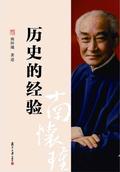
  21. Historical Experience completed Strategy, in ancient Chinese culture, is also called the art of vertical and horizontal, the art of long and short, and the art of hook and distance. In order to summarize historical experience, the famous scholar Mr. Nan Huaijin once gave a systematic lecture and analysis on ancient Chinese strategy. His lecture was titled "Historical Experience" and was published by Taiwan Laogu Culture Corporation in two volumes in 1985 and 1986. The first volume captures the essence of Zhao Rui's "Long and S Reads9.4ScoreShelves
  22. Zhuangzi completed The book "Zhuangzi" records the thoughts, words and deeds of Zhuangzi himself and his disciples. It is a representative work of Taoism. Since the Wei and Jin Dynasties, its influence has transcended the scope of Taoism and has been combined with academic schools such as Confucianism and Buddhism. It has become a must-read book for traditional Chinese scholars to cultivate themselves and cope with the world. Among them, the seven chapters of "Neipian" have always been known for their rigorous ide Reads9.4ScoreShelves
  23. I Said completed Mr. Nan Huaijin, a master of Chinese studies, has fully explained, corrected and quoted the connotation of "Laozi" with his profound knowledge of literature and history and keen social insight. It has the characteristics of explaining things in a simple and clear way. It has made useful explorations in popularizing Chinese traditional culture, popularizing profound ancient books, and popularizing specialized academics. At the end of the book, there is also a bibliographic list of studies on "Lao Reads9.5ScoreShelves
  24. How to Practice Buddhism completed Mr. Nan Huaijin once held a series of lectures on the theme of "How to Practice and Realize Buddhism", which were held twenty-eight times. The contents of these lectures were recorded and compiled into this book (originally titled "Integration of Sutra, Secret, Yuantong, and Cultivation Stages"). The book focuses on "views" (views), "cultivation" (cultivation), and "actions" (implementation of wishes), and includes "Surangama Sutra", "Lotus Sutra", "Zengyi Agama Sutra", "Rise of the World Sutra" Reads9.4ScoreShelves
  25. A Farewell Lecture on the Book of Changes completed "The Book of Changes" is a famous Chinese cultural work and a must-read textbook for ancient scholars. It is said that the first and second chapters of "Xici Zhuan" written by Confucius are the general introduction of the "Book of Changes". This "Farewell Lectures on the Biography of the Book of Changes" is Nan Huaijin's lecture notes on "The Biography of the Book of Changes". The method is to first excerpt the original text of each chapter, and then comprehensively integrate ancient and modern Reads9.4ScoreShelves
  26. Initial Practice of Dinghui completed "Jie" (discipline), "samadhi" (meditation), and "hui" (wisdom) are the three major components of the entire doctrine of Buddhism. Precepts are used to prevent evil; concentration is used to calm down worries; wisdom is used to eliminate worries. They complement each other and together constitute the basic content of Buddhist practice. "The First Practice of Dinghui" contains a set of Buddhist lectures given by Mr. Nan Huaijin. Among them, the first three are summaries of the three disciplines of Reads9.4ScoreShelves
  27. Xiaoyan Huangdi Neijing and Life Sciences completed "The Yellow Emperor's Internal Classic" is one of the four classic works of traditional Chinese medicine. Its core content is about the composition of life and the laws of its operation. Due to the construction of academic theories of traditional Chinese medicine such as the "Yin Yang and Five Elements Theory" and the "Pulse Theory", it eventually became the most important medical masterpiece in ancient China. Mr. Nan Huaijin, a master of traditional Chinese medicine, was invited to explain the Reads9.4ScoreShelves
  28. Original University Whispers completed "The Great Learning" is one of the representative works of Confucianism. It is said to be written by Zengzi (Zeng Shen), a student of Confucius. Together with "The Doctrine of the Mean", "The Analects of Confucius" and "Mencius", it is collectively known as the "Four Books" and is a must-read textbook for scholars and scholars since the Song Dynasty. The article takes "clear virtues", "people-friendly" and "perfect goodness" as the key points, and "investigates things, develops knowledge, sincer Reads9.4ScoreShelves
  29. Zen and Taoism completed This book systematically explains the purpose, origin, practice and influence of Zen and Taoism in the form of special research. The whole book is divided into two parts: upper and lower. The first volume is "Zen and Buddhism", which provides an exquisite discussion of the historical background of the emergence of Buddhism, the basic teachings of Mahayana Buddhism, the inheritance of Zen, and the deeds of the Sixth Patriarch Huineng who laid the foundation for later generations of Zen thought. T Reads9.3ScoreShelves
  30. Zen Hailizhi completed This book is a Zen research work written by Mr. Nan Huaijin. Through vertical narration and horizontal comparison, the author makes a classified discussion on the evolution, purpose, teaching and practice of Zen Buddhism, as well as the similarities and differences between Zen Buddhism and Pure Land Buddhism, Tantra, Alchemy, Neo-Confucianism and Western philosophy, and offers many unique insights. Reads9.3ScoreShelves
  31. A Brief Lecture on Zongjinglu (Volume 2) completed The 100-volume "Zongjinglu" was written by Zen Master Yongming Yanshou in the late Tang and Five Dynasties. It is a classic masterpiece of Chinese Buddhism handed down from generation to generation. Zen Master Yanshou was the third generation heir of the Fayan Sect of Zen Buddhism. He was aware of the various abuses and controversies that arose among Zen believers at that time because they did not understand the Buddha's Dharma. He invited monks from the three Dharma sects of Tiantai, Huayan and Reads9.3ScoreShelves
  32. A Brief Lecture on Zongjinglu (Volume 3) completed The 100-volume "Zongjinglu" was written by Zen Master Yongming Yanshou in the late Tang and Five Dynasties. It is a classic of Chinese Buddhism handed down from generation to generation. Zen Master Yanshou was the third generation heir of the Fayan Sect of Zen Buddhism. He was aware of the various abuses and controversies that arose among Zen believers at that time because they did not understand the Buddha's Dharma. He invited monks from the three Dharma sects of Tiantai, Huayan and Weishi to a Reads9.3ScoreShelves
  33. A Brief Lecture on Zongjinglu (Volume 1) completed The 100-volume "Zongjinglu" was written by Zen Master Yongming Yanshou in the late Tang and Five Dynasties. It is a classic of Chinese Buddhism handed down from generation to generation. Zen Master Yanshou was the third generation heir of the Fayan Sect of Zen Buddhism. He was aware of the various abuses and controversies that arose among Zen believers at that time because they did not understand the Buddha's Dharma. He invited monks from the three Dharma sects of Tiantai, Huayan and Weishi to a Reads9.4ScoreShelves
  34. I'm Talking About the Deed of Participation (All Three Volumes) completed "Shen Tong Qi" is an important early Taoist classic, its full name is "Zhou Yi Shen Tong Qi". The book borrows Dharma symbols such as Qian, Kun, Kan, Li, water, and fire to explain the art of refining elixirs and cultivating immortality. It is the earliest Taoist work that systematically discusses alchemy. Taoism regards it as the "King of Alchemy Sutra" and the originator of the Alchemy Sutra through the ages. This book is a record of Mr. Nan Huaijin's explanation of "Shen Tongqi" in Taiwan in Reads9.5ScoreShelves
  35. The Present Explanation of Shurangama's Righteousness completed This book is the modern interpretation of the entire Shurangama Sutra written by Mr. Nan Huaijin. The content includes: the original text, annotations, modern translations and serial expositions (marked in parentheses). The translation strives to be faithful and elegant, to bring forth the new from the old, and to transform the past into the present. It is a high-quality interpretation of the Surangama Sutra. Reads9.4ScoreShelves
  36. The Analects of Confucius (Two Volumes) completed "The Analects of Confucius" written by Mr. Nan Huaijin is a collection of lectures on "The Analects of Confucius". The book gives a detailed and vivid description of each original text of the twenty chapters of "The Analects of Confucius". There are not only hints on chapter structure and paragraph connection, but also elucidation of the meaning of the original text and the humanistic anecdotes involved. What is particularly novel is that the author summarizes the original text into historical s Reads9.5ScoreShelves
  37. Meditation and Immortality completed "Immortality" has been the yearning and pursuit of people for thousands of years. Everyone in the Fang family has their own ideas on how to practice. In response to inquiries from scholars, Mr. Nan Huaijin wrote the book "Sitting in Meditation and Immortality" based on his years of practice and ancient and modern writings. The book focuses on the meditation practice methods of Buddhism, Taoism and Confucianism. The content includes: the posture and key points of meditation; the reaction of Qi in Reads9.5ScoreShelves
  38. Peace Is Blessing: Life Lessons from Nan Huaijin (Four Volumes) completed This set of books is a collection of Mr. Nan Huaijin's quotations. There are more than 300 short quotations in total, divided into four volumes: "Peace is Blessing: The Philosophy of Living in Peace", "There are Three Grades of Medicine: A Longevity Lifestyle", "You Can Learn Without a Teacher: There are Methods for Learning", "Seeing" Broken, But Unbearable: A Guide to Avoiding Pitfalls in Life" helps modern people relieve stress and anxiety, maintain the health and peace of body and mind, and Reads9.3ScoreShelves
  39. Nan Huaijin Speaks Old Chinese Proverbs completed This book carefully excerpts nearly 200 old sayings, proverbs, and proverbs told by Mr. Nan from his more than 40 works. The book is divided into upper and lower volumes. The first volume is an internal chapter, which includes four themes: the foundation of virtue, the basis for changing one's life, the tips for learning, and the key to practice. The second volume is an external chapter, which includes four themes: treasures for managing the family, ways to live in the world, methods of discernm Reads9.5ScoreShelves
  40. Miscellaneous Comments on the Book of Changes completed This book is a lecture on the "Book of Changes". Among them, the first part mainly introduces the general knowledge of "I Ching" and some issues related to it. The latter part focuses on explaining the sixty-four hexagrams (beginning with "Qian hexagram" and ending with "Weiji hexagram"), with the explanation of "Qian hexagram" being the most detailed. The content includes: hexagram names, hexagram words, line words, as well as "Hao Ci", "Xiang Ci", "Xiang Ci", "Classic Chinese", etc. That expla Reads9.5ScoreShelves
  41. Miscellaneous Comments on the Book of Changes completed Where did this dragon come from? We must first understand that Chinese culture is the culture of dragons. Since the time of the Yellow Emperor, the political system has been divided into officials, with dragon as the official name, such as Dragon Master and Dragon Emperor, both represented by dragon. The dragon is the greatest symbol of Chinese culture and has been our flag for thousands of years. Chinese culture always uses the dragon as a symbol for those great, auspicious and worshipful pheno Reads9.5ScoreShelves
  42. I Ching and Traditional Chinese Medicine completed If a person thinks too much, he will get angry. If a person uses his brain too much, he will suffer from stomach problems. Thoughts affect the heart. The heart belongs to fire, so it gets angry. The stomach is made of earth, and too much fire affects the earth, causing stomach problems. This is also a principle recognized by Western medicine. If you are too tired, your kidneys will fail, which will lead to a heart-kidney disharmony. That is, the activity ability of the heart and the kidneys are Reads9.4ScoreShelves
  43. Principles of Life completed "The Analects of Confucius" by Nan Huaijin, a master of Chinese studies, is a classic interpretation of "The Analects of Confucius". "The Analects of Confucius" is based on "The Analects of Confucius" as a blueprint. It selects the core chapters with profound thoughts, popular language and in line with the growth needs of contemporary teenagers, and carries out innovative comic interpretation and popularization. Each chapter in the series begins with Wang Lanberry's hilarious and down-to-earth l Reads8.5ScoreShelves
  44. I Raise Kun in the Wasteland World Sci-Fi & Apocalypse75k Wordsongoing At the beginning of the apocalypse, I only bound one Kunpeng breeding system. While others were picking up garbage in the wasteland, grabbing resources, and hiding from radioactive beasts, I was immersed in hatching a small fry. When the mecha troops from all the major forces in the wasteland came to attack me, my little fish had swallowed up thousands of mutants and turned into a giant kun that covered the sky. Swallow the aircraft carrier in one gulp and overthrow the fortress with its wings. ReadsScoreShelves
  45. Chasing the Wind Modern Romance175k Wordsongoing Ji Ruofeng was originally a member of a top foreign e-sports club. During this period, he had been playing on the same team as Lin Xiaochen, a female netizen with the pseudonym "It's a macho guy!" The two agreed to meet after returning to China. But who knows, Ji Ruofeng suddenly disappeared, and the two lost contact since then. Three years later, Lin Xiaochen became the top game anchor in the country. She thought she had forgotten Ji Ruofeng, until that day, she saw Ji Ruofeng's operation in a ReadsScoreShelves