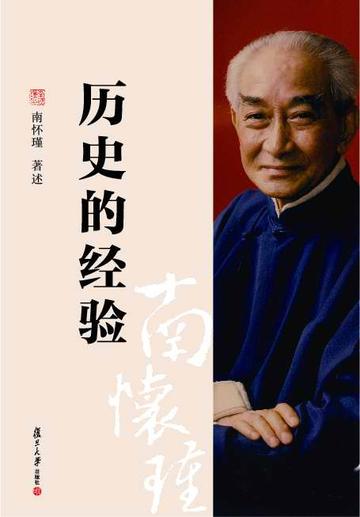
Strategy, known in ancient Chinese culture as the arts of diplomacy, the arts of persuasion, or the art of probing, has been examined by the renowned scholar Mr. Nan Huaijin, who gave a Systematic analysis of ancient Chinese strategy to draw lessons from history. His lecture notes, titled Lessons from History, were published in two volumes by Taiwan's Laogu Cultural Enterprise in 1985 and 1986. The first volume extracts the essence of Zhao Rui's The Art of Persuasion, Liu Xiang's Strategies of the Warring States, and Huan Fan's On the Essentials of Statecraft. Drawing on historical examples of rise and fall, success and failure, it discusses how to govern, employ capable people, guard against evil, and distinguish the treacherous. The second volume offers a line-by-line commentary on The Book of Plain Writings, Taigong's Art of War, and The Book of the Hidden Talisman. The Book of Plain Writings is said to have been passed down by Huang Shigong. Zhang Liang assisted Liu Bang in founding the Han dynasty and defeating Chu, and owed much of his military strategy and tactical insight to this book. After Zhang Liang's death, the book disappeared. During the Jin dynasty, someone broke into Zhang Liang's tomb and discovered it by his jade pillow, allowing it to be passed down once more.
This book focuses on explaining the meaning of the text, with nearly 150 historical stories set out after the original passages. Readers can compare the classics with history and draw lessons about founding an enterprise and treating others. In 1990, with authorization from the author and the original publisher, our publishing house combined the two volumes of Lessons from History into one book, divided into upper and lower parts, and republished it in a revised format under the title The Wisdom of History for scholarly study. In 1992, it was reprinted under its original title.
With authorization from the copyright holder, Taiwan's Laogu Cultural Enterprise, we have revised and published the January 2009 edition from Laogu for scholarly study.
This book is very interesting! Mr. Nan Huaijin explained ancient Chinese strategies thoroughly and used many historical stories to aid understanding, which was very beneficial. I especially liked his explanation of "Sushu", it felt like watching a wisecracking blockbuster. However, I kind of hate those traitors and villains. Fortunately, the book also teaches us how to identify them. Just like what is said in the book, "A virtuous minister is close to a virtuous minister, but a villain is far away from me." This sentence is so true! All in all, this is a book well worth reading.
The book is very good, especially worth reading to gain new knowledge and understanding of history, and to have a high awareness and improvement of oneself.
Express your true feelings and thoughts with clear logic and simple language, which is fascinating and empathetic!
There are countless proverbs! Master Huai's name will last forever! 🙏🏻🙏🏻🙏🏻🙏🏻🙏🏻🙏🏻
Chinese traditional culture is profound and profound!
A good book worth owning
This book reads as a very creative suggestion, returning history to history, with dialectical thinking, and is also very objective. It is worth savoring carefully.
It would be a pity not to study at Nanjing Normal University
5.5, Historical experience, five thousand years of history will eventually have your touch!
Vertical and horizontal, there is a way of checks and balances It's okay, why don't you comment?