Fanqie library
Browse
- Titles
- 4
Every Fanqie book we index, searchable by title, author or tag.
-
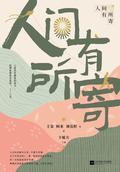 Something to Send to the World
This book is a collection of essays jointly created by 46 famous contemporary writers and new literary talents including Wang Meng, Zhang Wei, Alai, Xiao Fuxing, Han Shaogong, Liu Liangcheng, Zhou Xiaofeng, and Su Cangsang to interpret "Happiness in life depends on deep affection and love." These writers have won various literary awards such as the Mao Dun Literature Award, the Lu Xun Literature Award, the National Ethnic Minority Literary Creation Horse Award, the People's Literature Award, the
—Reads8.4Score—Shelves
Something to Send to the World
This book is a collection of essays jointly created by 46 famous contemporary writers and new literary talents including Wang Meng, Zhang Wei, Alai, Xiao Fuxing, Han Shaogong, Liu Liangcheng, Zhou Xiaofeng, and Su Cangsang to interpret "Happiness in life depends on deep affection and love." These writers have won various literary awards such as the Mao Dun Literature Award, the Lu Xun Literature Award, the National Ethnic Minority Literary Creation Horse Award, the People's Literature Award, the
—Reads8.4Score—Shelves
-
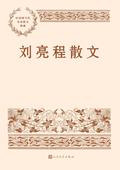 Prose by Liu Liangcheng (Collection of Prose by Chinese Modern and Contemporary Famous Writers)
Liu Liangcheng is a prose writer who entered the literary world in the 1990s. Through his unique rural writing of rebuilding his own village in his memories, he launched the essay collection "One Person's Village", which caused an uproar in the literary world at that time. Liu Liangcheng's prose is permeated with nature and spirituality, reflecting thoughts on loneliness and eternity. He is known as "China's last essayist in the 20th century" and "rural philosopher". This book selects Liu Liangc
—Reads9.3Score—Shelves
Prose by Liu Liangcheng (Collection of Prose by Chinese Modern and Contemporary Famous Writers)
Liu Liangcheng is a prose writer who entered the literary world in the 1990s. Through his unique rural writing of rebuilding his own village in his memories, he launched the essay collection "One Person's Village", which caused an uproar in the literary world at that time. Liu Liangcheng's prose is permeated with nature and spirituality, reflecting thoughts on loneliness and eternity. He is known as "China's last essayist in the 20th century" and "rural philosopher". This book selects Liu Liangc
—Reads9.3Score—Shelves
-
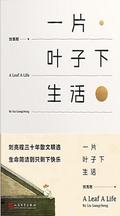 Life Under a Leaf
This book selects 36 prose works by Liu Liangcheng. Liu Liangcheng observes the home he lives in from his own unique perspective and way. Everything around him, including bugs, birds, ants, dogs, trees, sunshine, wind, earth walls... And people, are all extraordinary existences in his writings. He writes about the things in his life, the people around him, and the state of life. His writing is simple and rational, full of philosophical thoughts but not rigid and serious. Seemingly ordinary thing
—Reads9.1Score—Shelves
Life Under a Leaf
This book selects 36 prose works by Liu Liangcheng. Liu Liangcheng observes the home he lives in from his own unique perspective and way. Everything around him, including bugs, birds, ants, dogs, trees, sunshine, wind, earth walls... And people, are all extraordinary existences in his writings. He writes about the things in his life, the people around him, and the state of life. His writing is simple and rational, full of philosophical thoughts but not rigid and serious. Seemingly ordinary thing
—Reads9.1Score—Shelves
-
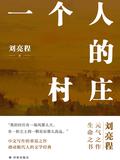 A Village of One Person (Work by Liu Liangcheng)
In Huangshaliang, a village where humans and animals cohabitate, Liu Er's greatest pleasure is wandering around the village: he plays with insects, watches other people working, greets the birds on the branches, and appreciates the smile of a flower; he understands the hardships of mice, feels the power of cows and horses, watches the wind tilt the shadows, and measures the distance of a gust of wind. He never opens the door when he goes to a house. He waits for the wind to blow the door open, t
—Reads9.4Score—Shelves
A Village of One Person (Work by Liu Liangcheng)
In Huangshaliang, a village where humans and animals cohabitate, Liu Er's greatest pleasure is wandering around the village: he plays with insects, watches other people working, greets the birds on the branches, and appreciates the smile of a flower; he understands the hardships of mice, feels the power of cows and horses, watches the wind tilt the shadows, and measures the distance of a gust of wind. He never opens the door when he goes to a house. He waits for the wind to blow the door open, t
—Reads9.4Score—Shelves