Fanqie library
Browse
- Titles
- 8
Every Fanqie book we index, searchable by title, author or tag.
-
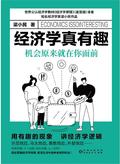 Economics Is so Interesting: the Opportunity Is Right in Front of You
Starting from economic phenomena, through literature, history, social topics, and life phenomena, we will uncover the mysteries of economic laws. The vivid and interesting economics stories break the economics textbook-style learning method and help readers break down barriers and have an easy conversation with economics. Economics is a philosophy of life and a knowledge for everyone who wants to live a happier life. It does not teach people to get rich or run a country, but it teaches people to
—Reads8.4Score—Shelves
Economics Is so Interesting: the Opportunity Is Right in Front of You
Starting from economic phenomena, through literature, history, social topics, and life phenomena, we will uncover the mysteries of economic laws. The vivid and interesting economics stories break the economics textbook-style learning method and help readers break down barriers and have an easy conversation with economics. Economics is a philosophy of life and a knowledge for everyone who wants to live a happier life. It does not teach people to get rich or run a country, but it teaches people to
—Reads8.4Score—Shelves
-
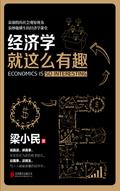 Economics Is so Interesting
The book "Economics Is So Interesting" is divided into five chapters and collects 69 articles written by Professor Liang Xiaomin in the past two years. It uses Chinese and foreign history, literature, news, current affairs, social phenomena and other familiar materials as clues to describe the economic principles, business operation rules and corporate management strategies behind these seemingly ordinary daily phenomena. For example, if we follow the trend and produce the same costumes worn by
—Reads7.6Score—Shelves
Economics Is so Interesting
The book "Economics Is So Interesting" is divided into five chapters and collects 69 articles written by Professor Liang Xiaomin in the past two years. It uses Chinese and foreign history, literature, news, current affairs, social phenomena and other familiar materials as clues to describe the economic principles, business operation rules and corporate management strategies behind these seemingly ordinary daily phenomena. For example, if we follow the trend and produce the same costumes worn by
—Reads7.6Score—Shelves
-
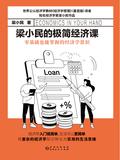 Liang Xiaomin's Minimalist Economics Class
"Liang Xiaomin's Minimalist Economics Lesson" is a popular economics book for general readers. Through vivid and interesting stories and practical cases, the author systematically explains the basic concepts and theories of economics, and runs through the discussion of economic issues in literature, history, society, life and other fields. Close to daily life examples, supplemented by easy analysis, it breaks the traditional "textbook-style" learning method and helps readers eliminate cognitive
—Reads8.5Score—Shelves
Liang Xiaomin's Minimalist Economics Class
"Liang Xiaomin's Minimalist Economics Lesson" is a popular economics book for general readers. Through vivid and interesting stories and practical cases, the author systematically explains the basic concepts and theories of economics, and runs through the discussion of economic issues in literature, history, society, life and other fields. Close to daily life examples, supplemented by easy analysis, it breaks the traditional "textbook-style" learning method and helps readers eliminate cognitive
—Reads8.5Score—Shelves
-
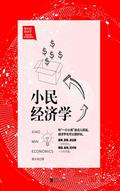 Small Economics
Professor Liang Xiaomin believes that fables talk about animals or people and reflect human nature and the principles of being a human being. Economics uses logical reasoning or mathematical tools to analyze human behavior. Whether it is a fable or economics, human nature is the same, and the principles of being a person or doing things are also the same. Fables express many profound principles of contemporary economics in a primitive and simple way, while economics reproduces many simple princi
—Reads8.6Score—Shelves
Small Economics
Professor Liang Xiaomin believes that fables talk about animals or people and reflect human nature and the principles of being a human being. Economics uses logical reasoning or mathematical tools to analyze human behavior. Whether it is a fable or economics, human nature is the same, and the principles of being a person or doing things are also the same. Fables express many profound principles of contemporary economics in a primitive and simple way, while economics reproduces many simple princi
—Reads8.6Score—Shelves
-
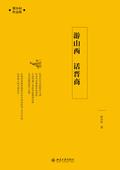 Traveling to Shanxi and Talking to Shanxi Merchants
This book comprehensively displays the historical ups and downs of Shanxi merchants' glory and decline. With its fresh style, beautiful words, and profound and evocative business wisdom, it is undoubtedly a business book that can be read over and over again for today's entrepreneurs. This book shows the glorious history of Shanxi merchants at that time in more detail, and analyzes the success factors and failure reasons of Shanxi merchants. It can not only be used as a reference for businessmen
—Reads8.4Score—Shelves
Traveling to Shanxi and Talking to Shanxi Merchants
This book comprehensively displays the historical ups and downs of Shanxi merchants' glory and decline. With its fresh style, beautiful words, and profound and evocative business wisdom, it is undoubtedly a business book that can be read over and over again for today's entrepreneurs. This book shows the glorious history of Shanxi merchants at that time in more detail, and analyzes the success factors and failure reasons of Shanxi merchants. It can not only be used as a reference for businessmen
—Reads8.4Score—Shelves
-
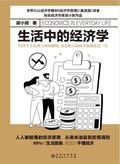 Economics in Life
The ultimate goal of economics is to teach people how to live a happy life. Our daily lives are filled with the application of economics, including the ups and downs of wages, unemployment, and prices... Only when economics comes out of the academic ivory tower and is known to the general public can it truly serve real life. This book is mainly short essays, starting from specific events in social life, and discusses economic issues. It includes both classic explanations of economic principles a
—Reads8.6Score—Shelves
Economics in Life
The ultimate goal of economics is to teach people how to live a happy life. Our daily lives are filled with the application of economics, including the ups and downs of wages, unemployment, and prices... Only when economics comes out of the academic ivory tower and is known to the general public can it truly serve real life. This book is mainly short essays, starting from specific events in social life, and discusses economic issues. It includes both classic explanations of economic principles a
—Reads8.6Score—Shelves
-
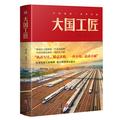 Great Country Craftsman
"Craftsman of a Great Country" is a novel based on the development of my country's high-speed rail industry. It closely follows the pulse of the times, eulogizes the "craftsman spirit" and pays tribute to the 100th anniversary of the founding of the Communist Party of China. The work is based on the stories of several senior technicians of China Railway Rolling Stock Corporation (CRRC), telling the story of Yang Lang, Peng Wei, Luo Juan, Song Fei and others from the Binjiang Locomotive Factory.
—Reads9.4Score—Shelves
Great Country Craftsman
"Craftsman of a Great Country" is a novel based on the development of my country's high-speed rail industry. It closely follows the pulse of the times, eulogizes the "craftsman spirit" and pays tribute to the 100th anniversary of the founding of the Communist Party of China. The work is based on the stories of several senior technicians of China Railway Rolling Stock Corporation (CRRC), telling the story of Yang Lang, Peng Wei, Luo Juan, Song Fei and others from the Binjiang Locomotive Factory.
—Reads9.4Score—Shelves
-
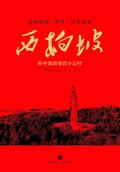 Xibaipo: a Small Mountain Village on the Eve of New China
In March 1947, Mao Zedong led the central government agencies to evacuate Yan'an and moved to Xibaipo Village, Pingshan County, Hebei in May of the following year. For nearly a year in Xibaipo, Mao Zedong and the Party Central Committee strategized and commanded the people's army to launch a decisive battle with the Kuomintang, liberating all of China in one fell swoop. The small mountain village of Xibaipo has since become a household name as the "cradle" that gave birth to New China. In the fo
—Reads9.6Score—Shelves
Xibaipo: a Small Mountain Village on the Eve of New China
In March 1947, Mao Zedong led the central government agencies to evacuate Yan'an and moved to Xibaipo Village, Pingshan County, Hebei in May of the following year. For nearly a year in Xibaipo, Mao Zedong and the Party Central Committee strategized and commanded the people's army to launch a decisive battle with the Kuomintang, liberating all of China in one fell swoop. The small mountain village of Xibaipo has since become a household name as the "cradle" that gave birth to New China. In the fo
—Reads9.6Score—Shelves