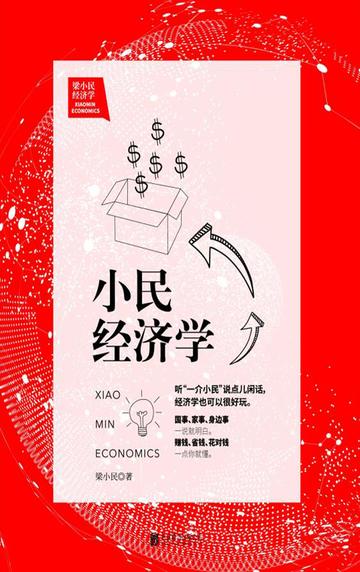
Professor Liang Xiaomin believes that fables talk about animals or people and reflect human nature and the principles of being a human being. Economics uses logical reasoning or mathematical tools to analyze human behavior. Whether it is a fable or economics, human nature is the same, and the principles of being a person or doing things are also the same. Fables express many profound principles of contemporary economics in a primitive and simple way, while economics reproduces many simple principles in fables in a modern and exquisite way.
This book shows everyone the principles of economics in life by telling those well-known fables, allowing readers to understand many profound principles of contemporary economics while reading interesting and vivid fables, thus stimulating readers' interest in learning and approaching economics.
Reader comments
This book is very interesting. It uses fables to explain economic principles and is easy to understand. I especially like the story "The Donkey Carrying Salt". The donkey regarded chance as inevitable and drowned. This reminds me that in life, we cannot blindly imitate other people's successful experiences, but must have our own thinking and innovation. This book also inspired me to educate my children, allowing them to easily understand economics through stories.



This book is very interesting. It uses fables to explain economic principles and is easy to understand. I especially like the story "The Donkey Carrying Salt". The donkey regarded chance as inevitable and drowned. This reminds me that in life, we cannot blindly imitate other people's successful experiences, but must have our own thinking and innovation. This book also inspired me to educate my children, allowing them to easily understand economics through stories.