Fanqie library

Browse

Titles
4

Every Fanqie book we index, searchable by title, author or tag.

Filters
Tags
Reset
  1. Fu Sinian Talks About Chinese History completed Fu Sinian (March 26, 1896 - December 20, 1950), originally known as Menghan and later as Mengzhen, was a native of Liaocheng, Shandong. Famous historian, classical literature research expert, educator, and academic leader. One of the student leaders of the May 4th Movement and the founder of the Institute of History and Linguistics, Academia Sinica. Fu Sinian served as acting president of Peking University and president of National Taiwan University. The principle he put forward, "Go to poverty Reads8.2ScoreShelves
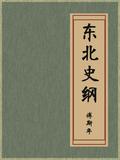
  2. Outline of Northeastern History completed In 1931, the September 18th Incident broke out. At this time, Fu Sinian was serving as the director of the Institute of History and Linguistics, Academia Sinica, in Peking (now Beijing), and concurrently as a professor in the History Department of Peking University. At a time of national peril, faced with the Japanese aggressors' iron hoofs trampling on the northeastern region of our country, and the Kuomintang government's non-resistance policy, Fu Sinian deeply realized that resisting Japanese Reads8.1ScoreShelves
  3. Ethnicity and Ancient Chinese History completed The two parts of this book, "Nation and the History of Ancient China" and "Differentiation of Ancient Teachings on Life and Ming", are both written by Fu Sinian. "Nation and Ancient Chinese History" is a research collection on the history of ancient pre-Qin China. It contains five representative works in total, including "The Theory of East and West of Yixia", "Jiang Yuan", "Zhou Dongfeng and the Survivors of Yin", "Zhou Dongfeng and the Survivors of Yin", "On the So-called Five Nobles", which s Reads8.7ScoreShelves
  4. Differentiation of Ancient Teachings on Life and Life completed "Differentiation of Ancient Precepts of Xing and Ming" is an outstanding work by Mr. Fu Sinian on the history of the development of ancient Chinese thought. It counts and analyzes the words "Xing" and "Ming" in the oracle bones and bronze inscriptions of the Shang and Zhou Dynasties to the classics of the Pre-Qin scholars. It discusses the thoughts of the Pre-Qin scholars based on their origin and evolution. Finally, it is inferred that Neo-Confucianism of the Song and Ming Dynasties is the inhe Reads8.7ScoreShelves