Fanqie library
Browse
- Titles
- 4
Every Fanqie book we index, searchable by title, author or tag.
-
 Selected Works of Dewey (6 Volumes)
This set contains the following five volumes. "Democracy as Freedom: Dewey's Political Philosophy and Legal Philosophy": Dewey's works and papers in political philosophy and legal philosophy. "The Transformation of the Chinese Mind: Dewey on China": Articles related to China topics written by the American philosopher Dewey during his visit to China. "Criticism of Criticism: Dewey's Axiology and Ethics": The content includes value issues, the field of "value", the composition of good, the object
24Reads8.3Score—Shelves
Selected Works of Dewey (6 Volumes)
This set contains the following five volumes. "Democracy as Freedom: Dewey's Political Philosophy and Legal Philosophy": Dewey's works and papers in political philosophy and legal philosophy. "The Transformation of the Chinese Mind: Dewey on China": Articles related to China topics written by the American philosopher Dewey during his visit to China. "Criticism of Criticism: Dewey's Axiology and Ethics": The content includes value issues, the field of "value", the composition of good, the object
24Reads8.3Score—Shelves
-
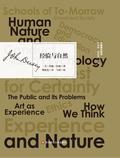 Experience and Nature
"Experience and Nature" is Dewey's masterpiece and one of the important works of the entire pragmatism school. In the book, Dewey proposed the basic views of his pragmatist philosophy and called it "empirical naturalism" or "naturalistic empiricism." This view opposes the complete separation of people and experience from nature, and advocates establishing the continuity between "experience and nature", thereby establishing a "unified whole of experience". About the author: The author John Dewey
9Reads8.1Score—Shelves
Experience and Nature
"Experience and Nature" is Dewey's masterpiece and one of the important works of the entire pragmatism school. In the book, Dewey proposed the basic views of his pragmatist philosophy and called it "empirical naturalism" or "naturalistic empiricism." This view opposes the complete separation of people and experience from nature, and advocates establishing the continuity between "experience and nature", thereby establishing a "unified whole of experience". About the author: The author John Dewey
9Reads8.1Score—Shelves
-
 The Chinese and Japanese in the Eyes of Americans (Witnesses of the Times a Hundred Years Ago)
"The Chinese and the Japanese in the Eyes of Americans" is what the famous American philosopher John Dewey saw and heard when he traveled to Japan and China. It records China and Japan in 1919 and can be called a witness to the times a hundred years ago. John Dewey recorded the folk customs of China and Japan in detail in the last century, including some interesting historical details, such as the sense of responsibility of Chinese students to "take the world as their own responsibility", prospe
—Reads8.4Score—Shelves
The Chinese and Japanese in the Eyes of Americans (Witnesses of the Times a Hundred Years Ago)
"The Chinese and the Japanese in the Eyes of Americans" is what the famous American philosopher John Dewey saw and heard when he traveled to Japan and China. It records China and Japan in 1919 and can be called a witness to the times a hundred years ago. John Dewey recorded the folk customs of China and Japan in detail in the last century, including some interesting historical details, such as the sense of responsibility of Chinese students to "take the world as their own responsibility", prospe
—Reads8.4Score—Shelves
-
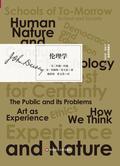 Ethics
This work, a collaboration between Dewey and Tufts, was published in 1908. Twenty-four years later, they published an almost completely rewritten revised edition. The authors state that their purpose is to "introduce careful deliberation and perspective into the full implications of individual behavior and social policy." After providing the necessary background, the authors analyze the problems faced by modern industrial society, arguing that ethics must be constantly concerned with the ever-ch
—Reads8.6Score—Shelves
Ethics
This work, a collaboration between Dewey and Tufts, was published in 1908. Twenty-four years later, they published an almost completely rewritten revised edition. The authors state that their purpose is to "introduce careful deliberation and perspective into the full implications of individual behavior and social policy." After providing the necessary background, the authors analyze the problems faced by modern industrial society, arguing that ethics must be constantly concerned with the ever-ch
—Reads8.6Score—Shelves