Fanqie library
Browse
- Titles
- 8
Every Fanqie book we index, searchable by title, author or tag.
-
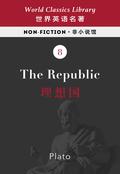 The Republic: Utopia (English Version)
Plato used the story as the theme in "The Republic", narrating that Socrates went to Beers to pray to the gods. On his way back, he was invited to his home by Paramic, and the guests and hosts talked about it. The debate between the two exposed the philosophical, political, artistic and educational thoughts of the slave-owning class from all angles. The Socrates in the story is fictitious and fake, and is actually the spokesperson of Plato. The article discusses justice with people through the w
13Reads8.7Score—Shelves
The Republic: Utopia (English Version)
Plato used the story as the theme in "The Republic", narrating that Socrates went to Beers to pray to the gods. On his way back, he was invited to his home by Paramic, and the guests and hosts talked about it. The debate between the two exposed the philosophical, political, artistic and educational thoughts of the slave-owning class from all angles. The Socrates in the story is fictitious and fake, and is actually the spokesperson of Plato. The article discusses justice with people through the w
13Reads8.7Score—Shelves
-
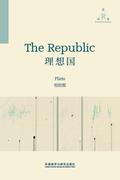 Utopia (Foreign Language Research Press Bilingual Library)
Editor's recommendation: Plato is philosophy, and philosophy is Plato. Burn all the libraries, because their value lies in this "Utopia". ——Emerson Instead of reading thousands of books on Greek philosophy, it is better to read Plato's "The Republic". ——Zhu Guangqian Content introduction: "The Republic" is Plato's most important representative work, not only because the content of "The Republic" is comprehensive and systematic, but more importantly: this work best reflects Plato's creative inten
2Reads8.0Score—Shelves
Utopia (Foreign Language Research Press Bilingual Library)
Editor's recommendation: Plato is philosophy, and philosophy is Plato. Burn all the libraries, because their value lies in this "Utopia". ——Emerson Instead of reading thousands of books on Greek philosophy, it is better to read Plato's "The Republic". ——Zhu Guangqian Content introduction: "The Republic" is Plato's most important representative work, not only because the content of "The Republic" is comprehensive and systematic, but more importantly: this work best reflects Plato's creative inten
2Reads8.0Score—Shelves
-
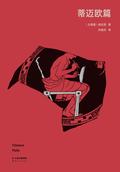 Timaeus
"The Timaeus" is a dialogue written by Plato in his later years. The mathematical conception of creation in the book greatly influenced the pioneers of modern science. Plato believed that the Creator added form to invisible matter to form the ordered world (universe) we see, and the way he gave form was geometric. Plato's mid-term dialogue "The Republic" and his later dialogue "Timaeus" are his two most influential masterpieces.
—Reads9.0Score—Shelves
Timaeus
"The Timaeus" is a dialogue written by Plato in his later years. The mathematical conception of creation in the book greatly influenced the pioneers of modern science. Plato believed that the Creator added form to invisible matter to form the ordered world (universe) we see, and the way he gave form was geometric. Plato's mid-term dialogue "The Republic" and his later dialogue "Timaeus" are his two most influential masterpieces.
—Reads9.0Score—Shelves
-
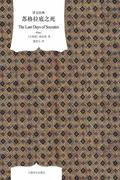 Death of Socrates
The trial and execution of Socrates was an important moment in the history of the ancient Greek city-state of Athens, and even in the history of Western thought. The four dialogues included in this book were written by Plato, a student of Socrates. By recording the historical event of Socrates' death, Plato developed his philosophy and at the same time showed the world Socrates' unique life, thoughts and personality charm.
—Reads9.2Score—Shelves
Death of Socrates
The trial and execution of Socrates was an important moment in the history of the ancient Greek city-state of Athens, and even in the history of Western thought. The four dialogues included in this book were written by Plato, a student of Socrates. By recording the historical event of Socrates' death, Plato developed his philosophy and at the same time showed the world Socrates' unique life, thoughts and personality charm.
—Reads9.2Score—Shelves
-
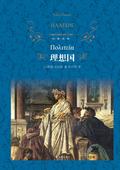 Utopia (Classic Translation)
"The Republic" is an important dialogue by Plato and a typical comprehensive work. It involves many issues such as philosophy, politics, ethics, education, psychology, society, family, religion, art, etc. The language is quite literary and full of speculative philosophy. If you savor it carefully, the fragrance will overflow. "Utopia" is a must-read book for Western intellectual circles, shocking both the past and the present. If we want to understand contemporary Western social and political cu
—Reads9.4Score—Shelves
Utopia (Classic Translation)
"The Republic" is an important dialogue by Plato and a typical comprehensive work. It involves many issues such as philosophy, politics, ethics, education, psychology, society, family, religion, art, etc. The language is quite literary and full of speculative philosophy. If you savor it carefully, the fragrance will overflow. "Utopia" is a must-read book for Western intellectual circles, shocking both the past and the present. If we want to understand contemporary Western social and political cu
—Reads9.4Score—Shelves
-
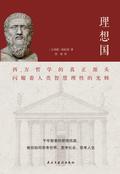 Utopia
"The Republic" is a philosophical dialogue written by Plato. The whole book is written in the words of Socrates and through dialogue with other people, designing a political system that integrates truth, goodness, and beauty, that is, an utopia that can achieve justice. Most of the issues discussed in the book are closely related to daily life, such as eugenics issues, birth control issues, family disintegration issues, freedom of marriage, celibacy issues, religious issues, moral issues, litera
—Reads9.3Score—Shelves
Utopia
"The Republic" is a philosophical dialogue written by Plato. The whole book is written in the words of Socrates and through dialogue with other people, designing a political system that integrates truth, goodness, and beauty, that is, an utopia that can achieve justice. Most of the issues discussed in the book are closely related to daily life, such as eugenics issues, birth control issues, family disintegration issues, freedom of marriage, celibacy issues, religious issues, moral issues, litera
—Reads9.3Score—Shelves
-
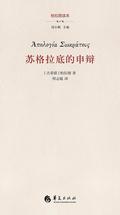 Socrates' Defense
In 399 BC, the philosopher Socrates was summoned, saying that he did not believe in the gods of the city-state, introduced new elves, and corrupted the youth. Socrates made his famous defense before a jury of 500 people. But the defense did not save Socrates' life, and he was eventually sentenced to death. The death of Socrates and the death of Jesus laid two basic tones for Western civilization. The reason why the death of Socrates became a core event in the history of Western philosophy is fir
—Reads9.4Score—Shelves
Socrates' Defense
In 399 BC, the philosopher Socrates was summoned, saying that he did not believe in the gods of the city-state, introduced new elves, and corrupted the youth. Socrates made his famous defense before a jury of 500 people. But the defense did not save Socrates' life, and he was eventually sentenced to death. The death of Socrates and the death of Jesus laid two basic tones for Western civilization. The reason why the death of Socrates became a core event in the history of Western philosophy is fir
—Reads9.4Score—Shelves
-
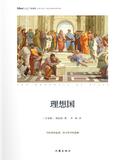 Utopia
Most of the issues discussed in the book are closely related to daily life, such as eugenics issues, birth control issues, family disintegration issues, freedom of marriage, celibacy issues, religious issues, moral issues, literary issues, education issues (including nurseries, kindergartens, primary schools, middle schools, university graduate schools, and vocational education such as industry, agriculture, navigation, and medicine). In addition, issues such as equal rights for men and women, m
—Reads8.8Score—Shelves
Utopia
Most of the issues discussed in the book are closely related to daily life, such as eugenics issues, birth control issues, family disintegration issues, freedom of marriage, celibacy issues, religious issues, moral issues, literary issues, education issues (including nurseries, kindergartens, primary schools, middle schools, university graduate schools, and vocational education such as industry, agriculture, navigation, and medicine). In addition, issues such as equal rights for men and women, m
—Reads8.8Score—Shelves