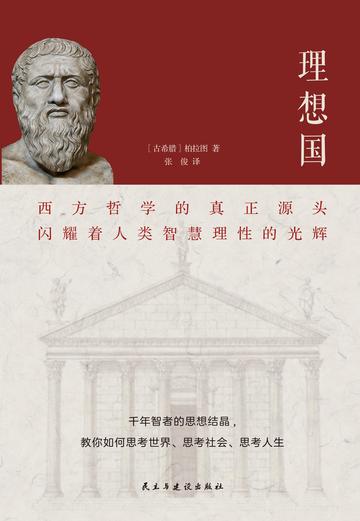
"The Republic" is a philosophical dialogue written by Plato. The whole book is written in the words of Socrates and through dialogue with other people, designing a political system that integrates truth, goodness, and beauty, that is, an utopia that can achieve justice.
Most of the issues discussed in the book are closely related to daily life, such as eugenics issues, birth control issues, family disintegration issues, freedom of marriage, celibacy issues, religious issues, moral issues, literature and art issues, education issues, as well as issues such as equal rights for men and women, male and female participation in politics, and male and female participation in the military. They are almost all various issues that ordinary people will encounter in their lives. Its thoughts are extensive and profound, representing almost the entire Greek culture. It was rated as one of the 20 most influential academic books in the UK.
Reader comments
"Utopia": The deep interweaving of ideal state and realistic thoughts
Plato's "The Republic" is undoubtedly a classic work that shocks the past and the present. It is like a treasure house of ideas, containing profound insights and outstanding insights into many fields such as politics, ethics, education, philosophy, etc.
From the perspective of political structure, Plato envisioned an ideal city-state ruled by philosophers. In this city-state, wisdom, bravery, temperance and justice are regarded as core values. With their unremitting pursuit of truth and wisdom, philosophers can lead the city-state to harmony and prosperity. However, this ideal political model faces many challenges in reality. It places almost stringent requirements on the ruler's morality and wisdom, and lacks sufficient careful consideration in the distribution and checks and balances of power, which can easily lead to hidden worries about centralization of power. However, it is undeniable that its concept provided an extremely important thinking cornerstone for the development of political philosophy in later generations, prompting people to continuously explore the construction elements of an ideal political system.
In terms of ethics and morality, "Utopia"'s in-depth discussion of justice is thought-provoking. Plato believes that justice is not only an individual's code of conduct, but also the harmonious order of the city-state as a whole. Through wonderful expositions such as the Allegory of the Cave, he reveals the profound differences between appearance and truth, the world of senses and the world of ideas, and guides people to transcend worldly fame and fortune and pursue inner soul perfection and moral sublimation. This noble pursuit of justice and morality is like a deafening alarm bell in today's materialistic society, reminding people to stick to the moral bottom line and reflect on social value orientation.
Regarding education, Plato emphasized its key role in shaping ideal citizens and building an ideal city-state. Education should not only be limited to imparting practical skills, but should also focus on cultivating people's rationality, virtue and wisdom. From early music and physical education to later higher philosophy education, this all-round, multi-level education system design reflects the high emphasis on the all-round development of people. Although it is difficult to completely replicate it in the modern education system, the forward-looking and advanced nature of its educational philosophy is still worth learning from, inspiring us to continuously optimize educational goals and methods to cultivate talents with noble moral character and innovative thinking that adapt to the development needs of the times.
Although "Utopia" depicts an ideal state that is difficult to fully achieve, its charm and value lies in this. It is like a bright star that hangs high in the sky of human thought. It illuminates the way forward in our continuous exploration in politics, ethics, education and many other aspects. It urges us to always cherish the longing for ideals in the quagmire of reality and strive to move towards a more just, wise and harmonious direction.
Plato constructs the ethical paradigm of the city-state with the "theory of ideas", and the metaphor of the cave reveals the violence of ontological cognition. The rule of the philosopher king alienates dialectics into power discipline, and the theory of justice dissolves individual subjectivity under the framework of collectivism. Its expulsion of poetics exposes the dilemma of logocentrism, and the dualistic separation of the ideal world and the phenomenal world indicates the totalitarian background of utopia. Because of its groundbreaking thought experiment and the tension of self-deconstruction—the prophecy of truth transgression and democratic dilemma, it still provides an original mirror for the critique of modernity.
Resurrection, the world needs you
Why can't comments, underlines and notes be made in books?
Debate beyond the times
Some words make sense, and some words are really hard to understand








"Utopia": The deep interweaving of ideal state and realistic thoughts Plato's "The Republic" is undoubtedly a classic work that shocks the past and the present. It is like a treasure house of ideas, containing profound insights and outstanding insights into many fields such as politics, ethics, education, philosophy, etc. From the perspective of political structure, Plato envisioned an ideal city-state ruled by philosophers. In this city-state, wisdom, bravery, temperance and justice are regarded as core values. With their unremitting pursuit of truth and wisdom, philosophers can lead the city-state to harmony and prosperity. However, this ideal political model faces many challenges in reality. It places almost stringent requirements on the ruler's morality and wisdom, and lacks sufficient careful consideration in the distribution and checks and balances of power, which can easily lead to hidden worries about centralization of power. However, it is undeniable that its concept provided an extremely important thinking cornerstone for the development of political philosophy in later generations, prompting people to continuously explore the construction elements of an ideal political system. In terms of ethics and morality, "Utopia"'s in-depth discussion of justice is thought-provoking. Plato believes that justice is not only an individual's code of conduct, but also the harmonious order of the city-state as a whole. Through wonderful expositions such as the Allegory of the Cave, he reveals the profound differences between appearance and truth, the world of senses and the world of ideas, and guides people to transcend worldly fame and fortune and pursue inner soul perfection and moral sublimation. This noble pursuit of justice and morality is like a deafening alarm bell in today's materialistic society, reminding people to stick to the moral bottom line and reflect on social value orientation. Regarding education, Plato emphasized its key role in shaping ideal citizens and building an ideal city-state. Education should not only be limited to imparting practical skills, but should also focus on cultivating people's rationality, virtue and wisdom. From early music and physical education to later higher philosophy education, this all-round, multi-level education system design reflects the high emphasis on the all-round development of people. Although it is difficult to completely replicate it in the modern education system, the forward-looking and advanced nature of its educational philosophy is still worth learning from, inspiring us to continuously optimize educational goals and methods to cultivate talents with noble moral character and innovative thinking that adapt to the development needs of the times. Although "Utopia" depicts an ideal state that is difficult to fully achieve, its charm and value lies in this. It is like a bright star that hangs high in the sky of human thought. It illuminates the way forward in our continuous exploration in politics, ethics, education and many other aspects. It urges us to always cherish the longing for ideals in the quagmire of reality and strive to move towards a more just, wise and harmonious direction.
Plato constructs the ethical paradigm of the city-state with the "theory of ideas", and the metaphor of the cave reveals the violence of ontological cognition. The rule of the philosopher king alienates dialectics into power discipline, and the theory of justice dissolves individual subjectivity under the framework of collectivism. Its expulsion of poetics exposes the dilemma of logocentrism, and the dualistic separation of the ideal world and the phenomenal world indicates the totalitarian background of utopia. Because of its groundbreaking thought experiment and the tension of self-deconstruction—the prophecy of truth transgression and democratic dilemma, it still provides an original mirror for the critique of modernity.
Resurrection, the world needs you
Why can't comments, underlines and notes be made in books?
Debate beyond the times
Some words make sense, and some words are really hard to understand