Fanqie library
Browse
- Titles
- 15
Every Fanqie book we index, searchable by title, author or tag.
-
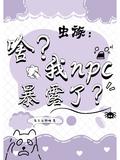 Zerg: What? Is My NPC Exposed?
[Two male protagonists] [1V1] [Zerg] [Double Clean] [Mind reading] [System] [Easy and funny] An Ran x He Xiu, non-orthopedics (The protagonists, Gong and Shou, have imperfect personalities, especially Shou. Initially, they just found it interesting and wanted to take advantage of Gong. There is less emotional description of Gong and Shou, and the relationship will not be confirmed until later.) After An Ran died, he traveled to the Zerg and bound the NPC acting system. His mission was to play va
83Reads6.6Score—Shelves
Zerg: What? Is My NPC Exposed?
[Two male protagonists] [1V1] [Zerg] [Double Clean] [Mind reading] [System] [Easy and funny] An Ran x He Xiu, non-orthopedics (The protagonists, Gong and Shou, have imperfect personalities, especially Shou. Initially, they just found it interesting and wanted to take advantage of Gong. There is less emotional description of Gong and Shou, and the relationship will not be confirmed until later.) After An Ran died, he traveled to the Zerg and bound the NPC acting system. His mission was to play va
83Reads6.6Score—Shelves
-
 Pu Nu's Sims Heartthrob System
[Heartthrob+System+Multiple Male Leads+Shura Field+Daily Direction] 1vN, there will be many emotional lines, The heroine will never really fall in love with anyone. Lu Ziwei, an ordinary girl in her late thirties, lost her job and stayed at home playing the Sims game, traveling back to her high school days to rewrite her life. There are golden fingers, not too exaggerated. The heroine is an ordinary girl, and wanting to be beautiful is an ordinary person's thought. Don't have too high expectatio
40Reads6.3Score—Shelves
Pu Nu's Sims Heartthrob System
[Heartthrob+System+Multiple Male Leads+Shura Field+Daily Direction] 1vN, there will be many emotional lines, The heroine will never really fall in love with anyone. Lu Ziwei, an ordinary girl in her late thirties, lost her job and stayed at home playing the Sims game, traveling back to her high school days to rewrite her life. There are golden fingers, not too exaggerated. The heroine is an ordinary girl, and wanting to be beautiful is an ordinary person's thought. Don't have too high expectatio
40Reads6.3Score—Shelves
-
 Mundane Pulse
Cultivation does not originate from ancient inheritance, but the special energy - "Mortal Vein" bred by the long-term integration of the city's "popularity, information flow, and architectural pattern". The mortal veins are distributed in the "active nodes" of the city: old neighborhoods, century-old bookstores, squares with large flow of people, and buildings carrying collective memory (such as old bell towers and ancient bridges). The more humane and historical the place, the richer the mortal
1Reads—Score—Shelves
Mundane Pulse
Cultivation does not originate from ancient inheritance, but the special energy - "Mortal Vein" bred by the long-term integration of the city's "popularity, information flow, and architectural pattern". The mortal veins are distributed in the "active nodes" of the city: old neighborhoods, century-old bookstores, squares with large flow of people, and buildings carrying collective memory (such as old bell towers and ancient bridges). The more humane and historical the place, the richer the mortal
1Reads—Score—Shelves
-
 Bianliang Fold: Guardian of Life Anchor
In the third year of Qingli reign of Emperor Renzong of the Northern Song Dynasty (1043), Bianjing became the capital, and the three pillars of Song, Liao and Xixia were established. At the beginning of the implementation of the Qingli New Deal, there was an undercurrent in the court between reformists such as Fan Zhongyan and Fu Bi and conservatives such as Lu Yijian; the private market was prosperous, and the Bianhe River water transportation was busy, but Jianghu forces and foreign tribes wer
—Reads—Score—Shelves
Bianliang Fold: Guardian of Life Anchor
In the third year of Qingli reign of Emperor Renzong of the Northern Song Dynasty (1043), Bianjing became the capital, and the three pillars of Song, Liao and Xixia were established. At the beginning of the implementation of the Qingli New Deal, there was an undercurrent in the court between reformists such as Fan Zhongyan and Fu Bi and conservatives such as Lu Yijian; the private market was prosperous, and the Bianhe River water transportation was busy, but Jianghu forces and foreign tribes wer
—Reads—Score—Shelves
-
 Great Yong's Strange Trajectory: Peiyu Jingchen
This novel is set in an original dynasty that is similar to the ancient Chinese feudal dynasty, but with "hidden deviations" in its core rules - the Yong Dynasty (not the Tang, Song, Ming and Qing Dynasties, and no historical prototypes are copied). It was founded 187 years ago and has gone through seven generations of emperors. It is currently in the middle of the reign of the eighth emperor "Yonghe Emperor" (reigned for 11 years). On the surface, Dayong is a typical farming feudal dynasty wit
—Reads—Score—Shelves
Great Yong's Strange Trajectory: Peiyu Jingchen
This novel is set in an original dynasty that is similar to the ancient Chinese feudal dynasty, but with "hidden deviations" in its core rules - the Yong Dynasty (not the Tang, Song, Ming and Qing Dynasties, and no historical prototypes are copied). It was founded 187 years ago and has gone through seven generations of emperors. It is currently in the middle of the reign of the eighth emperor "Yonghe Emperor" (reigned for 11 years). On the surface, Dayong is a typical farming feudal dynasty wit
—Reads—Score—Shelves
-
 Traces of History: Anecdotal Records of the Southern Dynasties
The story takes place in the seventeenth year of Yuanjia (AD 440), the reign of Emperor Wen of the Southern Song Dynasty. At this time, the Southern Song Dynasty and the Northern Wei Dynasty were in a confrontation between the north and the south. The Southern Song Dynasty "Reign of Yuanjia" began to show prosperity, Emperor Wen Liu Yilong intended to expedition to the north to regain the Central Plains; Emperor Taiwu of the Northern Wei Dynasty Tuoba Tao had just pacified Rouran in the north, a
—Reads—Score—Shelves
Traces of History: Anecdotal Records of the Southern Dynasties
The story takes place in the seventeenth year of Yuanjia (AD 440), the reign of Emperor Wen of the Southern Song Dynasty. At this time, the Southern Song Dynasty and the Northern Wei Dynasty were in a confrontation between the north and the south. The Southern Song Dynasty "Reign of Yuanjia" began to show prosperity, Emperor Wen Liu Yilong intended to expedition to the north to regain the Central Plains; Emperor Taiwu of the Northern Wei Dynasty Tuoba Tao had just pacified Rouran in the north, a
—Reads—Score—Shelves
-
 Chronicles of the Yong Dynasty: the Clouds Never Fall
The story takes place in the middle period of the Dayong Dynasty (approximately corresponding to the transitional stage between the Tang and Song Dynasties in reality). Imperial power fell to the wayside, and feudal vassalages and gentry monopolies coexisted: Geographical pattern: The core area of the Central Plains: centered on the capital "Luoyang" and radiating to Bianliang, Lin'an and other state capitals, it was the core of direct control by the imperial power. However, the gentry's forces
—Reads—Score—Shelves
Chronicles of the Yong Dynasty: the Clouds Never Fall
The story takes place in the middle period of the Dayong Dynasty (approximately corresponding to the transitional stage between the Tang and Song Dynasties in reality). Imperial power fell to the wayside, and feudal vassalages and gentry monopolies coexisted: Geographical pattern: The core area of the Central Plains: centered on the capital "Luoyang" and radiating to Bianliang, Lin'an and other state capitals, it was the core of direct control by the imperial power. However, the gentry's forces
—Reads—Score—Shelves
-
 City Veins: Awakening to Reality
The essence of the world: Under the modern city (with the fictional "Cangnan City" as the core), there is a "qi network" spread from ancient times. Qi energy originates from the city's "popularity" (crowd activity, emotional aggregation) and "territory veins" (topography, building layout). The two blend to form "pulse energy" that can be absorbed and used. Qi Vein Rules: Most Qi Vein nodes are hidden under urban landmark buildings (old churches, century-old parks, subway hubs) or special places
—Reads—Score—Shelves
City Veins: Awakening to Reality
The essence of the world: Under the modern city (with the fictional "Cangnan City" as the core), there is a "qi network" spread from ancient times. Qi energy originates from the city's "popularity" (crowd activity, emotional aggregation) and "territory veins" (topography, building layout). The two blend to form "pulse energy" that can be absorbed and used. Qi Vein Rules: Most Qi Vein nodes are hidden under urban landmark buildings (old churches, century-old parks, subway hubs) or special places
—Reads—Score—Shelves
-
 Ten Thousand Ruins Realm: Spirit Contractor
Ordinary modern cities look just like regular cities on the surface, but they hide a group of "psychics" - these people can weakly perceive unreal energy, but most of them don't know that they are special. There is an abandoned "Ancient Inkstone Town" on the edge of the city. It is said to be an ancient sacrificial site. Today, only broken stone tablets and old locust trees remain. It has become the destination of a few explorers and an important realistic scene in the subsequent plot. Core spec
—Reads—Score—Shelves
Ten Thousand Ruins Realm: Spirit Contractor
Ordinary modern cities look just like regular cities on the surface, but they hide a group of "psychics" - these people can weakly perceive unreal energy, but most of them don't know that they are special. There is an abandoned "Ancient Inkstone Town" on the edge of the city. It is said to be an ancient sacrificial site. Today, only broken stone tablets and old locust trees remain. It has become the destination of a few explorers and an important realistic scene in the subsequent plot. Core spec
—Reads—Score—Shelves
-
 Chronicles of the Yong Dynasty: Qingshan Mou
The Dayong Dynasty was founded for more than a hundred years and passed through four emperors. It is currently in the "Jinghe Period", which is the middle period of the dynasty. Taizu unified the world by force and designated the capital city as "Shangyong City". However, in order to appease all forces at the time of the founding of the country, the "Three Northern Domains" (Yanyun, Shuofang, and Hedong) and the Jiangnan noble clan group (headed by the Xie, Lu, and Zhou families) were retained,
—Reads—Score—Shelves
Chronicles of the Yong Dynasty: Qingshan Mou
The Dayong Dynasty was founded for more than a hundred years and passed through four emperors. It is currently in the "Jinghe Period", which is the middle period of the dynasty. Taizu unified the world by force and designated the capital city as "Shangyong City". However, in order to appease all forces at the time of the founding of the country, the "Three Northern Domains" (Yanyun, Shuofang, and Hedong) and the Jiangnan noble clan group (headed by the Xie, Lu, and Zhou families) were retained,
—Reads—Score—Shelves
-
 Ruins of Eclipsed Memories
- Disaster name: "The Great Eclipse", which occurred in 2147 and originated from an unknown microorganism that awakened under the Antarctic ice - "Erosion Bacteria". - Transmission method: Spreads through air and water. It does not directly cause death, but invades the hippocampus of the human brain and gradually "devours" memories. - Alienation phenomenon: People who have lost more than 70% of their memory will undergo physiological alienation (such as skin covered with translucent bacterial fi
—Reads—Score—Shelves
Ruins of Eclipsed Memories
- Disaster name: "The Great Eclipse", which occurred in 2147 and originated from an unknown microorganism that awakened under the Antarctic ice - "Erosion Bacteria". - Transmission method: Spreads through air and water. It does not directly cause death, but invades the hippocampus of the human brain and gradually "devours" memories. - Alienation phenomenon: People who have lost more than 70% of their memory will undergo physiological alienation (such as skin covered with translucent bacterial fi
—Reads—Score—Shelves
-
 Aftershock: Under the Virtual Image
The starting point of the catastrophe: In 2073, a "source wave" impact occurred simultaneously around the world. The source was unknown (not alien invasion, not nuclear pollution). It could not be captured by instruments and had an impact only through human perception. Core hazard: "Source Wave" distorts human five senses (mainly vision, hearing, and touch), causing "subjective perception" to break through the boundaries of reality - human fears, memories, and hallucinations will materialize and
—Reads—Score—Shelves
Aftershock: Under the Virtual Image
The starting point of the catastrophe: In 2073, a "source wave" impact occurred simultaneously around the world. The source was unknown (not alien invasion, not nuclear pollution). It could not be captured by instruments and had an impact only through human perception. Core hazard: "Source Wave" distorts human five senses (mainly vision, hearing, and touch), causing "subjective perception" to break through the boundaries of reality - human fears, memories, and hallucinations will materialize and
—Reads—Score—Shelves
-
 Traces of Virtual Objects
The worldview is divided into "three layers of space", each layer has independent rules and forces, and the core contradiction revolves around "virtual objects" - virtual objects refer to "non-natural artificial objects/imaginary objects", such as paintings, stories, handmade models, etc., Which can be "realized" when certain conditions are met, but becoming real will break the balance of space and trigger a chain of crises.
—Reads—Score—Shelves
Traces of Virtual Objects
The worldview is divided into "three layers of space", each layer has independent rules and forces, and the core contradiction revolves around "virtual objects" - virtual objects refer to "non-natural artificial objects/imaginary objects", such as paintings, stories, handmade models, etc., Which can be "realized" when certain conditions are met, but becoming real will break the balance of space and trigger a chain of crises.
—Reads—Score—Shelves
-
 Aura Restorer
The story takes place in the fictional second-tier city "Linzhou", which looks like an ordinary city on the surface - there are old alleys (such as "Xiuzhu Lane", where the male protagonist works), new business districts (such as "Xingmao Plaza", the area where the female protagonists often hang out), and museums ("Linzhou Museum", a key plot scene). People are living their daily lives, and most people are unaware of the existence of "Aura". Core carrier: old objects (such as ancient inkstones,
—Reads—Score—Shelves
Aura Restorer
The story takes place in the fictional second-tier city "Linzhou", which looks like an ordinary city on the surface - there are old alleys (such as "Xiuzhu Lane", where the male protagonist works), new business districts (such as "Xingmao Plaza", the area where the female protagonists often hang out), and museums ("Linzhou Museum", a key plot scene). People are living their daily lives, and most people are unaware of the existence of "Aura". Core carrier: old objects (such as ancient inkstones,
—Reads—Score—Shelves
-
 Learning from the Past Through Puzzles
The story is set in a modern city, with antique collection and appraisal as the core, and blended into folk Feng Shui secrets, family grudges and power disputes. Under the seemingly prosperous city surface, there are hidden secrets of a family of treasure appraisers that have been passed down for thousands of years, as well as overt and covert struggles surrounding the mysterious antique "Mountains and Rivers Sheji Tu". The antique market is a mixed bag, and behind the genuine and fake collectio
—Reads—Score—Shelves
Learning from the Past Through Puzzles
The story is set in a modern city, with antique collection and appraisal as the core, and blended into folk Feng Shui secrets, family grudges and power disputes. Under the seemingly prosperous city surface, there are hidden secrets of a family of treasure appraisers that have been passed down for thousands of years, as well as overt and covert struggles surrounding the mysterious antique "Mountains and Rivers Sheji Tu". The antique market is a mixed bag, and behind the genuine and fake collectio
—Reads—Score—Shelves