The book that is really eye-catching is not a cool novel, but a gangster novel. From it, you can learn about the ways of the world, watch the fireworks in the world, and recall the happy times with your brothers.
Highly Recommended: Four Absurd Fables That Will Make You Laugh and Think Dear Readers: If you are looking for some different stories - stories that will make you laugh and think again after you laugh - then congratulations, you have come to the right place. I have just finished writing four stories, each of which is nearly 20,000 words long. Each story is a thought experiment intertwining absurdity and reality. Now, I would like to recommend these four stories to you. Story 1: "Music Genre Wars" Have you ever been involved in a "what's better" debate online? Is tofu nao sweet or salty? Is Android better or Apple? Is classical music more advanced or pop music more down-to-earth? If so, then you will definitely relate to this story. This story is about: a "murder case" caused by a friend circle - a classical music lover casually posted a comment about pop music, which resulted in a century-old war that swept the entire Internet, spread to the real world, and even alarmed the "Music Genre Mediation Committee." The classical music camp invented the "subwoofer" and played "Requiem" in a loop to give the other party a sense of doom; the pop music camp invented the "subwoofer" and played the song "Mai" in a loop to give the other party a splitting headache. People from the two camps quarreled on the Internet for half a year, until a twelve-year-old child asked the simplest question: "Why do you have to choose one? Isn't music used to make people happy?" The most wonderful thing about this story is that it uses an extremely absurd shell to wrap up an extremely profound truth: what we argue about is never about music, but about identity. Those who criticize the most fiercely on the Internet are not real music lovers - they are people lost in real life, looking for a sense of existence in the virtual "camp". The wisest philosopher in the story is actually a pancake and fruit seller. He said something to shut everyone up: "Music is like the pancakes I serve. Some people like it spicy, and some people like it with sweet sauce. You can't say that the spicy ones are better than the ones with sweet sauce. The important thing is that you enjoy eating." This story will make you laugh, think about the meaningless arguments you have been involved in, and make you think: When we change "I like" to "I am better than you", what exactly do we lose? The second story: "Artist's Creation Bottleneck" Have you ever encountered the moment when you "can't write", "can't think of it" and "can't do it"? The protagonist of this story, Chen Mo, is a professional screenwriter who has been writing for fifteen years. Suddenly one day, he can no longer write. It's not that I'm in a bad state or that I need to rest—it's that I am truly, completely, like a well that has dried up, and I can't write. Then, a ridiculous journey of "seeking medical advice" began. Some people let him drink, some asked him to "write freely", and some recommended him an "inspiration restart studio" that charges 380,000 yuan - dismantling inspiration into modules, turning creation into processes, and turning artists into a part of the production line. Someone also recommended a "creativity management platform" to him, which quantifies bottlenecks into KPIs and uses a punishment mechanism to "incentivize" creation - if you can't write, your deposit will be deducted, you will be downgraded, and your "bottleneck data" will even be made public. Can you imagine? In this era, even "not being able to write" has become a business. Chen Mo tried all methods and spent all his energy, but still couldn't write it. Until he met a retired professor in his seventies, who told him: "Your current situation is not because you can't write, but because you want to write so much. Let it go. Be an ordinary person. Go to the vegetable market to buy food, chat with the security guard, and learn Tai Chi from the old lady. When you stop caring about it, it will come back naturally." Chen Mo did so. He gave up his identity as a "screenwriter" and his obsession that "I must write" and became an ordinary person. Then one day, while slicing cucumbers in the kitchen, he thought of his deceased mother—and the words poured out like water from a spring. The most touching thing about this story is that it reveals a cruel truth: In this era of "efficiency first", we have alienated ourselves into a machine. We forget that creation is not production, inspiration is not KPI, and people are not resources that can be exploited infinitely. Sometimes the best solution is not to try harder, but to not try harder—let it go and wait. This story will remind you of those days when you were chased by KPIs. It will make you rethink the relationship between "work" and "meaning." It will also make you understand that true creativity comes from real life, not from any "management system." The third story: "Direct Infusion of Knowledge" Imagine: If there was a technology that could directly write any knowledge into your brain in forty minutes - no need to read books, no need to listen to lectures, no need to review - would you use it? This is the story of Direct Knowledge Infusion. A company called "Zhi Nao Technology" released a revolutionary product - "Zhi Nao Imprint". Put it on, choose the knowledge package you want, and in forty minutes, you will master what it takes others ten years to learn. At the press conference, a mother from Henan cried - her son only slept for five hours a day, she was heartbroken, and she was willing to pay any price so that her son would no longer suffer. Once the product hit the market, it went crazy. Students no longer go to school, office workers no longer train, and everyone is "imprinting" knowledge. Some people use it to cheat in college entrance examinations, some people use it to become "experts" overnight, and some people use it to change their lives. But then what? Side effects started to show. Those who have imprinted too much knowledge begin to have memory confusion - they can't distinguish what they have learned and what they have imprinted, and they even "recall" things they have never experienced. What's even scarier is that they begin to lose their creativity - they can tell all they know but can't come up with any original ideas. Their critical thinking is deteriorating and their ability to learn is disappearing. The most terrifying thing is that there is a small word hidden in the user agreement: Zhinao Technology Company reserves the right to remotely manage imprinted knowledge. In other words, the knowledge in your brain can be withdrawn at any time. The most absurd thing about this story is that it uses the shell of science fiction to wrap up an extremely real problem: What is our obsession with "shortcuts" causing us to lose? What do we sacrifice when we pursue "faster"? What's the cost behind those "seemingly efficient" solutions? The most ironic scene in the story is: the founder of this company never used his own products. Someone asked him why, and he said: "Because I'm afraid." This story will make you rethink the meaning of "learning" - learning is not just about acquiring knowledge, the process of learning itself is a kind of growth. The nights you spent, the books you read, the questions you couldn't solve, and the questions you couldn't figure out all shaped you. Without this process, all you have is the corpse of knowledge. The fourth story: "Select test subjects" If one day, you can choose the test subjects yourself - you can not only take the traditional Chinese and math tests, but also take the "King of Glory Strategy", "Milk Tea Mixing" and "Cosplay Costume Design" - what will you choose? This is the story of "Exam Subjects of Your Own Choice". One city was selected as an education reform pilot and introduced a policy of "optional examination subjects". Students can declare any subject they like as a test subject, as long as it can pass the school's review. Then, a ridiculous carnival begins. Someone applied for the "Introduction to Fishing" to assess how to fish efficiently at work. Someone declared "pet care" because bathing a dog is easier than doing math problems. Parents began to frantically "customize" their own subjects - spending hundreds of thousands to hire someone to design a subject for their children that "looks sophisticated but is actually very simple", and then easily get full marks. Portfolio packagers appeared, admission consulting companies appeared, and a complete industry chain was formed. Children from rich families can use capital to "purchase" high scores, while children from poor families don't even have the right to choose. And those children with real talents no longer like it after they find that their favorite thing becomes a test subject - a boy who likes astronomy never looked up at the stars again after being forced to recite star data. The most absurd thing is that when everyone is "packaging" themselves and telling a "wonderful story," those children who cannot package or tell stories - those who are quiet, down-to-earth, and real - are completely forgotten. Until a fifteen-year-old girl named Su Xiaowan chose "nothing". She only takes traditional subjects and does not apply for any self-created subjects. She doesn't package herself or tell wonderful stories, she just stays true to herself. Her grades aren't the best, but she's real. Her diary sparked huge controversy online and ultimately spurred the reform-wide introspection. The most profound thing about this story is that it makes us think: When we give everyone the right to "free choice", do we really create fairness? When everyone can choose to show their best side, what about those who don't know how to "show"? When interest becomes a test subject, will interest still be interest? The most powerful sentence in the story is what Su Xiaowan said: "I don't want to be a packaged person. I want to be a real person. Even if it means my grades are not good, even if it means I can't get into a good school - at least, I am me." Why must you read these four stories? Each of these four stories is an independent fable. They use absurd settings, humorous language, and vivid characters to wrap up profound warnings and thoughts. They are not "chicken soup" - they don't tell you "hard work will lead to success" and "persistence is victory." They are much deeper and crueler than chicken soup. They are telling you: The world is ridiculous sometimes, but we can't be ridiculous along with it. They remind you that while pursuing efficiency, freedom, and individuality, we may be losing something more precious—reality, process, humanity, and the ability to think. They make you laugh because the characters are so ridiculous and the plot is so funny. They will make you think - because those ridiculous people and things are actually the reality around us, just a little magnified. They will make you uncomfortable - because you will find that you may be stepping into the traps in the story. How to read? These four stories are now available on Tomato Books. You can find them by searching for the story titles: · "Music Genre War" · "Artist's Creation Blockade" · "Direct Knowledge Infusion" · "Examination Subjects of Your Choice" Each story is nearly 20,000 words long. You can read the first 30% of the content on Tomato Books for free - that is, you can read about 6,000 words of each story for free. Six thousand words are enough for you to understand the setting, characters, and conflicts of the story, and enough for you to judge whether this story is your cup of tea. If you like, you can continue reading the following parts. If you don't like it, that's okay - you have nothing to lose with the free part. Welcome to leave your thoughts after reading. Dear reader, if you have finished reading these stories (even the free part), I sincerely invite you to leave your thoughts after reading in the comment area. You can tell me: · Which story is your favorite? Why? · Which episode made you laugh? Which episode made you think deeply? · What did you learn from the story? Or realized something? · What scenes in the story remind you of your own life? Every comment you make is precious to me. Because writing is a solitary process, but reading is a conversation. Your comment is the beginning of this conversation. Finally, let me tell you a secret. These four stories are just the tip of the iceberg. I have also prepared more than five thousand similar stories - the same absurd setting, the same profound thinking, the same humorous language. They involve all aspects of the workplace, every corner of life, and the light and darkness of human nature. More than five thousand stories, each one is a thought experiment, each one is a mirror that reflects things we take for granted but never think deeply about. If you like these four stories, please continue to follow me. More stories are on the way. Now, go to Tomato Books and search for these stories. Open the first page and let the man selling pancakes, the screenwriter who can't write a script, the programmer whose brain is filled with knowledge, and the girl who chooses "nothing" enter your world. They will make you laugh, make you think, and make you unable to calm down for a long time after closing your phone. That's enough. Looking forward to seeing you in the comments section. —Your storyteller
Watch the genius young man go through many twists and turns in his life, from the world of martial arts to the court. The martial arts plot is suspenseful, without routines or systems, the plot is novel, and the characters are lifelike. The key is that the novel is not waterlogged and reads smoothly!
I recommend this book. The main character is decisive and not like a virgin. The plot is okay. There is basically no plot to subdue one's wits. It's still highly recommended.
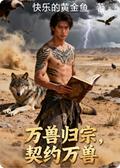 The Secret of Ten Thousand Beasts Controlling Heaven
49Reads8.6Score—Shelves
The Secret of Ten Thousand Beasts Controlling Heaven
49Reads8.6Score—Shelves
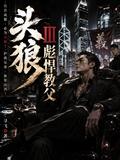 Crouching Tiger
13.9kReads6.8Score1.3kShelves
Crouching Tiger
13.9kReads6.8Score1.3kShelves
 Knowledge Is Imparted Directly.
—Reads8.6Score—Shelves
Knowledge Is Imparted Directly.
—Reads8.6Score—Shelves
 Artist's Bottleneck.
—Reads8.5Score—Shelves
Artist's Bottleneck.
—Reads8.5Score—Shelves
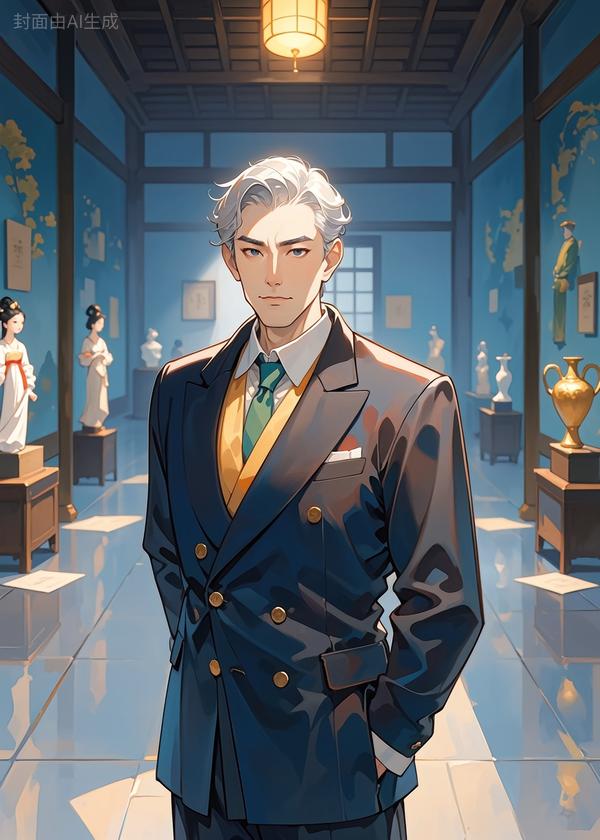 Museum Fantastic Tender.
—Reads8.6Score—Shelves
Museum Fantastic Tender.
—Reads8.6Score—Shelves
 Counter Sutra: Mountain and River Policy
38kReads9.4Score4kShelves
Counter Sutra: Mountain and River Policy
38kReads9.4Score4kShelves
 Origin Prisoner Star
5.3kReads9.2Score309Shelves
Origin Prisoner Star
5.3kReads9.2Score309Shelves
 It's a Big Stage for Survival, Don't Come If You Are Too Small.
168.9kReads8.5Score18.4kShelves
It's a Big Stage for Survival, Don't Come If You Are Too Small.
168.9kReads8.5Score18.4kShelves
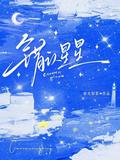 Misidentifying the Stars
16.2kReads9.8Score504Shelves
Misidentifying the Stars
16.2kReads9.8Score504Shelves
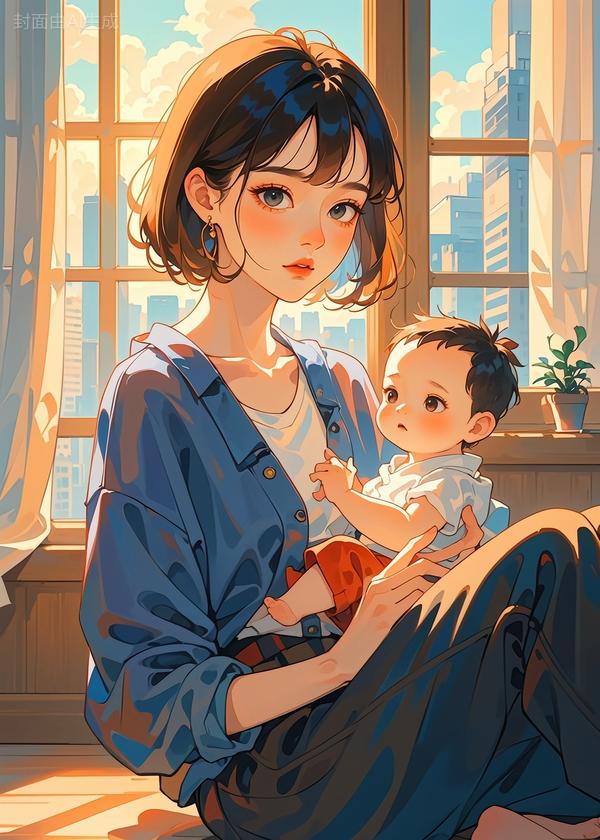 After Hearing the Voice of My Son in Her Belly, My Mother Became Richer Just Because of Her Son.
3.7kReads9.8Score—Shelves
After Hearing the Voice of My Son in Her Belly, My Mother Became Richer Just Because of Her Son.
3.7kReads9.8Score—Shelves
 I Sleep in a Separate Room with My Husband Bingshan, and the Barrage Advises Me Not to Commit Suicide.
73.8kReads9.6Score2.8kShelves
I Sleep in a Separate Room with My Husband Bingshan, and the Barrage Advises Me Not to Commit Suicide.
73.8kReads9.6Score2.8kShelves
 After No Longer Pretending to Be Someone Else, the Aloof Prince Regretted It
4.1kReads9.8Score117Shelves
After No Longer Pretending to Be Someone Else, the Aloof Prince Regretted It
4.1kReads9.8Score117Shelves
 The Real Daughter Was Obsessed with Making Money, and the Whole Family Collapsed.
7.3kReads9.8Score218Shelves
The Real Daughter Was Obsessed with Making Money, and the Whole Family Collapsed.
7.3kReads9.8Score218Shelves
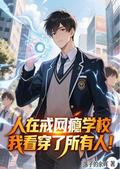 I'm in a School for Addiction Recovery, and I See Through Everyone!
61Reads5.8Score—Shelves
I'm in a School for Addiction Recovery, and I See Through Everyone!
61Reads5.8Score—Shelves
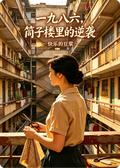 1986, Counterattack in Tongzilou
2Reads8.5Score—Shelves
1986, Counterattack in Tongzilou
2Reads8.5Score—Shelves
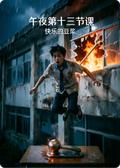 Midnight Lesson Thirteen
1Reads8.6Score—Shelves
Midnight Lesson Thirteen
1Reads8.6Score—Shelves
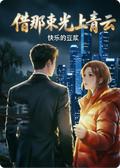 Use That Beam of Light to Reach the Blue Clouds
6Reads8.6Score—Shelves
Use That Beam of Light to Reach the Blue Clouds
6Reads8.6Score—Shelves
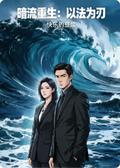 Undercurrent Rebirth: Using Law as a Blade
1Reads8.4Score—Shelves
Undercurrent Rebirth: Using Law as a Blade
1Reads8.4Score—Shelves
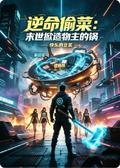 Going Against Fate and Stealing Food: Turning the Blame on the Creator in the Last Days
—Reads8.5Score—Shelves
Going Against Fate and Stealing Food: Turning the Blame on the Creator in the Last Days
—Reads8.5Score—Shelves
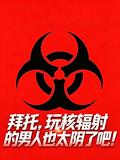 Come On, Men Who Play with Nuclear Radiation Are Too Shady, Right?
—Reads5.8Score—Shelves
Come On, Men Who Play with Nuclear Radiation Are Too Shady, Right?
—Reads5.8Score—Shelves
 Chinese Sword Master
43.4kReads6.5Score6.2kShelves
Chinese Sword Master
43.4kReads6.5Score6.2kShelves
 If You Lose a Fight, You Deserve to Be Dressed as a Peerless Elf.
396Reads5.8Score—Shelves
If You Lose a Fight, You Deserve to Be Dressed as a Peerless Elf.
396Reads5.8Score—Shelves
 My Bestie Is so Manly, She Always Hurts When She Hits Someone
193Reads5.8Score—Shelves
My Bestie Is so Manly, She Always Hurts When She Hits Someone
193Reads5.8Score—Shelves
 My Soul Traveled Through the Mountains, and I Picked up an Empress to Be My Taoist Companion.
5.9kReads6.6Score564Shelves
My Soul Traveled Through the Mountains, and I Picked up an Empress to Be My Taoist Companion.
5.9kReads6.6Score564Shelves
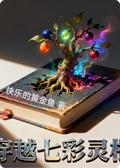 Traveling Through Colorful Spiritual Roots
24Reads8.6Score—Shelves
Traveling Through Colorful Spiritual Roots
24Reads8.6Score—Shelves
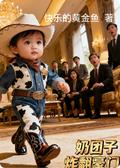 Milk Dumplings Blow up the Wealthy Family
2Reads8.4Score—Shelves
Milk Dumplings Blow up the Wealthy Family
2Reads8.4Score—Shelves
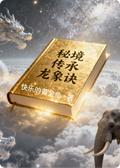 Secret Realm Inherited Dragon Elephant Technique
40Reads8.6Score—Shelves
Secret Realm Inherited Dragon Elephant Technique
40Reads8.6Score—Shelves
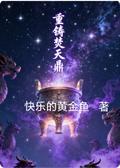 Recast the Burning Heaven Cauldron
9Reads8.5Score—Shelves
Recast the Burning Heaven Cauldron
9Reads8.5Score—Shelves
 Star Dome Crack Repair Notes
4Reads8.6Score—Shelves
Star Dome Crack Repair Notes
4Reads8.6Score—Shelves
 The Soul of the Concubine of the Prime Minister's Mansion
4Reads8.6Score—Shelves
The Soul of the Concubine of the Prime Minister's Mansion
4Reads8.6Score—Shelves
 My Ex-Boyfriend Said I Wasn't Good Enough for Him, and the Next Day I Became the Biggest Dad in His Company
—Reads8.4Score—Shelves
My Ex-Boyfriend Said I Wasn't Good Enough for Him, and the Next Day I Became the Biggest Dad in His Company
—Reads8.4Score—Shelves
 The Captain Returned, and After Breaking Out the Adultery, I Made the Whole Family Kneel Down and Beg for Mercy.
—Reads8.5Score—Shelves
The Captain Returned, and After Breaking Out the Adultery, I Made the Whole Family Kneel Down and Beg for Mercy.
—Reads8.5Score—Shelves
 My Husband Worked as a Male Model in a Nightclub
—Reads8.4Score—Shelves
My Husband Worked as a Male Model in a Nightclub
—Reads8.4Score—Shelves
 A Young Lady Born in 1976 Married a Bratty Brother Born in 1999
—Reads8.6Score—Shelves
A Young Lady Born in 1976 Married a Bratty Brother Born in 1999
—Reads8.6Score—Shelves
 I Was Sent as an Undercover Agent by the Boss's Wife
7Reads—Score—Shelves
I Was Sent as an Undercover Agent by the Boss's Wife
7Reads—Score—Shelves
 Beauty Ups and Downs
2.6kReads7.7Score309Shelves
Beauty Ups and Downs
2.6kReads7.7Score309Shelves
 The Soaring Confidante
134Reads—Score—Shelves
The Soaring Confidante
134Reads—Score—Shelves
 Dongguan's Domineering Sister Helped Me Make a Comeback
1Reads—Score—Shelves
Dongguan's Domineering Sister Helped Me Make a Comeback
1Reads—Score—Shelves
 Grassroots Luo Erwa
12Reads—Score—Shelves
Grassroots Luo Erwa
12Reads—Score—Shelves
 Final Judgment
1Reads—Score—Shelves
Final Judgment
1Reads—Score—Shelves
 My Life Is Worse Than Death in the Wind, Flowers, Snow and Moon
—Reads—Score—Shelves
My Life Is Worse Than Death in the Wind, Flowers, Snow and Moon
—Reads—Score—Shelves
 The King Awakened by the System
2Reads—Score—Shelves
The King Awakened by the System
2Reads—Score—Shelves
 The Woman Who Stirred up the Storm
4Reads—Score—Shelves
The Woman Who Stirred up the Storm
4Reads—Score—Shelves
 The Stunning Widow Makes My Life Worse Than Death
56Reads6.0Score—Shelves
The Stunning Widow Makes My Life Worse Than Death
56Reads6.0Score—Shelves
 Love in the Sentient World
61Reads6.5Score—Shelves
Love in the Sentient World
61Reads6.5Score—Shelves
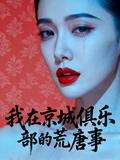 My Ridiculous Story at the Capital Club
35Reads—Score—Shelves
My Ridiculous Story at the Capital Club
35Reads—Score—Shelves
 The Thoughts of the Widowed Landlady
324Reads5.8Score—Shelves
The Thoughts of the Widowed Landlady
324Reads5.8Score—Shelves
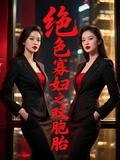 The Twins of the Stunning Widow
1.1kReads6.6Score106Shelves
The Twins of the Stunning Widow
1.1kReads6.6Score106Shelves
 My Domineering Sister
207Reads6.0Score—Shelves
My Domineering Sister
207Reads6.0Score—Shelves
 My Stunning Widow Aunt
445Reads6.3Score—Shelves
My Stunning Widow Aunt
445Reads6.3Score—Shelves