It's a very good book. If you want to read something a little more funny and focus on history, I don't recommend it. It feels a little inconsistent with the essential character of historical figures. If you want to read something a little funny and have a good historical relationship, you can read it. There is no major magic change in history. It's just that the character I feel is a bit inappropriate, but it is still a very good book and I recommend everyone to read it.
He is the powerful "King of Ili" in the northwest, and he is also a filial son who kneels in front of his mother and receives the staff. In troubled times, benevolence and tyranny merged strangely in him, eventually creating the tragic song of a desperate hero. A legend of the Western Regions buried by the wind and sand, a complex soul crushed by the times. He is the most benevolent ruler among warlords and the most rebellious careerist among filial sons. When he was young, he was a desperate and poor student by the Yellow River in Lanzhou who jumped into the air. He used a death scam to escape the pursuit of his creditors, but he also buried his past self in the turbulent waves. Leaving Yangguan in the west, he plunged into the torrent of the great era. With his extraordinary agility and courage, he rose up among powerful men such as Yang Zengxin and Jin Shuren. He rose from a small company commander in Jimuna to a "prince outside the Great Wall" who dominated Ili and held heavy troops. He was benevolent and righteous: he governed Yili, established settlements, and reduced taxes. He actually created a peaceful and pure land for the border people in troubled times, and was deeply loved. He is domineering externally: Towards the surrounding White Russian remnants and powerful neighbors in the north, he is ruthless and refuses to give in an inch of territory, showing the cold and hard nature of a warlord. He was extremely filial to his mother: even though he was already the powerful "King of Ili", he would still kneel under his mother's stick for a long time, carving Confucian filial piety into his bones. However, individual talents are ultimately unable to defeat the great wheel of the times. He competed with another more cunning and ruthless tycoon, Sheng Shicai, for hegemony in Xinjiang, until a powerful external force intervened and completely crushed the world he carefully built. This is a magnificent historical biographical novel that takes you back to the passionate era when warlords were fighting and foreign enemies were around. It is also a profound and complex epic of human nature, depicting a tragic soul violently torn between loyalty and treachery, good and evil, ideals and reality. Let's see how a generation of heroes rose from a young age, roamed beyond the Great Wall, and finally left behind the final words of "broken rivers and mountains, rotten places" in the cold night of Tiebangou, and turned all their grudges and hatreds into the wind and snow of Tianshan Mountain. "The King of Ili" - an epic of the Western Regions worth remembering, a personal elegy of a grand era.
The world hidden in the fireworks - Thoughts after reading "Zhu's Shop" When reading "Zhu's Shop", I always feel like standing on the old street of Zhangye City, watching the camel team coming from a distance on the dust and smoke, and hearing the "squeak" sound when the shop door is pushed open. There are no earth-shattering legends in this story, just ordinary things that the Zhu brothers lived with their relatives and friends - Zhu Tingbai kept the accounting book of the trading company, Zhu Tingjun ran a long way with the camel team, Xiulian sprinkled sesame seeds into the pancakes when frying them in the kitchen, and even the tune Scarface hummed while driving the camels carried the wind and sand of the Hexi Corridor. But it is these details stained with fireworks that quietly wrap up the warmth and warmth of the world and the tenacity of people's hearts. The most touching thing is the Zhu family's honesty of "working hard to move forward". Zhu Tingbai was not a hero. He would clutch his silver coins and laugh when facing the interrogating soldiers. When he saw his younger brother tying up his ladle, he would be reminded of the whipping he received from his father when he was a child. Zhu Tingjun was not naturally bold either. When he protected his comrades across the Black River for the first time, his palms were so tight that the hilt of his short knife became wet. But these two ordinary brothers, one is willing to take risks for his brother's "business", and the other dares to bear the burden of escorting without telling his family - their bravery is never shouted out, but comes from their bones when they look at the faces of their loved ones and think, "I have to make life better." Just like Chun Xing in Hongsi Lake, who is obviously afraid of life, but will quietly add firewood to the stove when Li Baohua and others rest; Xu Gang and Dao Scarface look rough, but will rush to pull the rope when the camel slips, more caring than protecting their own children. People these days are like the Achnatherum splendens at the foot of Longshou Mountain. They look inconspicuous. No matter how strong the wind is, they are stuck in the soil and can block the sand from passers-by. The Hexi Corridor in the story is not just a background. The Shajingzi Station where Zhu Tingbo led his horse walked through, the stream was so clear that hares could be seen; the ruined temple in Linze Town, when the firewood was burning, everyone's faces turned red; the wooden bridge on the Black River creaked when stepped on, and the millet stalks on the other side of the river were taller than people. These place names and these scenes are not written casually - every section of the road the camel team takes hides the difficulties of businessmen: the sand in Shawozi is loose, and you have to keep an eye on the camels' hooves; the mountain road is steep, and the ropes used to tie the packs must be replaced with the strongest hemp ropes; even in the ruined temples where you rest, you must remember "Don't light a fire, the smoke will be seen." But it is also this road that supports the people here: the water in the Heihe River is sweet, the camels love to drink it, and the people are warm after drinking it; the Qinling Mountains can be seen from the flat ground on the top of the mountain. If you stand and take a look when you are tired, you will feel that it is worth climbing a few miles more. The relationship between land and people is like the copper gourd in Zhu Tingbai's hand. It is cool, but it holds a solid weight. At the end of reading, Zhu Tingbai stood on the field ridge of Hongsi Lake, watching Tingzhi carrying a hoe and shouting "Grind noodles for you", and suddenly understood what this story wanted to say. Zhu's shop is not just a business, it is the root of the family - Zhu Tingbai guards the shop to ensure that his brothers can run away safely; Zhu Tingjun ventures out to make the shop last for a few more years, so that Chun Xing can laugh more happily when picking beans. Even those who came to rest, Li Baohua's emotion when drinking millet porridge, and Comrade Liu's hands picking up cabbage for the old man, all felt warm after taking a break in this shop. No matter how difficult the world is, as long as there is a shop to shelter from the wind, hot porridge to warm your heart, and relatives to help you, you will always have the energy to move forward. When I close the book, I always think of the sentence at the end, "The camel bells are jingling, moving forward all the way." In this ring, there are the days of the Zhu family, the wind in the Hexi Corridor, and the hope in ordinary people's hearts that refuses to wither - just like the snow in Longshou Mountain turns into a stream, which looks soft, but can grow crops and pave long roads.
 Beginning with Yingzheng: Kings from All Dynasties Descended One After Another
69.9kReads9.6Score8.4kShelves
Beginning with Yingzheng: Kings from All Dynasties Descended One After Another
69.9kReads9.6Score8.4kShelves
 First Emperor! If You Don't Die, I Will Fight to Australia
158.6kReads9.0Score13.3kShelves
First Emperor! If You Don't Die, I Will Fight to Australia
158.6kReads9.0Score13.3kShelves
 No, the Top Scorer in Science Also Had to Take Exams in Ancient Times?
76kReads8.8Score7.8kShelves
No, the Top Scorer in Science Also Had to Take Exams in Ancient Times?
76kReads8.8Score7.8kShelves
 Immortal Emperor Master
638.7kReads9.4Score61.7kShelves
Immortal Emperor Master
638.7kReads9.4Score61.7kShelves
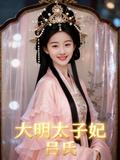 Crown Princess of the Ming Dynasty: Lu
32Reads—Score—Shelves
Crown Princess of the Ming Dynasty: Lu
32Reads—Score—Shelves
 Star Chaos Technique
—Reads5.8Score—Shelves
Star Chaos Technique
—Reads5.8Score—Shelves
 Zishan Cave Mansion
—Reads—Score—Shelves
Zishan Cave Mansion
—Reads—Score—Shelves
 Heaven's Immortal Realm
212Reads—Score—Shelves
Heaven's Immortal Realm
212Reads—Score—Shelves
 Pheasant Crying Qin Su
1Reads5.8Score—Shelves
Pheasant Crying Qin Su
1Reads5.8Score—Shelves
 Jiuhuan Immortal Realm
—Reads5.8Score—Shelves
Jiuhuan Immortal Realm
—Reads5.8Score—Shelves
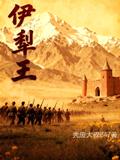 King of Ili
6Reads5.8Score—Shelves
King of Ili
6Reads5.8Score—Shelves
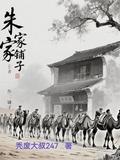 Zhujiapuzi
4Reads5.8Score—Shelves
Zhujiapuzi
4Reads5.8Score—Shelves