Who knows? The expeditionary force went crazy in Southeast Asia. This is a cool article about the hard-core anti-war war! Traveling through time to become a cannon fodder officer of the expeditionary force, he took over the remnants of the army that was short of guns and ammunition, and faced the Japanese invaders with overwhelming equipment and the Allied forces with ulterior motives? He decided to change the situation in the jungle of Myanmar! On the Ren'anqiang battlefield, the elite Japanese troops fought hard to save the Allied forces with a small victory; they outsmarted the British troops to extract supplies, and cleverly took advantage of the heavy firepower of the U. S. Military to forge the scattered troops into an iron-blooded force! From hand-to-hand combat on the Pingqiang River to oil field battles, from squad raids to legion showdowns, each chapter has famous explosive scenes, and the tactical details are so hard-core that it makes your skin crawl! There is no brainless cheating, only a step-by-step rise; there is no single fight, every inch of rivers and mountains, every inch of blood, the expeditionary force's Southeast Asian battlefield is never a supporting role! I stayed up all night chasing and couldn't stop. After watching it, I just wanted to shout: This is the domineering power of Chinese soldiers! Click to read and witness how the cannon fodder group carved out a world in a foreign country and let "China is the best" resound throughout Southeast Asia!
The plot has ups and downs and is interlocking to make up for the regrets in history. The IQs of all members are online, but the enemy's brains are not. The writing style is humorous and funny, with laughter and tears.
When I woke up, I was in the 1940s, but I had a Xixi system*? An Yu thought for a second and decided to confess: I come from the future, and I have a golden finger. Luncheon meat, labor-protection shoes, three-bunzi... Fertilizer, luncheon meat, military coats... You can find them on Pinxixi, and you can find them here too! This time, we must not let our ancestors go hungry to fight the Japanese! We can't let the folks cut back on their clothes and go on a diet to support the fight against the Japanese! Frankly speaking, infrastructure patriotic article, no CP.
Cool article, carrying a single soldier to kill the enemy system! Don't join a team and work alone. If you can make a sneak attack, never fight head-on. If you can do it, never beep.
I saw a different Anti-Japanese War novel, with the Japanese fighting in the early stage and the great development of the founding of the country in the later stage. It is good. Many Anti-Japanese War novels are not in the later stage. This one is good. . .
When we in peaceful times open a book about sacrifice - why is "From Ordinary to Legendary" worth reading late at night? 1. This is not a book about war, but a book about "why it's worth it." In the autumn of 1943, Qinglong Ridge in Taihang Mountains. A brigade commander named Fu Bikang wrote his last letter in the trenches: "If you see this letter, I have gone on my mission. Don't be sad, I have no regrets in this life." Eighty years later, a young border guard read this text at the post late at night and burst into tears. He left a message in the book review area: "We are today's 'Ghost Team.'" This dialogue that transcends time and space is the most shocking power of "From Ordinary to Legend" - it allows the dusty history to suddenly shine into reality, allowing us in the peaceful era to truly understand the full weight of the word "sacrifice" for the first time. 2. What will you encounter in this book? 1. A flesh-and-blood hero, not a name on a stone tablet. You will experience an astonishingly three-dimensional Fu Bikang: he is a talented scholar from Peking University who gave up his pointer and chose a steel gun, a husband who carved a pocket watch for his wife under a kerosene lamp, and an ordinary person who promised to "build roads and schools" for the village but could no longer fulfill his promise. His comrades-in-arms are equally vivid - Chief of Staff Fu Shuiheng who is as rigorous as his father, political commissar Fu Biyue who records history with a pen, and Dr. Lin Wanning who holds a scalpel like a gun. These characters will shatter all your stereotypes of what a "hero" might be. They have no aura, only choices. At every critical moment, they choose the more difficult path - not because they are born great, but because they believe that some things are worth guarding with their lives. 2. A spiritual relay spanning eighty years. The most exquisite structure of the book is that it never stays in 1943. You will follow Fu Bikang's daughter Fu Nian'an, a bridge engineer, on the construction site of the Yangtze River Bridge in 1980, and understand her father's dream of "building a road to peace." You will follow your granddaughter Lin Xiao, a reporter, and discover the spontaneous "spiritual root-seeking" craze among young readers in the online message area in 2024. There is a tearful detail in the book: when Fu Bikang died, his gaze was in the direction of the hospital in the rear - where his wife was about to give birth. Eighty years later, his granddaughter stood on the top of Qinglong Ridge, looking at the lights of thousands of houses below the mountain, and whispered: "Dad, did you see it? This is the night you paid for with your life." This is not a one-way remembrance, but a two-way rush. History is taking care of reality, and reality is responding to history. 3. Redefining "ordinary" and "legendary" The most subversive point of view in the book is quietly contained in the title: from ordinary to legendary. You will see that Fu Bikang was just a scholar at first, Lin Wanning was just a doctor at first, and Fu Shuiheng was just a cautious consultant at first. Their legends are not the result of extraordinary talents, but the extraordinary choices they made at critical moments. What is even more touching is that this "legendary" still continues eighty years later: the ranger who planted trees in Qinglongling, the old teacher who taught in the countryside, the young soldier who stood guard at the border, the surgeon who fought hard in the operating room - they all completed the modern expression of the same spiritual trait on their respective "battlefields". There is a punchline in the book: "Every era has its battlefield. Where the smoke has cleared, new protection is taking place." 3. Why do you need to read this book today? Because in comfort, we need to understand the cost of "guarding". When we complained about poor signal, someone used his life in the trenches to deliver the last information. When we discuss "lying down", some people once chose to "die standing up" just so that future generations can "live standing up". When we pursue personal happiness, some people have put the happiness of millions of people above their own lives. This is not a moral kidnapping, but a broadening of horizons. "From Ordinary to Legendary" will not ask you to become a hero, but it will make you understand: all the ordinary things you enjoy today - the soy milk in the morning, the sunset in the evening, the laughter of children, the freedom of choice - have been valued by some people more seriously than their own lives. Because when we are confused, we need to see a longer value coordinate. This book provides a frame of reference for values spanning eighty years. When you are troubled by "Is this job meaningful?", The characters in the book spend their lives answering: The meaning does not lie in the position itself, but in who you protect and why you persist. Fu Bikang protects the mountains and rivers, Lin Wanning protects life, Fu Nian'an protects the road, and Lin Xiao protects the memory. Today, we can protect kindness, protect truth, protect innovation, and protect fairness in our respective fields. Because when we are lonely, we need to find spiritual companions. As you read this book, you join in a silent conversation. Talk to the trenches of 1943, talk to the construction sites of 1980, talk to the outposts of 2024. You will find: You are not struggling alone. I am not the first generation to face difficulties. I am not the last generation who needs to be protected. The resonance of "It turns out I'm not alone" is the most scarce spiritual comfort in this fragmented era. 4. When you open this book, you will experience three awakenings: The first: the awakening of the historical perspective - it turns out that history is not a cold list of events, but the life story of generations of people who use their body temperature to warm up. The second level: Awakening of self-awareness - It turns out that an ordinary person like me can also become a contemporary carrier of some great spirit. The third level: Awakening of the responsibility of the times - It turns out that "inheritance" is not about reciting dogma, but about letting the light of the past illuminate the path of today. 5. The best time to read • When you feel that life lacks meaning - this book will tell you that meaning lies in protecting others. • When you feel powerless against reality - this book will show that the deepest change often comes from the most lasting persistence. • When you need to make a big choice - this book reminds you that the criteria for choosing can be: eighty years from now, will anyone thank you for the choice you made today? • When you want to understand your parents or communicate with your children - this book builds a spiritual bridge for intergenerational dialogue. The Last Invitation At the end of "From Ordinary to Legend", there is an "everlasting lamp" burning quietly in Qinglong Ridge. It was not a real flame, but a spiritual symbol. The author Fu Nian'an wrote at the age of eighty-seven: "My father's life ended in 1943, but his spirit is realized in the lights of thousands of families today." The book itself is an ever-lasting light. It illuminates the past and allows us to see clearly where we came from. It illuminates the present and allows us to examine the present moment. It illuminates the future even more and makes us think: What kind of light will our generation ignite? What kind of spirit will it pass on to the world eighty years from now? So, open it up. On a quiet night, immerse yourself in this journey spanning eighty years. You will find that by the end, you will have closed more than just a book. What you open is a possibility - about how ordinary people can become torchbearers, about how individual lives can be integrated into eternal inheritance, about us today, and how to respond to those who have fought for us with their lives to achieve "today". The beacon will go out, but the eternal light of the spirit, once ignited in your heart, will never go out. This may be the deepest meaning of reading "From Ordinary to Legend" - let us still maintain the body temperature of the guardian in peaceful times; let us still hear the call of legend in ordinary life. --- "From Ordinary to Legendary" A spiritual journey spanning eighty years. A soul dialogue between ordinary people and heroes. A life experience that redefines "worthwhile" is here, waiting to meet you.
9.9 Dad's son-in-law broadcasts a spy war and bomb disposal, and the cute kid hands over the tools, and the cooperation is super tacit #TomatoNovel # Dadshuangwen #espionage
 Anti-Japanese War: Electrify the Whole Country, We Enter the Customs with the Army
164Reads—Score—Shelves
Anti-Japanese War: Electrify the Whole Country, We Enter the Customs with the Army
164Reads—Score—Shelves
 Hunting
5.7kReads9.2Score723Shelves
Hunting
5.7kReads9.2Score723Shelves
 The End of the War
10.6kReads9.3Score815Shelves
The End of the War
10.6kReads9.3Score815Shelves
 Anti-Japanese War: Time Travel to 1937 and the Awakening of the Broken Soldiers
261Reads5.8Score—Shelves
Anti-Japanese War: Time Travel to 1937 and the Awakening of the Broken Soldiers
261Reads5.8Score—Shelves
 Republic of China: Bully System, There Are Rewards for Doing Bad Things!
239kReads9.4Score26.1kShelves
Republic of China: Bully System, There Are Rewards for Doing Bad Things!
239kReads9.4Score26.1kShelves
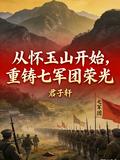 Starting from Huaiyu Mountain, Rebuild the Glory of the Seven Legions
76Reads5.8Score—Shelves
Starting from Huaiyu Mountain, Rebuild the Glory of the Seven Legions
76Reads5.8Score—Shelves
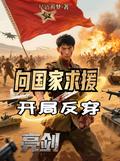 Bright Sword: Reverse Time Travel at the Beginning to Ask for Help from the Country
2.1kReads—Score100Shelves
Bright Sword: Reverse Time Travel at the Beginning to Ask for Help from the Country
2.1kReads—Score100Shelves
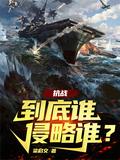 War of Resistance: Invincible Organization System
43.4kReads8.5Score3.1kShelves
War of Resistance: Invincible Organization System
43.4kReads8.5Score3.1kShelves
 Guandong Little Bandit
17.2kReads9.4Score2.1kShelves
Guandong Little Bandit
17.2kReads9.4Score2.1kShelves
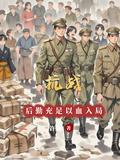 Anti-Japanese War: Counterattack Starts from the Cannon Fodder Regiment
6.9kReads8.9Score311Shelves
Anti-Japanese War: Counterattack Starts from the Cannon Fodder Regiment
6.9kReads8.9Score311Shelves
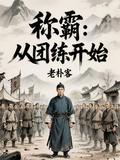 Domination: Start with Team Training
2.8kReads5.8Score—Shelves
Domination: Start with Team Training
2.8kReads5.8Score—Shelves
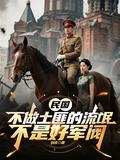 The Republic of China: the Last Jianghu
38.7kReads9.3Score3.3kShelves
The Republic of China: the Last Jianghu
38.7kReads9.3Score3.3kShelves
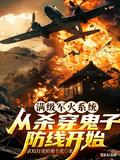 Anti-Japanese War: I Have a God-Level Arms System
16kReads7.3Score1.9kShelves
Anti-Japanese War: I Have a God-Level Arms System
16kReads7.3Score1.9kShelves
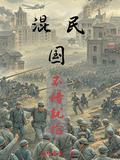 It's Not Easy to Mess Around in This Republic of China
40.8kReads8.5Score2.9kShelves
It's Not Easy to Mess Around in This Republic of China
40.8kReads8.5Score2.9kShelves
 Go to National Disaster Alone
17.8kReads9.1Score2.1kShelves
Go to National Disaster Alone
17.8kReads9.1Score2.1kShelves
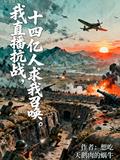 Resistance: I Have a Summoning System
92.6kReads8.2Score11.2kShelves
Resistance: I Have a Summoning System
92.6kReads8.2Score11.2kShelves
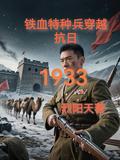 The Iron-Blooded Special Forces Travel Through the Anti-Japanese War 1933
1.1kReads6.3Score—Shelves
The Iron-Blooded Special Forces Travel Through the Anti-Japanese War 1933
1.1kReads6.3Score—Shelves
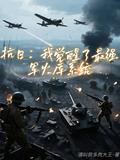 Anti-Japanese: I Awakened the Most Powerful Arsenal System
123Reads8.4Score—Shelves
Anti-Japanese: I Awakened the Most Powerful Arsenal System
123Reads8.4Score—Shelves
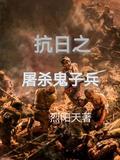 China's Anti-Japanese Front Line Vowed to Kill the Japanese Soldiers
13.4kReads8.3Score876Shelves
China's Anti-Japanese Front Line Vowed to Kill the Japanese Soldiers
13.4kReads8.3Score876Shelves
 Store System: Massacre of Japanese Soldiers on the Anti-Japanese Battlefield
2.6kReads6.9Score109Shelves
Store System: Massacre of Japanese Soldiers on the Anti-Japanese Battlefield
2.6kReads6.9Score109Shelves
 At the Beginning, I Revealed That I Would Lead the Country to Fight the War with Swords.
7.8kReads6.7Score495Shelves
At the Beginning, I Revealed That I Would Lead the Country to Fight the War with Swords.
7.8kReads6.7Score495Shelves
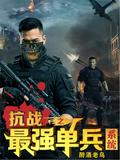 The Strongest Single-Soldier Enemy-Killing System in the War of Resistance
10.4kReads8.2Score680Shelves
The Strongest Single-Soldier Enemy-Killing System in the War of Resistance
10.4kReads8.2Score680Shelves
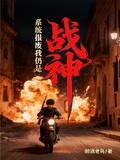 I Am Ding Fushun in the War of Resistance
931Reads6.1Score—Shelves
I Am Ding Fushun in the War of Resistance
931Reads6.1Score—Shelves
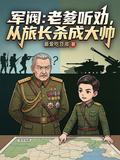 Warlord: Dad Listened to the Advice and Became a Commander from a Brigade Commander
149.1kReads8.9Score12kShelves
Warlord: Dad Listened to the Advice and Became a Commander from a Brigade Commander
149.1kReads8.9Score12kShelves
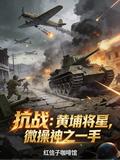 Anti-Japanese War: Huangpu General, the God of Micromanaging
1.4kReads5.8Score129Shelves
Anti-Japanese War: Huangpu General, the God of Micromanaging
1.4kReads5.8Score129Shelves
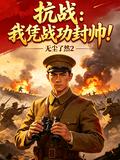 Anti-Japanese War: I Am Appointed Commander Based on My Military Exploits!
106kReads5.8Score7.7kShelves
Anti-Japanese War: I Am Appointed Commander Based on My Military Exploits!
106kReads5.8Score7.7kShelves
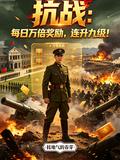 Anti-Japanese War: Return Ten Thousand Times, from Regimental Commander to Commander-In-Chief
65.3kReads7.0Score7kShelves
Anti-Japanese War: Return Ten Thousand Times, from Regimental Commander to Commander-In-Chief
65.3kReads7.0Score7kShelves
 Anti-Japanese War: One-Dollar Kill, from Regiment Leader to Commander-In-Chief
29.8kReads7.6Score2kShelves
Anti-Japanese War: One-Dollar Kill, from Regiment Leader to Commander-In-Chief
29.8kReads7.6Score2kShelves
 Starting with the Guangxi System, I Want to Go to Nanyang
192.2kReads8.6Score13.9kShelves
Starting with the Guangxi System, I Want to Go to Nanyang
192.2kReads8.6Score13.9kShelves
 Warlord: Feng Is the Eldest Son, and All the Warlords and Powers Are Afraid of Me.
123.4kReads8.1Score8.3kShelves
Warlord: Feng Is the Eldest Son, and All the Warlords and Powers Are Afraid of Me.
123.4kReads8.1Score8.3kShelves
 Anti-Japanese War: Travel Through the Bright Sword and Build the Strongest Military Academy
30.7kReads8.2Score2.2kShelves
Anti-Japanese War: Travel Through the Bright Sword and Build the Strongest Military Academy
30.7kReads8.2Score2.2kShelves
 As Soon as I Was Reborn, I Was Kidnapped by a Group of Female Bandits and Taken to the Mountain.
4.6kReads7.8Score475Shelves
As Soon as I Was Reborn, I Was Kidnapped by a Group of Female Bandits and Taken to the Mountain.
4.6kReads7.8Score475Shelves
 Wang Jiujin and the Handsome Woman
19.5kReads7.6Score1.6kShelves
Wang Jiujin and the Handsome Woman
19.5kReads7.6Score1.6kShelves
 Anti-Japanese War Siheyuan: Ancestors, Kill Me!
177Reads7.2Score—Shelves
Anti-Japanese War Siheyuan: Ancestors, Kill Me!
177Reads7.2Score—Shelves
 Anti-Japanese War: He Was Kicked Out at the Beginning and Turned to Join the Red Army
40.2kReads8.0Score2.8kShelves
Anti-Japanese War: He Was Kicked Out at the Beginning and Turned to Join the Red Army
40.2kReads8.0Score2.8kShelves
 Turn in the Portal, and the Combined Brigade Will Push the Japanese Pirates.
62.2kReads5.8Score6kShelves
Turn in the Portal, and the Combined Brigade Will Push the Japanese Pirates.
62.2kReads5.8Score6kShelves
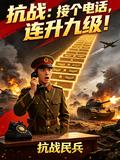 Anti-Japanese War: One Penny Kill, Commander-In-Chief of the Sichuan Army!
18.8kReads7.7Score1.4kShelves
Anti-Japanese War: One Penny Kill, Commander-In-Chief of the Sichuan Army!
18.8kReads7.7Score1.4kShelves
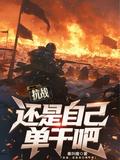 In the War of Resistance, It's Better to Do It Alone
35kReads7.3Score2.5kShelves
In the War of Resistance, It's Better to Do It Alone
35kReads7.3Score2.5kShelves
 I Traveled to Shanxi to Fight Against Japan
16Reads5.8Score—Shelves
I Traveled to Shanxi to Fight Against Japan
16Reads5.8Score—Shelves
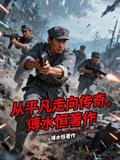 From Ordinary to Legendary
990Reads—Score102Shelves
From Ordinary to Legendary
990Reads—Score102Shelves
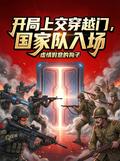 Turn in the Crossing Gate at the Beginning and the National Team Enters
4.9kReads7.3Score334Shelves
Turn in the Crossing Gate at the Beginning and the National Team Enters
4.9kReads7.3Score334Shelves
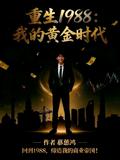 Rebirth 1988: My Golden Age
91Reads6.1Score—Shelves
Rebirth 1988: My Golden Age
91Reads6.1Score—Shelves
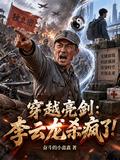 Bright Sword: Hand in at the Beginning, Okamura Neji Cried
2.9kReads7.4Score137Shelves
Bright Sword: Hand in at the Beginning, Okamura Neji Cried
2.9kReads7.4Score137Shelves
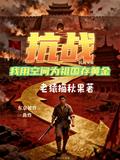 Anti-Japanese War: Defend Nanjing and Obtain the God-Level Individual Soldier System
27.8kReads8.2Score3kShelves
Anti-Japanese War: Defend Nanjing and Obtain the God-Level Individual Soldier System
27.8kReads8.2Score3kShelves
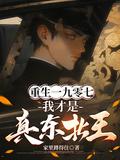 Reborn in 1907, I Am the True King of the Northeast
28kReads8.4Score2kShelves
Reborn in 1907, I Am the True King of the Northeast
28kReads8.4Score2kShelves
 In the War of Resistance, I Have a Thousand Times More Training Skills
11.1kReads8.5Score746Shelves
In the War of Resistance, I Have a Thousand Times More Training Skills
11.1kReads8.5Score746Shelves
 Anti-Japanese War: I Have Steel, You Better Also Have Will
5.8kReads7.7Score297Shelves
Anti-Japanese War: I Have Steel, You Better Also Have Will
5.8kReads7.7Score297Shelves
 The Replacement System at the Beginning, I Replaced a Million Troops
15.9kReads8.5Score1kShelves
The Replacement System at the Beginning, I Replaced a Million Troops
15.9kReads8.5Score1kShelves
 Anti-Japanese War: from Tactical Interposition to Fire Coverage
4.9kReads8.1Score382Shelves
Anti-Japanese War: from Tactical Interposition to Fire Coverage
4.9kReads8.1Score382Shelves
 Anti-Japanese War: the System Is Close to the Body and the Fellow Villagers Are Worshipped
78.6kReads7.3Score5.7kShelves
Anti-Japanese War: the System Is Close to the Body and the Fellow Villagers Are Worshipped
78.6kReads7.3Score5.7kShelves