Who would have thought that Qin Shihuang, who slaughtered the world, was once a poor young man struggling to survive? The process of returning to Qin to seize power was dangerous every step of the way, and he had to go through many calculations and fights before he could secure the throne. The ruthless emperor only favored Afang and made an oath to be hired by the mountains and rivers. The good days have not lasted long, wars are raging everywhere, and Tianming deliberately sets up difficult problems to force him to give up the only weakness in his life...
Two peerless dancers disappeared into the vast world. The four graceful gentlemen with the appearance of immortals each have their own weaknesses. Three old coaches, loving and wise. Villains don't show their wits. . .
Found a treasure new author! The writing style is mature and cold, and his ability to control group portraits and philosophical propositions is not like that of a novice. The story framework is grand but rock-solid, and all the characters stand up. It can be seen that the author has put a lot of effort and thought into it. Following up on works like this is like witnessing the birth of a new star, giving me a super sense of participation and anticipation!
This is an unreadable novel that perfectly blends the intellectual tragedy of the science fiction classic "Flowers for Algernon" with the ultimate aesthetics of Mishima Yukio's "The Temple of the Golden Pavilion" to create an unprecedented literary image. A "knight" whose intelligence has regressed to a blank, guarding a daisy he calls "Kinkakuji Temple" with his life on an abandoned railway track - this setting itself is heartbreaking, but the author uses cold and poetic writing to forge this story into a sharp blade that pierces the depths of the soul. When the truth emerges in Chapter 8, you will find that behind all the absurdities, there are answers that a person has spent his whole life writing.
The silence of Mo Yin Zhai and the heritage of Buzhuang. The morning light in Qingshi Town always first flows through Jingchen Temple in the east, and then flows into the alleys of West Street. The Jade Bodhisattva in the Main Hall always has his eyebrows lowered, and his gilt cassock glows warmly in the incense. He never utters a word of advice, but villagers who kneel down every day still line up outside the temple gate. Even children know to walk slowly and lightly to respect the solemnity in this silence. Granny Li under the old locust tree at the end of the alley is completely the opposite. The vegetable seedlings in the bamboo basket are still stained with soil, and she has been chattering away. When she sees the woman's clothesline stretched too full, she chants, "The rope is easy to break, and things are easy to mess up in an emergency." Mr. Su, the owner of Mo Yin Zhai in the town, is the most silent person in the town. He would open the library at dawn every day, lay out paper, study ink, and copy ancient paintings. He would close the door in the evening and thank guests, and never get involved in the gossips of the neighbors. Some people say that he is aloof and aloof, but during the holidays, he will always secretly distribute the money from the charity sales of his paintings to poor families. When the neighbor's children want to learn painting, he does not charge any money, but only teaches "a calm mind and a steady pen, and the character can be seen in the painting." On the other hand, Miss Lin from Jienna Fabric Shop always likes to wear waist-baring short skirts and silver chains, and wears heavy makeup to attract customers at the door of the store. She praises her fashionable fabrics to everyone she meets, mocks Mr. Su's paintings as "old-fashioned and no one wants them", and also teases Granny Li for "dressing like foot wraps and not understanding the latest trends." At the beginning of summer, Qingshi Town suffered from waterlogging, and food prices skyrocketed. Many merchants hoarded food and raised prices. Miss Lin also wanted to follow suit, but Mr. Su caught her conspiring with the grain merchant. Mr. Su only looked at her quietly and turned around and left without saying a word. That night, Mr. Su entrusted the two ancient paintings he had collected to a reliable salesman, and exchanged two carts of grain for distribution to the villagers. He continued to paint in his fasting every day, as if nothing had happened. Grandma Li went from house to house on crutches and told her: "Ventilate the cellar to prevent mildew, and mix some dry mugwort in the stored grain to repel insects." She also distributed the seeds she saved to farmers, saying, "Grow lettuce quickly after the disaster, harvest early and fill your stomach early." Miss Lin's cloth shop lost money due to hoarding grain. She wanted to recover the losses by selling gaudy fabrics at low prices. However, most of the people who came and went saw her frivolous dress and heard about her hoarding grain, so most of them turned away. An out-of-town businessman wanted to purchase fabrics in bulk, but when he saw her revealing clothes and telling lies, he frowned and said, "If you dress inappropriately, your work will definitely be unreliable." Instead, he went to the newly opened "Sujin Pavilion" in the north of the street. The owner of Sujin Pavilion is Mr. Su's apprentice Shen Niang. She often wears a moon-white satin cheongsam and a dark pattern suit vest. Although the fabric is not ostentatious, it has an ironed texture. She never takes the initiative to solicit customers, but only quietly takes care of the fabrics, but the guests are willing to sit down and choose carefully - some people say, "Ms. Shen is dressed dignifiedly, and the fabrics must be of high quality", while others praise, "She is not noisy, but makes people feel reassured." After the flood, the epidemic spread. Miss Lin got sick and cried anxiously while lying in bed. She remembered that she had laughed at Granny Li's folk remedies as "useless", but now she had no choice but to find them. Granny Li didn't mention the past, but only taught her carefully about "boil mugwort water for bathing, and make soup with tangerine peel and ginger to ward off the cold." She also stuffed her with a pack of herbal medicine and muttered, "Drink on time and go out less often." After three days of drinking, Miss Lin's condition gradually improved. Looking at Granny Li's wrinkled hands, she suddenly understood the kindness hidden in those chattering. Mr. Su drew dozens of epidemic prevention science maps and posted them on the walls at the entrance of the town. There was no redundant text in the pictures, and only simple lines were used to teach villagers to wash hands, ventilate, and avoid gatherings. The villagers gathered around to look at the pictures, and no one thought he was silent and withdrawn anymore. Instead, they said, "Mr. Su's paintings are more effective than talking." The monks from Jingchen Temple also came to borrow the picture, and the abbot sighed: "The Bodhisattva's silence teaches people to be in awe; Mr. Su's silence is to convey goodwill with actions. Silence and nagging are neither good nor bad, but the essence is sincerity." In late autumn, foreign businessmen came to visit again. Not only did they order all the fabrics in Sujin Pavilion, but they also invited Shen Niang to open a branch in the city. He held Shen Niang's hand and said, "You dress like a piece of jade and are down-to-earth in your work. This is the person worth cooperating with." Miss Lin closed her cloth shop and learned how to grow herbal medicine from Grandma Li. She wore plain coarse clothes and spoke less impetuously. She often told people, "I used to be talkative, which would bring trouble; now I hide my edge, but feel at ease." When the first snow fell in winter, Mr. Su posted a couplet on the door of Moyinzhai: "Silence hides the mind to understand the world, and whispering can warm the world." The Bodhisattva in Jingchen Temple is still silent, and the incense is getting stronger; Granny Li is sitting by the stove, still talking to the younger generation about the precautions for winter, and the people sitting around listen attentively; in Niang Shen's Sujin Pavilion, guests come and go, and the texture of the fabric complements her calmness. The people of Qingshi Town gradually understood: Bodhisattva's silence is not indifference, but compassion in solemnity; Granny Li's nagging is not long-winded, but care in triviality; Mr. Su's reticence is not withdrawn, but transparency in action; Niang Shen's dress is not conservative, but confidence in her heritage. The glitz exposed on the surface will eventually dissipate, and the sincerity and strength hidden deep are the foundation of one's life. People who understand can see through appearances, see awe in silence, appreciate kindness in chatter, and recognize treasures in low-keyness; people who don't understand will only be confused by publicity and miss the warmth and opportunities hidden in the ordinary. As time goes by, everyone has learned to be less impetuous and more calm, and the fireworks of the town have become more down-to-earth and transparent.
The writing style is super good, fine and fine, the rhetoric is gorgeous, the writing style is rosy, the poems are magnificent, dots of langgan, and every word is pearl. The only drawback is that you need to have a certain amount of knowledge to read it easily.
This book has a rich historical flavor. The author often quotes classics and has a strong foundation. He mainly tells stories from the Southern and Northern Dynasties. The knowledge content is absolutely sufficient and you can learn a lot. It is worth reading. 🔥Mark: The author's writing style of this book is absolutely trustworthy.
 Destiny Is the Highest
4Reads—Score—Shelves
Destiny Is the Highest
4Reads—Score—Shelves
 Since Ancient Times, Adultery Has Been the Fate of Human Life.
2.7kReads8.9Score—Shelves
Since Ancient Times, Adultery Has Been the Fate of Human Life.
2.7kReads8.9Score—Shelves
 Classic of Mountains and Seas. Records of Strange Beasts
361Reads8.7Score—Shelves
Classic of Mountains and Seas. Records of Strange Beasts
361Reads8.7Score—Shelves
 The Spring Breeze Brings Beauty
1.3kReads8.7Score—Shelves
The Spring Breeze Brings Beauty
1.3kReads8.7Score—Shelves
 My Years in Dongguan
500Reads8.8Score—Shelves
My Years in Dongguan
500Reads8.8Score—Shelves
 Ancient Legend
103Reads8.4Score—Shelves
Ancient Legend
103Reads8.4Score—Shelves
 The Bone Girl of the Wilderness: I Use My Mortal Body to Suppress Gods and Demons
94Reads8.4Score—Shelves
The Bone Girl of the Wilderness: I Use My Mortal Body to Suppress Gods and Demons
94Reads8.4Score—Shelves
 Classic of Mountains and Seas: I Suppress All Monsters with My Ordinary Heart
48Reads8.4Score—Shelves
Classic of Mountains and Seas: I Suppress All Monsters with My Ordinary Heart
48Reads8.4Score—Shelves
 Evernight Mixed Blood
23Reads8.5Score—Shelves
Evernight Mixed Blood
23Reads8.5Score—Shelves
 The Tiger Carries the Beloved Man Home!
21Reads8.5Score—Shelves
The Tiger Carries the Beloved Man Home!
21Reads8.5Score—Shelves
 The Feng Shui Master of Qingwu Secret Record
32Reads8.6Score—Shelves
The Feng Shui Master of Qingwu Secret Record
32Reads8.6Score—Shelves
 The Red Makeup of Embers Chasing My Wife
45Reads8.4Score—Shelves
The Red Makeup of Embers Chasing My Wife
45Reads8.4Score—Shelves
 My Idiot Girlfriend Xiaotu
97Reads5.8Score—Shelves
My Idiot Girlfriend Xiaotu
97Reads5.8Score—Shelves
 After Being Reviled by the Entire Internet, I Exposed the Shocking Scam of a Top Wealthy Family
45Reads8.5Score—Shelves
After Being Reviled by the Entire Internet, I Exposed the Shocking Scam of a Top Wealthy Family
45Reads8.5Score—Shelves
 Old Key at the End of the Alley
18Reads8.5Score—Shelves
Old Key at the End of the Alley
18Reads8.5Score—Shelves
 The Great Sage Returns: as Soon as I Suppressed the Demon Ancestor, the Jade Emperor Conferred Zen Status
25Reads5.8Score—Shelves
The Great Sage Returns: as Soon as I Suppressed the Demon Ancestor, the Jade Emperor Conferred Zen Status
25Reads5.8Score—Shelves
 After Resigning, I Beat up PUA in the Workplace and Made Millions
49Reads8.6Score—Shelves
After Resigning, I Beat up PUA in the Workplace and Made Millions
49Reads8.6Score—Shelves
 My Wife Is Domineering Sir
66Reads8.4Score—Shelves
My Wife Is Domineering Sir
66Reads8.4Score—Shelves
 The Classic of Mountains and Seas·the Great Wasteland Returns to the Ruins
17Reads8.5Score—Shelves
The Classic of Mountains and Seas·the Great Wasteland Returns to the Ruins
17Reads8.5Score—Shelves
 Xuanzang Seeds
1Reads5.8Score—Shelves
Xuanzang Seeds
1Reads5.8Score—Shelves
 Lin Chongjun
1Reads5.8Score—Shelves
Lin Chongjun
1Reads5.8Score—Shelves
 Accustomed
2Reads—Score—Shelves
Accustomed
2Reads—Score—Shelves
 The Realm of Symbiosis
1Reads5.8Score—Shelves
The Realm of Symbiosis
1Reads5.8Score—Shelves
 Silhouette Soul
1Reads5.8Score—Shelves
Silhouette Soul
1Reads5.8Score—Shelves
 Nothing
2Reads5.8Score—Shelves
Nothing
2Reads5.8Score—Shelves
 Lilai Youai
1Reads—Score—Shelves
Lilai Youai
1Reads—Score—Shelves
 Wait for Me to Hand over the Mountains and Rivers to Please You
41Reads5.8Score—Shelves
Wait for Me to Hand over the Mountains and Rivers to Please You
41Reads5.8Score—Shelves
 A Wonderful Book About Feng Shui That Can Change Your Life
180.8kReads8.4Score14.6kShelves
A Wonderful Book About Feng Shui That Can Change Your Life
180.8kReads8.4Score14.6kShelves
 Once He Traveled Through Time, He Would Marry the Disabled Prince and Become the Favorite of the Group.
170Reads5.8Score—Shelves
Once He Traveled Through Time, He Would Marry the Disabled Prince and Become the Favorite of the Group.
170Reads5.8Score—Shelves
 Living with the Boss, I Am so Strong That I Can Fly
148Reads5.8Score—Shelves
Living with the Boss, I Am so Strong That I Can Fly
148Reads5.8Score—Shelves
 Quickly Travel Through the Second Personality
55Reads5.8Score—Shelves
Quickly Travel Through the Second Personality
55Reads5.8Score—Shelves
 Book of Laws
5Reads—Score—Shelves
Book of Laws
5Reads—Score—Shelves
 All in One: Traveling Across Light Years to Protect You
221Reads5.8Score—Shelves
All in One: Traveling Across Light Years to Protect You
221Reads5.8Score—Shelves
 Light Meets All Living Beings
84Reads5.8Score—Shelves
Light Meets All Living Beings
84Reads5.8Score—Shelves
 Daisies for Algernon
2Reads8.4Score—Shelves
Daisies for Algernon
2Reads8.4Score—Shelves
 The Dragon's Tail Next Door
3Reads—Score—Shelves
The Dragon's Tail Next Door
3Reads—Score—Shelves
 Hengji Fengjie
12Reads5.8Score—Shelves
Hengji Fengjie
12Reads5.8Score—Shelves
 Star Frost Enters Long Dream
25Reads—Score—Shelves
Star Frost Enters Long Dream
25Reads—Score—Shelves
 Love in the Season of Blooming Flowers
4Reads5.8Score—Shelves
Love in the Season of Blooming Flowers
4Reads5.8Score—Shelves
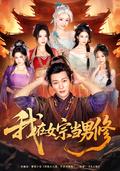 I Am a Male Cultivator in the Female Sect
117.6kReads8.2Score639Shelves
I Am a Male Cultivator in the Female Sect
117.6kReads8.2Score639Shelves
 Married, but Secretly Married
589Reads5.8Score—Shelves
Married, but Secretly Married
589Reads5.8Score—Shelves
 The Mistress Came into the House, and I Turned Around and Got Married to a Top Wealthy Family.
2.2kReads8.1Score247Shelves
The Mistress Came into the House, and I Turned Around and Got Married to a Top Wealthy Family.
2.2kReads8.1Score247Shelves
 Second Marriage by Contract
1.9kReads8.9Score205Shelves
Second Marriage by Contract
1.9kReads8.9Score205Shelves
 Wrong Date, Marry the Right Person, Flash Marriage to the Heir of a Wealthy Family
103kReads9.3Score10.9kShelves
Wrong Date, Marry the Right Person, Flash Marriage to the Heir of a Wealthy Family
103kReads9.3Score10.9kShelves
 On the Day of the Blind Date, the Heir of a Wealthy Family Pulled Me to Get the Certificate.
287.8kReads9.5Score15.4kShelves
On the Day of the Blind Date, the Heir of a Wealthy Family Pulled Me to Get the Certificate.
287.8kReads9.5Score15.4kShelves
 Retired Husband Is the Heir to a Wealthy Family
36.3kReads9.0Score4.7kShelves
Retired Husband Is the Heir to a Wealthy Family
36.3kReads9.0Score4.7kShelves
 After the Flash Marriage, I Was Spoiled by the Hidden Boss
4Reads—Score—Shelves
After the Flash Marriage, I Was Spoiled by the Hidden Boss
4Reads—Score—Shelves
 A Flash Marriage and a Flash Divorce, the Prince of the Beijing Circle Was Unilaterally Divorced
154.1kReads9.4Score13.1kShelves
A Flash Marriage and a Flash Divorce, the Prince of the Beijing Circle Was Unilaterally Divorced
154.1kReads9.4Score13.1kShelves
 Forced into a Flash Marriage, I Randomly Picked the Richest Man in the Country
24.7kReads9.1Score3.8kShelves
Forced into a Flash Marriage, I Randomly Picked the Richest Man in the Country
24.7kReads9.1Score3.8kShelves
 Pretending to Be Surnamed Langya
1.7MReads9.7Score121.3kShelves
Pretending to Be Surnamed Langya
1.7MReads9.7Score121.3kShelves