I want to read a book similar to "Snow Wolf's Mission 2: Wolfman". "Snow Wolf's Mission 2: Wolfman" is an intelligence rear area in Shanghai. Against the backdrop of Japan's increasingly powerful ambitions, the anti-Japanese organizations behind enemy lines in Shanghai are becoming more difficult and dangerous;
I strongly recommend this book. The plot is particularly novel. The male protagonist was originally a prodigal playboy who spent a lot of money. He was possessed by a "saint-type" time traveler for three years. He finally regained his body and was forced to imitate the time traveler to pretend to be a "perfect persona." What's even more amazing is that he has his own koi buff. He can break through secret conversations between enemy agents while drinking tea. He can pick up key information while strolling around the street. Others praise him for his ability to predict things.
I recommend this passionate anti-war novel with a unique theme. It is not a sword-fighting theme, it has no system and is not a drama. The protagonist is reborn in the card world and uses cards to kill devils. From individual resistance to small teams to frontal large armies, the further you go, the more explosive you get. It's a little bit tough, and it makes me shed tears, but once the rhythm gets up, I can't stop.
Get rid of Xiaoli! The cool articles of the Republic of China are coming! Chemistry genius Shen Yanzhi returns to China with his top-notch skills, and joins forces with the stunningly talented Su Manqing to lead a team to tear down traitors, destroy Japanese military factories, outwit gold, and use science to integrate ancient laws to protect bronze national treasures. Throughout the whole process, there is a high-powered battle of wits, a happy counterattack, alchemy and heart-warming to protect the homeland, handsome guys and beauties are on fire in Shanghai, and there is no need to urinate to get ahead!
[Like] [Like] Anything can happen. There is no way of knowing what Mingyi has encountered or what he is experiencing. At this moment, they, especially Yao Qin, focused all their beautiful thoughts on Ming Yi, forgetting that at this moment, they were also being carried away by the trend of the times, and headed towards an unknown tomorrow under the influence of an unknown fate. They also realize that some things are actually doomed. That is because their hearts are still hot and they still have the passion to fight for their ideals. They will move forward without hesitation, no matter what the outcome is.
This is novel! Both men and women have the same frequency, the two protagonists' perspectives [Group portrait] [The characters are plump and have highlights] The female protagonist is currently in service! The male protagonist's contribution to the founding of the country, two time and space cooperation to fight against the enemy
After reading these five chapters, I want to recommend "No Japanese Left Behind" to every Chinese - not because it is "cool" - but because it allows us to see how our ancestors lived, died, loved, and hated --- 1. The moment he burned his mother's photo, the fire in Shipan Village lit up the entire Taihang Mountains. I never thought that a time-travel anti-Japanese novel would keep me awake for a long time after closing the page late at night. It's not because the golden finger is wide open and the enemy is killed like crazy - although it has these. It's because the young man named Fu Shuiheng in Episode 18 threw the only photo of his mother that he brought from 1987 into the flames with his own hands in front of the fire in Shipan Village. "If you don't be cruel today, you will end the village tomorrow." He didn't mean it to the villagers. He was talking to himself. This fire burned away all physical connections between him and his hometown. From then on, in this era, he had no retreat, no worries, and no more illusions of "I will go back after the victory of the Anti-Japanese War." He burned himself into a nail wedged into the Taihang Mountains. This scene was permanently frozen by the shutter of war correspondent Lin Mang. That photo will later be published in newspapers in Yan'an, spread all over the country, and be seen by countless people - a time traveler, using his most precious relics to exchange for a village's right to live. This is not a cool article. This is a sacrificial text. --- 2. Kazuki Yamamoto asked: "Science knows no borders, and so does death." Fu Shuiheng replied: "Anyone who commits unjust acts will be killed." - Written on the margins of seventeen letters home from Japanese soldiers. In Episode 19, when I read about the three infected animals sent by Kazuki Yamamoto, I thought it would be a typical technical showdown of "repaying him with his own evil." I was wrong. Fu Shuiheng's gift in return was not bacteria, poison, or any kind of "tit for tat" violence. There are seventeen letters from home. It was the withered ground flower that the baggage soldier named Yamamoto Ichiro put in the letter and sent it to his mother all the way. It is the romaji pinyin of "May my mother's eye disease be cured". They are the addresses, names, thoughts, and concerns of ordinary farm families in Hiroshima, Nagano, Akita, and Fukuoka. Fu Shuiheng processed these family letters one by one and sent them back to Yamamoto Kazuki's headquarters. Then on the edge of each letter, in romaji pinyin that only the Japanese can understand, he wrote the same sentence: "Anyone who commits injustice will be punished by death." He was not seeking revenge. He was telling Yamamoto Kazuki: Every soldier in your hands is someone else's husband, someone else's father, someone else's son. And you turn them into tools of germ warfare, consumables for "scientific experiments", and a number without temperature on the death list. - I know their names. ——I know their mother is waiting for them to come home. --And you? At the end of this chapter, Yamamoto Kazuki stood alone in front of the window until dark after receiving the letter. He did not write a third letter to Fu Shuiheng. He was afraid. What he was afraid of was not Fu Shuiheng's cleverness. What he was afraid of was this young Chinese man who understood the tears of Japanese soldiers better than he did. --- 3. "On August 15, 1945, there was a man's voice on Tokyo Radio." The brigade commander said: "I heard nothing. But you must live to see that day - this is an order." At the celebration party in episode 20, Fu Shuiheng was drunk. For the first and only time, he revealed the deepest secret in his heart. August 15, 1945. Japan surrendered. We won. The brigade commander did not ask how he knew. The old soldier just carried him back to the dormitory, tucked him in, sat on the edge of the bed, and looked at him quietly for a long time. Then he said: "I didn't hear anything." "But you must live to see that day. This is an order." After reading this, my eyes became wet. Does this novel feature time-travelers changing history? No. Fu Shuiheng never tried to tell anyone "what will happen in the future." He knew that the tide of history could not be changed, and that August 15, 1945 was destined to come - he just didn't know whether he and the people around him would survive until that day. So he worked hard to improve fuses, build isolation zones, and study epidemic prevention manuals. He turned himself into a never-ending top, spinning in Huangya Cave, Shipan Village, and the banks of the Qingzhang River. He is not changing history. He is tempering the edge of steel for every wave destined to merge into the torrent. Let them die less silently. When you keep them alive, you can kill one more Japs. --- 4. "Fu Yihai, from Fujian, attempted to escape, life and death unknown." ——These ten words took him from Taihang Mountain to Fushun Episode 21, I was drinking water when Fu Shuiheng received the telegram. Then I saw him put the cup down. I saw him read the telegram page seven times. I saw him walking out of the translation room, standing in the June sunshine, raising his head, squinting, and looking at the blue, almost transparent sky. He didn't cry. He just stood there, like a lost child who finally heard the direction of home. Three years. He thought his brother died in a mass grave in the winter of 1938. He thought he was the only island in this era. He thought he had no family anymore. Then the telegram told him: Fu Yihai is still alive. In Fushun. In a coal mine labor camp. In a hell where more than a dozen people die every day. But he is still alive. From this moment on, the novel's temperament changes. It is no longer just a daily routine of "technicians engaged in production in the base area", and it is no longer just a chess game of "matching wits and courage with the Japanese commander". This is a redemption. From Taihang Mountain to Fushun, it is 2,300 miles. Five blockades, three enemy-occupied areas, and countless inspection checkpoints. Fu Shuiheng took Zhang Suozhu, Qiu Tang, and Lin Mang, disguised as medicinal merchants, and embarked on this road of narrow escape. He knew he might die on the way. He knew his brother might no longer be alive. He knew that even if he arrived in Fushun, he might not be able to do anything in the face of a labor camp heavily guarded by the Japanese army. But he went anyway. Because that's his brother. Because he failed to hold his hand three years ago. Because this time, he couldn't miss the promise again. --- 5. On the beach of Shanhaiguan, the whole village was kneeling. Interpreter Jin said: "I'm not helping you, I'm disgusting myself." Episode 22 is the episode among the five chapters that I can't bear to reread the most and must reread. Fu Shuiheng led the team to Shanhaiguan Pass. They passed three rounds of interrogations and used fake good citizen certificates, fake medicinal materials, and even the special high school badge ripped from the body of the dead to save themselves from danger time and time again. Then they saw the beach. Under the moonlight, the Japanese army drove the entire village to the seaside. They knelt down in rows, stabbed their backs with bayonets, and threw their bodies into the Bohai Sea to "feed the fish." An old woman with gray hair knelt at the front of the team. She didn't cry, didn't beg for mercy, didn't look back at the lives behind her that were younger than her. She just straightened her back and looked at the horizon. — And then fell. The sea water came up and took away her white hair. Seventeen-year-old Zhang Suozhu was lying on the back of the ridge, clutching the thousand-layer cloth shoes carried by his fiancée around his waist. His nails were embedded in his palms, and blood flowed into the stitches of the uppers. He wanted to rush out. He wants to kill someone. Fu Shuiheng held him down. "Remember this scene." "Then complete the mission." "Then come back alive." "Then one by one, calculate the total." He is not cold-blooded. He was just forcing himself to temper the hatred at this moment into a steel knife. And Kim Soon-hee, the North Korean translator who let them out, showed them photos of his wife and daughter in the guard box. In 1938, the Japanese "crusade" against the anti-Japanese elements in Jeolla Province passed by his village. A stray bullet killed his wife. Starvation killed his three-year-old daughter. He was acting as an interpreter for the man who killed his wife and daughter. He threw Fu Shuiheng's box of fake medicinal materials into the trash can. "I'm not helping you." "I'm disgusting myself." After reading this, I finally understood why this novel fascinated me so much. It doesn't shy away from hate. But it does not shy away from the people behind the hatred who are riddled with wounds and crushed by war. Kazuki Yamamoto is the murderer. But the young soldier who wanted to eat Nagasaki honey cake was also the son of a certain farmer. Translator Jin is a "traitor". But every night when he closed his eyes, he would dream of his wife holding a baby and smiling at him in front of that hut in Jeolla Province. War turns men into demons. But the devil was once human. What Fu Shuiheng did was not forgive them. It's about remembering them - remembering every name, every face, every tear - and then doing the math. --- 6. Why I recommend you to read "No Japs Allowed" is not because of how exciting its fighting scenes are - although they are indeed exciting. Not because of how technical it is - although it is. Not even because of how smart, calm, and invincible its protagonist is—although Fu Shuiheng deserves all the praise. It's because it reveals the real weight behind the word "travel". We are used to watching time travelers go back in time, use modern knowledge to crush the ancients, use historical prophets to reduce dimensions and strike, and easily reach the peak of life. But Fu Shuiheng is different. When he traveled back in time to 1942, what he faced was not the smooth road of making great achievements, but the arsenal where people died every day, the incurable plague, and the rescue mission of a narrow escape. The photo of his mother he took with him when he traveled through time was not for nostalgia. It's for burning. He knew Japan would surrender on August 15, 1945. But he didn't know if he would survive until that day. I don't know if my brother will survive until that day. I don't know if the brigade commander, Qiu Tang, Zhang Suozhu, Director Qin, and the 173 survivors of Shipan Village can survive until that day. He knew that the flow of history could not be changed. So he never tried to "change history." He just tried his best to temper each wave of water into a steel knife as it flowed through his palm. Let the seventeen corpses in Shipan Village sublimate in the flames. Let Zhang Suozhu wake up from a high fever of 39.9 Degrees and see the Thousand-Floor Bottom placed by his fiancée on his pillow. Let Yamamoto Kazuki stand in front of the window until dark with seventeen letters from home. Let the brigade commander open the jar of Xifeng wine that he carried from Yan'an for four years in front of the graves of those who can't wait for victory. Let the three words "Fu Yihai" be lightly crossed out with a pencil from the death list. Let this nation still have people who are willing to raise fire in the darkest years. --- 7. If you ask me, what is the most worth reading in this novel, I would say: It is the line written by Fu Shuiheng on the title page of his notebook at the end of episode 18. "I can't change the torrent of history, but I can temper every wave into a steel knife." This sentence runs through every chapter that has been written, and will also run through his entire journey from Taihang Mountain to Fushun, and from Fushun to victory. He is not a hero. He is just a young man who lost his hometown, lost his mother, almost lost his brother, and has nothing in this era. But there he stood. Standing in front of the fire in Shipan Village, standing on the empty beach of Qingzhang River, standing by the blood-stained beach of Shanhaiguan, standing outside the barbed wire fence of Fushun Coal Mine Labor Camp - he did not take a step back. So I recommend this novel to every Chinese. Not because it's a "good read" - although it does make my blood boil. Because it allowed me to see that the "War of Resistance Against Japan" that I had read in history books since I was a child and was compressed into typefaces was once patched up by countless Fu Shuiheng, Fu Yihai, Zhang Suozhu, Qiu Tang, and Director Qin - using their 19, 17, 23, and 31 years old - stitch by stitch, brick by tile, and life by life. They are not the names on the monument. They are where we come from. --- Let's turn to episode 18. The fire in Shipan Village has been lit. Fu Shuiheng stood in the firelight, holding the 1987 photo in his hand. His mother was smiling at him. He said: "If you don't be cruel today, you will be wiped out tomorrow." Then he sent the photo into the flames. ——That was Taihang Mountain in 1942. ——That is the place where our ancestors lived, died, loved and hated. ——That is the hometown that every Chinese should not forget. ["No Japs Allowed"·Taihang Chapter·Completed] [Guandong Chapter·Serializing] Qidian Chinese Network·Creation Chinese Network·Jointly published. Updated every Wednesday and Saturday - I would like to dedicate this book to all the ancestors who never took a step back in the Anti-Japanese War.
 Double Wear Sixty, Transport 2026
517Reads5.8Score—Shelves
Double Wear Sixty, Transport 2026
517Reads5.8Score—Shelves
 I Used Structural Mechanics to Blast Through the Entire World War II
13Reads5.8Score—Shelves
I Used Structural Mechanics to Blast Through the Entire World War II
13Reads5.8Score—Shelves
 Different Time and Space Begins with a Little Warlord
165Reads6.6Score—Shelves
Different Time and Space Begins with a Little Warlord
165Reads6.6Score—Shelves
 Yanhuang Empire Era
139Reads—Score—Shelves
Yanhuang Empire Era
139Reads—Score—Shelves
 Fox of Hengyang
911Reads6.6Score—Shelves
Fox of Hengyang
911Reads6.6Score—Shelves
 The Drunken Waiters Counterattacked and Swept Across Shanghai.
117Reads—Score—Shelves
The Drunken Waiters Counterattacked and Swept Across Shanghai.
117Reads—Score—Shelves
 Thirteen Provinces New Handbags
33Reads—Score—Shelves
Thirteen Provinces New Handbags
33Reads—Score—Shelves
 The Number One Acting School in the Republic of China Is Still Pretending to Be a Saint Today
115Reads5.8Score—Shelves
The Number One Acting School in the Republic of China Is Still Pretending to Be a Saint Today
115Reads5.8Score—Shelves
 The Legend of the Soldier King from the Eastern Future
221Reads5.8Score—Shelves
The Legend of the Soldier King from the Eastern Future
221Reads5.8Score—Shelves
 Happy Enmity Shanghai Beach
177Reads5.8Score—Shelves
Happy Enmity Shanghai Beach
177Reads5.8Score—Shelves
 New God of War in Southern Anhui
926Reads6.6Score—Shelves
New God of War in Southern Anhui
926Reads6.6Score—Shelves
 Traveling Through 1949, Am I a Refugee?
220Reads5.8Score—Shelves
Traveling Through 1949, Am I a Refugee?
220Reads5.8Score—Shelves
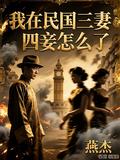 What Happened to Me Having Three Wives and Four Concubines in the Republic of China?
20.1kReads5.8Score1.4kShelves
What Happened to Me Having Three Wives and Four Concubines in the Republic of China?
20.1kReads5.8Score1.4kShelves
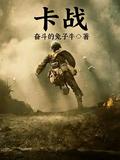 Card War
68Reads8.6Score—Shelves
Card War
68Reads8.6Score—Shelves
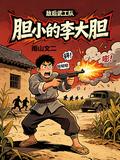 Armed Forces Behind Enemy Lines: Cowardly Li Daring
338Reads—Score160Shelves
Armed Forces Behind Enemy Lines: Cowardly Li Daring
338Reads—Score160Shelves
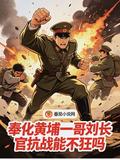 Can Mr. Liu, the First Brother of Fenghua Huangpu, Not Be Crazy About Fighting the War?
246Reads5.8Score—Shelves
Can Mr. Liu, the First Brother of Fenghua Huangpu, Not Be Crazy About Fighting the War?
246Reads5.8Score—Shelves
 Changbai Mountain Behind Enemy Lines: the Bandit King's Bunker Arsenal
12Reads5.8Score—Shelves
Changbai Mountain Behind Enemy Lines: the Bandit King's Bunker Arsenal
12Reads5.8Score—Shelves
 Zhutian: in the Beginning of Songhu, the Fourth Natural Disaster Penetrated
3Reads5.8Score—Shelves
Zhutian: in the Beginning of Songhu, the Fourth Natural Disaster Penetrated
3Reads5.8Score—Shelves
 A Collection of Short Stories About the History of the Anti-Japanese War
—Reads—Score—Shelves
A Collection of Short Stories About the History of the Anti-Japanese War
—Reads—Score—Shelves
 Li Ying in the Republic of China: Big Win, Special Win
991Reads—Score106Shelves
Li Ying in the Republic of China: Big Win, Special Win
991Reads—Score106Shelves
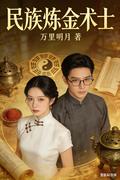 National Alchemist
41Reads5.8Score—Shelves
National Alchemist
41Reads5.8Score—Shelves
 The Rise of the Nation Across the Sixties
117Reads5.8Score—Shelves
The Rise of the Nation Across the Sixties
117Reads5.8Score—Shelves
 Double Wear of the 1960S
159Reads5.8Score—Shelves
Double Wear of the 1960S
159Reads5.8Score—Shelves
 Traveling Between Two Worlds 1973
164Reads5.8Score—Shelves
Traveling Between Two Worlds 1973
164Reads5.8Score—Shelves
 The Rise of Shuttle Between Two Worlds
252Reads5.4Score—Shelves
The Rise of Shuttle Between Two Worlds
252Reads5.4Score—Shelves
 The Iron-Blooded Tiger Fights Against the Ming Dynasty
531Reads7.2Score—Shelves
The Iron-Blooded Tiger Fights Against the Ming Dynasty
531Reads7.2Score—Shelves
 Traveling Through the Water Margin and Dominating the World
540Reads5.9Score—Shelves
Traveling Through the Water Margin and Dominating the World
540Reads5.9Score—Shelves
 The Controller of All Realms Is at Ease in the City
750Reads6.4Score—Shelves
The Controller of All Realms Is at Ease in the City
750Reads6.4Score—Shelves
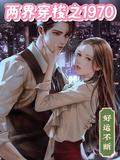 Traveling Between Two Realms: 1970
152Reads5.8Score—Shelves
Traveling Between Two Realms: 1970
152Reads5.8Score—Shelves
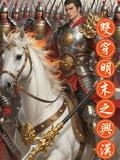 A Double Journey Through the Late Ming Dynasty and the Rise of the Han Dynasty
40Reads5.8Score—Shelves
A Double Journey Through the Late Ming Dynasty and the Rise of the Han Dynasty
40Reads5.8Score—Shelves
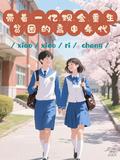 With 100 Million in Cash, He Was Reborn into the Poverty-Stricken High School Years.
8Reads5.8Score—Shelves
With 100 Million in Cash, He Was Reborn into the Poverty-Stricken High School Years.
8Reads5.8Score—Shelves
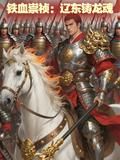 Iron-Blooded Chongzhen: Liaodong Casting Dragon Soul
25Reads5.8Score—Shelves
Iron-Blooded Chongzhen: Liaodong Casting Dragon Soul
25Reads5.8Score—Shelves
 Travel Through 80 and Be a Great Hero When You Return Home
821Reads5.8Score—Shelves
Travel Through 80 and Be a Great Hero When You Return Home
821Reads5.8Score—Shelves
 Reborn in High School with 100 Million Cash
—Reads5.8Score—Shelves
Reborn in High School with 100 Million Cash
—Reads5.8Score—Shelves
 1937: I Have an Arsenal
22Reads5.8Score—Shelves
1937: I Have an Arsenal
22Reads5.8Score—Shelves
 Two Realms: from 1983 to 2025
179Reads5.8Score—Shelves
Two Realms: from 1983 to 2025
179Reads5.8Score—Shelves
 Mingyue Castle
15Reads—Score—Shelves
Mingyue Castle
15Reads—Score—Shelves
 The Wind Blows from the Southwest!
171Reads5.8Score—Shelves
The Wind Blows from the Southwest!
171Reads5.8Score—Shelves
 Take the Silly Girl to 60
387Reads5.8Score—Shelves
Take the Silly Girl to 60
387Reads5.8Score—Shelves
 Bringing Millions of Tons of Supplies to Support the Anti-Japanese War, the Leader Was Confused
1.1kReads5.8Score172Shelves
Bringing Millions of Tons of Supplies to Support the Anti-Japanese War, the Leader Was Confused
1.1kReads5.8Score172Shelves
 The Martian Era: the Road to Venus
37Reads5.8Score—Shelves
The Martian Era: the Road to Venus
37Reads5.8Score—Shelves
 The Hero of Shanghai at Night Has No Regrets
87Reads5.8Score—Shelves
The Hero of Shanghai at Night Has No Regrets
87Reads5.8Score—Shelves
 Titans: Stardust War
14Reads5.8Score—Shelves
Titans: Stardust War
14Reads5.8Score—Shelves
 Greetings from E-Star
11Reads5.8Score—Shelves
Greetings from E-Star
11Reads5.8Score—Shelves
 Chariot of the Sun
11Reads5.8Score—Shelves
Chariot of the Sun
11Reads5.8Score—Shelves
 What Happened to Fenghua Huangpu No. 1 Brother's Anti-War Madness?
92.5kReads5.8Score8.8kShelves
What Happened to Fenghua Huangpu No. 1 Brother's Anti-War Madness?
92.5kReads5.8Score8.8kShelves
 Don't Check Me! the Anti-Japanese War Ancestor Is Waiting for Me to Send You Equipment
1Reads5.8Score—Shelves
Don't Check Me! the Anti-Japanese War Ancestor Is Waiting for Me to Send You Equipment
1Reads5.8Score—Shelves
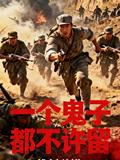 No Japanese Are Allowed to Stay
10Reads5.8Score—Shelves
No Japanese Are Allowed to Stay
10Reads5.8Score—Shelves