I want to read a book similar to "Children of the Crescent River Part 3: Right and Wrong". If you have missed the intoxicating fragrance of wheat waves in the neon lights of the city, if you are eager to touch the beating pulse of rural China, then this river soul flowing quietly on Tomato Novel Network
Human nature cannot withstand the test [Fallen love, confused beauty, murdering gods and killing hearts] Interpol Lu Jin woke up and found that he had lost his memory for 20 years and slept with his brother's lover by mistake. He only had one thought in his heart, and he would never let you go. A series of officialdom intrigues, fights between police and robbers, power and sex transactions, black and white layouts, it turns out that human nature is gray, and what is even more terrifying is... With three families destroyed and people killed, a sixty-year cycle of reincarnation was laid out, and a shocking god-killing plan was laid out. No matter how miserable the world is, we don't care about heaven. Mr. Fu, please come back to life! A story about a small town essayist and the rise of Brahmins in the county. God is in the world's hearts. Is it worth it in this world? …
Highlight recommendation: "The Play Next Door" is worth reading - five stories, five mirrors, reflecting the subtleties of human nature and the warmth of the system - 1. This book is different. If you think that this is just a collection of stories about strange professions in ancient times, you are only half right. It is indeed about professions - shackle lubricators, jailers of death row prisoners, skinners who complain about grievances, criminal masters, prison incense makers... These professions that you have never heard of are vividly represented in the book, with flesh and blood. But it's about much more than just career. It's about people. They are those people who still insist on "treating people as human beings" in the most marginalized and darkest corners of society. It's about the system. It is those seemingly small technical details that determine the smooth flow of judicial relief channels, the stability of rule enforcement, and the inheritance of experience and wisdom. It's about you and me. It is every ordinary person in modern society who longs to be seen, heard, and treated as a human being. --- 2. Five stories, five rays of light Chapter 314: The "shackle greaser" of the exiled prisoners - the old man who squatted beside the official road all his life, greased the shackles of the exiled prisoners for three cents. The official scolded him: "You are helping evil!" He replied: "Exile is a punishment to leave his hometown, not a punishment to make his flesh and blood mutilated to death." Many years later, the prisoner he rescued returned after being pardoned and thanked him with money. He refused: "What I receive is gas money, not charity money." This chapter tells you: Punishment can be harsh, but those who carry out the punishment can have a bottom line in their hearts. That bottom line is called "humanity." --- Chapter 315: The "last meal" of the condemned prisoner is delivered to the prisoner - That lame old Zhou always adds an extra spoonful when delivering the last meal to the condemned prisoner. The new prisoner withheld food, and the prisoner died of hunger. Before execution, he shouted: "I am leaving hungry, and I will come back to you in the next life!" Lao Zhou came back and added to the food he was given. "The law is unforgiving, but people are tolerant." This chapter tells you: Within the rigid framework of procedural justice, there can be a little bit of human softness. That spoonful of rice feeds the dying and warms the hearts of the living. --- Chapter 316: Lao Zheng, the skinner of the Yamen who "beats the grievance drum", makes the sound of the drum spread far and wide. In order to save money, the new craftsman made the drum thin and brittle, so that the high-pitched sound could not be transmitted far. The peasant woman beat the drum to express her grievances, but her voice could not reach the back hall. She was driven away by the government servants and hit the pillar in anger. The county magistrate heard the sound and came out, but it was too late. Lao Zhengzheng was playing the drum, and the sound shook the whole city. Since then, it has been stipulated that the sound of drums must be clearly heard in the back hall. This chapter tells you: seemingly technical details are related to the smooth flow of judicial relief channels. An inaudible drum means there is no drum. Relief that cannot be reached is equivalent to no relief. --- Chapter 317: Master Xing Ming's "Case Scrapbook" - Master Zhou has been handling cases for forty-seven years, and every case must be cut and pasted, annotated, and summarized. Eight boxes of books are the accumulation of experience from thousands of cases. The new master decided the case based on his feelings and was full of mistakes. The boss took the teacher's books for reference and sighed: "What you cut and paste is paper, and what you accumulate is irreplaceable judicial wisdom." This chapter tells you: Experience cannot be passed on without systematization and visualization. Those things written down on paper are not dead words, but living experiences, and the light of wisdom that can be passed on to future generations through time. ---Chapter 318: Timed incense "released in prison" - Three generations of the Cheng family have made incense, burning one foot and two inches for an hour, every second. The new warden wanted to save money in exchange for bad incense. For a short time, the prisoners were uneasy and they rioted many times, killing two people. In exchange for Cheng Jiaxiang, order was restored. The warden asked why and replied: "Incense gives a sense of certainty, uncertainty is the source of fear." This chapter tells you: For those who have lost their freedom, the stable execution of rules itself is a kind of spiritual refuge. People's hearts need "accuracy." If the accuracy is gone, people will panic. --- 3. Why is it worth seeing? 1. Because it allows you to see the "invisible people". The protagonists in these stories are all little people that history books disdain to record. They have no fame, status, wealth, or even names - they are just "Old Zhou", "Old Zheng" and "Old Master Cheng". But they spent their entire lives guarding the most basic bottom line of human nature. They let you see that in the darkest and most desperate places, there are still people lighting a light. The light didn't light up, but it was enough for people passing by to see the path under their feet. 2. Because it makes you think about the "temperature of the system." These stories are all about ancient times, but they all ask today's questions: ——Are our judicial relief channels really smooth? Can those "drum sounds" reach the ears of the people who should listen? ——Is our rule enforcement stable? Do those who need to rely on rules to survive have a sense of "certainty"? ——Is our experience inheritance systematic? Have the lessons learned with blood and tears been recorded? Can it be passed on to future generations? Every story is a mirror. What I see is from ancient times as well as today. 3. Because it makes you believe in the "power of the human heart". These stories have no happy endings, no heroic salvation, no reversals and counterattacks. The peasant woman died. The prisoner was killed. The exiles are gone. But those who are alive - Lao He, Lao Zhou, Lao Zheng, Master Zhou, Master Cheng - they are still there and still doing what they should do. They didn't change the world, but they kept it from getting worse. That's enough. This deserves to be seen, remembered, and passed on. --- 4. The last sentence "The Play Next Door" is a book that can be read in one afternoon. But it will stay in your heart for a long time. Next time you walk by the Yamen, you will think of that drum. Next time you see the rules, you will think of that incense. Next time you face injustice, you will think of that three pennies of oil. Those little people will speak to your heart. What they said was nothing more than this sentence: "People should be treated as human beings." Just because of this sentence, it is worth reading.
A particularly good-looking historical novel, full of memories for people born in the 1980s and 1990s. It is my favorite. The animation is also very exciting.
 God Made Him Sit Back in That Chair Again
59Reads—Score—Shelves
God Made Him Sit Back in That Chair Again
59Reads—Score—Shelves
 The Classic of Mountains and Seas·the Great Wasteland Returns to the Ruins
17Reads8.5Score—Shelves
The Classic of Mountains and Seas·the Great Wasteland Returns to the Ruins
17Reads8.5Score—Shelves
 Return of the Soul: the Tampered World
1Reads—Score—Shelves
Return of the Soul: the Tampered World
1Reads—Score—Shelves
 Time with a Robot Girlfriend
59Reads5.8Score—Shelves
Time with a Robot Girlfriend
59Reads5.8Score—Shelves
 Once He Traveled Through Time, He Would Marry the Disabled Prince and Become the Favorite of the Group.
170Reads5.8Score—Shelves
Once He Traveled Through Time, He Would Marry the Disabled Prince and Become the Favorite of the Group.
170Reads5.8Score—Shelves
 Living with the Boss, I Am so Strong That I Can Fly
148Reads5.8Score—Shelves
Living with the Boss, I Am so Strong That I Can Fly
148Reads5.8Score—Shelves
 Quickly Travel Through the Second Personality
55Reads5.8Score—Shelves
Quickly Travel Through the Second Personality
55Reads5.8Score—Shelves
 Anthology of Funny Meanings
3Reads—Score—Shelves
Anthology of Funny Meanings
3Reads—Score—Shelves
 Expensive Betrothal Gift, Calculated Marriage!
1Reads8.6Score—Shelves
Expensive Betrothal Gift, Calculated Marriage!
1Reads8.6Score—Shelves
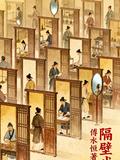 Next Door Drama
5Reads—Score—Shelves
Next Door Drama
5Reads—Score—Shelves
 After Escaping from Her Adoptive Parents' Home, Her Life Was Ruined
6.5kReads8.3Score758Shelves
After Escaping from Her Adoptive Parents' Home, Her Life Was Ruined
6.5kReads8.3Score758Shelves
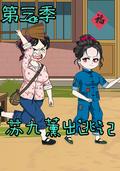 Su Jiuxun's Escape Season 3
995Reads8.2Score—Shelves
Su Jiuxun's Escape Season 3
995Reads8.2Score—Shelves
 His Lover's Name Is Sister Liu
7Reads8.4Score—Shelves
His Lover's Name Is Sister Liu
7Reads8.4Score—Shelves
 On the Night of Our Engagement, I Dated a Strange Man
70Reads8.6Score—Shelves
On the Night of Our Engagement, I Dated a Strange Man
70Reads8.6Score—Shelves
 I Spoiled Her for Three Months in Order to Get Divorced
98Reads8.6Score—Shelves
I Spoiled Her for Three Months in Order to Get Divorced
98Reads8.6Score—Shelves
 Sister, What Are You Doing This Afternoon?
54Reads8.8Score—Shelves
Sister, What Are You Doing This Afternoon?
54Reads8.8Score—Shelves
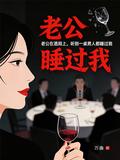 My Husband Was at a Bar and Heard That All the Men at the Table Had Slept with Me.
212Reads9.1Score—Shelves
My Husband Was at a Bar and Heard That All the Men at the Table Had Slept with Me.
212Reads9.1Score—Shelves
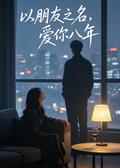 In the Name of a Friend, I Have Loved You for Eight Years
7Reads8.4Score—Shelves
In the Name of a Friend, I Have Loved You for Eight Years
7Reads8.4Score—Shelves
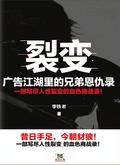 Fission: Brothers' Feud in the Advertising World
13Reads9.2Score—Shelves
Fission: Brothers' Feud in the Advertising World
13Reads9.2Score—Shelves
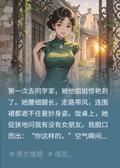 A Classmate's Sister Sent Her a Photo of a Cheongsam: Does This One Look Good Today?
272Reads9.0Score—Shelves
A Classmate's Sister Sent Her a Photo of a Cheongsam: Does This One Look Good Today?
272Reads9.0Score—Shelves
 Dad Can Eat It, Why Can't I?
76Reads8.7Score—Shelves
Dad Can Eat It, Why Can't I?
76Reads8.7Score—Shelves
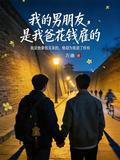 My Boyfriend Was Hired by My Father with Money
53Reads8.6Score—Shelves
My Boyfriend Was Hired by My Father with Money
53Reads8.6Score—Shelves
 I Was the Perfect Wife Who Never Said No to Her Husband Until I Found That Bracelet
119Reads8.9Score—Shelves
I Was the Perfect Wife Who Never Said No to Her Husband Until I Found That Bracelet
119Reads8.9Score—Shelves
 Taboo Sinking: Monday to Thursday, I Am His
678Reads9.0Score—Shelves
Taboo Sinking: Monday to Thursday, I Am His
678Reads9.0Score—Shelves
 The Rabbit on His Phone Calls Me Sister
169Reads8.6Score—Shelves
The Rabbit on His Phone Calls Me Sister
169Reads8.6Score—Shelves
 The Rise to Success Started as a Secretary
56Reads5.8Score—Shelves
The Rise to Success Started as a Secretary
56Reads5.8Score—Shelves
 A Foreign Country
66Reads—Score—Shelves
A Foreign Country
66Reads—Score—Shelves
 I Don't Have Super Powers
34Reads—Score—Shelves
I Don't Have Super Powers
34Reads—Score—Shelves
 Female Salesperson at Insurance Company
25.2kReads7.0Score2.1kShelves
Female Salesperson at Insurance Company
25.2kReads7.0Score2.1kShelves
 My Memories in Dongguan
78Reads5.8Score—Shelves
My Memories in Dongguan
78Reads5.8Score—Shelves
 Duke Huan of Cai's Intestines Turned Green Again
—Reads8.5Score—Shelves
Duke Huan of Cai's Intestines Turned Green Again
—Reads8.5Score—Shelves
 The Undercurrent of the Series of Major Cases Involving Female Police Chiefs
3.6kReads5.8Score225Shelves
The Undercurrent of the Series of Major Cases Involving Female Police Chiefs
3.6kReads5.8Score225Shelves
 Female Director, Crack Down on a Series of Major Crime Cases!
23.7kReads7.3Score515Shelves
Female Director, Crack Down on a Series of Major Crime Cases!
23.7kReads7.3Score515Shelves
 Female Director: Suppressing Darkness
6.3kReads6.9Score383Shelves
Female Director: Suppressing Darkness
6.3kReads6.9Score383Shelves
 Creation! the First of All Time
149Reads—Score—Shelves
Creation! the First of All Time
149Reads—Score—Shelves
 Bluestone Suspense Files: the 13Th Missing Person
695Reads5.8Score108Shelves
Bluestone Suspense Files: the 13Th Missing Person
695Reads5.8Score108Shelves
 The Old Grandmother in Yuejiazhuang
1.1kReads9.2Score104Shelves
The Old Grandmother in Yuejiazhuang
1.1kReads9.2Score104Shelves
 Sumeru Precepts: Rebirth in Sixty Years of Cultivation, Beauty, and Conspiracy for the World
15.4kReads7.3Score2kShelves
Sumeru Precepts: Rebirth in Sixty Years of Cultivation, Beauty, and Conspiracy for the World
15.4kReads7.3Score2kShelves
 Mortal Monk
6.5kReads8.5Score703Shelves
Mortal Monk
6.5kReads8.5Score703Shelves
Potato's Omnipotent Answer to the Magic Stick Theory 382Reads8.5Score—Shelves