After reading it, I couldn't calm down for a long time. The diverse story that opened up my imagination is so exciting. The love entanglement between the male and female protagonists along the way touched my heartstrings. I sincerely hope that the two of them will stay together for the rest of their lives and never be separated again!
Why is it that no one has read such a good-looking historical conspiracy article? The update is a bit slow, but it is really good-looking. The head section describes the historical conspiracy article about the lives of ordinary people and the lower class people.
Falling in love at first sight has been planned for a long time, and the relationship progresses step by step. The male protagonist is in love and puts the female protagonist first in everything, respecting, loving and pampering her. After reading this, I want to fall in love
It's so niche that it's barely popular, but its texture is amazingly good. The world view setting is so novel that there are no established benchmark works. The author's writing style is very stable, the pace is not fast, but there are many details, like a slowly closing net. You will constantly have questions while watching it, and you will doubt everything along with the protagonist. It does not deliberately sensationalize, but the fate of each character is like a designed tragic art, reasonable and cruel.
[Super realistic article about middle-aged people in the market! Recommendation for breaking the defense] Old alleys in Shanghai are full of fireworks. When you are middle-aged, you are unemployed and divorced, and you make a living on the construction site. You live frugally, just to protect your sensible daughter. No one knows that this ordinary worker covered in dust hides a shocking secret that has been hidden for twenty years. Medicine and wine protect the body, can relieve people's suffering, and detect the hidden dangers of all kinds of diseases. He is kind and restrained, and does good deeds everywhere. He never shows off, and never makes profits. But he has a sinister heart and is constantly plotting in the dark. The peaceful life of poverty has been completely broken. It is gentle and repressed, forbearing and passionate. The further it goes, the better it gets! #Middle-aged, I have been hiding my powers of medicine and wine for 20 years
[Wealthy compound + Shuang Jie + childhood sweethearts + group portraits] Dual identities of the male protagonist [the group's favorite little princess x the big bad wolf CEO] [designer x young major general]
The plot is exciting, and the more you watch it, the more addictive it becomes. The plot is full of twists and turns, the characters are vivid and three-dimensional, and the characters are vivid and flesh-and-blood, making people love and hate them. The characters of all the characters are eye-catching. I highly recommend it!
The facial features seemed to have been carefully carved by God. Even when he was kneeling in front of her, there still seemed to be an inexplicable look of disdain all over his body, as if he was an emperor who had fallen into the mortal world.
It's an all-female quartet, each with a distinct personality. It's about four female high school students who go to class during the day and play dungeons at night. They will later join a state agency, and then they have to save the world at night. After saving the world, they have to come back to make up their homework. The author is also quite interesting, and is updated steadily every day. The main characters are all women, and the dungeons have designs.
It is not recommended to watch it when there are many people because it will make you laugh. It is recommended to read the catalog first before reading the book
Four absurd workplace stories that will make you laugh and think, now available on Tomato Bookstore. Hello, dear readers. I won't talk about big ideas today, I just want to talk to you from my heart. A few days ago, I wrote four absurd stories that happened in the "Future Technology Group" in one go. To be honest, every time I finish writing one, I have to sit in a chair for a while - not because I am tired, but because the plots are so funny that I can't help but think about them for a long time after I finish laughing. These four stories are independent, each has its own absurdity, and each has its own warmth. They are not boring sermons, but like four old friends sitting across from you, eating melon seeds and telling you about the "evil things" they encountered. You will laugh out loud, frown, and suddenly think of yourself at a certain moment - and then say "Hey" and silently hold the phone in your arms. Today, as a friend, I will tell you these four stories seriously. If you haven't read it yet, or have only read one or two of them, you might as well listen to what I have to say. The first story: "Business Model Innovation Competition" When absurdity itself becomes a business model, what should serious people do? The protagonist of the story is Zhang Wei, an ordinary product manager. On a whim, the company boss wants to hold a "Business Model Innovation Competition" with a prize of five million. Guess what? The shortlisted projects are more outrageous than the last - "Paid Air", which aims to sell New Zealand air cans for money; "Filial Piety Blockchain", which uses blockchain technology to record the number of times children call their parents. If the points are low, they will be publicly "executed" in the circle of friends; "Sleep Sharing Economy", which records one's own dreams and sells them to people with insomnia... Zhang Wei honestly built an "enterprise-level AI knowledge base system" with detailed data and feasible solutions, but was almost eliminated. The judges lowered their heads and checked their mobile phones. The financial director asked, "How much is the expected loss in the first year?" And never looked up again. On the contrary, those projects that are extremely absurd receive thunderous applause and soar in valuation. On the night of the finals, Zhang Wei stood on the stage and said to a room full of judges and investors: "Absurdity is not the answer to the problem, absurdity is the problem itself." The audience was silent. The most ridiculous project won the championship. But the company's boss was touched by Zhang Wei's words and dedicated two million to establish an "Absurd Innovation Fund" to reward those who dare to point out absurdities and solve problems in a sincere way. Reading this story will make you laugh so hard that your spine will shiver. Because you will find that those absurd business models may be happening around you and me. The second story: "Consumer Behavior Research" Why do we always buy things we don't need at all? The protagonist is replaced by Lin Xiaoqing, a quiet user researcher. She took on an assignment that sounded outrageous—to study why people buy useless things. She posted a questionnaire on the company's intranet: "What is the most useless thing you have ever bought?" She received more than 2,000 responses in one day. Desktop mini bowling set, smart tea egg cooker, portable air fryer, anti-blue light glasses, sleep aid gravity blanket, fruit and vegetable cleaning and disinfecting machine... Every reply is like a mirror, reflecting ourselves. The most heartbreaking thing is what a girl said: "When I bought a juicer, I didn't buy a juicer. What I bought was the fantasy of 'I will become a healthy girl who gets up early to make juice.' That fantasy is contradictory to the real me." Lin Xiaoqing later became a "sober shopping assistant", hoping to help everyone save money, but users uninstalled it one after another - "I know it is helping me save money, but it makes me very uncomfortable. I don't buy things for needs, but for happiness." The ending of the story is particularly wonderful. Lin Xiaoqing did not continue to be a tool to "prevent purchases", but instead built a community for "post-consumption reflection". Users can anonymously share their "regret purchase" stories there. One user packed all the useless things he bought at home into seven cardboard boxes and placed them in the corner of the living room. Every time you want to buy something new, just look at the seven cartons and ask yourself: "Will this become the eighth carton?" The eighth carton never appears. When reading this story, you will laugh, blush, and think of those "treasures" gathering dust in the depths of your cabinet. Then you will be silent, and then you will smile knowingly - because you will find that you are not the only one like this. The third story: "Brand Personification" When the vice president spent 88,000 yuan on a training class, he came back to "create a personality" for the product... This story is the most "lively" one in the entire series. Vice President Zhao Tiejun (yes, the one in front) participated in a brand marketing training class, which cost 88,000 yuan. After returning, he vowed to launch a "brand revolution." He defines a "personality" for each of the company's products: cloud storage is "steady and reliable Uncle Wang", enterprise collaboration software is "efficient and capable Lisa", and AI assistant is "cute Xiao Ming". Then they spent nearly two million on a grand press conference, invited actors to play these "personalities", and took the oath on the T-stage. The result? Data slaps in the face - 87% of users choose to turn off "personality mode". User comments were even more cruel: "I'm not here to make friends, I'm here to store files." "Aren't you annoyed that your refrigerator says 'Hello Master' every time you open the door?" Here comes the best part. Zhao Tiejun was not defeated by the data, but created a "personality workshop" - allowing users to choose whether they want a personality and what kind of personality they want. Users can turn off all personalization functions, or choose the "lively version", "venomous version" or "silent version", or even "train" the personality to let the AI learn their own preferences. There was a user who worked overtime until two in the morning. When he was extremely lonely, he said to the AI assistant, "I'm so tired." The AI replied with two words: "Thank you for your hard work." Just these two words made the user cry late at night. At the end of the story, Zhao Tiejun said something at the industry summit: "Personality is not designed, it grows. You give users a framework, some options, and a little autonomy, and then you step back and let the users and the product grow their own personalities together." This story will make you laugh at the vice president's "obsession", and it will also make you think: In an era when everyone is "performing," what is the real "personality"? The fourth story: "Shopping Festival Time Expansion" When the Double Eleven flash sale makes time really "slow down"... This story is the most "brain-burning" and the most "enjoyable" in the entire series. Zhao Tiejun once again had an idea - he insisted that time would physically slow down during the shopping festival. To this end, he invited a postdoctoral fellow in physics to create a "time perception measurement APP" to monitor the entire process on Double Eleven. At first, the data seemed to actually support his theory: users felt that ten seconds had passed, but actually thirteen seconds had passed. Zhao Tiejun danced with excitement. But then, things started to spiral out of control. The time perception index is getting higher and higher, and users feel that time is getting slower and slower. Something even weirder happened - a user placed an order in the early morning and received the goods in less than an hour; some users even said that the goods "appeared out of thin air" in front of them after placing the order. The most worrying thing is the delivery man, Master Zhang. He was delivering goods in the early hours of the morning. It felt like he had only been driving for fifteen minutes, but when he looked at his phone, he found that more than four hours had passed. His body tells him he's tired, but his brain tells him "you've just started." This feeling of division almost made him collapse. The climax of the story is when Lin Xiaoqing discovers a cruel truth: time dilation is not a physical phenomenon, but a psychological trap created by the shopping festival system. When we are pushed forward by countdowns, flash sales, and limited-time discounts, we lose our normal judgment and the joy of waiting. The ending is particularly heartwarming. The company boss announced: Starting next year, Double Eleven will no longer be 24 hours, but 72 hours - not shorter, but longer. Because a longer shopping festival means less urgency and more time to think. The deliveryman, Master Zhang, later sent Lin Xiaoqing a photo: He was wearing new work clothes, standing next to the new electric car, with a real smile. There is a sentence written under the photo: "The company has changed its new policy, and the delivery people no longer need to deliver goods in the middle of the night. Yesterday I accompanied my daughter to the park to fly a kite. I haven't flown a kite with her in three years." When reading this story, you will be amused by the absurd "supernatural phenomena", you will be moved by Master Zhang's story, and when you close the phone at the end, you will ask yourself a question: What are we chasing? Four stories, one background. These four stories seem to be independent of each other - business model, consumer psychology, brand personality, and time perception. But their background is the same: in this increasingly absurd business world, staying sober and sincere is more important than anything else. They are not boring sermons, but use humor, absurdity, reversal and warmth to break apart and crush the "weird phenomena" in the workplace and life before you. You will laugh because those plots are really outrageous; you will be silent because you find that those outrageous things are actually not far away from you; you will smile knowingly, because the ending of the story always gives people hope - sincere people can eventually find a way out. Where can I read these stories? The good news is: these four stories are already online on Tomato Books! Open the Tomato Bookstore APP and enter "Absurd and Humorous Workplace Series" in the search box or directly search for the story titles - "Business Model Innovation Competition", "Consumer Behavior Research", "Brand Personification" and "Shopping Festival Time Dilation" - to find them. It is strongly recommended that you click "Add to Bookshelf" so that you will not miss any updates, and you can also turn it out at any time and review the fragments that make you laugh out loud and make you think. In addition, I would like to remind everyone that on Tomato Bookstore, the account with the author's user ID "26182811" is the original story written by me. Other reprints or counterfeits are not my version. Look for this number to ensure authenticity. Dear friends, see you in the comment area. After reading any story, if you laugh, are silent, or think of something, you are welcome to leave your footprints in the comment area. You can tell me: · Which character is your favorite? (Is it the persistent Zhao Tiejun, or the more sincere Lin Xiaoqing? Is it the sincere Zhang Wei, or the delivery man who accompanied his daughter to fly a kite?) · What is the most useless thing you have ever bought? (Don't worry, the comment section is full of "comrades") · What is the most absurd workplace moment you have ever experienced? · Or, just drop a "haha" and let me know you stopped by. I will read every comment carefully. Because when it comes to writing, the happiest moment is knowing that your words are read and felt by others. Finally, I sincerely thank you all for taking the time to read these stories. Thank you for your willingness to leave a quiet space for words in your busy life. I know that in this era of short videos and fragmented information, reading a long article of more than 20,000 words is a very "luxury" thing. But because of this, I cherish every reader's company even more. If these stories make you laugh out loud late at night, hold your hand down during an impulsive purchase, or find a new perspective on a problem when you are confused at work - then every night I stay up late typing on the keyboard is worth it. Thanks again! Love you! See you in the comments section! ——A person who writes stories seriously (Tomato Bookstore·User 26182811)
 Let Your Prodigal Son Turn Back, Why Have You Become a Succubus!
7kReads6.9Score596Shelves
Let Your Prodigal Son Turn Back, Why Have You Become a Succubus!
7kReads6.9Score596Shelves
 Listen to Zen Every Night, and Feel Desire Every Step of the Way
111Reads—Score104Shelves
Listen to Zen Every Night, and Feel Desire Every Step of the Way
111Reads—Score104Shelves
 I Used This Face to Deceive an Incredible Husband
14Reads8.5Score—Shelves
I Used This Face to Deceive an Incredible Husband
14Reads8.5Score—Shelves
 The Little Daughter-In-Law Next Door Plotted Against Me and Ruined Half My Life
1.7kReads8.1Score108Shelves
The Little Daughter-In-Law Next Door Plotted Against Me and Ruined Half My Life
1.7kReads8.1Score108Shelves
 Folding Flute
46Reads—Score—Shelves
Folding Flute
46Reads—Score—Shelves
 Slipper Female Bandit Online Tamer
184Reads9.1Score—Shelves
Slipper Female Bandit Online Tamer
184Reads9.1Score—Shelves
 Bind to My Ancestors, I Will Become Crazy Rich in Modern Times
19Reads8.1Score—Shelves
Bind to My Ancestors, I Will Become Crazy Rich in Modern Times
19Reads8.1Score—Shelves
 There Is a Sunny Sky Above the Chicken Feathers
583Reads8.1Score104Shelves
There Is a Sunny Sky Above the Chicken Feathers
583Reads8.1Score104Shelves
 In the Thirty-Eighth Year of Wanli, I Became the Princess of Zhenguo
66Reads5.8Score—Shelves
In the Thirty-Eighth Year of Wanli, I Became the Princess of Zhenguo
66Reads5.8Score—Shelves
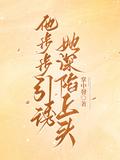 He Seduces Her Step by Step, and She Falls Deeply into Him
16Reads5.8Score—Shelves
He Seduces Her Step by Step, and She Falls Deeply into Him
16Reads5.8Score—Shelves
 Ah Li
11.4kReads9.1Score1.2kShelves
Ah Li
11.4kReads9.1Score1.2kShelves
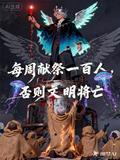 Light Meets All Living Beings
84Reads5.8Score—Shelves
Light Meets All Living Beings
84Reads5.8Score—Shelves
 The First Book of Tian Ling Kai
7Reads—Score—Shelves
The First Book of Tian Ling Kai
7Reads—Score—Shelves
 Two Bamboo Horses, [One Green Plum]
367Reads8.8Score125Shelves
Two Bamboo Horses, [One Green Plum]
367Reads8.8Score125Shelves
 Done! the Face I Raised Is Actually Prince Xizuo
16Reads—Score—Shelves
Done! the Face I Raised Is Actually Prince Xizuo
16Reads—Score—Shelves
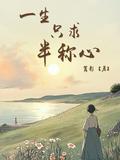 Only Half-Satisfaction in Life
16.1kReads8.9Score1.1kShelves
Only Half-Satisfaction in Life
16.1kReads8.9Score1.1kShelves
 Pass Through the Small Fishing Village and Go to the Xiangjiang River to Lie Down
10.8kReads5.8Score903Shelves
Pass Through the Small Fishing Village and Go to the Xiangjiang River to Lie Down
10.8kReads5.8Score903Shelves
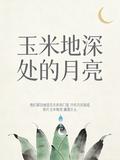 The Moon Deep in the Cornfield
3.5kReads6.2Score218Shelves
The Moon Deep in the Cornfield
3.5kReads6.2Score218Shelves
 My Days in the Sales Department
285Reads—Score—Shelves
My Days in the Sales Department
285Reads—Score—Shelves
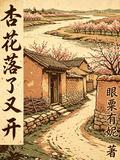 The Apricot Blossoms Have Fallen and Bloomed Again
42Reads—Score—Shelves
The Apricot Blossoms Have Fallen and Bloomed Again
42Reads—Score—Shelves
 Baby, Don't Cry, I'm Brother Zhou
29Reads5.8Score—Shelves
Baby, Don't Cry, I'm Brother Zhou
29Reads5.8Score—Shelves
 After Traveling Through Time, I Failed and Was Counter-Attacked by the Target.
851Reads9.4Score136Shelves
After Traveling Through Time, I Failed and Was Counter-Attacked by the Target.
851Reads9.4Score136Shelves
 Middle-Aged Shanghai Man: I've Been Hiding My Medicinal and Wine Powers for 20 Years
34Reads—Score—Shelves
Middle-Aged Shanghai Man: I've Been Hiding My Medicinal and Wine Powers for 20 Years
34Reads—Score—Shelves
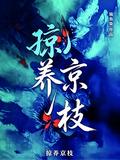 Prey and Raise Beijing Branches
7kReads6.7Score841Shelves
Prey and Raise Beijing Branches
7kReads6.7Score841Shelves
 398 Unlocks Shenhao's Black Stockings School Beauty and Comes Home with Me
7.6kReads5.8Score501Shelves
398 Unlocks Shenhao's Black Stockings School Beauty and Comes Home with Me
7.6kReads5.8Score501Shelves
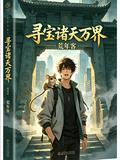 The Rat King Forced Me to Become an Immortal, and I Became Rich by Picking up Leaks.
2.9kReads8.1Score316Shelves
The Rat King Forced Me to Become an Immortal, and I Became Rich by Picking up Leaks.
2.9kReads8.1Score316Shelves
 Quick Travel: Strategy for the Cold-Heirless Male Protagonist
307Reads5.8Score—Shelves
Quick Travel: Strategy for the Cold-Heirless Male Protagonist
307Reads5.8Score—Shelves
 Angrily Licking Ten Female School Beauties, I Awakened and Returned to the World
8.2kReads6.7Score695Shelves
Angrily Licking Ten Female School Beauties, I Awakened and Returned to the World
8.2kReads6.7Score695Shelves
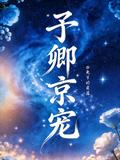 Give Favor to Qing Jing
9.8kReads8.4Score863Shelves
Give Favor to Qing Jing
9.8kReads8.4Score863Shelves
 We Made a Promise in March and We Will Stay Together for Life
31Reads—Score—Shelves
We Made a Promise in March and We Will Stay Together for Life
31Reads—Score—Shelves
 Beautiful Girl Gets 10 Times Cash Back on Spending
4.3kReads6.9Score381Shelves
Beautiful Girl Gets 10 Times Cash Back on Spending
4.3kReads6.9Score381Shelves
 My Dear, You Can Become Stronger by Eating Melons!
2Reads—Score—Shelves
My Dear, You Can Become Stronger by Eating Melons!
2Reads—Score—Shelves
 Meet Again, Fall in Love Again
2.5kReads—Score100Shelves
Meet Again, Fall in Love Again
2.5kReads—Score100Shelves
 Cultivation of Immortality: a Random System Every Day
411Reads5.8Score—Shelves
Cultivation of Immortality: a Random System Every Day
411Reads5.8Score—Shelves
 A Full-Level General Returns to His Senior Year of High School
39.9kReads9.0Score8kShelves
A Full-Level General Returns to His Senior Year of High School
39.9kReads9.0Score8kShelves
 The Class Beauty Said That You Can Use Bean Bags to Change Everyone's Scores to 0 Points
3Reads8.5Score—Shelves
The Class Beauty Said That You Can Use Bean Bags to Change Everyone's Scores to 0 Points
3Reads8.5Score—Shelves
 Can Tarot Be Counted as a College Entrance Examination Paper? No, Because There Are Official Tarot Masters Forming a Formation to Protect It.
1Reads8.5Score—Shelves
Can Tarot Be Counted as a College Entrance Examination Paper? No, Because There Are Official Tarot Masters Forming a Formation to Protect It.
1Reads8.5Score—Shelves
 Fall in Love with Her Countless Times
356Reads—Score—Shelves
Fall in Love with Her Countless Times
356Reads—Score—Shelves
 I Rented a Boyfriend and Went Back to My Hometown to Celebrate the New Year.
5Reads5.8Score—Shelves
I Rented a Boyfriend and Went Back to My Hometown to Celebrate the New Year.
5Reads5.8Score—Shelves
 One Hundred Percent Law Can Control Everything
1Reads8.5Score—Shelves
One Hundred Percent Law Can Control Everything
1Reads8.5Score—Shelves
 Whose Fault Is It for Marrying a Sister Instead?
105.9kReads8.1Score4.8kShelves
Whose Fault Is It for Marrying a Sister Instead?
105.9kReads8.1Score4.8kShelves
 The Infatuation Finally Awakens
234Reads—Score—Shelves
The Infatuation Finally Awakens
234Reads—Score—Shelves
 It's Just Dog Training, Why Is This Sick Uncle Still Addicted?
99Reads—Score—Shelves
It's Just Dog Training, Why Is This Sick Uncle Still Addicted?
99Reads—Score—Shelves
 Mechanical Strange Stories
19Reads5.8Score—Shelves
Mechanical Strange Stories
19Reads5.8Score—Shelves
 Unlimited Streaming? Sorry, All of Us Are Sick
26.3kReads8.7Score6.9kShelves
Unlimited Streaming? Sorry, All of Us Are Sick
26.3kReads8.7Score6.9kShelves
 Picked up a Baby and Became a Queen
156Reads—Score—Shelves
Picked up a Baby and Became a Queen
156Reads—Score—Shelves
 Shopping Festival Time Bloat.
—Reads8.4Score—Shelves
Shopping Festival Time Bloat.
—Reads8.4Score—Shelves
 Dog Man: When the Contract Expires, He Won't Let You Go
49Reads—Score—Shelves
Dog Man: When the Contract Expires, He Won't Let You Go
49Reads—Score—Shelves
 Brand Personification.
—Reads8.4Score—Shelves
Brand Personification.
—Reads8.4Score—Shelves
 Consumer Behavior Research.
1Reads8.5Score—Shelves
Consumer Behavior Research.
1Reads8.5Score—Shelves