A Super, Super Nice Anti-Japanese Book! Very Interesting Writing
Views
2.5M
Books
145
Recommendations
312
Updated
2d ago
I want to read a book similar to "The Japanese Avengers". Urban high martial arts, the plot is not procrastinating, funny and exciting writing, decompressing the divine writings, various Japanese-killing skills, the plot is procrastinating, and decompressing the divine writings. Chang Jinyu, a business wizard. Zhang Yi, pinch your fingers, kill people invisible within 20 meters
What should I say about this book? I didn't plan to read it because of its title. I accidentally opened it and read a few chapters and couldn't stop it. I don't know what words to use to describe this book. I can only say that it is worth reading twice or three times.
🌈A super good anti-war novel. The protagonist is from Huangpu. He has an uncle who is the general secretary and has a system [laughing] Now it has been written ✍🏻 to the commander of the army, the flag of the Guangxi Wolf Soldiers
In the parallel world of the Anti-Japanese War era, carry a single-soldier killing system! If you can make a sneak attack, never attack head-on; if you can make a move, never beep. Barrett's headshot, the anti-aircraft machine gun's flat shot, the Vulcan cannon's sweep, all arranged, killing the enemy with passion, and writing the legend of the Anti-Japanese War!
I must come to help the Japanese killer, escape from famine, the male protagonist, kill the Japanese traitors. The male protagonist kills decisively, neither doting on his sisters nor doting on women. There are women but no female protagonists. When you see a woman, you won't be unable to walk, you won't be smart, you won't be able to touch your nose. It's a breath of fresh air. The male protagonist is ambitious and kills anyone who gets in his way. If his sister becomes an obstacle, there is also a method of killing girls to achieve enlightenment. If you like to escape, you can read a good book in the style of Su who kills girls. I highly recommend it!
Apart from the hooks, the logic of this novel is really rigorous! The descriptions of the characters and scenes are spot on! It's not overly lyrical, it just feels like a story being told in a eloquent way, and everything is described just right! Seeing that I haven't skipped the chapter yet! And he is also the first author to write out the differences between modern language and past language. He pays great attention to details! There are pictures of various firearms, which really increases your knowledge! The protagonist is calm-minded and rational, and the various decisions he makes are more in line with the situation at that time. Anyway, it would not be better if I bring myself in! From the author's text description to the firearms during the Anti-Japanese War, to the military quality of the Japanese army during the Anti-Japanese War, etc., It can be seen that he has done a lot of homework, otherwise he would definitely not be able to write it. The writing is really good, but it is too little. Come on! [Like][Like][Like][Like]
"No Japanese Allowed to Stay": When the scientific thinking of 2035 collides with the bloody mountains and rivers of 1937. If you think this is just an ordinary anti-Japanese time travel novel - you are wrong. When you open "No Japanese Left Behind", you will enter a thought experiment spanning nearly a hundred years, a fierce collision between modern science and war aesthetics. When Fu Shuiheng, a top military doctor in 2035, was thrown into the scorched earth of the Shanxi battlefield in 1937 by a laboratory accident, he brought not only military knowledge that transcended the times, but also a set of thinking patterns that subverted that era. Highlight 1: Using "scientific thinking" to fight guerrilla warfare - a true interpretation of dimensionality reduction strikes. This is not a magical drama. There are no hand-tearing devils, no bullets turning. The first "meeting gift" Fu Shuiheng brought to him in 1937 was chemical fertilizer, sugar and explosive prepared using his junior high school chemistry knowledge. In the broken brick kiln in the base area, he weighed, ground, mixed, and packaged like he was conducting precise experiments in a laboratory. Using the simplest jars and clay pots, he created the explosives that made the Japanese army's warehouse fly into the sky. Scientific principles become battlefield weapons, and knowledge itself becomes the strongest firepower. But this is just the beginning. The prototype of the "digital management of guerrilla warfare" he proposed sounded like fantasy to the Eighth Route Army headquarters in 1937: establishing a Japanese military behavioral database, drawing a mental model map, and formulating a battle expectation table... These military scientific concepts from the future resonated across time and space with Chief of Staff Zhou Mingxuan, who had returned from studying abroad, and also laid the foundation for subsequent stories. Highlight 2: Extreme survival under the "identity dilemma" - every chapter is a psychological game of life and death. From the first episode, Fu Shuiheng fell into a cruel joke: he was wearing the shirt of a lower-level Japanese officer and fell in front of the Chinese army on the Xinkou battlefield. "Am I Chinese or Japanese?" This question runs throughout. He must use broken Japanese to disguise himself as a member of the "Super High School" and sneak into the Japanese military stronghold to obtain medicine; when he is suspected of being a spy by his compatriots, he must prove himself with practical actions; he must carefully hide his true origin every time he uses modern knowledge. This duality of identity creates a rare narrative tension: every dealing with the Japanese army is an ultimate test of intelligence; every contact with Chinese comrades is a difficult establishment of trust. When Fu Shuiheng said coldly to the squad leader of the puppet army in the stronghold of Pingshan Town, "The special high school class is handling the case," the tension of dancing on the tip of a knife could almost seep out from between the lines. Highlight 3: The real war behind "The First Shot" - there are no natural warriors. The fourth episode "The First Shot, Hands Shaking and Heart Burning" is the soul chapter of the entire story. When Fu Shuiheng was forced to use an electroshock tactical pen to knock down the pursuing Japanese soldiers, what he showed was not the "gold finger" pleasure of a time traveler, but the physiological collapse of a modern man after taking his life - he vomited everything in his stomach in the ravine and shivered all night. This real reaction to the violence of war makes the protagonist's image instantly three-dimensional. "They say I am a literate lunatic." - Behind this self-deprecating sentence is the identity of intellectuals who were torn apart in the cruel war. Fu Shuiheng brought not only technology, but also a completely different ethics of war. This inner conflict imbues every tactical choice with moral weight. Highlight 4: "Hardcore Anti-Japanese War" with details that are real to the core. This book refuses to float. Every technical detail can withstand scrutiny: • Explosive ratio: 7:3 mass ratio of ammonium nitrate to sugar, adding potash and potassium carbonate as a catalyst - this is a real chemical principle • Tactical deduction: based on a composite analysis of terrain, weather, and enemy psychology, rather than the halo of the protagonist • Historical restoration: the true background of the 1937 Xinkou Battle, the Japanese army's organization and equipment, and the actual conditions of the Eighth Route Army • Psychological portrayal: From the cautious and suspicious Japanese officer Second Lieutenant Matsumoto to the opportunistic mentality of the puppet squad leader, each supporting character has his own behavioral logic. Highlight 5: From "No one is allowed to be put back" to the grand pattern of ideological inheritance. At the end of the sixth episode, when Fu Shuiheng shouted "Not a single Japanese is allowed to be put back" for the first time during the Fenhe pursuit battle, this core line exploded like a declaration. But this is not just a battle cry, but also the ideological core of the entire work - the sublimation from physical destruction to ideological victory. The first six episodes have laid the groundwork: Fu Shuiheng brings not only the formula of explosives, but also a systematic and data-based way of thinking. This kind of thinking will take root in subsequent chapters, and eventually grow into an ideological system that affects the world in the notes left behind by the protagonist after he secludes himself. As presupposed at the beginning - his ideas will eventually be adopted by the United Nations. Why is it worth reading this book? Because this is not another "japan-fighting" novel. This is a double feast of intelligence and courage: • For military fans: see how modern military science is implemented under extreme conditions • For history fans: touch the real temperature of the Shanxi battlefield in 1937 • For psychology fans: observe the game of behavioral patterns in different cultural backgrounds • For every ordinary person: witness how a person who is forced to become a hero maintains the bottom line of human nature The story of Fu Shuiheng has just begun. He had used junior high school chemistry to blow up the arsenal, used psychology to draw a behavioral map of the Japanese army, and ignited the blood of the base area with the sentence "No Japanese allowed to stay". But a bigger storm is brewing - when his "super-era tactical vision" is actually put into practice, when the code book rescued from the Japanese stronghold is deciphered, when the Nanjing radio wave on December 13, 1937 is intercepted... How will the wheel of history be slightly and profoundly shifted by the arrival of this time traveler? It is not just one person who traveled through the centuries, but also a fierce dialogue between two civilizations' ways of thinking. Open "No Japs Allowed" to see how the scientific rationality of 2035 carved an unprecedented path of resistance in the bloody volcanic river of 1937 - a legendary path that begins with the chemical formula of explosives and ends at the height of human thought. "I can't change the flow of history, but I can temper every wave into a steel knife." ——Fu Shuiheng's notebook title page, waiting for your interpretation.
Give this one a try. It doesn't have any bloody content, and the author's narrative is relatively rigorous and refreshing. It's really good. The most important thing is that this novel is not superficial, with only three to five chapters of a short story. It's very compact. I highly recommend it!
The best is the War of Resistance, the best is The Sword, the best is Resisting U. S. Aggression and Aid Korea, and the best is Anti-Japanese War. The best anti-Japanese war novels, hundreds of thousands of levels. [Learned][Top post][Understood][Understood].
Some people start the game with a fine weapons company and build their own iron-blooded tigers, some people fight bloody battles in Songhu and recruit millions of soldiers from the police station; some people travel through the Northeast to fight against the nation and save the country; some people sell arms and pay loot increases in the world of bright swords, and write bloody legends in the war of resistance against Japan.
 Comrades, Please Take Your Place: Travel Through the Small World to Kill the Japanese
12.6kReads9.1Score2kShelves
Comrades, Please Take Your Place: Travel Through the Small World to Kill the Japanese
12.6kReads9.1Score2kShelves
 Traveling Through the Book 40: at the Beginning, the Younger Sister Is Left with the Baby to Escape.
21.4kReads9.2Score1.6kShelves
Traveling Through the Book 40: at the Beginning, the Younger Sister Is Left with the Baby to Escape.
21.4kReads9.2Score1.6kShelves
 Anti-Japanese War: I Have a Time-Travel Machine
19.6kReads6.6Score1.8kShelves
Anti-Japanese War: I Have a Time-Travel Machine
19.6kReads6.6Score1.8kShelves
 In the 1980S, He Disguised Himself as a Wealthy Countryman and Returned to China.
8kReads5.8Score429Shelves
In the 1980S, He Disguised Himself as a Wealthy Countryman and Returned to China.
8kReads5.8Score429Shelves
 As Soon as I Was Reborn, I Was Kidnapped by a Group of Female Bandits and Taken to the Mountain.
4.6kReads7.8Score475Shelves
As Soon as I Was Reborn, I Was Kidnapped by a Group of Female Bandits and Taken to the Mountain.
4.6kReads7.8Score475Shelves
 Double-Wearing to Fight Against U. S. Aggression and Aid Korea, I Beat up the Yankees
12kReads5.8Score1.6kShelves
Double-Wearing to Fight Against U. S. Aggression and Aid Korea, I Beat up the Yankees
12kReads5.8Score1.6kShelves
 Wang Jiujin and the Handsome Woman
19.5kReads7.6Score1.6kShelves
Wang Jiujin and the Handsome Woman
19.5kReads7.6Score1.6kShelves
 Shuttle Between Two Realms Part 1949
5.7kReads5.7Score417Shelves
Shuttle Between Two Realms Part 1949
5.7kReads5.7Score417Shelves
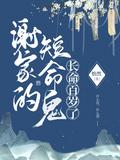 The Short-Lived Ghost of the Xie Family Has Lived a Long Life
168.6kReads9.6Score24.9kShelves
The Short-Lived Ghost of the Xie Family Has Lived a Long Life
168.6kReads9.6Score24.9kShelves
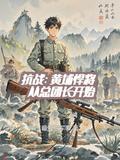 Anti-Japanese War: People Call Me Nephew, I Will Dominate the Huangpu Faction
15.3kReads8.4Score931Shelves
Anti-Japanese War: People Call Me Nephew, I Will Dominate the Huangpu Faction
15.3kReads8.4Score931Shelves
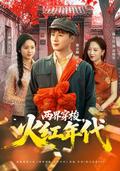 Traveling Between Two Worlds, the Red Era
65.4kReads8.2Score324Shelves
Traveling Between Two Worlds, the Red Era
65.4kReads8.2Score324Shelves
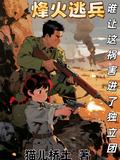 Entering the Beacon Fire Deserter, My Mobile Phone Has Data
9kReads8.8Score716Shelves
Entering the Beacon Fire Deserter, My Mobile Phone Has Data
9kReads8.8Score716Shelves
 Crossing the Beacon Fire Deserter, I Awakened the Anti-Japanese Martial Arts System
2.8kReads—Score210Shelves
Crossing the Beacon Fire Deserter, I Awakened the Anti-Japanese Martial Arts System
2.8kReads—Score210Shelves
 The Flesh and Blood Jungle of the War of Resistance
31.1kReads9.1Score4kShelves
The Flesh and Blood Jungle of the War of Resistance
31.1kReads9.1Score4kShelves
 Spy Codename I Am Waste Barbed Wire
193kReads9.5Score19.6kShelves
Spy Codename I Am Waste Barbed Wire
193kReads9.5Score19.6kShelves
 The Nameless Monument at the Bloody Gate of the Country
17.4kReads9.1Score1.2kShelves
The Nameless Monument at the Bloody Gate of the Country
17.4kReads9.1Score1.2kShelves
 My Resist US Aggression and Aid Korea
3.2kReads8.2Score242Shelves
My Resist US Aggression and Aid Korea
3.2kReads8.2Score242Shelves
 Hunting
5.7kReads9.2Score723Shelves
Hunting
5.7kReads9.2Score723Shelves
 The End of the War
10.6kReads9.3Score815Shelves
The End of the War
10.6kReads9.3Score815Shelves
 The Republic of China: the Last Jianghu
38.7kReads9.3Score3.3kShelves
The Republic of China: the Last Jianghu
38.7kReads9.3Score3.3kShelves
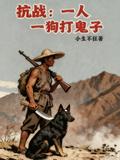 Anti-Japanese War: One Man and One Dog Beat the Japanese
25.4kReads7.8Score2.1kShelves
Anti-Japanese War: One Man and One Dog Beat the Japanese
25.4kReads7.8Score2.1kShelves
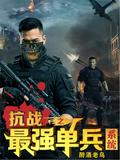 The Strongest Single-Soldier Enemy-Killing System in the War of Resistance
10.4kReads8.2Score680Shelves
The Strongest Single-Soldier Enemy-Killing System in the War of Resistance
10.4kReads8.2Score680Shelves
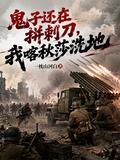 The Japanese Are Still Fighting for Their Bayonets, and I, Katyusha, Am Washing the Ground.
5.7kReads7.6Score476Shelves
The Japanese Are Still Fighting for Their Bayonets, and I, Katyusha, Am Washing the Ground.
5.7kReads7.6Score476Shelves
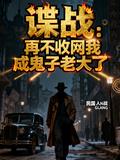 Spy War, I Lurked and Became a Japanese General! ?
28.5kReads8.5Score2.7kShelves
Spy War, I Lurked and Became a Japanese General! ?
28.5kReads8.5Score2.7kShelves
 China's Anti-Japanese Front Line Vowed to Kill the Japanese Soldiers
13.4kReads8.3Score876Shelves
China's Anti-Japanese Front Line Vowed to Kill the Japanese Soldiers
13.4kReads8.3Score876Shelves
 Store System: Massacre of Japanese Soldiers on the Anti-Japanese Battlefield
2.6kReads6.9Score109Shelves
Store System: Massacre of Japanese Soldiers on the Anti-Japanese Battlefield
2.6kReads6.9Score109Shelves
 Huangpu Lang
7Reads5.8Score—Shelves
Huangpu Lang
7Reads5.8Score—Shelves
 Anti-Japanese Iron-Blooded God of War
7Reads5.8Score—Shelves
Anti-Japanese Iron-Blooded God of War
7Reads5.8Score—Shelves
 The Eleventh Phase of Huangpu Reveals the Strongest Legend
6.7kReads6.1Score450Shelves
The Eleventh Phase of Huangpu Reveals the Strongest Legend
6.7kReads6.1Score450Shelves
 Wow, My Circle of Friends Directly Connects to the Three Realms and Affects the Future.
—Reads5.8Score—Shelves
Wow, My Circle of Friends Directly Connects to the Three Realms and Affects the Future.
—Reads5.8Score—Shelves
 Rebirth 42 Escape: Others Eat Tree Bark, I Eat Stew
20.5kReads7.1Score1.1kShelves
Rebirth 42 Escape: Others Eat Tree Bark, I Eat Stew
20.5kReads7.1Score1.1kShelves
 Liang Jian: Koi, We Have Hit the Japanese Base Camp.
15.4kReads8.9Score941Shelves
Liang Jian: Koi, We Have Hit the Japanese Base Camp.
15.4kReads8.9Score941Shelves
 One Person's War of Resistance: My Knife Is Not Bad Either
12.3kReads8.1Score1.1kShelves
One Person's War of Resistance: My Knife Is Not Bad Either
12.3kReads8.1Score1.1kShelves
 Time Travel 1936: the Spy Shadow
43.9kReads7.7Score3.8kShelves
Time Travel 1936: the Spy Shadow
43.9kReads7.7Score3.8kShelves
 Anti-Japanese War: Counterattack Starts from the Cannon Fodder Regiment
6.9kReads8.9Score311Shelves
Anti-Japanese War: Counterattack Starts from the Cannon Fodder Regiment
6.9kReads8.9Score311Shelves
 I Traveled to Shanxi to Fight Against Japan
16Reads5.8Score—Shelves
I Traveled to Shanxi to Fight Against Japan
16Reads5.8Score—Shelves
 From Ordinary to Legendary
990Reads—Score102Shelves
From Ordinary to Legendary
990Reads—Score102Shelves
 I Am a Coolie, and You Want Me to Be the King of Shanghai?
19.8kReads8.8Score2.4kShelves
I Am a Coolie, and You Want Me to Be the King of Shanghai?
19.8kReads8.8Score2.4kShelves
 I Use My Lonely City to Illuminate the Mountains and Rivers
100Reads—Score—Shelves
I Use My Lonely City to Illuminate the Mountains and Rivers
100Reads—Score—Shelves
 Anti-Japanese War: Revenge with Child Soldiers
5.7kReads8.4Score515Shelves
Anti-Japanese War: Revenge with Child Soldiers
5.7kReads8.4Score515Shelves
 Anti-Japanese War: Li Yunlong Is Reborn to Kill the Japanese with His Bright Sword!
2.5kReads7.8Score102Shelves
Anti-Japanese War: Li Yunlong Is Reborn to Kill the Japanese with His Bright Sword!
2.5kReads7.8Score102Shelves
 Anti-Japanese War: Li Yunlong with the Bright Sword Is Reborn in Cangyunling at the Beginning
3.7kReads7.2Score145Shelves
Anti-Japanese War: Li Yunlong with the Bright Sword Is Reborn in Cangyunling at the Beginning
3.7kReads7.2Score145Shelves
 Through the Rise of the Iron-Blooded Sword
7.4kReads8.8Score440Shelves
Through the Rise of the Iron-Blooded Sword
7.4kReads8.8Score440Shelves
 Anti-Japanese War: Start with an Art Company and Build Your Own Iron-Blooded Tiger
37.1kReads8.8Score2.7kShelves
Anti-Japanese War: Start with an Art Company and Build Your Own Iron-Blooded Tiger
37.1kReads8.8Score2.7kShelves
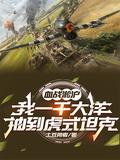 In the Bloody Battle of Songhu, I Got a Tiger Tank from Qian Da Yang
2.1kReads5.8Score287Shelves
In the Bloody Battle of Songhu, I Got a Tiger Tank from Qian Da Yang
2.1kReads5.8Score287Shelves
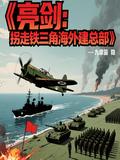 Anti-Japanese War: Super Instructor Mass-Produced Soldier King
8.7kReads8.5Score655Shelves
Anti-Japanese War: Super Instructor Mass-Produced Soldier King
8.7kReads8.5Score655Shelves
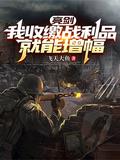 Liang Jian: I, Congratulate Li Yunlong on Getting Rich
9.5kReads8.3Score632Shelves
Liang Jian: I, Congratulate Li Yunlong on Getting Rich
9.5kReads8.3Score632Shelves
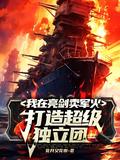 When I First Arrived, the System Urged Me to Repay the Favor.
38.2kReads9.0Score3kShelves
When I First Arrived, the System Urged Me to Repay the Favor.
38.2kReads9.0Score3kShelves
 Liangjian Civilian Supplier
5.7kReads8.4Score426Shelves
Liangjian Civilian Supplier
5.7kReads8.4Score426Shelves
 The Soul Travels Through the Northeast to Fight Against the War and Save the Country
3.9kReads5.8Score209Shelves
The Soul Travels Through the Northeast to Fight Against the War and Save the Country
3.9kReads5.8Score209Shelves