I want to read a book similar to "My Wife is the First Demon Female in the Eastern Jin Dynasty". A rare book from the Jin, Southern and Northern Dynasties
Despite the low rating, the first book already has more than a thousand chapters and I am following it every day. The second book has been completed and every story is very interesting! The third Zhanshen fanfic is very funny and well written! Highly recommended!
This is a novel about cultivating immortality that looks interesting on the surface, but actually contains profound meaning. The protagonist Li Feiyu repeatedly asks a philosophical question. The novel advances step by step through Li Feiyu with regrets, and finally reveals a majestic world of immortality.
Absolutely special, absolutely awesome diplomatic writing. Very passionate! A pilot is reborn as a diplomat, using a different identity to defend the backbone of the motherland! Chapter 11 made me cry when I watched it, and a torrent of steel was released in the White House and it exploded! It's worth a read to keep up with current events.
When you open "From Ordinary to Legendary", what will you read? Dear reader, if you are tired of those cool novels where the protagonist cheats all the way and is invincible, and if you want to find a truly flesh-and-blood, weighty and warm anti-war legend, then please allow me to solemnly recommend to you - "From Ordinary to Legendary". This is not an ordinary anti-Japanese novel. It does not have an omnipotent superhero, but only an ordinary person who is swept away by the torrent of the times. How to catch a glimmer of light in despair and eventually grow into the backbone that holds up the world. The latest five chapters (chapters 256-260) that have just been completed are a concentrated burst of the essence of this work, and each chapter shines with an unforgettable light. Highlight 1: A "quietest farewell" that shakes people's hearts. In Chapter 256, "System Farewell, Eternity of Data," you will experience what may be the most unique and affectionate "system farewell" in the history of online literature. The "system" here is not a cold tool, but a silent comrade, mentor and witness who has accompanied the protagonist Fu Bikang for more than 700 days and nights. There are no earth-shattering special effects in its farewell, only the "Thank the host for its efforts" at the final settlement, and the humane and tender "Farewell. Fu Bikang." The reason why this kind of farewell is shocking is that it completes a great sublimation of the narrative - the disappearance of the plug-in is not a weakening, but the beginning of true strength. The system "permanently solidifies" all knowledge, skills, and production line technologies to the protagonist and his core comrades, completing the transition from "giving" to "empowering." You will see that the real strength is not dependence, but walking independently after internalization. Highlight 2: The "soul injection" of knowledge rather than simple indoctrination. The following chapter 257, "The Last Gift, Sublimation of Skills", shows the profound thinking in the setting of this novel. What the system leaves behind is not a rigid database, but "living knowledge" that is integrated with the character's original experience and personality traits after "integration". You will see: · How Chief of Staff Fu Shuiheng integrated a systematic strategic vision into his original cautious character, becoming both calm and far-sighted; · How Political Commissar Fu Biyue transformed systematic organizational methodology into down-to-earth and practical political work wisdom; · How field doctor Lin Wanning turned advanced medical knowledge into more stable and precise hands when saving lives. This kind of "knowledge inheritance" writing method goes beyond the common cheating growth and makes you believe that the strength of this group of people is credible and well-founded. Highlight 3: The "silence" behind victory, true heroism From Chapter 258 to Chapter 260, the author completed an in-depth deconstruction of "victory". When the victory song of the Hulao Pass was played, what the protagonist Fu Bikang felt was not pure joy, but the boundless silence and loneliness after "the continuous mechanical sound in his mind completely disappeared", and the heavy freedom and responsibility that followed. This kind of delicate psychological portrayal makes the hero return to mortals and makes victory full of texture. In "The Hero's Soul Rests in Rest, a Monument is Erected to Remember", you will see a funeral without fancy words, only a stone monument carved by hand. Fu Bikang used his bayonet to carve the names of his fallen comrades on the rocks of Hulao Pass one stroke at a time. Stone chips splattered like flying memories; sweat mixed with blood seeped into the texture of the stone. The appeal of this scene is better than a thousand words of praise. It tells you: commemoration is not a ceremony, but engraving names into mountains and rivers, and integrating will into blood. In "Triumph and Silence", the most exciting part is the art of contrast: on the one hand, it is the warm and noisy welcome of the people eating pots of juice and walking along the streets; on the other hand, it is the unspeakable details and memories deep in the hearts of the returnees - the feeling of bullets penetrating the body, the last look in the eyes of the comrades before they fell, and the life-and-death struggle on the operating table. Merits can be recorded, but only they themselves bear the responsibility for witnessing the sacrifices. This "silence" is the deepest respect for war. Why are these chapters especially worth reading? Because these five chapters happen to be at a great turning point: from dependence to independence, from fighting to construction, from survival to mission. The author uses exquisite writing to describe: · The systematic exit philosophy: It has completed the mission of "igniting the fire" and ended gracefully, leaving behind a truly mature leadership core. · Collective growth map: Not only is the protagonist growing, but his comrades, his lover, and his entire team are also evolving simultaneously, forming a solid and reliable "talent matrix." · Complex levels of emotion: There is the hesitation of losing the company of the system, the sadness of facing sacrifice, the warmth of gaining recognition, and the burden of shouldering the future. A variety of emotions are intertwined, and they are not thin. · Exploring the possibility of history: When a team with advanced knowledge but deeply rooted in reality truly begins to walk independently, how will they change the details of history? This leaves endless room for imagination. Literary pursuit beyond the limitations of genre In the final analysis, "From Ordinary to Legend" stands out because it never limits itself to the framework of "anti-Japanese cool literature". It explores more universal propositions: · How does a person find meaning in desperate situations? · Where is the boundary between external help and self-growth? · Who will bear the price of victory, and how will it be remembered? · When the torrent of history hits us, how should ordinary people define their own "legends"? The author uses a calm and tense writing style to construct a unique world that has the wonderful imagination of Goldfinger without losing the heaviness of history. The character dialogues fit the times, the tactical deductions are rigorous and credible, and the emotional descriptions are restrained and profound. If you are looking for a work that can make your blood boil and make you think deeply; a novel that has the majestic feelings of family and country without losing the subtle insight into human nature, then the latest chapter of "From Ordinary to Legend" is waiting for you to start. Here, you will see the truest form of legend - it is not born, but comes out of the ordinary step by step in the silent farewell, sole commitment, silent remembrance and silence after the noise. Open it, and you may also see the ordinary soul in your heart that can become a legend.
That day in the mountains of Guangxi, I watched with my own eyes two purple lines crawling out of an old man's blood vessels. He was bitten by a cobra. The two lines started from the back of the hand and crawled up the forearm as if they were alive - they were snake venom flowing through the blood vessels. When it reaches the heart, it will be difficult for the gods to save it.
Fellow Taoist, please stay. I am a 20-year-old bookworm who has read more than 600 books on Tomato alone. I have read more than 3,000 hours of this bookworm and strongly recommend: This traditional fantasy time travel novel is unsystematic and not brain-dead. If you like it, read it with me. Please update it [Add one to the bookshelf] [Already planted] [Please update] [Please pay attention] [Please pay attention] [Please pay attention] [Please follow me]
The protagonist of this book, Qin Yu, kills silence step by step: time, space, life and death, cause and effect, five elements, yin and yang, fate, reincarnation, nothingness, rules, logic, narrative, symbols/language, power/ideology, time/history, subject/self, space/place, and finally becomes the master of page zero. [Seeking attention]
If you don't cultivate yourself, you won't realize the great way. Killing monsters and leveling up + causing trouble in the fairy mountain is enough fun! What kind of cheating life do you want to experience more? Book famine party, hurry up and grab both of them! [Like][Like][Like]
 Siheyuan Is Just the Beginning
1.7kReads5.5Score114Shelves
Siheyuan Is Just the Beginning
1.7kReads5.5Score114Shelves
 The Legend Returns
42.3kReads9.4Score4.6kShelves
The Legend Returns
42.3kReads9.4Score4.6kShelves
 Who Is Still Chasing Her After She Has Been Reborn?
339.2kReads9.1Score33.8kShelves
Who Is Still Chasing Her After She Has Been Reborn?
339.2kReads9.1Score33.8kShelves
 Stop It, Brother! This Anchor Is Not a Showman at All.
201kReads9.4Score20.9kShelves
Stop It, Brother! This Anchor Is Not a Showman at All.
201kReads9.4Score20.9kShelves
 The Rise to Fame Started with Calling the Police
67.5kReads9.5Score9.7kShelves
The Rise to Fame Started with Calling the Police
67.5kReads9.5Score9.7kShelves
 Wasteland Era
32.4kReads9.0Score3.6kShelves
Wasteland Era
32.4kReads9.0Score3.6kShelves
 Shenzhen, Charming Night
78.1kReads9.6Score10.2kShelves
Shenzhen, Charming Night
78.1kReads9.6Score10.2kShelves
 Let You Conquer the Male Protagonist and Develop Him into a Gay Man
6.7kReads8.9Score562Shelves
Let You Conquer the Male Protagonist and Develop Him into a Gay Man
6.7kReads8.9Score562Shelves
 I, the Immortal of the Ming Dynasty, Have Experienced Sixteen Emperors
243.8kReads9.3Score19.8kShelves
I, the Immortal of the Ming Dynasty, Have Experienced Sixteen Emperors
243.8kReads9.3Score19.8kShelves
 Offender
241.2kReads9.4Score32.7kShelves
Offender
241.2kReads9.4Score32.7kShelves
 Death Game? I Am the God of Death!
205.4kReads9.0Score28kShelves
Death Game? I Am the God of Death!
205.4kReads9.0Score28kShelves
 "My Name Is Jing Yunhui"
655.1kReads9.1Score81.1kShelves
"My Name Is Jing Yunhui"
655.1kReads9.1Score81.1kShelves
 Reborn in 2008, This Time I Want to Take Off!
22.1kReads7.8Score2kShelves
Reborn in 2008, This Time I Want to Take Off!
22.1kReads7.8Score2kShelves
 Online Game Death Martial Arts
196.3kReads8.9Score17.1kShelves
Online Game Death Martial Arts
196.3kReads8.9Score17.1kShelves
 Prodigal Son
19.7kReads9.3Score2.6kShelves
Prodigal Son
19.7kReads9.3Score2.6kShelves
 Gambling on Stones: a Powerful Life
40kReads9.3Score5.2kShelves
Gambling on Stones: a Powerful Life
40kReads9.3Score5.2kShelves
 After Leaving My Job, I Won 50 Million
25.9kReads8.7Score1.6kShelves
After Leaving My Job, I Won 50 Million
25.9kReads8.7Score1.6kShelves
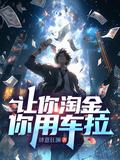 Let You Pan for Gold and You Use a Car to Pull It
43.6kReads9.0Score3.9kShelves
Let You Pan for Gold and You Use a Car to Pull It
43.6kReads9.0Score3.9kShelves
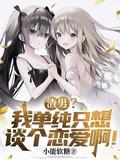 Scumbag? I Simply Just Want to Fall in Love!
78.5kReads9.3Score6.9kShelves
Scumbag? I Simply Just Want to Fall in Love!
78.5kReads9.3Score6.9kShelves
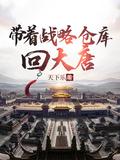 Return to Datang with Strategic Warehouse
187.5kReads9.5Score24kShelves
Return to Datang with Strategic Warehouse
187.5kReads9.5Score24kShelves
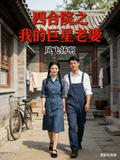 Siheyuan: My Superstar Wife
27kReads6.8Score1.3kShelves
Siheyuan: My Superstar Wife
27kReads6.8Score1.3kShelves
 When the Boss Dresses up as a White-Eyed Wolf
64.1kReads8.9Score4.8kShelves
When the Boss Dresses up as a White-Eyed Wolf
64.1kReads8.9Score4.8kShelves
 Flying Fish Legend
909Reads5.8Score135Shelves
Flying Fish Legend
909Reads5.8Score135Shelves
 Zhanshen: My Girlfriend Hongying
84.5kReads9.3Score9kShelves
Zhanshen: My Girlfriend Hongying
84.5kReads9.3Score9kShelves
 Sleeping God
187Reads5.8Score—Shelves
Sleeping God
187Reads5.8Score—Shelves
 The Most Timid Diplomat? 1.4 Billion People Beg Me to Work
8.7kReads6.9Score636Shelves
The Most Timid Diplomat? 1.4 Billion People Beg Me to Work
8.7kReads6.9Score636Shelves
 Reading Books Has Explosive Attributes, Am I Going to Go Against the Grain?
23.6kReads7.3Score2.4kShelves
Reading Books Has Explosive Attributes, Am I Going to Go Against the Grain?
23.6kReads7.3Score2.4kShelves
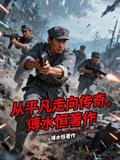 From Ordinary to Legendary
983Reads—Score106Shelves
From Ordinary to Legendary
983Reads—Score106Shelves
 After Being Bitten by a Snake, Two Purple Lines Crawled up the Arm
37Reads8.6Score—Shelves
After Being Bitten by a Snake, Two Purple Lines Crawled up the Arm
37Reads8.6Score—Shelves
 Sister, What Are You Doing This Afternoon?
54Reads8.8Score—Shelves
Sister, What Are You Doing This Afternoon?
54Reads8.8Score—Shelves
 I Traveled to Shanxi to Fight Against Japan
16Reads5.8Score—Shelves
I Traveled to Shanxi to Fight Against Japan
16Reads5.8Score—Shelves
 Misty Worlds
437Reads5.8Score—Shelves
Misty Worlds
437Reads5.8Score—Shelves
 Source World Ring Master
2.8kReads8.3Score362Shelves
Source World Ring Master
2.8kReads8.3Score362Shelves
 I Spoiled Her for Three Months in Order to Get Divorced
98Reads8.4Score—Shelves
I Spoiled Her for Three Months in Order to Get Divorced
98Reads8.4Score—Shelves
 Pillow Desire
1.7kReads8.2Score131Shelves
Pillow Desire
1.7kReads8.2Score131Shelves
 He Once Said, Live Together
147Reads8.4Score—Shelves
He Once Said, Live Together
147Reads8.4Score—Shelves
 Double Penetration, Fierce Female General and Purifier
29Reads—Score—Shelves
Double Penetration, Fierce Female General and Purifier
29Reads—Score—Shelves
 On the Night of Our Engagement, I Dated a Strange Man
70Reads8.5Score—Shelves
On the Night of Our Engagement, I Dated a Strange Man
70Reads8.5Score—Shelves
 Sister-In-Law's Secret
760Reads8.1Score—Shelves
Sister-In-Law's Secret
760Reads8.1Score—Shelves
 Recruiting a Son-In-Law Is a Billionaire CEO
24Reads8.6Score—Shelves
Recruiting a Son-In-Law Is a Billionaire CEO
24Reads8.6Score—Shelves
 Village Doctor Official Luck: Chunxiang, Please Take It Easy
4.6kReads8.1Score723Shelves
Village Doctor Official Luck: Chunxiang, Please Take It Easy
4.6kReads8.1Score723Shelves
 Dad Can Eat It, Why Can't I?
76Reads8.7Score—Shelves
Dad Can Eat It, Why Can't I?
76Reads8.7Score—Shelves
 Old Chinese Medicine Doctor
96.4kReads8.3Score4.5kShelves
Old Chinese Medicine Doctor
96.4kReads8.3Score4.5kShelves
 The Courtyard of Jiaoyan Village Is Full of Flowers
9.4kReads9.1Score1.2kShelves
The Courtyard of Jiaoyan Village Is Full of Flowers
9.4kReads9.1Score1.2kShelves
 I Was Cheated and Extorted 10,000 Yuan
66Reads8.7Score—Shelves
I Was Cheated and Extorted 10,000 Yuan
66Reads8.7Score—Shelves
 Inheriting the Magical Power of Tongtian, Xiaocun Doctor Became the World's Richest Man
25.7kReads9.3Score3.5kShelves
Inheriting the Magical Power of Tongtian, Xiaocun Doctor Became the World's Richest Man
25.7kReads9.3Score3.5kShelves
 Stop Practicing. You Can't Cultivate Immortality as Quickly as I Can Kill Monsters and Level Up.
13.5kReads9.3Score3.4kShelves
Stop Practicing. You Can't Cultivate Immortality as Quickly as I Can Kill Monsters and Level Up.
13.5kReads9.3Score3.4kShelves
 The Prisoner Bird of Love, the Cage of Desire
27.1kReads6.5Score1.5kShelves
The Prisoner Bird of Love, the Cage of Desire
27.1kReads6.5Score1.5kShelves
 Sweet Dating Stories
521Reads8.8Score—Shelves
Sweet Dating Stories
521Reads8.8Score—Shelves
 After His Lumbar Disc Herniated, He Cheated Money and Sex
403Reads8.9Score—Shelves
After His Lumbar Disc Herniated, He Cheated Money and Sex
403Reads8.9Score—Shelves