I want to read a book similar to "Iron-Blooded Beihou, Starting with the Dandy Young Master". It's okay. You can read it in Shu Huang. It's a relatively readable book with a clear sense of hierarchy. Rich content, clear logic and practical
## When survivalist aesthetics meets the shadow of Cthulhu - Comment on the narrative experiment of "The Lonely House" At the junction of survival literature and the Cthulhu mythology, "The Lonely House" constructs a spiritual labyrinth with its unique narrative posture. This rotten wooden house standing on the edge of a black pine forest is not only a fortress for the protagonist to resist alienation, but also a petri dish for the transformation of human nature. The author cleverly combines the thrill of infrastructure in a survival game with the unspeakable fear, and interprets a contemporary existential fable in a small space. ### 1. Space Poetics: From Physical Barrier to Spiritual Cage The renovation process of the wooden house is like a precise ritual, with each reinforced beam reconstructing the sense of order in existence. When the protagonist fills the cracks in the wall with birch bark, readers can hear the soft sound of sap seeping into the wood grain; when he bakes damp matches in front of the fireplace, the fragrance of burning rosin almost penetrates the page. These material details build up a reassuring physical world, but they pave the way for subsequent spatial alienation—the compass swallowed by moss, the sudden reverse flow of fireplace smoke, all disintegrate the painstakingly constructed cognitive system. The folds of time and space in the storage room are a stroke of genius. The shelves filled with cans and tools turned into a mirror corridor after opening the door at one time, reflecting countless frightened figures holding axes. This kind of spatial folding is not only consistent with the geometric paradox of the Cthulhu mythology, but also a metaphor for the spiritual dilemma of modern people amid material abundance. When survival materials are transformed into a cage that imprisons consciousness, the crazy work of infrastructure reveals its absurd nature. ### 2. Fear Encoding: The Revelation Strategy of Invisible Objects The author abandons the audio-visual bombardment of traditional horror novels and instead adopts the phenomenological suspension technique. The "non-sound" floating in the mist in the forest is not a specific howl, but a physiological pressure similar to infrasound waves; the claw marks on the window lattice are visible in the moonlight, but degenerate into natural cracks in the wood grain in the sunlight. The continuous growth of this uncertainty keeps the reader's fear nerves in a semi-activated state. The setting of memory erosion can be called an excellent footnote of mental pollution. When the protagonist discovers strange events recorded in strange handwriting in his diary, and when the nails in the toolbox are inexplicably arranged into non-Euclidean shapes, the authenticity of existence itself begins to collapse. This kind of cognitive pollution is more destructive than any physical monster. It directly deconstructs the rational cornerstone of human beings' survival. ### 3. Existential Dilemma: Primitive Game Under the Cloak of Civilization In the process of fighting against invisible things, the protagonist gradually reveals his dual nature. During the day, he is a meticulous survivalist, using a Swiss Army knife to transform animal traps, and using chemical knowledge to purify rainwater; at night, he degenerates into a shaman, using animal blood to draw protective totems on the base of walls, and divining dangers from the ashes of fireplaces. This split personality is not only a stress response, but also reveals the possibility of reconciliation between technological civilization and primitive instinct. The open-ended treatment of the novel's ending is full of philosophical implications. When the wooden house finally sinks into the ground, the protagonist chooses to embrace the darkness rather than escape. This action dissolves the binary opposition between "survival" and "destruction" in traditional horror narratives. Perhaps the real terror is not external threats but the realization that humanity is nothing more than a pendulum suspended between existence and nothingness. In this carefully planned narrative experiment, "The Lonely House" successfully forges the materiality of survival literature and the metaphysical anxiety of the Cthulhu Mythos into a new aesthetic form. It reminds us that the spiritual crisis of contemporary people no longer comes from the wilderness or the deep sea, but lurks in shelters that we think are safe, at the seams of every board and under the label of every storage tank, quietly waiting for the moment of fission of the cognitive system. This horror of defamiliarizing daily life may be the ultimate nightmare in this quantum age.
🔥"Blue Stone Tribulation" Secret Realm Life and Death Battle! The boy's counterattack begins 🔛 The seventeen-year-old boy in ragged clothes clutched the glowing emerald stone in his arms, river mud dripping from his chin. The vision of the Gongsun family's hunt three days ago was still before his eyes - the blood-red sky cracked open, and the mysterious spiritual stone imprinted with the green lotus pattern fell straight into his arms. "Zhan Tian!" His father's rich voice penetrated the crowd. The young man subconsciously covered his chest, and the eyes of the leader of the Qinglian Sword Sect swept over him like a sharp blade. At the exit of the secret realm, the new poison-quenching short blade on the third brother's waist was glowing, and the poisonous snake Nobuko was hidden in the seemingly concerned smiles of his direct disciples. 🌌The law of the secret realm that reverses day and night begins to fade away 🩸Only forty-seven people remain from the three hundred experienced practitioners 💎All fate depends on this hot potato in his palm... #Fantasynovel #secretadventure #strategygame 👇Click to reveal the amazing sword secret hidden in the blue stone👇 (text link🔗)
Elegant Leisure On the left and right sides of the garden, one side is full of young men. Here, someone is fishing leisurely with a pole, waiting for the fish to take the bait; over there, someone is leaning over to admire the flowers, intoxicated by the fragrance. There are even two people in the pavilion under the waterfall, focusing on playing chess, making sound. The fragrance of flowers all around was intertwined with the roar of waterfalls, and everyone was immersed in it, enjoying this pleasant leisure time.
 The Forbidden Curse Master Has a Short Life, What Does It Have to Do with My Immortality?
351.5kReads8.7Score27kShelves
The Forbidden Curse Master Has a Short Life, What Does It Have to Do with My Immortality?
351.5kReads8.7Score27kShelves
 I Became the School Belle and Turned into a God, but My Classmates Scolded Me for Not Being Human.
41.2kReads8.1Score6.1kShelves
I Became the School Belle and Turned into a God, but My Classmates Scolded Me for Not Being Human.
41.2kReads8.1Score6.1kShelves
 The School Beauty's Strong Cultivator
6.7kReads8.6Score680Shelves
The School Beauty's Strong Cultivator
6.7kReads8.6Score680Shelves
 One-Click Training System Instantly Reaches One Million Levels
15.4kReads8.4Score1.5kShelves
One-Click Training System Instantly Reaches One Million Levels
15.4kReads8.4Score1.5kShelves
 Master Comes Down the Mountain, I Have Nine Invincible Masters!
98.1kReads9.3Score5.6kShelves
Master Comes Down the Mountain, I Have Nine Invincible Masters!
98.1kReads9.3Score5.6kShelves
 I'm Already in the Nascent Soul Stage, and You're Telling Me That School Is About to Start?
108.3kReads8.3Score12.7kShelves
I'm Already in the Nascent Soul Stage, and You're Telling Me That School Is About to Start?
108.3kReads8.3Score12.7kShelves
 His Talent Is Unparalleled in History, and He Can Push Three Thousand Emperors with One Hand!
173.3kReads8.2Score23.5kShelves
His Talent Is Unparalleled in History, and He Can Push Three Thousand Emperors with One Hand!
173.3kReads8.2Score23.5kShelves
 God-Level Choice, Awaken the Ten Ferocious Beast Spirits at the Beginning
54.9kReads8.9Score5.4kShelves
God-Level Choice, Awaken the Ten Ferocious Beast Spirits at the Beginning
54.9kReads8.9Score5.4kShelves
 During Those Years When I Was Cultivating Immortality on a Male Channel
12.9kReads9.2Score1.8kShelves
During Those Years When I Was Cultivating Immortality on a Male Channel
12.9kReads9.2Score1.8kShelves
 After the Male Protagonist Awakens
—Reads8.4Score—Shelves
After the Male Protagonist Awakens
—Reads8.4Score—Shelves
 Survive in a Horror World of Nightmares
43.5kReads8.7Score3.9kShelves
Survive in a Horror World of Nightmares
43.5kReads8.7Score3.9kShelves
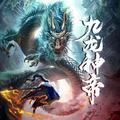 Nine Dragon God Emperor
124.9kReads8.9Score12.8kShelves
Nine Dragon God Emperor
124.9kReads8.9Score12.8kShelves
Chaos Heavenly Emperor Technique 118.8kReads8.8Score5.1kShelves
 The Origin of the Avenue
25.1kReads9.0Score3.1kShelves
The Origin of the Avenue
25.1kReads9.0Score3.1kShelves
 All Heavens: I Became the Leader of Huashan Mountain
18.2kReads7.8Score617Shelves
All Heavens: I Became the Leader of Huashan Mountain
18.2kReads7.8Score617Shelves
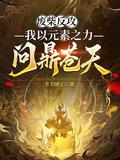 The Loser Counterattacks, I Use the Power of the Elements to Conquer the Sky
5.6kReads8.7Score827Shelves
The Loser Counterattacks, I Use the Power of the Elements to Conquer the Sky
5.6kReads8.7Score827Shelves
 I Dressed as a Martial Arts Master
25Reads—Score—Shelves
I Dressed as a Martial Arts Master
25Reads—Score—Shelves
 Chasing the Deer: Qimen Dunjia
30Reads—Score—Shelves
Chasing the Deer: Qimen Dunjia
30Reads—Score—Shelves
 Kowloon Seizes the Direct Descendant, I Can Summon the Heroes of China!
24.8kReads5.8Score2.7kShelves
Kowloon Seizes the Direct Descendant, I Can Summon the Heroes of China!
24.8kReads5.8Score2.7kShelves