I would like to read a book similar to "The Choice of Being a Woman". Books that women should read to improve their awareness, change their thinking, and redeem themselves
The heroine, a rural girl grows up to be the president of a high-tech company. I hope this experience will be helpful to you. It is adapted from real experiences.
She is like the deep sea - a reunion that begins with revenge, an ultimate reversal about substitutes, misunderstandings and love as deep as the sea. When ten years of hatred collided with ten years of silent guardianship, when the hunter thought he was in control of the situation, little did he know that he had stepped step by step into the seemingly calm but powerful... Deep sea that could swallow up everything in the past.
People's hearts and laws in the market At the end of the Spring and Autumn Period, merchants gathered in Linzi City of Qi State. There were two Buzhuangs, one was Wangji Buzhuang, and the shopkeeper was named Wang Zhuo; the other was Liji Buzhuang, and the shopkeeper was named Li Zhi. Both of them started out by carrying burdens and selling cloth along the street. The cloth and capital were almost the same. However, within a few years, Wang Zhuo's cloth shop became increasingly depressed and on the verge of bankruptcy. However, Li Zhi's cloth shop grew bigger and bigger and became one of the top business houses in the city. People called him the "Master Cloth Merchant". Others say that Li Zhi is lucky, but they don't know that he has seven business truths hidden in his heart. It is these seven seemingly simple truths that allow him to see through people's hearts, follow the rules, and eventually achieve great success. When Wang Zhuo first opened a cloth shop, he only knew one thing: "My cloth must be sold cheaply. The cheaper the better." In order to lower the price, he chose the cheapest cloth, cut corners on workmanship, and relied on low prices to attract customers. At first, many people did come to buy. But not long after, the customers discovered that his fabrics were faded, pilled, and ruined after two wears. They complained: "Although this fabric is cheap, it can't be worn, and the money spent is in vain." Wang Zhuo only thought that the customers were picky, and he still focused on cutting prices. The quality of the fabrics became worse and worse, and fewer and fewer people came to buy. As for Li Zhi's cloth shop, the prices of fabrics are not low, but the shops are busy. Someone asked him: "You sell more expensively than others, so why do you have more customers?" Li Zhi smiled and said: "It's not that customers don't need cheap prices, but they need to take advantage. I don't compare with others for lower cloth prices, but let the customers feel that every time they buy cloth from me, they will spend more. It's worth every penny." He classified the fabrics, with ordinary fabrics priced at a reasonable price, and high-quality fabrics marked with the original price, and marked with "20% off during holidays". They also included needles, threads and cloth strips of the same color, making customers feel that "you get extra benefits by buying good fabrics". The customers took the fabrics back and felt that the quality was good and there were gifts, which was much more cost-effective than buying cheap fabrics. The reputation of Liji Cloth Shop spread from person to person. This is his first business philosophy: Customers don't need a discount, they need to take advantage. Seeing that the customer didn't come, Wang Zhuo argued with the customer: "My cloth is obviously cheaper than others, why don't you buy it?" The customer said, "This cloth of yours is not strong. I bought it and wore it out twice. No matter how cheap it is, it is useless." Wang Zhuo was anxious: "What do you know? The purchase price of this cloth is more than this price. I have already sold it at a loss, what else do you choose?" He would only argue with the customer about the price and say how much he lost, but he never talked about the yarn, workmanship and durability of the cloth. The guest felt upset and turned away, never to come again. Li Zhi never discussed the price with his customers. When the customers asked, "Why is your cloth more expensive than others?", He picked up the cloth and showed the guests the thickness of the yarn and the density of the weave: "Look at this cloth. The yarn is dense and tightly woven. It will not wear out after three years of wear. Other brands' cloth looks cheap. It wears out after a year, so my cloth is more cost-effective." He would also tell customers what clothes are suitable for different fabrics: coarse cloth is durable and suitable for farm work; fine cloth is breathable and suitable for summer gowns; brocade is gorgeous and suitable for wedding dresses. After listening to this, the customers understood that what they were paying for was durable and worry-free. Naturally, they stopped worrying about the price and were willing to pay for it. This is his second business philosophy: Don't discuss price with customers, discuss value. Wang Zhuo always felt that as long as his cloth was of the best quality, he would be able to sell it. He bought a batch of fine brocade, with smooth material and exquisite patterns. The price was also high, thinking that he would be rushed to buy it. But most of the people who come to buy cloth are ordinary people. Most of them just want to buy coarse cloth for daily clothes. Few people care about expensive brocade. Wang Zhuo scolded the customer for his lack of discernment: "You don't even buy such good cloth, you really don't know the goods." He refused to adjust, and still clung to the brocade, waiting for "customers who know the goods." As a result, the brocade lay there for a year and became dusty, so he had to sell it at a low price, losing all his money. Li Zhi never insists on "the best cloth", but recommends the most suitable cloth to different customers. We recommend wear-resistant coarse cloth to farmers, breathable and smooth fine cloth to scholars, gorgeous and exquisite brocade to wealthy families, and festive and washable red silk to girls making wedding dresses. He often said: "There is no best product, only the most suitable product. Farmers buy brocade, but after working in the fields it wears out after two wears, no matter how good it is, it is useless; rich families buy coarse cloth, which is not decent to wear when making clothes, so they will not buy it no matter how cheap it is." Customers can always find fabrics they like from him. Some buy coarse cloth and find it durable, while others buy brocade and find it decent. Everyone is satisfied. This is his third business philosophy: There is no best product, only the most suitable product. The business of Wang Zhuo's cloth shop was getting worse and worse. He looked at the unsold fabrics and complained to everyone he met: "My fabrics are all good, but no one buys them. This business can't be done." He felt that the customers did not know the goods and the world was not good, and he never thought about what he did wrong. Someone advised him: "You can ask your customers why they don't buy your cloth?" But he shook his head: "The cloth is dead. If it can't be sold, it's the customer's problem." Li Zhi also encountered a time when fabrics were slow to sell. Once he bought a batch of light cyan fabrics with simple patterns, but no one cared about them at first. He did not complain that the fabric was not good, but thought: "Light cyan fabric is elegant and not suitable for wedding clothes, but it is suitable for scholars and family members of wealthy families. They don't like to show off, so they like this kind of plain color." He asked his clerk to make the light cyan fabric into the style of a gown, hang it at the door of the store, and write "Elegant gown, the favorite of literati and elegant people" next to it. It didn't take long for scholars and family members of wealthy families to come to buy, and the light blue fabric was quickly sold out. He often said: "There are no products that cannot be sold, only people who cannot sell the products. If something cannot be sold, it is not because the product is not good, but because the right people who need it are not found, and its benefits are not explained clearly." This is his fourth business line: There are no products that cannot be sold, only people who cannot sell the products. Once, a customer came to buy cloth. After spending a long time choosing it, he thought the color was not good and the feel was rough, and finally left without buying it. When Wang Zhuo saw this, he cursed at the guest's back: "This man is really difficult to serve. The cheap ones he gives you are too bad, and the good ones he gives you are too expensive. He can't serve anyone!" He thought it was the guest's problem, he was picky, and he didn't really buy cloth at all. Li Zhi's store has also encountered picky customers. A lady came to buy cloth. After choosing for a long time, she always said that the color of the cloth was not bright enough and the workmanship was not exquisite enough. Instead of being impatient, Li Zhi asked with a smile: "What kind of clothes do you want to make, madam? Do you have a favorite color?" The madam said she wanted to make a wedding dress for her daughter, and she wanted fabrics that were festive but not tacky. Li Zhi took out a red silk with dark patterns and showed it to her: "The color of this red silk is not gaudy. The dark patterns are lotus flowers. It has a good meaning and fine workmanship. The wedding dress is both festive and decent." The lady was very satisfied with it and bought it immediately. Afterwards, the waiter asked Li Zhi: "This customer is so picky, why don't you get annoyed?" Li Zhi said: "There are no wrong customers, only wrong service. The customer is picky, not intentionally looking for trouble, but because his needs have not been met. He feels bad because we didn't find what he really wanted. If we follow his needs, we will naturally satisfy him." This is his fifth business saying: There are no wrong customers, only wrong services. Wang Zhuo feels that doing business depends entirely on the cloth itself. If the cloth is good, it can be sold, but if the cloth is not good, it cannot be sold. In his cloth shop, the fabrics were piled up in a mess. When the guests came, no one greeted them. They only asked questions and answered them. The guests became impatient after asking too many questions. When customers come to buy cloth, most of them take one look and leave. No matter how good the cloth is, no one looks at it. Li Zhi didn't think so. He felt: "What is sold is not important, what is important is how to sell it. If the same cloth is placed in a messy place, no one will take a second look. If you take good care of it and introduce it carefully, customers will naturally be willing to buy it." In his cloth shop, the cloth is neatly arranged according to color, material and purpose, and there are also hanging samples of clothes made of different cloths. When a customer comes, the waiter will greet him with a smile, ask about his needs, patiently introduce the customer, measure the customer's size, calculate the amount of fabric, and teach the customer how to match needle and thread and make clothes. The customer sat in the shop, drank a cup of tea, chatted about home affairs, and bought cloth without knowing it, and felt comfortable. Li Zhichang said: "Selling cloth is not just about selling cloth, but also about making customers feel comfortable buying and using it with confidence." This is his sixth business saying: It doesn't matter what you sell, what matters is how you sell it. Seeing Li Zhi's cloth shop getting bigger and bigger, Wang Zhuo never understood why he couldn't sell to Li Zhi, even though his own cloth was not bad and the price was cheap. He felt that Li Zhi was just lucky and caught up with the good times. It wasn't until Wang Zhuo's cloth shop completely closed down that he had to work as a waiter in Li Zhi's cloth shop. In Li Zhi's cloth shop, he watched Li Zhi carefully consider the customers' thoughts, study the uses of cloth, and adjust the way of selling cloth, and finally understood: "Li Zhi is not lucky, but he has business principles in his head. I only want to sell cloth, but I don't understand people's hearts and methods. If my head is empty, my pocket will naturally be empty." When Li Zhi saw that he had woken up, he told him the seventh business saying: Success is not luck, it is the head that determines the pocket. If the head is empty, the pocket is also empty. Wang Zhuo felt regretful after hearing this, but it was too late. Relying on these seven business principles, Li Zhi's business grew bigger and bigger. Later, he not only opened a cloth shop, but also started a silk, satin and ready-to-wear business, becoming a well-known businessman in Qi State. Many years later, Li Zhi's seven tips for business were passed down from generation to generation by merchants in Linzi City and became the business philosophy followed by everyone. Everyone says that Li Zhi's success has never depended on luck, but on his wisdom of seeing through people's hearts and following the rules. Just like business in this world, success or failure is never determined by low prices or the quality of products, but by reading people's hearts, delivering value, adapting to needs, and polishing methods. People's hearts are the root of business, and laws are the backbone of business. Only by complying with people's hearts and following laws can you gain a firm foothold in the business world. If you just rely on brute force and don't know how to adapt, you will eventually be eliminated by the market. These seven business principles are not only the principles of business, but also the wisdom of life and work. Only by seeing through the appearance, grasping the human heart and laws, and controlling the world with a clear mind can we advance and retreat calmly and move forward steadily.
If a woman falls in love and then gets married when she matures, the partner she meets will be more stable, peaceful and lasting. There is never enough to talk about, and instead of you wanting to have a calm and in-depth conversation, he just wants to "settle things down." Your confession turns into an accusation against him, and his avoidance confirms your despair of "not being loved". After the divorce, when she meets true love, the male protagonist's single-minded devotion makes the female protagonist become better and better. The heroine's kindness and sincerity gave the male protagonist inner peace and yearning. You have to find the person who is already good, and you have to find the person who makes you better and better.
The author is professional in screenwriting and has a strong sense of immersion! The writing is humorous and the language is beautiful. You can improve your literary quality while reading it. If you like to watch smart people doing business, playing psychological warfare, and being able to accept being stabbed, close your eyes and watch! A niche treasure! The core of dystopia is shocking. It is not an ordinary adventure, but a process of slowly tearing apart beauty.
The heroine novel is like a majestic mountain, standing in the vast world of literature with its perseverance and independent spirit. This type of work takes women as the protagonists, showing a magnificent picture of them rising in adversity and growing up in challenges, and has become a beacon and source of strength in the hearts of countless readers. The heroines in heroine novels often possess extraordinary wisdom, courage and determination. They are not bound by traditional gender roles, dare to pursue their dreams and values, and show outstanding talents and leadership in multiple fields such as career, love, and family. Whether it is Mi Yue's wisdom and bravery in "The Legend of Mi Yue" or Chu Qiao's perseverance in "The Legend of Chu Qiao", these characters interpret the power and charm of women in their own unique way. The charm of the heroine novel not only lies in the growth and struggle of the protagonist, but also in its profound exploration and display of female value. This type of work explores the role and status of women in history, society, and culture through the stories of heroines, and reveals their struggles and breakthroughs in the patriarchal society. At the same time, heroine-driven articles often convey positive values such as independence, self-confidence, and bravery through the heroine's experiences, inspiring countless female readers to bravely pursue their dreams and live out their lives. Praising heroines is not only an appreciation of literary works, but also a tribute to the power of women. It allows us to see that women can be the masters of their own destiny and can shine in any field. The heroine novels provide more role models and spiritual role models for women, and also bring more thinking and inspiration to the entire society. I hope that heroine stories will continue to shine in the literary world, telling more inspiring stories with female voices, and bringing more strength and hope to readers. Let us cheer for great female protagonists and cheer for women's independence and freedom!
The background should be the early Republic of China, with strong women + growth + lucky people + patriotism. The writing is very down-to-earth and the writing is very good. I highly recommend it.
I saw this book. The heroine is slowly growing up through her own continuous learning. I can see a lot of resilience in it. It is very realistic and has elements of the times in it!
This is possible. The background spans a wide range (factories, campuses, institutions, towns). The protagonists are two little bitter girls. The group portraits are women of different generations, professions and backgrounds. They all have some insights on work and marriage.
These books are all about female themes. It is strongly recommended that women read more. They will definitely improve your knowledge and make you understand the world clearly.
There is no golden finger, and it describes the ups and downs of urban women. It is worth reading. The story revolves around four urban girls, focusing on the workplace, love and marriage, and female friendship. It has a strong flavor of human fireworks and is close to the lives of contemporary women. For most people, it has a strong sense of immersion.
 What's Wrong with the Maid? I'll Still Make You Cry!
21Reads—Score—Shelves
What's Wrong with the Maid? I'll Still Make You Cry!
21Reads—Score—Shelves
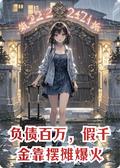 With Millions in Debt, the Fake Daughter Became Popular by Setting up a Stall.
1Reads8.5Score—Shelves
With Millions in Debt, the Fake Daughter Became Popular by Setting up a Stall.
1Reads8.5Score—Shelves
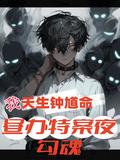 I Handle Cases in the Special Case Bureau During the Day and Work as an Errand in the Underworld at Night
10.2kReads8.7Score926Shelves
I Handle Cases in the Special Case Bureau During the Day and Work as an Errand in the Underworld at Night
10.2kReads8.7Score926Shelves
 I Quit My Job and My Parents Kicked Me Out.
—Reads8.6Score—Shelves
I Quit My Job and My Parents Kicked Me Out.
—Reads8.6Score—Shelves
 After the Divorce, He Counterattacked
—Reads8.6Score—Shelves
After the Divorce, He Counterattacked
—Reads8.6Score—Shelves
 Ao Family Past Events
2Reads—Score—Shelves
Ao Family Past Events
2Reads—Score—Shelves
 Idiom Cognition Dictionary: Unlocking the Underlying Algorithm of Life
5Reads5.8Score—Shelves
Idiom Cognition Dictionary: Unlocking the Underlying Algorithm of Life
5Reads5.8Score—Shelves
 Career Transition: Cognitive Methods from Rookie to Expert
1Reads5.8Score—Shelves
Career Transition: Cognitive Methods from Rookie to Expert
1Reads5.8Score—Shelves
 Alien Beast Disguise Day: Plan to Clear All Human Cognition
2Reads—Score—Shelves
Alien Beast Disguise Day: Plan to Clear All Human Cognition
2Reads—Score—Shelves
 Book of Laws
5Reads—Score—Shelves
Book of Laws
5Reads—Score—Shelves
 Love You in Planck Time
20Reads5.8Score—Shelves
Love You in Planck Time
20Reads5.8Score—Shelves
 She Is Like the Deep Sea
10Reads5.8Score—Shelves
She Is Like the Deep Sea
10Reads5.8Score—Shelves
 Hengji Fengjie
12Reads5.8Score—Shelves
Hengji Fengjie
12Reads5.8Score—Shelves
 Reunion After Divorce
5Reads—Score—Shelves
Reunion After Divorce
5Reads—Score—Shelves
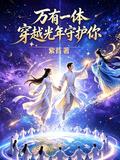 All in One: Traveling Across Light Years to Protect You
234Reads5.8Score—Shelves
All in One: Traveling Across Light Years to Protect You
234Reads5.8Score—Shelves
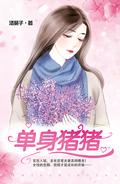 Single Pig
8Reads—Score—Shelves
Single Pig
8Reads—Score—Shelves
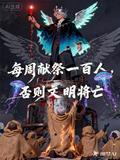 Light Meets All Living Beings
84Reads5.8Score—Shelves
Light Meets All Living Beings
84Reads5.8Score—Shelves
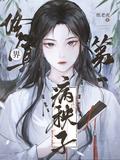 The Most Sick Person in the World of Cultivation
277.5kReads9.7Score36.5kShelves
The Most Sick Person in the World of Cultivation
277.5kReads9.7Score36.5kShelves
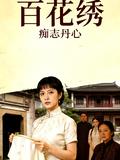 Baihua Embroidery
30Reads8.3Score—Shelves
Baihua Embroidery
30Reads8.3Score—Shelves
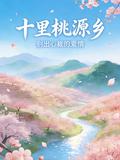 Unique Love in Shili Taoyuan Township
1.6kReads5.8Score186Shelves
Unique Love in Shili Taoyuan Township
1.6kReads5.8Score186Shelves
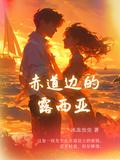 Lucia at the Equator
7Reads—Score—Shelves
Lucia at the Equator
7Reads—Score—Shelves
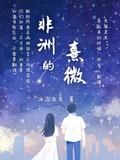 Africa's Xiwei
16Reads—Score—Shelves
Africa's Xiwei
16Reads—Score—Shelves
 A Broken Bridge Can Be Crossed by Itself
12Reads—Score—Shelves
A Broken Bridge Can Be Crossed by Itself
12Reads—Score—Shelves
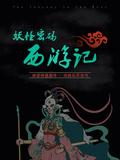 Monster Code: Journey to the West
209Reads9.3Score—Shelves
Monster Code: Journey to the West
209Reads9.3Score—Shelves
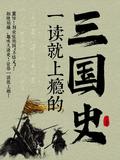 A History of the Three Kingdoms That Will Make You Addicted as Soon as You Read It
1.3kReads9.4Score133Shelves
A History of the Three Kingdoms That Will Make You Addicted as Soon as You Read It
1.3kReads9.4Score133Shelves
 Zizhi Tongjian·zhou Ji (Vernacular Version)
5Reads8.6Score—Shelves
Zizhi Tongjian·zhou Ji (Vernacular Version)
5Reads8.6Score—Shelves
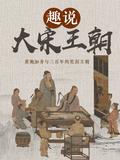 Interesting Facts About the Song Dynasty
2.7kReads9.4Score176Shelves
Interesting Facts About the Song Dynasty
2.7kReads9.4Score176Shelves
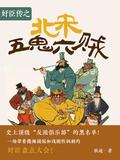 The Legend of the Traitor: Five Ghosts and Six Thieves of the Northern Song Dynasty
7Reads8.4Score—Shelves
The Legend of the Traitor: Five Ghosts and Six Thieves of the Northern Song Dynasty
7Reads8.4Score—Shelves
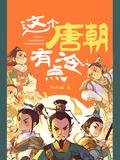 This Tang Dynasty Is a Bit Cold
33Reads9.2Score—Shelves
This Tang Dynasty Is a Bit Cold
33Reads9.2Score—Shelves
 Romance of Qing History
2Reads8.3Score—Shelves
Romance of Qing History
2Reads8.3Score—Shelves
 Romance of the Later Han Dynasty
6Reads8.4Score—Shelves
Romance of the Later Han Dynasty
6Reads8.4Score—Shelves
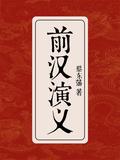 Romance of the Former Han Dynasty
2Reads8.4Score—Shelves
Romance of the Former Han Dynasty
2Reads8.4Score—Shelves
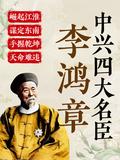 Li Hongzhang, One of the Four Famous Ministers of ZTE
2Reads8.1Score—Shelves
Li Hongzhang, One of the Four Famous Ministers of ZTE
2Reads8.1Score—Shelves
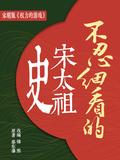 The History of Song Taizu That I Can't Bear to Read Carefully
2Reads7.8Score—Shelves
The History of Song Taizu That I Can't Bear to Read Carefully
2Reads7.8Score—Shelves
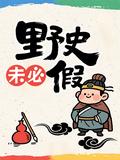 Unofficial History May Not Be Fake
47Reads8.7Score—Shelves
Unofficial History May Not Be Fake
47Reads8.7Score—Shelves
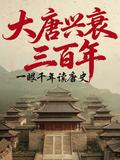 The Rise and Fall of the Tang Dynasty over Three Hundred Years: Reading the History of the Tang Dynasty over a Thousand Years at a Glance
11Reads8.1Score—Shelves
The Rise and Fall of the Tang Dynasty over Three Hundred Years: Reading the History of the Tang Dynasty over a Thousand Years at a Glance
11Reads8.1Score—Shelves
 Records of Emperor Wu of the Qing Dynasty
1Reads7.8Score—Shelves
Records of Emperor Wu of the Qing Dynasty
1Reads7.8Score—Shelves
 Romance of the Thirteen Dynasties of the Qing Dynasty
2Reads8.1Score—Shelves
Romance of the Thirteen Dynasties of the Qing Dynasty
2Reads8.1Score—Shelves
 The Romance of Zeng Guofan
1Reads7.9Score—Shelves
The Romance of Zeng Guofan
1Reads7.9Score—Shelves
 Online Games Reshape Life
10.5kReads9.5Score746Shelves
Online Games Reshape Life
10.5kReads9.5Score746Shelves
 Second Marriage
6Reads—Score—Shelves
Second Marriage
6Reads—Score—Shelves
 Xia Dongchun's Road to Rebirth and Counterattack
—Reads5.8Score—Shelves
Xia Dongchun's Road to Rebirth and Counterattack
—Reads5.8Score—Shelves
 Hongfei Returns to the South
—Reads5.8Score—Shelves
Hongfei Returns to the South
—Reads5.8Score—Shelves
 Urban Woman's Rules
23Reads—Score—Shelves
Urban Woman's Rules
23Reads—Score—Shelves
 Searching for the Heart: the Long Road to Immortality
2Reads—Score—Shelves
Searching for the Heart: the Long Road to Immortality
2Reads—Score—Shelves
 She Can't Be Trapped
26Reads—Score—Shelves
She Can't Be Trapped
26Reads—Score—Shelves
 The Legend of Brother Niu
15Reads—Score—Shelves
The Legend of Brother Niu
15Reads—Score—Shelves
 The Glory of the End of the Road
1Reads5.8Score—Shelves
The Glory of the End of the Road
1Reads5.8Score—Shelves
 Invisible Blade
—Reads—Score—Shelves
Invisible Blade
—Reads—Score—Shelves
 Mei Niang, Mei Lang
1Reads—Score—Shelves
Mei Niang, Mei Lang
1Reads—Score—Shelves