I want to read a book similar to "How to Survive World War II Under Fire". The story of survival during World War II is really good. Apart from not conforming to the mainstream, it is a rare good book.
A passionate anti-war novel with unique themes. The protagonist is reborn in the card world and uses cards to kill devils. There is no system, it is not a divine drama, it is a group portrait. The beginning is a little bit rough, and it makes me cry. The plot develops more and more compactly and attractively, making it exciting and beautiful to watch. .
As a general reader, I never thought that the real picture of war could tear apart fantasy so concretely. When Paul and his classmates were incited by the principal to join the army with the passion of "defending their home and country," I thought it would be a passionate and heroic story. But Remarque's pen is like a cold scalpel, cutting through the sugar coating of romanticism: during recruit training, the instructor said "polishing buttons is more important than reading Schopenhauer", the intestines of comrades in the frontline trenches crawled on their hands, soldiers trampled on each other to grab gas masks when the poisonous gas filled the air... These details made my stomach cramp while reading late at night. What hurts me most is not the bloody battlefield, but the process of human nature being crushed by war. When Paul stabbed the French soldier to death with a bayonet and huddled in the crater to confess to the corpse, I suddenly realized that the so-called "enemy" was just another Paul who was pushed into the slaughterhouse by politicians. The smell of fireworks when he stole a goose and roasted it, the potato cakes his mother secretly stuffed into his luggage when he returned home on vacation, and the absurd tenderness of raising butterflies in lunch boxes in the trenches, were like fireflies in the darkness, illuminating the last glimmer of humanity that the soldiers desperately clung to. The cruelest tenderness of this book is that it allows readers to experience the transformation of "alive but dead" with Paul. When he was shot and fell before the dawn of peace, the cold battle report of "All Quiet on the Western Front" was like a heavy hammer smashing all lies about the war. After closing the book, I stared at the sycamore tree outside the window for a long time - it turned out that the days when I could hear the chirping of birds, smell the fragrance of rice, and complain about 996 were already an unreachable utopia in the trenches. If you have ever watched a "bloody war scene" in a short video and felt excited, please be sure to open this book. It will tell you through Paul's 19-year-old eyes: All sacrifices glorified by grand narratives are essentially the silent cries of living lives in the political meat grinder.
Integrating historical events during World War II into novels requires combining historical authenticity and literary creation while capturing readers' interests. The following is based on the topic selection direction and story elements.
 Card War
174Reads7.1Score—Shelves
Card War
174Reads7.1Score—Shelves
 Travel Through Verdun, but the Plug-In Is Krieger
2.8kReads5.7Score251Shelves
Travel Through Verdun, but the Plug-In Is Krieger
2.8kReads5.7Score251Shelves
 All Quiet on the Western Front
—Reads9.5Score—Shelves
All Quiet on the Western Front
—Reads9.5Score—Shelves
 All Quiet on the Western Front
—Reads9.4Score—Shelves
All Quiet on the Western Front
—Reads9.4Score—Shelves
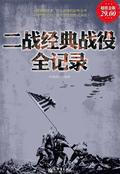 Complete Records of Classic Battles of World War II
—Reads9.5Score—Shelves
Complete Records of Classic Battles of World War II
—Reads9.5Score—Shelves
 Classic Battles of World War II
—Reads—Score—Shelves
Classic Battles of World War II
—Reads—Score—Shelves
 The Decrypted Complete History of Resisting U. S. Aggression and Aiding Korea
1.6kReads9.1Score159Shelves
The Decrypted Complete History of Resisting U. S. Aggression and Aiding Korea
1.6kReads9.1Score159Shelves