Variety Movies Quick Time Travel Male Succubus System Heartthrob
- Views
- 1.9M
- Books
- 180
- Recommendations
- 130
- Updated
- 7d ago
I want to read a book similar to "The Succubus Makes Trouble in the Small World".
In this list
179 books · page 4 of 4
-
152
综
 Zongman: Don't Pull My Skirt!
A Thought Makes the Flowers Bloom Wrongly505k Wordsongoing
3kReads5.2Score174Shelves
Zongman: Don't Pull My Skirt!
A Thought Makes the Flowers Bloom Wrongly505k Wordsongoing
3kReads5.2Score174Shelves
-
153
综
 Variety Film**********
ongoing
—Reads5.8Score—Shelves
Variety Film**********
ongoing
—Reads5.8Score—Shelves
-
154
综
 Variety Film************
ongoing
—Reads5.8Score—Shelves
Variety Film************
ongoing
—Reads5.8Score—Shelves
Reader note
The first book is so beautiful, I am a fan of everyone, I highly recommend it.
-
155
综
 Variety Film and Television: Born to Be a Heartthrob
You Must Pass Every Exam.206k Wordsongoing
66.5kReads7.3Score8.1kShelves
Variety Film and Television: Born to Be a Heartthrob
You Must Pass Every Exam.206k Wordsongoing
66.5kReads7.3Score8.1kShelves
-
156
火
 Naruto: the Legend of Tomie Uchiha
After All the Rain734k Wordscompleted
1.7kReads6.8Score205Shelves
Naruto: the Legend of Tomie Uchiha
After All the Rain734k Wordscompleted
1.7kReads6.8Score205Shelves
Reader note
🌿The male protagonist is definitely a succubus in the Naruto world [Sending Hearts] 🍏The male protagonist traveled to the Naruto world, had Tomie's beautiful face and physique, and became Uchiha Tomie. His beautiful appearance and ability to climax made him the most charming enchantress in the Naruto world. Kakashi, Uchiha Shisui, Orochimaru and other male ninjas all like the male protagonist.
-
157
万
 The First Double Repair Avenue in Eternity
Phoenix Flying DanceEastern Fantasy5.3M Wordsongoing
19.6kReads8.8Score2.3kShelves
The First Double Repair Avenue in Eternity
Phoenix Flying DanceEastern Fantasy5.3M Wordsongoing
19.6kReads8.8Score2.3kShelves
-
158
拥
 Possessing Immortality, I Start My Contract with the Succubus!
Xuyang at No. 1, Tianhai CityEastern Fantasy423k Wordscompleted
407Reads6.6Score—Shelves
Possessing Immortality, I Start My Contract with the Succubus!
Xuyang at No. 1, Tianhai CityEastern Fantasy423k Wordscompleted
407Reads6.6Score—Shelves
-
159
历
 Quick Travel Through History: Bai Yueguang Only Seeks Peace and Prosperity for the Country and the People
Yin BingerAncient Romance1.2M Wordscompleted
24kReads9.5Score2.7kShelves
Quick Travel Through History: Bai Yueguang Only Seeks Peace and Prosperity for the Country and the People
Yin BingerAncient Romance1.2M Wordscompleted
24kReads9.5Score2.7kShelves
Reader note
🤣🤣🤣These are all fast-travel novels 💥💥💥The first one in the fast-travel series, with a single heroine, the heroine was plagued by illness in her previous life, and she is bound to a system to travel through fictional historical dynasties, changing those uneasy thoughts! The heroine is gentle and strong, has a stable core, and is very smart. Let the red star shine in history! 💯💯💯"History will always have some regrets, and I will make these regrets never happen again." This sentence can be used to summarize the content. It is an eye-catching existence in historical novels. It is not a loss to invest in it.
-
160
快
 Quick Time Travel Guide for Thousands of Lost Persons and Broken Armor
ZeleAncient Romance2.7M Wordsongoing
123.6kReads9.0Score12kShelves
Quick Time Travel Guide for Thousands of Lost Persons and Broken Armor
ZeleAncient Romance2.7M Wordsongoing
123.6kReads9.0Score12kShelves
Reader note
🤣🤣🤣These are all fast-travel novels 💥💥💥The first one in the fast-travel series, with a single heroine, the heroine was plagued by illness in her previous life, and she is bound to a system to travel through fictional historical dynasties, changing those uneasy thoughts! The heroine is gentle and strong, has a stable core, and is very smart. Let the red star shine in history! 💯💯💯"History will always have some regrets, and I will make these regrets never happen again." This sentence can be used to summarize the content. It is an eye-catching existence in historical novels. It is not a loss to invest in it.
-
161
快
 She Doesn't Follow the Routine When It Comes to Quickly Passing Through Cannon Fodder.
A Misty Rain GuestAncient Romance1.7M Wordsongoing
92.2kReads9.4Score4.6kShelves
She Doesn't Follow the Routine When It Comes to Quickly Passing Through Cannon Fodder.
A Misty Rain GuestAncient Romance1.7M Wordsongoing
92.2kReads9.4Score4.6kShelves
Reader note
🤣🤣🤣These are all fast-travel novels 💥💥💥The first one in the fast-travel series, with a single heroine, the heroine was plagued by illness in her previous life, and she is bound to a system to travel through fictional historical dynasties, changing those uneasy thoughts! The heroine is gentle and strong, has a stable core, and is very smart. Let the red star shine in history! 💯💯💯"History will always have some regrets, and I will make these regrets never happen again." This sentence can be used to summarize the content. It is an eye-catching existence in historical novels. It is not a loss to invest in it.
-
162
综
 Variety Films Dismantled CP and Dismantled It into Bai Yueguang in Everyone's Heart
It's Qiqi1.1M Wordscompleted
26.3kReads7.1Score1kShelves
Variety Films Dismantled CP and Dismantled It into Bai Yueguang in Everyone's Heart
It's Qiqi1.1M Wordscompleted
26.3kReads7.1Score1kShelves
Reader note
🌱Come and take a look at the freshly released fanfic of "Celebrating More Than Years". 🍁①The protagonist traveled through time and came to the world of fast travel, went to various film and television planes, completed the tasks given by the system, and rescued various troubled people.
-
163
综
 Variety Film and Television: Draw the Skills of Fenghou Qimen at the Beginning
Black Koi2.7M Wordscompleted
44kReads8.5Score2.1kShelves
Variety Film and Television: Draw the Skills of Fenghou Qimen at the Beginning
Black Koi2.7M Wordscompleted
44kReads8.5Score2.1kShelves
Reader note
🌱Come and take a look at the freshly released fanfic of "Celebrating More Than Years". 🍁①The protagonist traveled through time and came to the world of fast travel, went to various film and television planes, completed the tasks given by the system, and rescued various troubled people.
-
164
综
 Variety Film and Television: I Live in Spring Mountain
Spring Branches and Dusk1.6M Wordscompleted
53.6kReads9.3Score2.3kShelves
Variety Film and Television: I Live in Spring Mountain
Spring Branches and Dusk1.6M Wordscompleted
53.6kReads9.3Score2.3kShelves
Reader note
🌱Come and take a look at the freshly released fanfic of "Celebrating More Than Years". 🍁①The protagonist traveled through time and came to the world of fast travel, went to various film and television planes, completed the tasks given by the system, and rescued various troubled people.
-
165
明
The Bright Moon Hangs High and Shines on All Living Beings. It Is so Difficult to Follow the Holy Father! Stars Falling into the Sky729k Wordsongoing 2.2kReads5.8Score122Shelves
Reader note
[Asking for explosive updates][Asking for explosive updates][Asking for explosive updates][Asking for explosive updates][Asking for explosive updates]
-
166
快
 Quickly Wear the Stunning Moon Demon, the Yandere Is Obsessed and Exclusive
Sakura Fire1.0M Wordscompleted
12.4kReads9.3Score1.7kShelves
Quickly Wear the Stunning Moon Demon, the Yandere Is Obsessed and Exclusive
Sakura Fire1.0M Wordscompleted
12.4kReads9.3Score1.7kShelves
-
167
综
 Comprehensive Film and Television Starts from Menghualu
My Little Dragon1.8M Wordscompleted
16.2kReads9.0Score598Shelves
Comprehensive Film and Television Starts from Menghualu
My Little Dragon1.8M Wordscompleted
16.2kReads9.0Score598Shelves
Reader note
These movie reviews are so good, I recommend them! ! !
-
168
影
 Film Variety: Starting from the Three Young Masters of Xinchuan, We Start Recruiting People
Xiao Qiao Loves to Snore314k Wordscompleted
1.3kReads9.1Score100Shelves
Film Variety: Starting from the Three Young Masters of Xinchuan, We Start Recruiting People
Xiao Qiao Loves to Snore314k Wordscompleted
1.3kReads9.1Score100Shelves
Reader note
These movie reviews are so good, I recommend them! ! !
-
169
综
 Variety Film and Television: Starting from an Lingrong, He Went Crazy
White Cat Fatty2.5M Wordsongoing
40.6kReads9.2Score2.4kShelves
Variety Film and Television: Starting from an Lingrong, He Went Crazy
White Cat Fatty2.5M Wordsongoing
40.6kReads9.2Score2.4kShelves
Reader note
These movie reviews are so good, I recommend them! ! !
-
170
嬿
 Yan Wan and Zhong Were Reborn to Cure Epilepsy and Palace-Breaking Disease
Jing Ning707k Wordscompleted
15.3kReads9.6Score2.5kShelves
Yan Wan and Zhong Were Reborn to Cure Epilepsy and Palace-Breaking Disease
Jing Ning707k Wordscompleted
15.3kReads9.6Score2.5kShelves
Reader note
These movie reviews are so good, I recommend them! ! !
-
171
综
 Variety Film************
ongoing
—Reads5.8Score—Shelves
Variety Film************
ongoing
—Reads5.8Score—Shelves
Reader note
Emperor Wu of the Han Dynasty, Liu Che, was born in the womb and took the emperor system to live in the Qing Dynasty until he was the son of the crazy princess, without a CP+ career line.
-
172
月
 Moon Time: Civilization Stagnated for Sixty Years
Simple Country BoySci-Fi & Apocalypse440k Wordsongoing
9Reads5.8Score—Shelves
Moon Time: Civilization Stagnated for Sixty Years
Simple Country BoySci-Fi & Apocalypse440k Wordsongoing
9Reads5.8Score—Shelves
Reader note
Here's one! When the moonlight shines into the multidimensional universe: Comment on the space-time puzzle and the game of human nature in "Moon Time" When the Lancer fleet detonated the last vector light particle deep in the wormhole, I stared at the embers in the margin of the page and seemed to hear the trembling buzz of the cosmic string. This final work caught countless readers off guard, like a Pandora's box that suddenly closed, setting the fate of human civilization at the bloody dawn of 2232. As an old reader who has followed the book for nearly two years, I always remember the shudder I felt when I opened "Moon Time" for the first time and was struck by the sentence "The cognitive limit of civilization is the boundary" in the opening chapter. Now, looking back at the end of the first part, the narrative threads intertwined with hard science fiction and philosophical speculation still shine with a cold light in my memory. 1. Reflection of civilization on the moon The author uses the hexagonal array of calcium elements from the Gaicheng ruins to construct a time and space puzzle that spans hundreds of years. When the automated lunar rover discovered this extraterrestrial observatory built in the mid-20th century in Alfonso Crater, we finally understood: amidst the cheers of mankind's first moon landing, the countdown had already been laid on the back of the moon. Are those silicon-based life forms that self-destructed after nuclear tests afraid of the rise of earth civilization, or are they foretelling a greater cosmic crisis? This nested suspense setting makes the moon no longer an icy satellite, but a magic mirror that reflects human civilization. When a semi-intelligent radio telescope captured polarized radiation from the HD183658 galaxy, the gears of the science fiction narrative began to rev. The combined fleets of Nia Meroba and Pacific Island in the Indian Ocean, the technical support of the Cybertronian Mechanical Complex, and the mysterious time and space guidance of the Voyager Clan, these forces are competing under the shadow of the Dark Matter Legion. What is particularly commendable is the author's design of the "Firefly Swarm". This seemingly tiny weapon system is actually an innovative tribute to the "water droplets" in "The Three-Body Problem" - survival wisdom under the technological gap is always more deterrent than brute force. 2. The spectrum of human nature in the multidimensional universe. Every decision Lancer makes in the turbulence of time and space is questioning the nature of existence. When he went back in time to save the earth, he discovered that not only the historical coordinates had changed, but also the butterfly effect of the entire causal chain. This concrete interpretation of the grandfather paradox brings about a violent collision between the physical laws of hard science fiction and the emotional logic of human nature. Especially when Dreamland showed the ability to manipulate time and space, we suddenly realized that the so-called "special ability" may be some metaphor of the universe for human civilization - we are always trying to transcend cognitive boundaries, but we are trapped within our own limitations. The siliconization process of the Cybertronian mechanical complex constitutes a mirror reflection of human civilization. When the protagonist team undergoes progressive silicon-based transformation, the evolution of the visual system not only brings about a revolution in perception, but also triggers a crisis of identity. This deconstruction of the definition of "human" echoes the privacy ethics issues raised by brainwave interaction technology, forming a deep philosophical question in the novel: When technology breaks through the limits of biology, can we still protect those glimmers of "humanity"? 3. The unfinished time and space narrative. The first part ended abruptly in the shadow of the fleet of the Dark Matter Legion. The controversy caused by this open ending is exactly the charm of science fiction narrative. Those unsolved suspense are like stardust scattered in the universe: the triggering conditions of the city's self-destruction program, the origin of the Yuanhang clan and the dark matter army, and the space-time paradox behind Li Erniang's vector light particles, are all waiting for answers in the second part. What is particularly exciting is the narrative of the Laniakea supergalaxy cluster revealed by the author in "The Author Has Something to Say", which indicates that the next film will break out of the limitations of the solar system and start a civilizational game on a grander scale. When we look up at the moon on the spring night of 2025, those craters seem to be telling the story of "Moon Time". The most precious value of this work is that it not only constructs a logical and self-consistent science fiction universe, but also finds an exquisite balance between scientific rationality and humanistic care. As the author said in the opening chapter: "Any civilization is a small and weak existence." But it is this clear understanding of smallness that allows humans to always maintain awe and the courage to explore when facing the universe. It is expected that in the second part, we can follow the Lancer fleet through more folds of time and space and witness the light of civilization blooming at the limit.
-
173
月
 Lunar Time
Simple Country Girlcompleted
—Reads7.2Score—Shelves
Lunar Time
Simple Country Girlcompleted
—Reads7.2Score—Shelves
Reader note
Here's one! When the moonlight shines into the multidimensional universe: Comment on the space-time puzzle and the game of human nature in "Moon Time" When the Lancer fleet detonated the last vector light particle deep in the wormhole, I stared at the embers in the margin of the page and seemed to hear the trembling buzz of the cosmic string. This final work caught countless readers off guard, like a Pandora's box that suddenly closed, setting the fate of human civilization at the bloody dawn of 2232. As an old reader who has followed the book for nearly two years, I always remember the shudder I felt when I opened "Moon Time" for the first time and was struck by the sentence "The cognitive limit of civilization is the boundary" in the opening chapter. Now, looking back at the end of the first part, the narrative threads intertwined with hard science fiction and philosophical speculation still shine with a cold light in my memory. 1. Reflection of civilization on the moon The author uses the hexagonal array of calcium elements from the Gaicheng ruins to construct a time and space puzzle that spans hundreds of years. When the automated lunar rover discovered this extraterrestrial observatory built in the mid-20th century in Alfonso Crater, we finally understood: amidst the cheers of mankind's first moon landing, the countdown had already been laid on the back of the moon. Are those silicon-based life forms that self-destructed after nuclear tests afraid of the rise of earth civilization, or are they foretelling a greater cosmic crisis? This nested suspense setting makes the moon no longer an icy satellite, but a magic mirror that reflects human civilization. When a semi-intelligent radio telescope captured polarized radiation from the HD183658 galaxy, the gears of the science fiction narrative began to rev. The combined fleets of Nia Meroba and Pacific Island in the Indian Ocean, the technical support of the Cybertronian Mechanical Complex, and the mysterious time and space guidance of the Voyager Clan, these forces are competing under the shadow of the Dark Matter Legion. What is particularly commendable is the author's design of the "Firefly Swarm". This seemingly tiny weapon system is actually an innovative tribute to the "water droplets" in "The Three-Body Problem" - survival wisdom under the technological gap is always more deterrent than brute force. 2. The spectrum of human nature in the multidimensional universe. Every decision Lancer makes in the turbulence of time and space is questioning the nature of existence. When he went back in time to save the earth, he discovered that not only the historical coordinates had changed, but also the butterfly effect of the entire causal chain. This concrete interpretation of the grandfather paradox brings about a violent collision between the physical laws of hard science fiction and the emotional logic of human nature. Especially when Dreamland showed the ability to manipulate time and space, we suddenly realized that the so-called "special ability" may be some metaphor of the universe for human civilization - we are always trying to transcend cognitive boundaries, but we are trapped within our own limitations. The siliconization process of the Cybertronian mechanical complex constitutes a mirror reflection of human civilization. When the protagonist team undergoes progressive silicon-based transformation, the evolution of the visual system not only brings about a revolution in perception, but also triggers a crisis of identity. This deconstruction of the definition of "human" echoes the privacy ethics issues raised by brainwave interaction technology, forming a deep philosophical question in the novel: When technology breaks through the limits of biology, can we still protect those glimmers of "humanity"? 3. The unfinished time and space narrative. The first part ended abruptly in the shadow of the fleet of the Dark Matter Legion. The controversy caused by this open ending is exactly the charm of science fiction narrative. Those unsolved suspense are like stardust scattered in the universe: the triggering conditions of the city's self-destruction program, the origin of the Yuanhang clan and the dark matter army, and the space-time paradox behind Li Erniang's vector light particles, are all waiting for answers in the second part. What is particularly exciting is the narrative of the Laniakea supergalaxy cluster revealed by the author in "The Author Has Something to Say", which indicates that the next film will break out of the limitations of the solar system and start a civilizational game on a grander scale. When we look up at the moon on the spring night of 2025, those craters seem to be telling the story of "Moon Time". The most precious value of this work is that it not only constructs a logical and self-consistent science fiction universe, but also finds an exquisite balance between scientific rationality and humanistic care. As the author said in the opening chapter: "Any civilization is a small and weak existence." But it is this clear understanding of smallness that allows humans to always maintain awe and the courage to explore when facing the universe. It is expected that in the second part, we can follow the Lancer fleet through more folds of time and space and witness the light of civilization blooming at the limit.
-
174
清
 Master Qing Leng's Cute Little Apprentice
Simple Country Boy27k Wordscompleted
54Reads—Score—Shelves
Master Qing Leng's Cute Little Apprentice
Simple Country Boy27k Wordscompleted
54Reads—Score—Shelves
Reader note
Here's one! When the moonlight shines into the multidimensional universe: Comment on the space-time puzzle and the game of human nature in "Moon Time" When the Lancer fleet detonated the last vector light particle deep in the wormhole, I stared at the embers in the margin of the page and seemed to hear the trembling buzz of the cosmic string. This final work caught countless readers off guard, like a Pandora's box that suddenly closed, setting the fate of human civilization at the bloody dawn of 2232. As an old reader who has followed the book for nearly two years, I always remember the shudder I felt when I opened "Moon Time" for the first time and was struck by the sentence "The cognitive limit of civilization is the boundary" in the opening chapter. Now, looking back at the end of the first part, the narrative threads intertwined with hard science fiction and philosophical speculation still shine with a cold light in my memory. 1. Reflection of civilization on the moon The author uses the hexagonal array of calcium elements from the Gaicheng ruins to construct a time and space puzzle that spans hundreds of years. When the automated lunar rover discovered this extraterrestrial observatory built in the mid-20th century in Alfonso Crater, we finally understood: amidst the cheers of mankind's first moon landing, the countdown had already been laid on the back of the moon. Are those silicon-based life forms that self-destructed after nuclear tests afraid of the rise of earth civilization, or are they foretelling a greater cosmic crisis? This nested suspense setting makes the moon no longer an icy satellite, but a magic mirror that reflects human civilization. When a semi-intelligent radio telescope captured polarized radiation from the HD183658 galaxy, the gears of the science fiction narrative began to rev. The combined fleets of Nia Meroba and Pacific Island in the Indian Ocean, the technical support of the Cybertronian Mechanical Complex, and the mysterious time and space guidance of the Voyager Clan, these forces are competing under the shadow of the Dark Matter Legion. What is particularly commendable is the author's design of the "Firefly Swarm". This seemingly tiny weapon system is actually an innovative tribute to the "water droplets" in "The Three-Body Problem" - survival wisdom under the technological gap is always more deterrent than brute force. 2. The spectrum of human nature in the multidimensional universe. Every decision Lancer makes in the turbulence of time and space is questioning the nature of existence. When he went back in time to save the earth, he discovered that not only the historical coordinates had changed, but also the butterfly effect of the entire causal chain. This concrete interpretation of the grandfather paradox brings about a violent collision between the physical laws of hard science fiction and the emotional logic of human nature. Especially when Dreamland showed the ability to manipulate time and space, we suddenly realized that the so-called "special ability" may be some metaphor of the universe for human civilization - we are always trying to transcend cognitive boundaries, but we are trapped within our own limitations. The siliconization process of the Cybertronian mechanical complex constitutes a mirror reflection of human civilization. When the protagonist team undergoes progressive silicon-based transformation, the evolution of the visual system not only brings about a revolution in perception, but also triggers a crisis of identity. This deconstruction of the definition of "human" echoes the privacy ethics issues raised by brainwave interaction technology, forming a deep philosophical question in the novel: When technology breaks through the limits of biology, can we still protect those glimmers of "humanity"? 3. The unfinished time and space narrative. The first part ended abruptly in the shadow of the fleet of the Dark Matter Legion. The controversy caused by this open ending is exactly the charm of science fiction narrative. Those unsolved suspense are like stardust scattered in the universe: the triggering conditions of the city's self-destruction program, the origin of the Yuanhang clan and the dark matter army, and the space-time paradox behind Li Erniang's vector light particles, are all waiting for answers in the second part. What is particularly exciting is the narrative of the Laniakea supergalaxy cluster revealed by the author in "The Author Has Something to Say", which indicates that the next film will break out of the limitations of the solar system and start a civilizational game on a grander scale. When we look up at the moon on the spring night of 2025, those craters seem to be telling the story of "Moon Time". The most precious value of this work is that it not only constructs a logical and self-consistent science fiction universe, but also finds an exquisite balance between scientific rationality and humanistic care. As the author said in the opening chapter: "Any civilization is a small and weak existence." But it is this clear understanding of smallness that allows humans to always maintain awe and the courage to explore when facing the universe. It is expected that in the second part, we can follow the Lancer fleet through more folds of time and space and witness the light of civilization blooming at the limit.
-
175
银
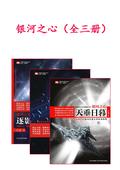 Heart of the Galaxy (All Three Volumes)
Jiang Bocompleted
—Reads9.4Score—Shelves
Heart of the Galaxy (All Three Volumes)
Jiang Bocompleted
—Reads9.4Score—Shelves
Reader note
Here's one! When the moonlight shines into the multidimensional universe: Comment on the space-time puzzle and the game of human nature in "Moon Time" When the Lancer fleet detonated the last vector light particle deep in the wormhole, I stared at the embers in the margin of the page and seemed to hear the trembling buzz of the cosmic string. This final work caught countless readers off guard, like a Pandora's box that suddenly closed, setting the fate of human civilization at the bloody dawn of 2232. As an old reader who has followed the book for nearly two years, I always remember the shudder I felt when I opened "Moon Time" for the first time and was struck by the sentence "The cognitive limit of civilization is the boundary" in the opening chapter. Now, looking back at the end of the first part, the narrative threads intertwined with hard science fiction and philosophical speculation still shine with a cold light in my memory. 1. Reflection of civilization on the moon The author uses the hexagonal array of calcium elements from the Gaicheng ruins to construct a time and space puzzle that spans hundreds of years. When the automated lunar rover discovered this extraterrestrial observatory built in the mid-20th century in Alfonso Crater, we finally understood: amidst the cheers of mankind's first moon landing, the countdown had already been laid on the back of the moon. Are those silicon-based life forms that self-destructed after nuclear tests afraid of the rise of earth civilization, or are they foretelling a greater cosmic crisis? This nested suspense setting makes the moon no longer an icy satellite, but a magic mirror that reflects human civilization. When a semi-intelligent radio telescope captured polarized radiation from the HD183658 galaxy, the gears of the science fiction narrative began to rev. The combined fleets of Nia Meroba and Pacific Island in the Indian Ocean, the technical support of the Cybertronian Mechanical Complex, and the mysterious time and space guidance of the Voyager Clan, these forces are competing under the shadow of the Dark Matter Legion. What is particularly commendable is the author's design of the "Firefly Swarm". This seemingly tiny weapon system is actually an innovative tribute to the "water droplets" in "The Three-Body Problem" - survival wisdom under the technological gap is always more deterrent than brute force. 2. The spectrum of human nature in the multidimensional universe. Every decision Lancer makes in the turbulence of time and space is questioning the nature of existence. When he went back in time to save the earth, he discovered that not only the historical coordinates had changed, but also the butterfly effect of the entire causal chain. This concrete interpretation of the grandfather paradox brings about a violent collision between the physical laws of hard science fiction and the emotional logic of human nature. Especially when Dreamland showed the ability to manipulate time and space, we suddenly realized that the so-called "special ability" may be some metaphor of the universe for human civilization - we are always trying to transcend cognitive boundaries, but we are trapped within our own limitations. The siliconization process of the Cybertronian mechanical complex constitutes a mirror reflection of human civilization. When the protagonist team undergoes progressive silicon-based transformation, the evolution of the visual system not only brings about a revolution in perception, but also triggers a crisis of identity. This deconstruction of the definition of "human" echoes the privacy ethics issues raised by brainwave interaction technology, forming a deep philosophical question in the novel: When technology breaks through the limits of biology, can we still protect those glimmers of "humanity"? 3. The unfinished time and space narrative. The first part ended abruptly in the shadow of the fleet of the Dark Matter Legion. The controversy caused by this open ending is exactly the charm of science fiction narrative. Those unsolved suspense are like stardust scattered in the universe: the triggering conditions of the city's self-destruction program, the origin of the Yuanhang clan and the dark matter army, and the space-time paradox behind Li Erniang's vector light particles, are all waiting for answers in the second part. What is particularly exciting is the narrative of the Laniakea supergalaxy cluster revealed by the author in "The Author Has Something to Say", which indicates that the next film will break out of the limitations of the solar system and start a civilizational game on a grander scale. When we look up at the moon on the spring night of 2025, those craters seem to be telling the story of "Moon Time". The most precious value of this work is that it not only constructs a logical and self-consistent science fiction universe, but also finds an exquisite balance between scientific rationality and humanistic care. As the author said in the opening chapter: "Any civilization is a small and weak existence." But it is this clear understanding of smallness that allows humans to always maintain awe and the courage to explore when facing the universe. It is expected that in the second part, we can follow the Lancer fleet through more folds of time and space and witness the light of civilization blooming at the limit.
-
176
月
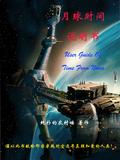 Moon Time Manual
Simple Country BoySci-Fi & Apocalypse661k Wordsongoing
7Reads—Score—Shelves
Moon Time Manual
Simple Country BoySci-Fi & Apocalypse661k Wordsongoing
7Reads—Score—Shelves
Reader note
Here's one! When the moonlight shines into the multidimensional universe: Comment on the space-time puzzle and the game of human nature in "Moon Time" When the Lancer fleet detonated the last vector light particle deep in the wormhole, I stared at the embers in the margin of the page and seemed to hear the trembling buzz of the cosmic string. This final work caught countless readers off guard, like a Pandora's box that suddenly closed, setting the fate of human civilization at the bloody dawn of 2232. As an old reader who has followed the book for nearly two years, I always remember the shudder I felt when I opened "Moon Time" for the first time and was struck by the sentence "The cognitive limit of civilization is the boundary" in the opening chapter. Now, looking back at the end of the first part, the narrative threads intertwined with hard science fiction and philosophical speculation still shine with a cold light in my memory. 1. Reflection of civilization on the moon The author uses the hexagonal array of calcium elements from the Gaicheng ruins to construct a time and space puzzle that spans hundreds of years. When the automated lunar rover discovered this extraterrestrial observatory built in the mid-20th century in Alfonso Crater, we finally understood: amidst the cheers of mankind's first moon landing, the countdown had already been laid on the back of the moon. Are those silicon-based life forms that self-destructed after nuclear tests afraid of the rise of earth civilization, or are they foretelling a greater cosmic crisis? This nested suspense setting makes the moon no longer an icy satellite, but a magic mirror that reflects human civilization. When a semi-intelligent radio telescope captured polarized radiation from the HD183658 galaxy, the gears of the science fiction narrative began to rev. The combined fleets of Nia Meroba and Pacific Island in the Indian Ocean, the technical support of the Cybertronian Mechanical Complex, and the mysterious time and space guidance of the Voyager Clan, these forces are competing under the shadow of the Dark Matter Legion. What is particularly commendable is the author's design of the "Firefly Swarm". This seemingly tiny weapon system is actually an innovative tribute to the "water droplets" in "The Three-Body Problem" - survival wisdom under the technological gap is always more deterrent than brute force. 2. The spectrum of human nature in the multidimensional universe. Every decision Lancer makes in the turbulence of time and space is questioning the nature of existence. When he went back in time to save the earth, he discovered that not only the historical coordinates had changed, but also the butterfly effect of the entire causal chain. This concrete interpretation of the grandfather paradox brings about a violent collision between the physical laws of hard science fiction and the emotional logic of human nature. Especially when Dreamland showed the ability to manipulate time and space, we suddenly realized that the so-called "special ability" may be some metaphor of the universe for human civilization - we are always trying to transcend cognitive boundaries, but we are trapped within our own limitations. The siliconization process of the Cybertronian mechanical complex constitutes a mirror reflection of human civilization. When the protagonist team undergoes progressive silicon-based transformation, the evolution of the visual system not only brings about a revolution in perception, but also triggers a crisis of identity. This deconstruction of the definition of "human" echoes the privacy ethics issues raised by brainwave interaction technology, forming a deep philosophical question in the novel: When technology breaks through the limits of biology, can we still protect those glimmers of "humanity"? 3. The unfinished time and space narrative. The first part ended abruptly in the shadow of the fleet of the Dark Matter Legion. The controversy caused by this open ending is exactly the charm of science fiction narrative. Those unsolved suspense are like stardust scattered in the universe: the triggering conditions of the city's self-destruction program, the origin of the Yuanhang clan and the dark matter army, and the space-time paradox behind Li Erniang's vector light particles, are all waiting for answers in the second part. What is particularly exciting is the narrative of the Laniakea supergalaxy cluster revealed by the author in "The Author Has Something to Say", which indicates that the next film will break out of the limitations of the solar system and start a civilizational game on a grander scale. When we look up at the moon on the spring night of 2025, those craters seem to be telling the story of "Moon Time". The most precious value of this work is that it not only constructs a logical and self-consistent science fiction universe, but also finds an exquisite balance between scientific rationality and humanistic care. As the author said in the opening chapter: "Any civilization is a small and weak existence." But it is this clear understanding of smallness that allows humans to always maintain awe and the courage to explore when facing the universe. It is expected that in the second part, we can follow the Lancer fleet through more folds of time and space and witness the light of civilization blooming at the limit.
-
177
传
 Legendary President
Simple Country Boy6k Wordscompleted
1Reads8.5Score—Shelves
Legendary President
Simple Country Boy6k Wordscompleted
1Reads8.5Score—Shelves
Reader note
Here's one! When the moonlight shines into the multidimensional universe: Comment on the space-time puzzle and the game of human nature in "Moon Time" When the Lancer fleet detonated the last vector light particle deep in the wormhole, I stared at the embers in the margin of the page and seemed to hear the trembling buzz of the cosmic string. This final work caught countless readers off guard, like a Pandora's box that suddenly closed, setting the fate of human civilization at the bloody dawn of 2232. As an old reader who has followed the book for nearly two years, I always remember the shudder I felt when I opened "Moon Time" for the first time and was struck by the sentence "The cognitive limit of civilization is the boundary" in the opening chapter. Now, looking back at the end of the first part, the narrative threads intertwined with hard science fiction and philosophical speculation still shine with a cold light in my memory. 1. Reflection of civilization on the moon The author uses the hexagonal array of calcium elements from the Gaicheng ruins to construct a time and space puzzle that spans hundreds of years. When the automated lunar rover discovered this extraterrestrial observatory built in the mid-20th century in Alfonso Crater, we finally understood: amidst the cheers of mankind's first moon landing, the countdown had already been laid on the back of the moon. Are those silicon-based life forms that self-destructed after nuclear tests afraid of the rise of earth civilization, or are they foretelling a greater cosmic crisis? This nested suspense setting makes the moon no longer an icy satellite, but a magic mirror that reflects human civilization. When a semi-intelligent radio telescope captured polarized radiation from the HD183658 galaxy, the gears of the science fiction narrative began to rev. The combined fleets of Nia Meroba and Pacific Island in the Indian Ocean, the technical support of the Cybertronian Mechanical Complex, and the mysterious time and space guidance of the Voyager Clan, these forces are competing under the shadow of the Dark Matter Legion. What is particularly commendable is the author's design of the "Firefly Swarm". This seemingly tiny weapon system is actually an innovative tribute to the "water droplets" in "The Three-Body Problem" - survival wisdom under the technological gap is always more deterrent than brute force. 2. The spectrum of human nature in the multidimensional universe. Every decision Lancer makes in the turbulence of time and space is questioning the nature of existence. When he went back in time to save the earth, he discovered that not only the historical coordinates had changed, but also the butterfly effect of the entire causal chain. This concrete interpretation of the grandfather paradox brings about a violent collision between the physical laws of hard science fiction and the emotional logic of human nature. Especially when Dreamland showed the ability to manipulate time and space, we suddenly realized that the so-called "special ability" may be some metaphor of the universe for human civilization - we are always trying to transcend cognitive boundaries, but we are trapped within our own limitations. The siliconization process of the Cybertronian mechanical complex constitutes a mirror reflection of human civilization. When the protagonist team undergoes progressive silicon-based transformation, the evolution of the visual system not only brings about a revolution in perception, but also triggers a crisis of identity. This deconstruction of the definition of "human" echoes the privacy ethics issues raised by brainwave interaction technology, forming a deep philosophical question in the novel: When technology breaks through the limits of biology, can we still protect those glimmers of "humanity"? 3. The unfinished time and space narrative. The first part ended abruptly in the shadow of the fleet of the Dark Matter Legion. The controversy caused by this open ending is exactly the charm of science fiction narrative. Those unsolved suspense are like stardust scattered in the universe: the triggering conditions of the city's self-destruction program, the origin of the Yuanhang clan and the dark matter army, and the space-time paradox behind Li Erniang's vector light particles, are all waiting for answers in the second part. What is particularly exciting is the narrative of the Laniakea supergalaxy cluster revealed by the author in "The Author Has Something to Say", which indicates that the next film will break out of the limitations of the solar system and start a civilizational game on a grander scale. When we look up at the moon on the spring night of 2025, those craters seem to be telling the story of "Moon Time". The most precious value of this work is that it not only constructs a logical and self-consistent science fiction universe, but also finds an exquisite balance between scientific rationality and humanistic care. As the author said in the opening chapter: "Any civilization is a small and weak existence." But it is this clear understanding of smallness that allows humans to always maintain awe and the courage to explore when facing the universe. It is expected that in the second part, we can follow the Lancer fleet through more folds of time and space and witness the light of civilization blooming at the limit.
-
178
开
 The Contract Begins with the Succubus, the Whip Is Crackling and Smoking.
Cat Bubble ZzUrban452k Wordscompleted
91Reads5.9Score—Shelves
The Contract Begins with the Succubus, the Whip Is Crackling and Smoking.
Cat Bubble ZzUrban452k Wordscompleted
91Reads5.9Score—Shelves
Reader note
The male protagonist traveled through time and became an F-level spirit master, but the contracted succubus was able to crush the ninth-level puppet king with a whip. The system's "hundred-fold return" directly caused his cultivation to skyrocket. Others had worked hard for ten years, but he could break through on the spot by feeding the succubus a candy.
-
179
影
 Film and Television*************
ongoing
—Reads5.8Score—Shelves
Film and Television*************
ongoing
—Reads5.8Score—Shelves
Reader note
Succubus Hongli is coming online! 🌈The protagonist is reincarnated as Hongli, and is the interpreter of the fat orange sisters in the harem. What the protagonist wants is to be held in front of his eyes and begged for it! 🍉Hongzhou is the younger brother and likes Hongli the most: Prince Guo regards the protagonist as his confidant: Hongxi regards the protagonist as the only sun: He is also An Lingrong's benefactor: Ye Lanyi likes him: His brothers and ministers are treated as cattle and horses but still respect him! Protagonist of later generations' evaluation: The only pure white jasmine flower in the Forbidden City, the well-deserved No. 1 Succubus of the Qing Dynasty [screen licking]!
-
180
斩
 Kill the God******************
ongoing
—Reads5.8Score—Shelves
Kill the God******************
ongoing
—Reads5.8Score—Shelves
Reader note
This book is also super good-looking. It is a fan of thousands of people + a fan of gods, mainly a fan of gods. Although it is a fanfic about killing gods, I feel that there is less content about killing gods later, but there will be a description and sub-CP, so don't enter if you don't mind [exploration]