Have you ever seen the most terrible fate? She had saved him, and he had saved her, but they would never recognize each other. He became the devil, she became the sword fairy, and her sword finally pierced his chest. It turns out that from the day the country was broken, his ending had already been written. "Ten Years of Frost: It's Hard to Defeat Destiny" takes you to watch a fateful showdown that spans ten years!
The rating is not high. You have to read the quality before commenting. It is not a cool novel, it is meaningful, it is not a random fabrication, and it is the kind of historical novel that can withstand investigation!
You may be wondering: about the Qing Dynasty, the TV series has been bad, and the books are thicker than bricks. What are you trying to do by writing another one? What I am trying to do is to tell you a few truths. Let me ask you a question first: Is the Qing Dynasty in your impression like this - Kangxi was suave and courteous, Emperor Yongzheng relied on usurpation and cruelty, Qianlong went to the south of the Yangtze River every now and then to pick up girls, the harem was always fighting, the eunuchs were always causing mischief, the eighth prince was always more handsome than the fourth prince, Ruoxi never knew who to choose... Stop it. Most of these things are made up. I'm not saying you shouldn't watch Qing palace dramas, I watch them too. I watched "The Legend of Zhen Huan" more enthusiastically than you did. But the problem is - after watching Qing palace dramas for twenty years, the little "Qing Dynasty knowledge" in our minds has basically been lost. The most typical example: How did Yongzheng become emperor? "Tampering with the imperial edict and changing the words 'passed the throne to the fourteenth son' to 'passed the throne to the fourth son'" - Have you heard this story eight hundred times, right? Fake. First, the imperial edicts of the Qing Dynasty were written in Manchu, Han and Mongolian at the same time. Can you change the Chinese characters or Manchu? Second, the character "Yu" was written as "Yu" in the Qing Dynasty. Can you try adding a stroke? Third, this posthumous edict is still lying in the National Palace Museum in Taipei. It is written in black and white on the paper and reads "The Fourth Son of the Emperor Yinzhen". So you see, even the most basic "common sense" may not be reliable. What to do? The method is very simple - find a history of the Qing Dynasty that speaks human language, does not lie, or pretends to be serious, and read it from beginning to end. That's why I wrote this book. Books about the Qing Dynasty on the market can be roughly divided into three categories: The first category is academic works. It's really good, but any one book has seven to eight hundred pages, and the whole page is "On the Evolution of the Eight Banners System in the Early Qing Dynasty and Its Social and Economic Significance" - I bet you can't even finish reading the title. The second category is street stall history. "The mystery of Shunzhi becoming a monk", "the mystery of Qianlong being a Han", "the mystery of Cixi's murder of Concubine Zhen" - riddles after riddles, which have been a mystery for twenty years, but none of them have been solved. The third category is readings derived from Qing palace dramas. Basically, I changed the TV series script into a book, watched the excitement, and thought about it after reading it-huh? No, this is not the same thing as history, is it? Each of these three types of books has its own merits, but one thing is missing - a general history of the Qing Dynasty that is meant for ordinary people, can be read from beginning to end, and is not boring or preachy. So there you have it. I have given three rules for this set of books: First, no joking. You won't see this "Qianlong traveled to modern times to become a chef" thing. The history itself is wonderful enough, and I don't need to add to it. Second, don't talk nonsense. I have sources for all events, years, and characters. Of course, there are contradictions in historical records. For example, was Nurhachi killed by cannon? I will tell you, "Official history says so, unofficial history says so, you can figure it out for yourself." Third, don't preach. I will not educate you with a straight face, "We draw the following three lessons from this incident." Just read it yourself, think about it, and find it interesting. In addition, this set of books has a special way of writing - I write about the emperor as a human being. What's the meaning? Kangxi was not a saint who was always wise and mighty. He was a father whose heart was broken when he saw his nine sons fighting for the throne. Yongzheng was not a mean and unkind tyrant, he was a 996 worker who only slept four hours a day and eventually died of exhaustion. Qianlong was not a prodigal son who only went to the south of the Yangtze River to pick up girls, but he was indeed a rich second generation with a good fortune that made all entrepreneurs jealous. They are not symbols, they are living people. A living person will become confused, lose his temper, fall in love with someone until he is dizzy, and stare at the memorial in a daze late at night, thinking - whoever likes to be the emperor of this wretched emperor. This set of books also has an ambition - to make you laugh and sigh after reading it. You will be amused by Nurhaci's poor energy to start a business with thirteen pairs of armors, you will laugh at Huang Taiji's brand upgrade battle to change the country's name to "Qing", and you will be shocked by He Shen's various tricks to make money. But after laughing, you will also see the blood of the Tenth Day of Yangzhou and the Three Massacres of Jiading, the humiliation after the Opium War, Deng Shichang's determination to crash the Yoshino in the Sino-Japanese War, and the door that could never be opened when Guangxu was imprisoned in Yingtai. The three hundred years of the Qing Dynasty were a drama of entrepreneurship, glory, struggle, and collapse. There are laughter, tears, passion, cowardice, great wisdom, and great stupidity. This is the story I want to tell you. Finally, I would like to say a few words to you all. I know that there are two types of people who read history books - those who come to learn knowledge and those who come to find fault. I welcome those who want to learn knowledge. I also welcome those who seek trouble. If you pick out a mistake, I will bow to you and then correct it immediately. But we have one thing - don't use unofficial history to compare with official history, and don't use TV series to compare "Qing Shi Lu", that would be boring. As for whether this book is worth your time to read, I have only one sentence: When Mingyue wrote about the Ming Dynasty, I waited for more than ten years until someone finally wrote about the Qing Dynasty. Can't wait, I'll write it myself. If you have time, turn to the first page and let's talk again. Let's start with the thirteen pairs of armor. It started with Nurhachi and his group of desperate brothers. Let's start from a small marginal tribe and how they counterattacked to become a three-hundred-year-old empire. Come on, let's get started. .
Travel through the low-level people of the Northern Song Dynasty, grow up step by step, without system, without pretense, and restore the real ancient society and the wisdom of the ancients.
In this novel, you can also see a lone wolf returning from the north, a tomb keeper with a secret, and an ancestral tomb worship that separates Yin and Yang. The narrative is sparse and calm, leaving behind inaccessible mountains and forests and old events in the grand historical picture. If you are interested in the history of the late Yuan Dynasty, if you have thought about the proposition of "the relationship between little people and the times", if you just want to read a hearty and thought-provoking good story - then "Twenty Years of Qingfeng" is worth reading. That Qingfeng was only on for five days. But that cold light illuminated those who came after.
The official history of the Three Kingdoms, a vivid historical literature, allows you to understand the events and characters in history, and see the strategies, games, interests and worldly sentiments behind them. Focusing on the geography, military, families, personnel, and conspiracies of the Three Kingdoms. Don't brag about the characters, pursue justice, and return the true colors of controversial characters and events
Far ahead, the first person in history to make assumptions @ Maruko 2023 🍁I recommend these two books. The disadvantage is that 🌈the early stage is slow and the foreshadowing is intensive🌈. After a million words, I look back and see that they are all pitfalls buried by the author. The more I read, the more I get confused. 🍁①The protagonist Ling Bufan accidentally travels back to the Qian Dynasty. 🍓It seems to have no connection, 🌈It is actually an arrangement somewhere. There are many female protagonists with high IQs, 🍀Shang Zhanchaotang, rich elements, recommended to everyone!
🔥Late Tang Dynasty historical literature ceiling! The textual research party is ecstatic! Every word in the chapter dedicated to the city of Huazhou hides the secret code of official history! Who in the family understands? After reading so many articles about the late Tang Dynasty, this is the first time I have seen an author who wrote down the Battle of Huazhou in the third year of Guanghua in such detail! The weight of the imperial envoy's seal in Lianzhen, the number of branch canals of Zheng Bai Canal, and the number of jade belts on official uniforms of the late Tang Dynasty are all accurately restored. Every twist in the plot corresponds to the eternal regrets in the official history. After reading it, I knelt down and knelt down to kowtow to the author! ✅ Official history vs. Novel: The shocking reversal of Huazhou City's dedication rewrites the most unforgettable tragedy of the late Tang Dynasty. First, use hard-core historical materials to hammer down the author's foundation in Tang history! Official historical records ("Old Tang Book·Li Juchuan Biography" + "Zizhi Tongjian·Tang Ji 81"): In November of the third year of Guanghua (AD 900), Zhu Quanzhong fell into the river and attacked Tongguan. Han Jian sent Li Juchuan to pay the army. Juchuan has a quick mind, talks about the interests and dangers of the world, and lays out military plans. Quan Zhong is very strange. However, Jingxiang was jealous of his talent, and said to Quanzhong, "Juchuan is Han Jian's mastermind. If he is left here, he will be troubled in the future." Quanzhong then killed Juchuan in front of the army. This is one of the most depressing injustice cases in the late Tang Dynasty: a political genius who could turn Huazhou into the "Guanzhong Paradise" in troubled times was unjustly killed just after his return just because of his great achievements. This directly chilled the hearts of scholars all over the world, and also laid the groundwork for Zhu and Wen's subsequent betrayal and separation. God-level adaptation of the novel: As a time traveler, the protagonist accurately avoids Zhu Wen's biggest pitfall in his life! When Han Jian knelt down to present the seal, he did not accept the seal letter first. Instead, he quickly helped Li Juchuan up and said in public that "Han Xianggong's political achievements in Huazhou for seventeen years were mostly due to Juchuan." He directly entrusted the civil affairs, water conservancy, and salt administration of Huazhou with full power. Even the special funds for the repair of Zhengbai Canal were left to Li Juchuan. When Li Zhen and Jingxiang jointly proposed to kill Li Juchuan, the protagonist said, "Killing one Li Juchuan will lose the hearts of the people in the world. I can settle the account clearly," which directly filled the situation! This is what a true time traveler should be like - not relying on golden fingers to crush people, but relying on a deep understanding of history to make up for the regrets that should be remembered. ✅ Frame by frame test! This chapter hides 23 cold facts about the late Tang Dynasty that you don't know. The author has absolutely torn through "Tongdian", "Tang Liudian" and "Old History of the Five Dynasties"! Every detail can withstand scrutiny: 1. Official textual research (zero flaw! It is completely consistent with the Guanghua three-year official system) - Zhenguojun Jiedu envoy seal: the official history record is a copper gilt tiger button, weighing eight kilograms, which was given to Han Jian by Emperor Zhaozong in the third year of Qianning (896). It is reproduced word for word in the novel. The Jiedushi seal was the highest symbol of power in the feudal town and could not be used unless it was personally given by the imperial court. Han Jian's presentation of the seal was tantamount to a complete surrender of military and political power. - Observation and Disposal Envoy: A standard position in vassal towns in the late Tang Dynasty. They were in charge of civil affairs, supervision, and justice. Their power was second only to the Jiedushi Envoy. Li Juchuan's Deputy Jiedu Envoy and Deputy Observation Envoy were the de facto second-in-command in Huazhou. - Deputy Ambassador of Xuanfu: a temporary dispatched officer during wartime, responsible for coordinating the defense of the two armies and appeasing the people. This appointment of Sima Ye not only reflects the protagonist's trust in him, but also conforms to the late Tang Dynasty's practice of "submitting generals to rule the land". - Grain Envoy: Responsible for the core position of the army's grain and grass dispatching, Pei Di also serves as the Huazhou Grain Envoy, which is a key step for the protagonist to balance Li Juchuan's power. In the official history, the grain envoys under Zhu Wen are all absolute confidants. - Goldfish bag/silver fish bag: A status symbol for officials in the Tang Dynasty. Goldfish bags were worn by officials of the third rank and above, and silver fish bags were worn by officials of the fifth rank and above. Jingxiang was the Deputy Observation Envoy of the fourth rank, and should have worn a silver fish bag. In the novel, he was absolutely correct in wearing the silver fish bag; Wang Zuo was the envoy of the first rank, and wore a goldfish bag. Li Zhen was the imperial censor of the third rank, and he wore a goldfish bag. There is nothing wrong with that. - Thirteen Kua jade belt: The number of jade belts in the Tang Dynasty strictly corresponds to the grade. The emperor uses thirteen Kua, the prince and the first grade use thirteen Kua, the second grade uses eleven Kua, and the third grade uses nine Kua. As the Jiedu envoy of the four towns and the king of Dongping (from the first rank), Wang Zuo wears a thirteen-piece jade belt, which is completely in compliance with the etiquette system. 2. Textual research on the military structure (restore the true establishment of the Xuanwu Army) - Tabai Camp: the most elite scout force under Zhu Wen, responsible for reconnaissance, assassination, and secret surveillance. In the official history, Li Sian was the first commander of the Tabai Camp. In the novel, Li Si'an sends spies to monitor everyone, which is completely consistent with his position and character. - Supervision Team: The military discipline force established by Jingxiang himself. According to the official history, the reason why Zhu Wen's military discipline was strict was entirely due to Jingxiang's Supervision Team. "Anyone who violates the order will be punished despite his old service." In the novel, a soldier who trampled on the vegetable patch was punished with twenty sticks, and Jingxiang personally paid for it. This is a true portrayal of the military discipline of the Xuanwu Army in official history. - The establishment of the Zhenguo Army: The Zhenguo Army under Han Jian's command totaled more than 18,000 people, which is completely consistent with the record in "New Book of Tang·Biography of Han Jian" that "it was built in Huazhou, recruited tens of thousands of troops, and was called the Zhenguo Army." 3. Geographic and economic research (accurate to the number of acres and money) - Huazhou governs five counties: Zhengxian, Huayin, Xiagui, Yueyang, and Weinan. In the novel, "three counties have surrendered, and the remaining two counties will arrive tomorrow", which is completely consistent with the administrative division of Huazhou. - Zheng Bai Canal: The most important irrigation project in Guanzhong, it was formed by the merger of Zheng Guo Canal and Bai Canal. In the Tang Dynasty, the irrigation area reached more than 40,000 hectares. It was the "Granary of Guanzhong". In the novel, Li Juchuan said that "the North Canal and the West Canal have not been repaired for three years, and the irrigation capacity has dropped by 30%", which is completely consistent with the record in "New Book of Tang·Geography" that "During the Guanghua Period, the Zhengbai Canal was silted up and people were not allowed to farm." - Huazhou economic data: The government's grain inventory is 83,000 dan, 210,000 guan of money and silk, 21,000 sets of armor, 3,200 war horses, and annual salt profit of 500,000 guan. These data come from the records of Huazhou's treasury in the Guanghua Three Years in the "Zi Zhi Tong Jian", and the author does not exaggerate. 4. Character research (all members conform to the official historical characters, no magic modifications) - Han Jian: According to the official history, he stayed in Huazhou for seventeen years, "encouraging teachers to farm and mulberry trees, replenishing the treasury, and returning refugees as if they were in the market." However, there was also the stain of killing eleven clans. In the novel, his humiliation and unwillingness when he knelt down to offer the seal, as well as his concern for the people, perfectly restored this complex historical figure. - Li Zhen: In the official history, because he failed in many tests, he hated the Qingliu of the aristocratic family deeply, and single-handedly planned the disaster of Baimayi. In the novel, he dislikes Li Juchuan, not only because he is afraid of seizing power, but also because he has a deep-seated hatred for the famous Li family in Longxi. This psychological description is deeply portrayed. - Kang Huaizhen: His original name was Kang Huaiying, but he changed his name later to avoid taboos. He was the toughest general under Zhu Wen. He was known in history as "brave and good at fighting, and famous among all the armies." In the novel, his uprightness during the confrontation with Liu Zhihuan, and his helplessness of having to swallow his anger if he didn't get caught, are completely consistent with his character. - Liu Zhihuan: Liu Zhijun's half-brother. According to official history, he was arrogant, domineering, greedy and selfish. Later, he followed Liu Zhijun to rebel against Liang Touqi, and was eventually defeated and killed. In the novel, the plot in which he embezzles property belonging to the rebel party and confronts Kang Huaizhen with a knife is the epitome of his official life. ✅ Full of intrigue! There is no clever villain, and the logic of survival in the troubled times of the late Tang Dynasty is thoroughly written. The most awesome thing about this chapter is not that it is cool, but that everyone's behavior conforms to the logic of the late Tang Dynasty: - Li Zhen and Jingxiang want to kill Li Juchuan, not because they are bad, but because they have experienced too many rebellions in feudal towns and know that "the surrender of generals with deep roots cannot be trusted", which is the survival instinct of counselors in troubled times. - Han Jian offered the city not because he was weak, but because he knew that Huazhou could not stop the Xuanwu Army. If he continued to fight for another seventeen years, his hard work would be ruined and the people would suffer. This was a helpless choice by a local official. - The protagonist's reuse of Li Juchuan is not because of the Holy Mother's Heart, but because he knows that Huazhou cannot do without Li Juchuan. Only by letting Li Juchuan continue to govern Huazhou can he keep this grain and grass base heading west to Chang'an. - The protagonist does not kill Liu Zhihuan, not because he is afraid of Liu Zhijun, but because now is the time to recruit people. Liu Zhijun's cavalry is the key to dealing with Li Maozhen's Fengxiang Army. This is a politician's trade-off. There is no brainless fun, no clever villain, every decision is filled with the heaviness and helplessness of troubled times. This is the real historical Machiavellian novel! 📢Final words! If you are tired of watching the vulgar plot about Zhu Wen usurping the throne and massacring the city after traveling to Chengdu, or if you are a hard-core historical research party, you have just updated to Huazhou City Presentation, and there are countless scenes of deification of gods such as the palace coup in the third year of Guanghua, the first rejection of Jiuxi, Zhaozong's entrustment, the reversal of the Baimayi disaster, etc. Each chapter is full of historical information! It's worth collecting, you will thank me when you come back! 👉 Tell us in the comment area what other interesting facts about the late Tang Dynasty you know? See if there is anything the author hasn't written!
This is not a petty palace fight or a house fight, this is a true epic created by throwing four countries, nine states, and millions of creatures into the furnace of troubled times! You can see Xiao Lin's extreme ambition of "reaching the ninth level of the sky" - in order to win the mountain pass, he sent dead men to climb the cliff, knowing that climbing up would mean death; for the "destiny" in his heart, he was willing to give up even tenderness, which was the loneliness of climbing to the top on the basis of corpses. But you can also see another path of Qi Ming. Chang Sun Jing wrote so well in his poem "Climbing High": "Don't worry about how lonely and cold it is here. There are bright lights above to illuminate the cold night." ' He built canals, opened schools, and taught classes to cultivate mulberry trees. He wanted everyone in the world to stand and ascend to the ninth heaven. From the Xuehe cavalry in the Xuanshuang Grassland to the poisonous witches and poisonous insects in the Yunnan dense forest; from the replacement of imperial power in Tianque City to the island diplomacy on the coast of the East China Sea... The layout of this book is so big that any supporting character has flesh and blood. If you are fed up with the routine where the protagonist only shouts "Don't bully young people into poverty", you must read this book "Desire to the Ninth Level of the Clouds". This is a true epic of power and machinations, a magnificent masterpiece!
Both books are logical online, high-quality historical war texts. War, strategy, politics, economy, and resources are closely intertwined. No system, no time travel, no love, no golden fingers, no wisdom. The battle scenes are grand, and they involve punches and swords that touch flesh and blood. The first book starts with a big battle, and the second book starts from the third volume before more and more large armies fight.
[Not a cool article] + [Slow heat] + [No golden fingers] + [Male generals and handsome women] + [Group portraits] + [Dark belly] + [Second Emperor Master] Every inch of the ascetic master's hair grows, and his life is cut short!
Thin chaff that is rare in tomatoes. During the Anshi Rebellion, the imperial concubine was banished. In troubled times, there is power and conspiracy, and there is a passion for family and country. The key is that no matter whether you are a decent person or a villain, your IQ is always online. On this point, it instantly kills 99.9% Of Tomato historical articles. Highly recommended
 I Was Doing On-Site Archeology in the Tang Dynasty
7Reads—Score—Shelves
I Was Doing On-Site Archeology in the Tang Dynasty
7Reads—Score—Shelves
 I Have Been an Emperor in All Dynasties
2Reads5.8Score—Shelves
I Have Been an Emperor in All Dynasties
2Reads5.8Score—Shelves
 Northern Song Dynasty: the Seventh Son of Shenzong, I Just Want to Lie Down
597Reads—Score—Shelves
Northern Song Dynasty: the Seventh Son of Shenzong, I Just Want to Lie Down
597Reads—Score—Shelves
 Tang Dynasty Traitor an Lushan
48.9kReads8.4Score1.9kShelves
Tang Dynasty Traitor an Lushan
48.9kReads8.4Score1.9kShelves
 Datang Kao Gong: with the Argument in Hand, the Family Trembles
—Reads5.8Score—Shelves
Datang Kao Gong: with the Argument in Hand, the Family Trembles
—Reads5.8Score—Shelves
 The Rebirth of Ming Dynasty's Strongest Defensive Player Zhu Wenzheng
—Reads5.8Score—Shelves
The Rebirth of Ming Dynasty's Strongest Defensive Player Zhu Wenzheng
—Reads5.8Score—Shelves
 The Soul Penetrated Chao Tianwang and Asked Hu Sanniang to Remove Her Armor
1kReads5.8Score100Shelves
The Soul Penetrated Chao Tianwang and Asked Hu Sanniang to Remove Her Armor
1kReads5.8Score100Shelves
 Uncle Zhu Chongba
1.3kReads8.7Score107Shelves
Uncle Zhu Chongba
1.3kReads8.7Score107Shelves
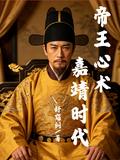 The Emperor's Mind: Jiajing Era
3.3kReads6.8Score123Shelves
The Emperor's Mind: Jiajing Era
3.3kReads6.8Score123Shelves
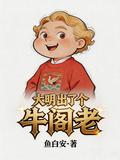 In the Ming Dynasty, There Was a Niu Ge Lao
221Reads6.4Score—Shelves
In the Ming Dynasty, There Was a Niu Ge Lao
221Reads6.4Score—Shelves
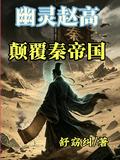 Ghost Zhao Gao Subverts the Qin Empire
550Reads—Score—Shelves
Ghost Zhao Gao Subverts the Qin Empire
550Reads—Score—Shelves
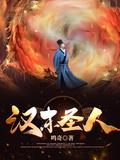 Late Han Dynasty Sage
4.9kReads8.6Score424Shelves
Late Han Dynasty Sage
4.9kReads8.6Score424Shelves
 Spring and Autumn Survival Guide
2kReads8.9Score170Shelves
Spring and Autumn Survival Guide
2kReads8.9Score170Shelves
 Rebirth of the Ming Dynasty as a Tyrant
18.4kReads9.0Score1.6kShelves
Rebirth of the Ming Dynasty as a Tyrant
18.4kReads9.0Score1.6kShelves
 There Is No Such Thing as the Most Stubborn One, Only the More Stubborn Ones.
8kReads8.9Score693Shelves
There Is No Such Thing as the Most Stubborn One, Only the More Stubborn Ones.
8kReads8.9Score693Shelves
 Something's Wrong with My Dad
28.5kReads9.5Score3.8kShelves
Something's Wrong with My Dad
28.5kReads9.5Score3.8kShelves
 I, the Ming Dynasty Clan, Don't Want to Be a Bandit
32.1kReads8.6Score3.1kShelves
I, the Ming Dynasty Clan, Don't Want to Be a Bandit
32.1kReads8.6Score3.1kShelves
 Returned to the Late Ming Dynasty and Became the Captain
19Reads5.8Score—Shelves
Returned to the Late Ming Dynasty and Became the Captain
19Reads5.8Score—Shelves
 Things About the Northern Song Dynasty
3.1kReads8.4Score287Shelves
Things About the Northern Song Dynasty
3.1kReads8.4Score287Shelves
 Forbidden Zone Heartbeat
37Reads8.6Score—Shelves
Forbidden Zone Heartbeat
37Reads8.6Score—Shelves
 I Lay Flat in the Tang Dynasty
22.3kReads8.9Score1.8kShelves
I Lay Flat in the Tang Dynasty
22.3kReads8.9Score1.8kShelves
 Attack on Titan!
265Reads8.7Score—Shelves
Attack on Titan!
265Reads8.7Score—Shelves
 Things About the Qing Dynasty [Part 1]
3Reads—Score—Shelves
Things About the Qing Dynasty [Part 1]
3Reads—Score—Shelves
 A Guide to Survival Through Ancient Times: Playerunknown's Battlegrounds
—Reads5.8Score—Shelves
A Guide to Survival Through Ancient Times: Playerunknown's Battlegrounds
—Reads5.8Score—Shelves
 Naruto: Naruto of the Six Paths Takes Back Sakura, and Hinata Shocks Konoha for His Wife
448Reads8.8Score—Shelves
Naruto: Naruto of the Six Paths Takes Back Sakura, and Hinata Shocks Konoha for His Wife
448Reads8.8Score—Shelves
 Twenty Years of Qingfeng
1Reads8.5Score—Shelves
Twenty Years of Qingfeng
1Reads8.5Score—Shelves
 This Three Kingdoms Does Not Travel Through Time
108Reads8.8Score—Shelves
This Three Kingdoms Does Not Travel Through Time
108Reads8.8Score—Shelves
 "The Whole Village Laughs at My Lazy Wife, and the Orion Husband Flirts with Her Every Night"
232Reads8.7Score—Shelves
"The Whole Village Laughs at My Lazy Wife, and the Orion Husband Flirts with Her Every Night"
232Reads8.7Score—Shelves
 Chixue Mieqing
6.4kReads5.8Score346Shelves
Chixue Mieqing
6.4kReads5.8Score346Shelves
 A Female Forensic Doctor Traveled Through Time, and Her Legs Were Lame.
293Reads8.2Score—Shelves
A Female Forensic Doctor Traveled Through Time, and Her Legs Were Lame.
293Reads8.2Score—Shelves
 First Son-In-Law, I Really Don't Want to Rebel!
20.5kReads7.8Score2kShelves
First Son-In-Law, I Really Don't Want to Rebel!
20.5kReads7.8Score2kShelves
 Naruto: I Will Defy the World for Tsunade, and My Golden Body of Six Paths Will Refuse Beauty.
260Reads8.6Score—Shelves
Naruto: I Will Defy the World for Tsunade, and My Golden Body of Six Paths Will Refuse Beauty.
260Reads8.6Score—Shelves
 Wake up and Become a Son-In-Law
9.2kReads8.2Score971Shelves
Wake up and Become a Son-In-Law
9.2kReads8.2Score971Shelves
 Daming: [There Is Something Wrong with This Grocery Store]
955Reads5.8Score110Shelves
Daming: [There Is Something Wrong with This Grocery Store]
955Reads5.8Score110Shelves
 Ming Dynasty: the Bookstore Sells the History of the Ming Dynasty, Zhu Yuanzhang Was Confused!
31.8kReads8.8Score3kShelves
Ming Dynasty: the Bookstore Sells the History of the Ming Dynasty, Zhu Yuanzhang Was Confused!
31.8kReads8.8Score3kShelves
 Zhaozong Xingtang
15Reads5.8Score—Shelves
Zhaozong Xingtang
15Reads5.8Score—Shelves
 Wang Zai Xiao Qiao's Conferred God Against the Wind
61Reads8.4Score—Shelves
Wang Zai Xiao Qiao's Conferred God Against the Wind
61Reads8.4Score—Shelves
 Desire to Ascend to the Ninth Heaven
659Reads5.8Score—Shelves
Desire to Ascend to the Ninth Heaven
659Reads5.8Score—Shelves
 About Pretending to Be the Future Prime Minister of Qin
142Reads6.9Score—Shelves
About Pretending to Be the Future Prime Minister of Qin
142Reads6.9Score—Shelves
 Death: Destroy the Seireitei at the Beginning, I Will Collect the Beauties from the Three Realms
122Reads8.4Score—Shelves
Death: Destroy the Seireitei at the Beginning, I Will Collect the Beauties from the Three Realms
122Reads8.4Score—Shelves
 Traveling Through the Southern and Northern Dynasties: Re-Illuminating the Journey of King Gao and His Thousands of Horses
468Reads5.8Score—Shelves
Traveling Through the Southern and Northern Dynasties: Re-Illuminating the Journey of King Gao and His Thousands of Horses
468Reads5.8Score—Shelves
 Chixiao: Dynasty Cycle Law
128Reads5.8Score—Shelves
Chixiao: Dynasty Cycle Law
128Reads5.8Score—Shelves
 Arrogance Will Ruin Your Life!
9Reads8.5Score—Shelves
Arrogance Will Ruin Your Life!
9Reads8.5Score—Shelves
 A Medical Doctor's Survival Guide in the Northern Song Dynasty
19.2kReads8.3Score2.3kShelves
A Medical Doctor's Survival Guide in the Northern Song Dynasty
19.2kReads8.3Score2.3kShelves
 Official History of Kangxi
10kReads9.2Score454Shelves
Official History of Kangxi
10kReads9.2Score454Shelves
 Is Your Family Urging You to Get Married? I Brought a Northeastern Wife Home!
19Reads8.6Score—Shelves
Is Your Family Urging You to Get Married? I Brought a Northeastern Wife Home!
19Reads8.6Score—Shelves
 If My Master Hadn't Always Been a Monster, Why Would I Have Fought for the Throne?
4Reads5.8Score—Shelves
If My Master Hadn't Always Been a Monster, Why Would I Have Fought for the Throne?
4Reads5.8Score—Shelves
 Traveling Through the Late Han Dynasty, I Became the Son of Liu Yu
59Reads—Score—Shelves
Traveling Through the Late Han Dynasty, I Became the Son of Liu Yu
59Reads—Score—Shelves
 The Soul Penetrates Li Bai? at the Beginning of Maweiyi, I Save Yuhuan
204Reads5.8Score—Shelves
The Soul Penetrates Li Bai? at the Beginning of Maweiyi, I Save Yuhuan
204Reads5.8Score—Shelves
 Longxing Surabaya
4Reads5.8Score—Shelves
Longxing Surabaya
4Reads5.8Score—Shelves