A very good novel about stock trading. The author is a great man in the market. If you want to improve your skills, read it. If you want to read cool articles and want to recommend stocks, please take a detour. There is no such thing here.
The content keeps up with the pace of the market, pure trading experience sharing, rigorous and self-consistent logic, not a cool article, it is an essential tool for improving trading awareness.
In the era of quantification, can the chief executive win over AI? The real details make you suspect that the author is leaking secrets. The logic is irrefutable. A must-read for veteran investors who want to invest in hot money!
💥Highly recommended: ②This king has told a lot of knowledge about stock trading. The author is a man with a bone age of twenty years. He narrates a lot in the book based on his own personal experience. That's how it is. Everything is your own heart.
The most exciting trading novel I have ever read so far. Not only is the plot fascinating, the book also shares strategies and techniques for stock and futures trading, which is of extremely important learning and research value for investors.
I found a very realistic urban stock trading article in the book shortage. The male protagonist enters the market with a capital of 100,000 and slowly understands the trading mentality. There is a lot of useful information. After reading it, you can learn a lot of real stock trading ideas, which is neither suspended nor exaggerated.
Commercial stock trading article! Highly recommended! ! The protagonist awakens to the stock trading system at the beginning! Can see stock market information! Rise and fall every day! So popular! Stock god!
The comparison between "The Way of Stocks is Confucianism" and "The Way of Heaven" (the classic TV series "The Way of Heaven" starring Wang Zhiwen, adapted from the novel "The Distant Savior") can be launched from multiple dimensions. The former is a text rooted in the actual practice of the current capital market, while the latter is an allegorical work that has become a classic and is full of philosophical speculation. The following is a comparative analysis from several core dimensions: 1. Core and philosophy: "Skills" and "Tao" have different emphasis. "Tiandao": The core is "Tao". It explores cultural attributes, social laws, and philosophical speculation. The protagonist Ding Yuanying is a tragic planner who "looked at the edge of the well and then fell down". His business war of "killing the rich and helping the poor" (metrical poetry incident) is more like a social experiment, with the purpose of verifying that "cultural attributes determine destiny" and triggering thinking about a "savior". Its business operation itself is an allegorical tool serving philosophical propositions. "Stock Path": The core is "using skills to get close to the path". It deeply demonstrates the specific and subtle "techniques" in the modern capital market - K-line tactics, board of directors rules, market value management, public opinion manipulation, and cash flow strategy. Its "Tao" is reflected in the comprehensive understanding and strategic application of these "techniques", which is the wisdom of seeking optimal solutions within business rules. Heda's goal is to win a specific, high-level business war, and its philosophical thinking (such as quoting the Tao Te Ching) is a strategic lubricant to assist actual combat, rather than the ultimate goal. 2. Professionalism and sense of reality: "allegorical reality" vs "operational reality" "Tiandao": pursues a kind of "philosophical reality" or "logical reality". Its business cases (such as the speaker price war) may not stand up to rigorous scrutiny in terms of details, but the "laws of survival" it reveals (such as "both sides suffer if you breathe more than him, you are the winner") and the game of human nature are very impactful and make people feel "essentially true." "Stock Road": pursues an "industry reality" and "operational reality". From the MA5 moving average to the new regulations on holding reduction, from industrial funds to CDS trading, its professional knowledge density and operational details are extremely high, and it can almost be used as an "advanced capital game textbook". Its sense of reality comes from its detailed description of industry rules and actual combat processes. 3. Character creation: "Philosopher" and "Player" "The Way of Heaven" - Ding Yuanying: He is a "philosopher" and a "lone wolf" who overlook all living beings. He is lonely, detached, and distanced from secular society. His charm stems from the profoundness of his thoughts and the abnormality of his behavior. His abilities are almost "magical", and his characters have strong symbolic and transcendental overtones. "Stock Road" - Heda: He is a "top player" and "the core of the team" who knows the rules well. He laughs and curses, and is completely integrated into the world (wearing pink pajamas, joking), and his charm comes from his wisdom in navigating complex rules and averting dangers. His ability is based on the ultimate calculation and utilization of information, human nature and rules, and has a more "human" spirit and teamwork spirit. 4. Narrative style and audience "The Way of Heaven": The style is melancholy, speculative, and full of aphorisms. The conversations are often philosophical discussions, slow-paced but powerful in their ideas. It attracts readers/audiences who like to think about grand propositions such as culture, society, and human nature. "Stock Road": The style is bright, sharp and humorous. The dialogue is dense in information, full of professional confrontations and witty banter, with a tight rhythm and a strong sense of pleasure in the battle of wits. It attracts readers who are directly interested in finance, business, workplace games, and high-IQ plots. 5. Background and issues of the times "The Way of Heaven": It has a strong imprint of the times in the late 1990s and early 21st century. It reflects on the "waiting, relying, and wanting" thinking of traditional Chinese culture and explores human nature under the impact of the market economy. "Stock Road": Completely rooted in the Chinese capital market in the 2020s, it involves the latest issues such as the registration system, industrial funds, new media public opinion, and new financial supervision regulations. It explores the contemporary conflict between global capital and local industries, short-term arbitrage and long-term value. Conclusion: "The Way of Stocks" is not an imitation or continuation of "The Way of Heaven", but a battlefield opened up in a new era and dimension. If "The Way of Heaven" is like a profound philosophical drama, it is presented to humanity on a commercial stage. Then "Stock Road" is like a precise and exciting practical deduction, moving step by step on the chessboard of capital. The excellence of "Stock Road" is that it finds an almost perfect balance between the "hard-core reality of professional operations" and the "reading pleasure of intellectual games", and creates a group of practical characters with a strong contemporary sense and charm. It fills an important gap in the market: an extremely professional and extremely beautiful contemporary high-end business war novel. Its challenge lies in how to continue to cultivate its own path of "extreme professionalism and intellectual struggle" while maintaining respect for the philosophical depth of "The Way of Heaven", and to maintain logical rigor and narrative tension in the subsequent grand layout of "Longzhong Dui". Judging from the current level of performance, "The Way of Stocks" has the potential to become a contemporary benchmark in this subdivision, forming a pattern with philosophical classics such as "The Way of Heaven" that have their own merits and reflect each other.
In the game of stock market, winning lies in the mentality, not the skills. This book does not talk about complicated indicators, nor does it chase short-term rises and falls. It only talks about the core mental methods that determine long-term profits and losses, such as cultivating the mind, controlling positions, observing discipline, and waiting patiently. Teach you to jump out of emotional traps, establish a stable profit mindset, stick to your heart in the cycle of ups and downs, and steadily win in the stormy market. If the mind is calm, the market will be calm, and if the mind is calm, the market will be prosperous.
Chapter 3 Mysterious Code Gift from the Stock God The self in the mirror looks like a different person. The white hair has been trimmed into distinct layers and the edges are clear. Even the beard has been trimmed into an internationally popular fashion style. Not the wrinkled shirt that smells a little bit of sweat, but also the big and baggy canvas pants. Just looking at his face, it is obvious that he is a successful person who has been through battles for a long time, a handsome man who is going to enter the entertainment industry. Lin Qi stared blankly at himself in the mirror, feeling dazed for a moment, as if he had returned to the past. "How about it, Brother Lin, you are so handsome, you look like a stock god, a star-like stock god!" Hongyan didn't know whether she was excited for her own masterpiece or for the man in front of her.
A man who made a fortune by stock trading and was brutally beaten by blood, a business war, siege and counterattack, is a legend of grassroots capital from the perspective of period literature. From the bicycle shed to the big house, watch him rewrite the rules of the stock market with Eastern wisdom. No rebirth, no golden fingers! !
Chapters 67, 68, and 87 of this book. I personally think the content about stock trading is very good. There aren't many things about stock trading in this book, but they are all the essence.
"The First Zen of Quantification" tells a thought-provoking question: In the financial world, should we believe in the cold system or the fiery human nature? The best brother will introduce you to the "legend" you hate most. How should you choose? Until "brothers" treat gamblers as guests, until "big picture" becomes the epitaph of the rules. What should you do? The financial world is not in the K-line chart, but in every system alarm and human calculation. "The First Zen of Quantification" is a story about the system and human nature, betrayal and loss. It is not necessarily the enemy who betrays you. You may or may not be lost. Interested friends, please search and read. The book recommendation link cannot be displayed normally. I hope everyone will understand.
The core logic of "How to Win Stocks" is to "make money by following the rules of A-shares"! I am from Shixiang, and 10 years of practical experience have allowed me to see clearly: the core of A-share profits is not value investment or trend prediction, but the "fluctuation difference". Therefore, this system is fully adapted to the characteristics of A-shares, which are "bulls, shorts, bears, long, and frequent fluctuations." It uses "breaking through the 5-day moving average for the first time" to capture capital momentum, "dividing positions into Ts" to dilute costs, and "cashing out on the same day" to lock in profits. It does not require you to have professional knowledge, it does not require you to have too much time, and it does not require you to overcome human weaknesses. Even ordinary people can easily get started. Whether you are a novice in the stock market or an experienced investor, whether you are a retail investor, hot money investor or an institution, you can find a way to play in this system that suits you. I hope "The Technique of Winning Stock Trading" can help you escape from the misunderstandings of traditional stock trading, use rules to win every transaction, and enable you to truly achieve "stable profits without any hassle" in the A-share market!
Although it is a rebirth, it still allows novices to gain a lot of knowledge in it. It analyzes the economic market and practical trading operations, and has professional explanations. The plot and environment are consistent with reality, and there are no disgusting YY plots. It is a dark horse in the new book and is highly recommended.
From not being able to hold my girlfriend's hand after being in a relationship for three years, to falling in love online and meeting countless female netizens, from being unable to sleep at night when I lost money while trading stocks, to accurately predicting two bull markets, it all happened to one person.
Chen Fan is a typical person who has been educated by the stock market: if he sees good news, he rushes, and when the rush is over, he buys; when he believes in the experts, he buys, and when he buys, he makes a profit; as soon as his account goes green, his mentality explodes. Until he opened his omniscient trading eyes. Others look at the K-line as a guess, but he looks at the K-line as an answer. Which day is for washing the market, which day is for pulling up, which stocks can double, which ones are just used to cut leeks, the writing is so specific, so specific that--you wonder if the author has ever been a main force. The pace is fast and the operation is ruthless. Almost every few chapters there is a "precise bargain hunting + a slap in the face". It is no exaggeration to say: 👉 This is a refreshing article that "makes you want to add more positions after reading it, but your reason tells you that this is a novel".
 Leek Practice Notes
57.2kReads9.3Score9.3kShelves
Leek Practice Notes
57.2kReads9.3Score9.3kShelves
 The Second Book of Capturing the Dragon Notes
62Reads—Score—Shelves
The Second Book of Capturing the Dragon Notes
62Reads—Score—Shelves
 Living a Life with a Name, Starting from the Big A-Share God
210Reads5.8Score—Shelves
Living a Life with a Name, Starting from the Big A-Share God
210Reads5.8Score—Shelves
 My Path to Enlightenment in Stock Trading
3.6kReads8.4Score560Shelves
My Path to Enlightenment in Stock Trading
3.6kReads8.4Score560Shelves
 Stock Trading Simulation: Earn One Trillion from Eight Thousand Yuan
82Reads—Score—Shelves
Stock Trading Simulation: Earn One Trillion from Eight Thousand Yuan
82Reads—Score—Shelves
 Traveling Through Germany 1370 to Establish the Federal Reserve with Bare Hands
184Reads8.1Score—Shelves
Traveling Through Germany 1370 to Establish the Federal Reserve with Bare Hands
184Reads8.1Score—Shelves
 Who Among the Stock Gods Is the Most Sinister?
3.6kReads8.9Score503Shelves
Who Among the Stock Gods Is the Most Sinister?
3.6kReads8.9Score503Shelves
 Starting with 100,000 Yuan, Enlightenment Begins with Stock Trading
540Reads5.8Score—Shelves
Starting with 100,000 Yuan, Enlightenment Begins with Stock Trading
540Reads5.8Score—Shelves
 Stock God: Enlightenment with 50,000 Principal
107.9kReads9.2Score12.7kShelves
Stock God: Enlightenment with 50,000 Principal
107.9kReads9.2Score12.7kShelves
 Stock Life
42.4kReads9.3Score7.6kShelves
Stock Life
42.4kReads9.3Score7.6kShelves
 Navigating the Sea of Stocks, It Turns Out That This Is Called Stock Trading
17.5kReads9.2Score1.9kShelves
Navigating the Sea of Stocks, It Turns Out That This Is Called Stock Trading
17.5kReads9.2Score1.9kShelves
 The Path to Advanced Leeks
136Reads5.8Score—Shelves
The Path to Advanced Leeks
136Reads5.8Score—Shelves
 Stock Market Forecast 2026
411Reads6.5Score—Shelves
Stock Market Forecast 2026
411Reads6.5Score—Shelves
 How to Make Small Profits in the Stock Market
79Reads5.8Score—Shelves
How to Make Small Profits in the Stock Market
79Reads5.8Score—Shelves
 I Am Practicing Cultivation in the Stock Market
11Reads—Score—Shelves
I Am Practicing Cultivation in the Stock Market
11Reads—Score—Shelves
 Making Money in the Golden Years
7.7kReads8.3Score334Shelves
Making Money in the Golden Years
7.7kReads8.3Score334Shelves
 Gold Stocks and Foreign Exchange: a Scumbag Makes a Fortune in Silence
19.6kReads5.5Score1.9kShelves
Gold Stocks and Foreign Exchange: a Scumbag Makes a Fortune in Silence
19.6kReads5.5Score1.9kShelves
 The World's No. 1 Stock Trading Notes
22.3kReads8.5Score2.3kShelves
The World's No. 1 Stock Trading Notes
22.3kReads8.5Score2.3kShelves
 Misappropriating the Nine Tribes to Trade Stocks and Lose Money? I Made Tens of Billions!
23.2kReads8.6Score1kShelves
Misappropriating the Nine Tribes to Trade Stocks and Lose Money? I Made Tens of Billions!
23.2kReads8.6Score1kShelves
 I Have a Photographic Memory. It's Reasonable to Make Hundreds of Billions by Stock Trading, Right?
23.6kReads8.7Score1.7kShelves
I Have a Photographic Memory. It's Reasonable to Make Hundreds of Billions by Stock Trading, Right?
23.6kReads8.7Score1.7kShelves
 Don't Call Me Stock God
24.6kReads7.4Score2.1kShelves
Don't Call Me Stock God
24.6kReads7.4Score2.1kShelves
 Return to 2006 and Become the God of Investment
11.4kReads8.5Score773Shelves
Return to 2006 and Become the God of Investment
11.4kReads8.5Score773Shelves
 Reborn as a Stock God
28.5kReads7.4Score2.4kShelves
Reborn as a Stock God
28.5kReads7.4Score2.4kShelves
 Rebirth: from Retail Investors to Hot Money Tycoons
90Reads5.8Score—Shelves
Rebirth: from Retail Investors to Hot Money Tycoons
90Reads5.8Score—Shelves
 Get Rich Instantly: Counterattack After Dropping Out of School and Stock Trading
1.6kReads8.6Score273Shelves
Get Rich Instantly: Counterattack After Dropping Out of School and Stock Trading
1.6kReads8.6Score273Shelves
 After I Was Fired, I Went Crazy in the Stock Market!
23.1kReads8.4Score1.6kShelves
After I Was Fired, I Went Crazy in the Stock Market!
23.1kReads8.4Score1.6kShelves
 The Strongest King of A-Shares
6.6kReads8.6Score657Shelves
The Strongest King of A-Shares
6.6kReads8.6Score657Shelves
 Gu Dao Is Confucianism
306Reads—Score—Shelves
Gu Dao Is Confucianism
306Reads—Score—Shelves
 The King of the Stock Market: from Ten Thousand Yuan to One Trillion
216Reads—Score—Shelves
The King of the Stock Market: from Ten Thousand Yuan to One Trillion
216Reads—Score—Shelves
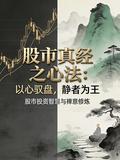 The Heart of the Stock Market
417Reads7.0Score—Shelves
The Heart of the Stock Market
417Reads7.0Score—Shelves
 Stock Market
58Reads5.8Score—Shelves
Stock Market
58Reads5.8Score—Shelves
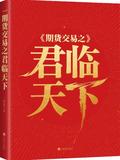 The King of Futures Trading
107Reads—Score—Shelves
The King of Futures Trading
107Reads—Score—Shelves
 Divorce? Pampering Your Wife Backhand Will Make You Stronger
9Reads—Score—Shelves
Divorce? Pampering Your Wife Backhand Will Make You Stronger
9Reads—Score—Shelves
 Wandering Stock God
174Reads—Score—Shelves
Wandering Stock God
174Reads—Score—Shelves
 1990S: a Business Empire That Started with 5,000 People
3.3kReads8.8Score323Shelves
1990S: a Business Empire That Started with 5,000 People
3.3kReads8.8Score323Shelves
 Shushan Diary Stock Futures
8Reads—Score—Shelves
Shushan Diary Stock Futures
8Reads—Score—Shelves
 Rebirth in 2010 Opens the Perspective, Can't Bear to Look at It
2.5kReads8.6Score363Shelves
Rebirth in 2010 Opens the Perspective, Can't Bear to Look at It
2.5kReads8.6Score363Shelves
 Strange Attractor
23Reads5.8Score—Shelves
Strange Attractor
23Reads5.8Score—Shelves
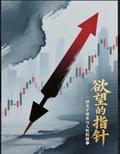 Pointer of Desire
21Reads—Score—Shelves
Pointer of Desire
21Reads—Score—Shelves
 The Winning Technique of Stock Trading
35Reads5.8Score—Shelves
The Winning Technique of Stock Trading
35Reads5.8Score—Shelves
 Capital Review: I Was Already a Stock God at the Age of Ten
29Reads—Score—Shelves
Capital Review: I Was Already a Stock God at the Age of Ten
29Reads—Score—Shelves
 Old Stock Investors Buy Comrades Indiscriminately
124Reads—Score—Shelves
Old Stock Investors Buy Comrades Indiscriminately
124Reads—Score—Shelves
 She in 2005
3Reads—Score—Shelves
She in 2005
3Reads—Score—Shelves
 Three Years of Dating Without Holding Hands
2Reads—Score—Shelves
Three Years of Dating Without Holding Hands
2Reads—Score—Shelves
 The Red Boots of the 18-Year-Old
4Reads—Score—Shelves
The Red Boots of the 18-Year-Old
4Reads—Score—Shelves
 My Online Love
4Reads—Score—Shelves
My Online Love
4Reads—Score—Shelves
 Omniscient Trading Eye: from Delivery Man to Galaxy Master
—Reads—Score—Shelves
Omniscient Trading Eye: from Delivery Man to Galaxy Master
—Reads—Score—Shelves
 A Wonderful Book About Feng Shui That Can Change Your Life
180.8kReads8.4Score14.6kShelves
A Wonderful Book About Feng Shui That Can Change Your Life
180.8kReads8.4Score14.6kShelves
 Once He Traveled Through Time, He Would Marry the Disabled Prince and Become the Favorite of the Group.
170Reads5.8Score—Shelves
Once He Traveled Through Time, He Would Marry the Disabled Prince and Become the Favorite of the Group.
170Reads5.8Score—Shelves