The Siheyuan Crossing the Silly Pillar written by me has rigorous logic, warmth, and the pleasure of revenge. Each chapter is 3,000 words. You can add it to your bookshelf to gain weight and read it again. The original title of the book (Siheyuan: I became a Silly Pillar but I am not stupid)
Two very nice books! In order to find his daughter, he fought all the way from Siheyuan to Xiangjiang. The protagonist is Lao Mo, the number one killer in Jinghai. He is extremely arrogant and cold-hearted. He is ruthless and doesn't say much, but he kills without blinking an eye. The beasts were killed until they heard the news, and their expressions changed in silence. People who have read it say it is so satisfying. If you don't believe it, you can read the book reviews first before jumping in.
The historical data is detailed and there is no hunting or fishing. The two-million-word serialization refuses routine writing. The IQs of all the staff are online, the writing style is humorous, the book is clean, there is no shit, and the logic of a hard-core industrial power has been rigorous since 1953. The protagonist, the golden-dressed sixth man, has no bad temper. He initially thought he was a saint, but later he found out that he was plotting against everyone around him. It is neither black nor witty, and breaks out of the black-and-white stereotype. The protagonist has a grand structure, cares about his family and country, has a clear goal, and uses knowledge beyond the times to make silent contributions. The dispute in the courtyard is just a background.
The male protagonist without any shortcomings, are you kidnapping me morally? Sorry, I am a descendant of martyrs, the most outstanding young man in Tongluoguxiang (later an outstanding middle-aged man [laughing evilly]), and his backing is beyond your imagination.
"Siheyuan: After Being Struck by Lightning, I Can Travel Between Two Worlds" breaks out of the "house fighting" framework of traditional Siheyuan novels, and takes "travel between two worlds + resource plunder" as the core excitement, allowing the protagonist Wang Yu to freely switch between the 1959 Siheyuan and the mysterious other world, using modern thinking and resources from the other world to play with the special era, and staged a hard-core counterattack of "freedom to eat meat + crushing with force". The beginning of time travel: lightning strikes awakens the two gates, and the food desert turns into paradise. The protagonist Wang Yu encounters "survival hell" when he travels through time: In 1959, the courtyard house was experiencing a food shortage, and the seven members of the family relied on wild vegetables to satisfy their hunger. The Jia Zhang family next door was still thinking about eating meat. But a lightning strike accidentally activates the "Light Gate" in his mind, connecting him to a different world in the virgin forest, instantly reversing the situation. During his first time travel, he hunted the one-horned rabbit and brought back 30 kilograms of barbecued meat, giving his family a long-lost taste of meat. The author uses details such as "the smell of barbecue makes the neighbors jealous" and "Jia Zhang's family scolding the street and begging for food" to strongly contrast the hunger of the era with the protagonist's sense of satisfaction, especially the panic of the mother Chen Chunhua who mistakenly believes that the meat is "stolen", which further highlights the reality of human nature under the scarcity of resources. Different world setting: The primeval forest hides mysteries, and the time difference allows for "resource plug-ins". The different world is shaped into a "treasury of primitive creatures": a one-horned rabbit the size of a wolf dog, a spur bird with a wingspan of more than ten meters, a three-meter-long pig-headed griffin, and even a giant snake entrenched in a big tree. Danger and opportunity coexist. The "time difference" setting of the Light Gate (4 hours in another world = 20 minutes in reality) is a stroke of genius, allowing Wang Yu to "work during the day and hunt beasts at night" and accumulate resources efficiently. He used the powerful power of Bajiquan to hunt exotic beasts, wrapped meat in leaves to avoid censorship, and even planned to "get guns" in the black market to increase his combat power, and used the "resources from another world - realizing reality" routine to become a success. Group Portraits of the Siheyuan: Warmth and Calculation in the Fireworks. The novel's depiction of the Siheyuan is full of the texture of the times: the eldest brother Yi Zhonghai is fair in dealing with things but hides moral kidnapping; the third eldest brother Yan Bu Guai loves to take advantage of others; Jia and Zhang's "shrew-style survival" is astonishing; while the Wang family's "low-key martial arts training + unity to protect food" has become a breath of fresh air. The author uses plots such as "the entire hospital meets to buy food" and "black market trading secret codes" to show the delicate balance between neighbors in a special era - they both hold together for warmth, but also make their own calculations. Wang Yu's family has a good relationship with Uncle Zhou's traditional Chinese medicine family, and their "tacit understanding of martial arts" with Sha Zhu adds a touch of warmth to the cold competition for survival. Plot rhythm: Seamless switching between combat, development, and daily life. The author is good at switching between "intense hunting" and "daily survival": in the first chapter, Wang Yu climbed a tree to roast rabbits and avoid giant snakes in a different world. In the next chapter, he returned to the courtyard to deal with Jia Zhang's unreasonable troubles; he had just used force to scare Xiaoxiao in the black market, and he had to learn welding technology from his father in the factory. This kind of "combining dynamic and static" narrative not only satisfies readers' expectations for "adventure in another world", but also retains the pyrotechnics of life in the courtyard theme. In particular, Wang Yu uses meat from another world to "reverse poverty alleviation" in his hometown in the countryside, which not only echoes the historical background, but also lays the groundwork for the "expansion of family power" for the subsequent plot. The core of the theme: using "plug-ins" to deconstruct dilemmas, hiding a gentle deconstruction of the times. On the surface, this is a cool article about "relying on system cheats to counterattack", but in fact it hides a profound insight into a special era. The essence of Wang Yu's shuttle between the two worlds is to use "surreal means" to solve "realistic dilemmas" - when food rationing and the ticket system restrict survival, the other world becomes a "green channel" to break the rules; when neighbor calculations and moral kidnapping are everywhere, Bajiquan and the resources of the other world become the strongest voice. This setting not only makes readers feel happy, but also implicitly pays tribute to "survival in desperate situations" - as Wang Yu's father Wang Bao said: "In these days, what you can get to eat is your ability." "Siheyuan: After I was struck by lightning, I can travel between two worlds" redefines the Siheyuan novel with "imaginative setting + hard-core survival", allowing readers to feel the thrill of traveling between two worlds while also getting a glimpse of the tenacity and wisdom of ordinary people in special times. If you are tired of the "intrigue" of traditional courtyard houses and want to see how the protagonist uses "other world resources" to overcome the predicament of the times, this work will definitely refresh your mind - after all, when others are still worrying about half a catty of food, Wang Yu's barbecue grill is already standing up. This is the real "dimensionality reduction strike"!
 Siheyuan: During the Famine Years, I Had a Farm of 10,000 Acres
7.3kReads6.8Score432Shelves
Siheyuan: During the Famine Years, I Had a Farm of 10,000 Acres
7.3kReads6.8Score432Shelves
 Living in a Courtyard
16.6kReads7.8Score439Shelves
Living in a Courtyard
16.6kReads7.8Score439Shelves
 Siheyuan: Lou Xiaoe Is My Wife!
27.4kReads7.9Score1kShelves
Siheyuan: Lou Xiaoe Is My Wife!
27.4kReads7.9Score1kShelves
 This Projectionist from Siheyuan Is Good at Treasure Hunting and Shoveling the Land.
29.3kReads7.0Score2.2kShelves
This Projectionist from Siheyuan Is Good at Treasure Hunting and Shoveling the Land.
29.3kReads7.0Score2.2kShelves
 Siheyuan: I Am He Yufan
6.2kReads7.8Score190Shelves
Siheyuan: I Am He Yufan
6.2kReads7.8Score190Shelves
 The Dragon Elephant Prajna Kung Fu Starts at the Beginning and Goes Rampant in Nanluogu Alley
23kReads7.7Score923Shelves
The Dragon Elephant Prajna Kung Fu Starts at the Beginning and Goes Rampant in Nanluogu Alley
23kReads7.7Score923Shelves
 Siheyuan: I Made a Fortune by Doing People a Disservice
3.6kReads6.0Score226Shelves
Siheyuan: I Made a Fortune by Doing People a Disservice
3.6kReads6.0Score226Shelves
 Siheyuan, the Happy Life of Wang Dapeng, a Fun-Loving Man
64.2kReads8.9Score3.1kShelves
Siheyuan, the Happy Life of Wang Dapeng, a Fun-Loving Man
64.2kReads8.9Score3.1kShelves
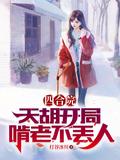 Siheyuan: the Counterattack Life of Young Silly Zhu
27.1kReads8.8Score1.2kShelves
Siheyuan: the Counterattack Life of Young Silly Zhu
27.1kReads8.8Score1.2kShelves
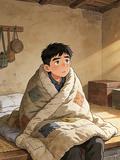 At the Beginning of the Courtyard, the Whole Village Was Chased in the Northeast.
20kReads6.9Score963Shelves
At the Beginning of the Courtyard, the Whole Village Was Chased in the Northeast.
20kReads6.9Score963Shelves
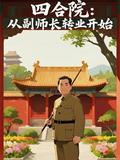 Siheyuan: Starting from the Transition of the Deputy Division Commander
73.5kReads7.6Score4.6kShelves
Siheyuan: Starting from the Transition of the Deputy Division Commander
73.5kReads7.6Score4.6kShelves
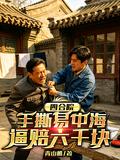 Siheyuan: Yi Zhonghai Was Torn Apart and Forced to Pay 6,000 Yuan
43.4kReads5.1Score2kShelves
Siheyuan: Yi Zhonghai Was Torn Apart and Forced to Pay 6,000 Yuan
43.4kReads5.1Score2kShelves
 Siheyuan: Shazhu Is Finally Happy
25.9kReads8.1Score985Shelves
Siheyuan: Shazhu Is Finally Happy
25.9kReads8.1Score985Shelves
 Siheyuan: a Good Life Earned
31kReads7.3Score1.5kShelves
Siheyuan: a Good Life Earned
31kReads7.3Score1.5kShelves
 I Live in a Courtyard, and Animals Are Just Vegetables!
23.8kReads7.7Score951Shelves
I Live in a Courtyard, and Animals Are Just Vegetables!
23.8kReads7.7Score951Shelves
 Siheyuan: My Years in the Security Office
42.3kReads8.3Score1.8kShelves
Siheyuan: My Years in the Security Office
42.3kReads8.3Score1.8kShelves
 My System in Siheyuan Is Very Powerful
50.4kReads8.6Score2.6kShelves
My System in Siheyuan Is Very Powerful
50.4kReads8.6Score2.6kShelves
 Siheyuan: Enter the Most Sinister Place
69.5kReads7.4Score5kShelves
Siheyuan: Enter the Most Sinister Place
69.5kReads7.4Score5kShelves
 Old Han Jia Cannon in the Siheyuan
65.3kReads7.7Score6.5kShelves
Old Han Jia Cannon in the Siheyuan
65.3kReads7.7Score6.5kShelves
 Qin Huairu of the Siheyuan, Please Respect Yourself
1.9kReads5.9Score107Shelves
Qin Huairu of the Siheyuan, Please Respect Yourself
1.9kReads5.9Score107Shelves
 Qin Huairu and Yu Li Are Both My Tenants in the Courtyard House
2.2kReads6.0Score102Shelves
Qin Huairu and Yu Li Are Both My Tenants in the Courtyard House
2.2kReads6.0Score102Shelves
 Sister-In-Law Qin Huairu of Siheyuan
4.5kReads5.8Score193Shelves
Sister-In-Law Qin Huairu of Siheyuan
4.5kReads5.8Score193Shelves
 Siheyuan: Why Bother with Him? He Really Dares to Kill People
13kReads7.8Score628Shelves
Siheyuan: Why Bother with Him? He Really Dares to Kill People
13kReads7.8Score628Shelves
 Siheyuan: I Just Want to Live a Peaceful Life
34.7kReads7.8Score1.5kShelves
Siheyuan: I Just Want to Live a Peaceful Life
34.7kReads7.8Score1.5kShelves
 Siheyuan: I Scare You to Death
28.5kReads6.5Score1.5kShelves
Siheyuan: I Scare You to Death
28.5kReads6.5Score1.5kShelves
 The Young People in the Courtyard Revolted
15kReads6.0Score439Shelves
The Young People in the Courtyard Revolted
15kReads6.0Score439Shelves
 Siheyuan: This Time I, Damao, Am the Protagonist
19.1kReads7.1Score895Shelves
Siheyuan: This Time I, Damao, Am the Protagonist
19.1kReads7.1Score895Shelves
 Siheyuan: I Loved Fighting Injustices in 1960
26.6kReads8.2Score1.1kShelves
Siheyuan: I Loved Fighting Injustices in 1960
26.6kReads8.2Score1.1kShelves
 Siheyuan: the Soul of a Junk Guy Travels Through 60 Years
16.6kReads8.9Score648Shelves
Siheyuan: the Soul of a Junk Guy Travels Through 60 Years
16.6kReads8.9Score648Shelves
 Siheyuan: I Have a Universe
4.9kReads8.7Score211Shelves
Siheyuan: I Have a Universe
4.9kReads8.7Score211Shelves
 Siheyuan: the God of Death Arrives
11.8kReads8.5Score601Shelves
Siheyuan: the God of Death Arrives
11.8kReads8.5Score601Shelves
 Siheyuan: I Can Absorb Life
41.6kReads8.0Score2.1kShelves
Siheyuan: I Can Absorb Life
41.6kReads8.0Score2.1kShelves
 Siheyuan Baibaoshan Enjoys the Hard Times
21.6kReads8.6Score818Shelves
Siheyuan Baibaoshan Enjoys the Hard Times
21.6kReads8.6Score818Shelves
 The Dashing Family Heir to the Siheyuan
14.3kReads6.9Score515Shelves
The Dashing Family Heir to the Siheyuan
14.3kReads6.9Score515Shelves
 Era: Fight Through the Courtyard at the Beginning and Travel to the Great Northern Wilderness
24.3kReads8.8Score1.3kShelves
Era: Fight Through the Courtyard at the Beginning and Travel to the Great Northern Wilderness
24.3kReads8.8Score1.3kShelves
 Siheyuan: Everyone Stands up and Salutes Godfather
25.1kReads9.2Score962Shelves
Siheyuan: Everyone Stands up and Salutes Godfather
25.1kReads9.2Score962Shelves
 Siheyuan: Don't Do It! We Are Serious Doctors!
36.8kReads7.6Score2.2kShelves
Siheyuan: Don't Do It! We Are Serious Doctors!
36.8kReads7.6Score2.2kShelves
 Siheyuan, Break the Stupid Pillar's Legs, Baoding Smoke Daqing
12.2kReads7.0Score388Shelves
Siheyuan, Break the Stupid Pillar's Legs, Baoding Smoke Daqing
12.2kReads7.0Score388Shelves
 Siheyuan: My Space Can Collect All Things
54kReads8.6Score3.7kShelves
Siheyuan: My Space Can Collect All Things
54kReads8.6Score3.7kShelves
 Siheyuan: My Wife Is Liu Tianxian
246Reads5.8Score—Shelves
Siheyuan: My Wife Is Liu Tianxian
246Reads5.8Score—Shelves
 Siheyuan: I Will Kill Anyone Who Bullies My Family
566Reads5.8Score117Shelves
Siheyuan: I Will Kill Anyone Who Bullies My Family
566Reads5.8Score117Shelves
 Siheyuan: Traveling Through Time to Fight Monsters and Become Invincible
13.5kReads7.9Score618Shelves
Siheyuan: Traveling Through Time to Fight Monsters and Become Invincible
13.5kReads7.9Score618Shelves
 Siheyuan: More Children, More Blessings, More Wealth and More Than 100 Million Yuan
60.6kReads8.0Score7.7kShelves
Siheyuan: More Children, More Blessings, More Wealth and More Than 100 Million Yuan
60.6kReads8.0Score7.7kShelves
 Siheyuan: Prison Break at the Beginning, Hack Qin Huairu to Death
1.3kReads5.8Score200Shelves
Siheyuan: Prison Break at the Beginning, Hack Qin Huairu to Death
1.3kReads5.8Score200Shelves
 Siheyuan: I Have a Small World
17.4kReads8.2Score952Shelves
Siheyuan: I Have a Small World
17.4kReads8.2Score952Shelves
 Rebirth of the Siheyuan: Starting from the Escape from Famine in 1942
33kReads8.2Score1kShelves
Rebirth of the Siheyuan: Starting from the Escape from Famine in 1942
33kReads8.2Score1kShelves
 The Disciple Was Too Ambitious and Rebelled Against the Teaching, and He Became the Emperor.
17.8kReads8.9Score1.9kShelves
The Disciple Was Too Ambitious and Rebelled Against the Teaching, and He Became the Emperor.
17.8kReads8.9Score1.9kShelves
 Siheyuan: with the Blessing of Lao Liu, Create the Strongest Life
25.9kReads7.9Score1.2kShelves
Siheyuan: with the Blessing of Lao Liu, Create the Strongest Life
25.9kReads7.9Score1.2kShelves
 I, Xu Damao, Come from the 21St Century
6.8kReads8.1Score206Shelves
I, Xu Damao, Come from the 21St Century
6.8kReads8.1Score206Shelves
 Siheyuan: the Happy Life of a Little Chef
8.4kReads8.1Score295Shelves
Siheyuan: the Happy Life of a Little Chef
8.4kReads8.1Score295Shelves