New book is online! Not the Holy Mother! Kill decisively! High energy throughout! Not AI! The protagonist travels to the courtyard and discovers that both his parents died unexpectedly. Behind this is indeed the plan of the beasts in the courtyard. In order to take revenge and find out the truth to comfort the original owner and his family, the protagonist decides to kill!
A refreshing revenge novel that started in 1984, with a brand new perspective on Siheyuan. It is an absolute masterpiece of Siheyuan. There is no shit, no pulling, no subterfuge, no brainlessness, and it is completely in line with the real history.
A restaurant owner ~ I sincerely invite you to give me a one-star review for this article! Written by a newbie, slow-burning and realistic! There is no system, the space does not increase the speed, the food, antiques, and hunting are authentically reproduced. There is a bit of family and country feelings hidden between the lines, and there are some foreshadowings worth savoring. You can complain about the logic and rationality of the plot, and wait for book friends who love to use their brains to dig out details to unlock this era of counterattack!
I strongly recommend you to read this new book on Siheyuan, it is definitely a breath of fresh air in Siheyuan! No anger, no cowardice, no virginity, no extreme pulling, just a lot of fun! It incorporates a lot of memes, a lot of self-created scenes, and poems and songs written by the author, which is great! The inventions, creations and historical backgrounds in it can definitely stand the test and are very real! Very down-to-earth, a rare good book! ! ! ! !
The new book is unsystematic. The protagonist joined the army in 1947 to make a living. In 1950, he was seriously injured and changed his job and was invited to attend Haizi's family dinner. He volunteered and took a big job. After reading the introduction, he was pretty awesome. The characters in Siheyuan are also well drawn.
"Variety Film and Television: Daily Life from the Siheyuan" is a male channel derivative novel that combines elements of time travel, system, variety film and television, etc. It tells the story of modern young man Lin Nan who traveled to the world of "Love in the Courtyard" and became the chef He Yuzhu. With the help of the time travel system in the heavens, he rewrote his destiny and started a wonderful life. With its novel setting, compact plot and distinctive characters, the work brings readers a unique counterattack journey in the courtyard. Time Travel and System: Goldfinger Starts the Road to Counterattack. The beginning of the novel points out the time travel background of the protagonist Lin Nan. He accidentally time traveled after staying up late to watch "Love in the Courtyard" and became the idiot He Yuzhu in the play. Immediately afterwards, the "Heavens Travel System" was activated, bringing him a newbie gift package such as the original owner's cooking skills, portable space, and initial points. This classic time-travel + system setting quickly established a refreshing tone for the story, and also provided a guarantee for Lin Nan to gain a foothold in the 1960s when supplies were scarce. The setting of the system is quite innovative. It not only provides skills and items, but also leads the host to travel through the world, complete tasks and gain points, which can then be exchanged for stronger items and techniques. This setting breaks the limitations of the traditional courtyard theme and leaves a broad space for the development of the story. The plot of Lin Nan using the system mall to purchase supplies and improve his life not only satisfies readers' expectations for "Golden Finger", but also promotes the development of the plot. Character Reshaping: The Transformation from Silly Pillar to Lin Nan. The characterization of the protagonist Lin Nan is a highlight of this book. Before time travel, he was an ordinary modern young man. After time travel, he inherited He Yuzhu's body and memory, but he has modern thinking and values. He is no longer the "foolish pillar" in the original work who was manipulated by Qin Huairu and used as a weapon by everyone in the compound. Instead, he has become sober, rational, and well-planned. Faced with Qin Huairu's demands, he decisively refused to bring food and no longer acted as a "mobile granary"; faced with the calculations of the third uncle, he dealt with it cleverly and did not fall into the trap; faced with the moral kidnapping of the first uncle, he fought hard to safeguard his own interests. For example, he took the initiative to go to the sub-district office to seek introduction partners, breaking Qin Huairu's control over him and showing his determination to think independently and take the initiative to change his destiny. This reshaping of the character allows readers to see a new and more charming He Yuzhu. In addition, the classic characters of the Siheyuan, such as the hypocrisy of the first uncle, the bureaucracy of the second uncle, the calculation of the third uncle, Qin Huairu's selfishness, etc., Have also been vividly restored in the author's writings. Their interaction with Lin Nan forms a complex network of interpersonal relationships in the courtyard, which drives the development of the plot. Plot design: wits and growth coexist. The plot design of the novel is relaxed and relaxed, cleverly combining the daily wits in the courtyard with the growth and progress of the protagonist. While Lin Nan uses the system's advantages to improve his life and improve his cooking skills, he also has to deal with the various calculations of everyone in the courtyard. He refused Qin Huairu's request to bring food for a reasonable and intelligent reason. He did not offend the other party and safeguarded his own interests. He took the initiative to find a partner, broke the plan of the first uncle and Qin Huairu, and took the initiative in life. He used his cooking skills to gain a foothold in the steel rolling mill and won the respect of his leaders and colleagues. These plots not only show Lin Nan's wisdom, but also make readers feel the thrill of counterattack. At the same time, the elements of traveling through the heavens interspersed in the plot add more possibilities to the story. Although the early stage mainly focused on the world of courtyards, the task of "traveling through the worlds of the heavens" prompted by the system paved the way for the subsequent plot, making readers look forward to Lin Nan's wonderful experiences in different worlds. Detailed depiction: a strong sense of age and life. The author depicts the background of the era in detail, from the operation of the canteen of the steel rolling mill, the use of food stamps, to the living environment of the courtyard, people's dress, speech and behavior, all of which truly restore the social scene of the 1960s. For example, the description of Lin Nan's work in the kitchen of the steel rolling mill and the presentation of the shopping scene in the supply and marketing cooperative give readers a strong sense of the times. The atmosphere of life is also well created. Details such as Lin Nan's preparation of food for his sister He Yuyu, daily interactions with neighbors in the courtyard, and handling of household chores all make the story full of fireworks. In particular, the description of Qin Huairu's psychology after learning that Lin Nan no longer brought meals, as well as the reaction of Jia Zhang, vividly demonstrated the living conditions and sophistication of ordinary people in that era. Theme expression: breaking fate and self-growth. The work deeply explores the theme of "breaking fate". Lin Nan traveled to the world of "Love in the Courtyard" and knew the tragic ending of the original owner He Yuzhu, so he relied on his system and wisdom to try to change his destiny. He refused to repeat the mistakes of the original owner, no longer be controlled by Qin Huairu, no longer became a victim of everyone in the compound, but took the initiative to plan his life and find happiness. This process not only demonstrated his tenacity and wisdom, but also conveyed a positive attitude towards life. "Self-growth" is also an important theme throughout the text. Lin Nan continues to learn and grow as he adapts to his new identity and responds to various challenges. He used the system to improve his cooking skills, learned to deal with complex interpersonal relationships, and gradually transformed from a modern youth into a strong man who could gain a foothold in the 1960s. His care and protection for his sister He Yuyu also reflects his responsibility and responsibility. "Video: Daily Life from the Siheyuan" relies on novel settings, exciting plots and delicate descriptions to successfully build a Siheyuan world full of hope and struggle. Lin Nan's counterattack is not only a fight against fate, but also a realization of self-worth. For readers who like time-travel stories, system stories, and Siheyuan themes, this work is undoubtedly a pleasant reading experience. People can't help but look forward to how Lin Nan will continue to write a wonderful life in the Siheyuan and the world of heaven in the subsequent plot.
 Siheyuan: My Subdistrict Director
24.1kReads7.6Score675Shelves
Siheyuan: My Subdistrict Director
24.1kReads7.6Score675Shelves
 Siheyuan: Crossing the Silly Pillar and Beating up All the Birds
3Reads5.8Score—Shelves
Siheyuan: Crossing the Silly Pillar and Beating up All the Birds
3Reads5.8Score—Shelves
 Siheyuan: the Deaf Old Lady Is an Enemy Agent!
3.3kReads5.5Score122Shelves
Siheyuan: the Deaf Old Lady Is an Enemy Agent!
3.3kReads5.5Score122Shelves
 Siheyuan: in 1984, You Brought a Bastard to Lick a Stupid Pillar?
29.7kReads8.0Score1.2kShelves
Siheyuan: in 1984, You Brought a Bastard to Lick a Stupid Pillar?
29.7kReads8.0Score1.2kShelves
 Siheyuan: Start by Reporting Silly Pillar
14.2kReads6.1Score313Shelves
Siheyuan: Start by Reporting Silly Pillar
14.2kReads6.1Score313Shelves
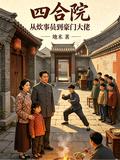 Siheyuan from Cook to Wealthy Boss
20.7kReads6.3Score796Shelves
Siheyuan from Cook to Wealthy Boss
20.7kReads6.3Score796Shelves
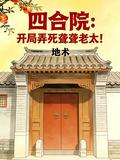 Siheyuan: Kill the Deaf Old Lady at the Beginning!
40.6kReads7.1Score1.9kShelves
Siheyuan: Kill the Deaf Old Lady at the Beginning!
40.6kReads7.1Score1.9kShelves
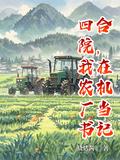 Siheyuan, I Work as a Secretary in an Agricultural Machinery Factory
15kReads6.1Score568Shelves
Siheyuan, I Work as a Secretary in an Agricultural Machinery Factory
15kReads6.1Score568Shelves
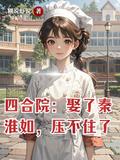 Siheyuan: Married to Qin Huairu, I Can't Hold Myself Back Anymore
3.3kReads6.7Score104Shelves
Siheyuan: Married to Qin Huairu, I Can't Hold Myself Back Anymore
3.3kReads6.7Score104Shelves
 Siheyuan He Yuzhu's Three-In-One Soul Wear 1949
8kReads8.2Score218Shelves
Siheyuan He Yuzhu's Three-In-One Soul Wear 1949
8kReads8.2Score218Shelves
 Siheyuan: I Wore Kai Kai and Defeated the Whole Courtyard
58Reads5.8Score—Shelves
Siheyuan: I Wore Kai Kai and Defeated the Whole Courtyard
58Reads5.8Score—Shelves
 Come and Take Away the Nursing Home Group from the Courtyard
195Reads5.8Score—Shelves
Come and Take Away the Nursing Home Group from the Courtyard
195Reads5.8Score—Shelves
 Siheyuan: 1952, Starting from the Security Department
5Reads5.8Score—Shelves
Siheyuan: 1952, Starting from the Security Department
5Reads5.8Score—Shelves
 Siheyuan: Lao Liu, Open the Door. Your Boss Is Back.
3.4kReads7.9Score101Shelves
Siheyuan: Lao Liu, Open the Door. Your Boss Is Back.
3.4kReads7.9Score101Shelves
 Siheyuan: the Deaf Old Lady Was Made to Kneel Down at the Beginning
39.2kReads8.6Score2.1kShelves
Siheyuan: the Deaf Old Lady Was Made to Kneel Down at the Beginning
39.2kReads8.6Score2.1kShelves
 Do You Believe That I Was Just Passing by the Siheyuan?
26.9kReads8.3Score787Shelves
Do You Believe That I Was Just Passing by the Siheyuan?
26.9kReads8.3Score787Shelves
 The Dreamy History of an Old Courtyard Driver Who Went to the Soviet Union to Be a Prostitute
3.5kReads6.7Score205Shelves
The Dreamy History of an Old Courtyard Driver Who Went to the Soviet Union to Be a Prostitute
3.5kReads6.7Score205Shelves
 Siheyuan: from Sijiucheng to Hong Kong Comprehensive
23.8kReads8.7Score1.1kShelves
Siheyuan: from Sijiucheng to Hong Kong Comprehensive
23.8kReads8.7Score1.1kShelves
 My System in Siheyuan Is Very Powerful
50.4kReads8.6Score2.6kShelves
My System in Siheyuan Is Very Powerful
50.4kReads8.6Score2.6kShelves
 Book 2 of Jingle Bells
114Reads5.8Score—Shelves
Book 2 of Jingle Bells
114Reads5.8Score—Shelves
 I Am Li Huaide's Security Guard
43.4kReads7.1Score3.1kShelves
I Am Li Huaide's Security Guard
43.4kReads7.1Score3.1kShelves
 Siheyuan: My Superstar Wife
27kReads6.8Score1.3kShelves
Siheyuan: My Superstar Wife
27kReads6.8Score1.3kShelves
 Siheyuan: I Entered the Railway Crossing
31.1kReads6.8Score1.7kShelves
Siheyuan: I Entered the Railway Crossing
31.1kReads6.8Score1.7kShelves
 Escape at the Beginning with Eight Children
8kReads7.9Score396Shelves
Escape at the Beginning with Eight Children
8kReads7.9Score396Shelves
 There Is No Separation Between Medicine and Martial Arts in the Courtyard
11.4kReads7.2Score451Shelves
There Is No Separation Between Medicine and Martial Arts in the Courtyard
11.4kReads7.2Score451Shelves
 Siheyuan: Turning a Dilapidated Courtyard into a Peach Blossom Garden
19.1kReads5.4Score951Shelves
Siheyuan: Turning a Dilapidated Courtyard into a Peach Blossom Garden
19.1kReads5.4Score951Shelves
 Siheyuan: a Great Transport for My New Life
5kReads8.1Score123Shelves
Siheyuan: a Great Transport for My New Life
5kReads8.1Score123Shelves
 Growth in the Era
12.1kReads7.3Score680Shelves
Growth in the Era
12.1kReads7.3Score680Shelves
 Qin Huairu and Yu Li Are Both My Tenants in the Courtyard House
2.2kReads6.0Score102Shelves
Qin Huairu and Yu Li Are Both My Tenants in the Courtyard House
2.2kReads6.0Score102Shelves
 Qin Huairu of the Siheyuan, Please Respect Yourself
1.9kReads5.9Score107Shelves
Qin Huairu of the Siheyuan, Please Respect Yourself
1.9kReads5.9Score107Shelves
 Sister-In-Law Qin Huairu of Siheyuan
4.5kReads5.8Score193Shelves
Sister-In-Law Qin Huairu of Siheyuan
4.5kReads5.8Score193Shelves
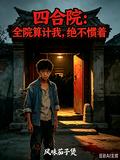 Siheyuan: the Whole Hospital Is Seeking Death, I Will Kill Them All Directly
29.1kReads8.5Score1.3kShelves
Siheyuan: the Whole Hospital Is Seeking Death, I Will Kill Them All Directly
29.1kReads8.5Score1.3kShelves
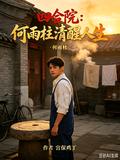 Siheyuan: He Yuzhu's Sober Life
37.8kReads8.6Score1.9kShelves
Siheyuan: He Yuzhu's Sober Life
37.8kReads8.6Score1.9kShelves
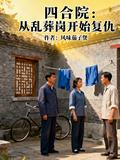 Siheyuan: Revenge Begins from the Mass Graves
25.8kReads8.8Score1.2kShelves
Siheyuan: Revenge Begins from the Mass Graves
25.8kReads8.8Score1.2kShelves
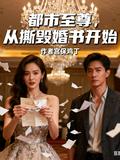 Urban Supreme Starts from Tearing up the Marriage Contract
1kReads7.0Score—Shelves
Urban Supreme Starts from Tearing up the Marriage Contract
1kReads7.0Score—Shelves
 Siheyuan: Be a Gangster That Everyone Loves
33.6kReads8.7Score1.8kShelves
Siheyuan: Be a Gangster That Everyone Loves
33.6kReads8.7Score1.8kShelves
 Legend of Hot Blood: Dawn of the Dragon
107Reads5.8Score—Shelves
Legend of Hot Blood: Dawn of the Dragon
107Reads5.8Score—Shelves
 The Situation in the Courtyard: the Benevolence of Doctors Breaks the Mystery
834Reads5.4Score—Shelves
The Situation in the Courtyard: the Benevolence of Doctors Breaks the Mystery
834Reads5.4Score—Shelves
 Siheyuan: Traveling Through Chaotic Times, Remember to Stack Armor First
1.1kReads5.8Score—Shelves
Siheyuan: Traveling Through Chaotic Times, Remember to Stack Armor First
1.1kReads5.8Score—Shelves
 Siheyuan: Dasha Linzi Loves to Sing
2.3kReads—Score105Shelves
Siheyuan: Dasha Linzi Loves to Sing
2.3kReads—Score105Shelves
 Fireworks World in the Siheyuan
4.6kReads6.3Score—Shelves
Fireworks World in the Siheyuan
4.6kReads6.3Score—Shelves
 From Deputy Director to North Korean Army Commander Yan Jia's Counterattack
19.7kReads6.1Score1.1kShelves
From Deputy Director to North Korean Army Commander Yan Jia's Counterattack
19.7kReads6.1Score1.1kShelves
 Silly Pillar Is Reborn at 51, and Gets a Paralysis Ring at the Beginning
65.8kReads7.4Score6.5kShelves
Silly Pillar Is Reborn at 51, and Gets a Paralysis Ring at the Beginning
65.8kReads7.4Score6.5kShelves
 Shamao Is Reborn, and at the Beginning, He Sends Banggeer to a Juvenile Detention Center
2.2kReads5.8Score103Shelves
Shamao Is Reborn, and at the Beginning, He Sends Banggeer to a Juvenile Detention Center
2.2kReads5.8Score103Shelves
 Siheyuan: Many Children and Many Blessings Have Been Invincible Since I Married Chen Xueru!
5.1kReads5.8Score213Shelves
Siheyuan: Many Children and Many Blessings Have Been Invincible Since I Married Chen Xueru!
5.1kReads5.8Score213Shelves
 Siheyuan Is Just the Beginning
1.7kReads5.5Score114Shelves
Siheyuan Is Just the Beginning
1.7kReads5.5Score114Shelves
 Siheyuan, Silly Zhu Is My Brother
37.3kReads8.3Score1.5kShelves
Siheyuan, Silly Zhu Is My Brother
37.3kReads8.3Score1.5kShelves
 Siheyuan: I Am a Veterinarian, Specializing in Treating Animals
1.8kReads5.4Score—Shelves
Siheyuan: I Am a Veterinarian, Specializing in Treating Animals
1.8kReads5.4Score—Shelves
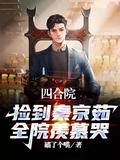 Siheyuan: After Picking up Qin Jingru, the Whole Hospital Cried with Envy
18.8kReads8.4Score899Shelves
Siheyuan: After Picking up Qin Jingru, the Whole Hospital Cried with Envy
18.8kReads8.4Score899Shelves
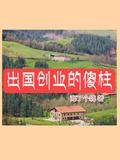 Idiot Who Went Abroad to Start a Business
4.3kReads8.2Score114Shelves
Idiot Who Went Abroad to Start a Business
4.3kReads8.2Score114Shelves