You can read these books. The end of the Anti-Japanese War. The protagonist's IQ is online. It's very interesting. People who read it will be excited. Save the book shortage [Please pay attention] [Salute]
When you open this book, history will hold your hand: "From Ordinary to Legendary" Recommended reading --- 1. A dialogue spanning eighty years If you have ever wondered - in peaceful times, how can we have a real connection with the war-torn history? How can those names in textbooks really enter our lives? Please open "From Ordinary to Legendary". This is no ordinary historical novel. Turning the first page, you will find that you are not a spectator, but a participant. The smoke from Qinglong Ridge in 1943 will pass through the paper and burn your fingertips; Brigadier Fu Bikang's gaze when he turns back will look directly at you eighty years later; and his unspoken question - "Is it all worth it?" - Will echo long after you close the book. In the just-completed final trilogy, this space-time dialogue reaches its extreme: In Chapter 298, Fu Nian'an said to young readers in front of the Martyrs' Wall: "These names are not the end, but the starting point." At that moment, history is no longer a cold stone carving, but a letter waiting to be opened, and the recipient is you. Chapter 299, when the border soldier says "We are today's Ghost Team", you will suddenly understand: the heroes never go away, they just change their clothes and stand in a new position - it may be you, it may be me. In Chapter 300, at the moment when the evergreen light turns on, the characters in the book and the readers outside the book complete a spiritual handshake. You will find that you have long been a part of this inheritance. --- 2. The three most moving reasons for this book 1. It turns "inheritance" from a slogan to a heartbeat. We often hear about "spiritual inheritance", but rarely feel how it actually happens. "From Ordinary to Legend" shows the truest appearance of inheritance: it is not a grand ceremony, but a pocket watch that has been kept among the people for 81 years, waiting to be returned to the Fu family; it is a village that takes turns sweeping graves every Qingming Festival, for 81 years; it is a 94-year-old man who clearly remembers the light in Fu Bikang's eyes; it is a young soldier who spontaneously said "We are today's ghost team" at the border post. The author tells us in an astonishingly delicate way: inheritance occurs in every specific memory, every sincere narration, and every conscious commitment. When you read these details, you will feel the pulse of inheritance - it beats in the choices of ordinary people. 2. It redefines "hero" and "ordinary". Is Fu Bikang a hero? Of course it is. But the more shocking revelation in the book is: so does his wife Lin Wanning, so does the doctor who saves lives on the operating table, so does the bridge built by Fu Nian'an, so does the young soldier at the border post, and even - you who are reading, so do it. There is a profound metaphor in the book: after Fu Bikang's death, the Independence Brigade left an empty chair during the group photo. That chair was later filled—by everyone who was affected by his spirit. The chair is also waiting outside the book. When you are touched by a certain passage, when you start to think about your responsibility in the times, you have already sat on that chair. This book declares gently but firmly: every era needs guardians, and every ordinary person can become the hero of this era - in your own way. 3. It answers the most fundamental question. All stories about sacrifice ultimately face this question: Is it worth it? Is it worth it for Fu Bikang to give up his teaching position in Peking and go to the battlefield? Is it worth it for Lin Wanning to give up her good life and choose a field hospital? Is it worth it for those warriors who stay in their youth forever? The answer in the book is not simply "worth it", but a picture spanning eighty years: When Fu Bikang died in 1943, he could not imagine what it would look like in 2024 - he could not think of smartphones or high-speed rail aircraft. But he believed in the core things: peace, dignity, hope. And in 2024, with the prosperity of the entire country, the peaceful life of hundreds of millions of people, and the free choice of generations, we gave him the answer: It is worth it. What you have exchanged for your life is being cherished, being continued to be built, and being passed down and protected. This kind of question and answer spanning time and space will make you re-examine your choices and persistence in life. --- 3. Why do you need to read this book now? In this era of information explosion but often feeling nihilistic, "From Ordinary to Legendary" provides three scarce things: 1. A real sense of connection. When you see the characters in the book facing similar confusions as you - about responsibility, about choices, about the meaning of life - you will find that there is no barrier between yourself and history. That young officer in 1943 and you reading this in 2024 are side-by-side explorers on the most fundamental issues of mankind. 2. Clear coordinate system In an era of diverse values, this book provides a solid coordinate: there are some things that transcend the changes of the times - love for home, persistence in justice, and responsibility for those who come after us. No matter how times change, these are the cornerstones of the human spirit. 3. Gentle awakening It does not admonish or force, but gently demonstrates: those beautiful qualities never disappear, they just continue to exist in different forms. And are you willing to be the carrier of these qualities in the present? --- 4. What will you take away? When you close this book, what you take away is not the ending of a story, but a series of beginnings: · An in-depth time travel: from 1937 to 2024, you will walk through the entire process as a participant, not just a spectator. · A new way of seeing: when you look at the city lights again, you will see one of them, which was lit for you by someone in the trenches in 1943; when you look at ordinary posts again, you will see the protective meaning contained in them. · A quiet confirmation: about the value of kindness, about the meaning of persistence, and about the extraordinary possibilities of ordinary life. · A gentle invitation: Inviting you to find a way of "guarding" in your life that belongs to this era. --- 5. The most important page is outside the book. The most special setting of "From Ordinary to Legend" is: the real final chapter is written by every reader. The book repeatedly emphasizes: "Every era has its battlefield." The battlefield in 1943 was in the flaming mountains. The battlefield in 2024 may be in the laboratory, in the operating room, on the podium, on the border, or anywhere you are at the moment. When you are touched by a certain passage in the book, when you start to think about "what can I protect?", The last page of the book is truly opened - that page is your life. So, this is not a simple reading. This is a spiritual recognition, a relay spanning eighty years, and a dialogue with past guardians. When you turn the first page, Fu Bikang in 1943 will say to you through text: "I have protected our era, and now, it is your turn." How will you answer? --- "From Ordinary to Legend" A book that lets history hold your hand. A journey that allows the spirit to find a carrier. An awakening that allows the ordinary to see the light. I hope you can meet the heroes of the past and your future self in this book.
The anti-Japanese "Snow Wolf's Mission" five patriotic young men formed an anti-Japanese team behind enemy lines. They successively completed important tasks such as blowing up the Japanese army's machinery depot, robbing the Japanese army's medicines, and stealing the Japanese army's secret operational essentials. They caused heavy losses to the Japanese army and made significant contributions to the frontline anti-Japanese forces;
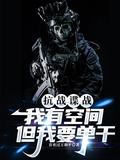 Spy: I Have Space, but I Choose to Go It Alone
41.4kReads8.6Score3kShelves
Spy: I Have Space, but I Choose to Go It Alone
41.4kReads8.6Score3kShelves
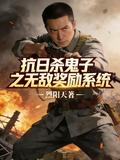 The Invincible Reward System for Fighting Against Japan and Killing Japanese Enemies
15.7kReads7.1Score1.3kShelves
The Invincible Reward System for Fighting Against Japan and Killing Japanese Enemies
15.7kReads7.1Score1.3kShelves
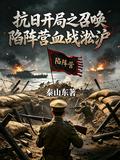 The Beginning of the Anti-Japanese War: the Call for a Bloody Battle in Songhu
279Reads—Score100Shelves
The Beginning of the Anti-Japanese War: the Call for a Bloody Battle in Songhu
279Reads—Score100Shelves
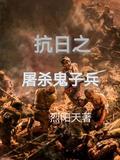 China's Anti-Japanese Front Line Vowed to Kill the Japanese Soldiers
13kReads8.3Score852Shelves
China's Anti-Japanese Front Line Vowed to Kill the Japanese Soldiers
13kReads8.3Score852Shelves
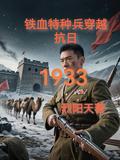 The Iron-Blooded Special Forces Travel Through the Anti-Japanese War 1933
1.1kReads6.3Score—Shelves
The Iron-Blooded Special Forces Travel Through the Anti-Japanese War 1933
1.1kReads6.3Score—Shelves
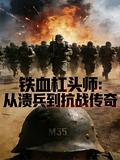 Rebirth: Cold-Blooded Fighter of the War of Resistance
19.7kReads8.2Score2.6kShelves
Rebirth: Cold-Blooded Fighter of the War of Resistance
19.7kReads8.2Score2.6kShelves
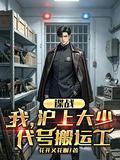 Spy War: I, the Eldest Son in Shanghai, Codenamed Porter
22kReads—Score2.2kShelves
Spy War: I, the Eldest Son in Shanghai, Codenamed Porter
22kReads—Score2.2kShelves
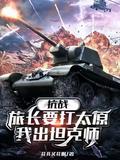 Bright Sword: It's Fun to Follow Kong and Create the Strongest Military Industry
16.1kReads8.3Score802Shelves
Bright Sword: It's Fun to Follow Kong and Create the Strongest Military Industry
16.1kReads8.3Score802Shelves
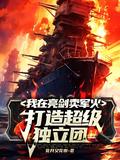 When I First Arrived, the System Urged Me to Repay the Favor.
37.5kReads9.0Score2.9kShelves
When I First Arrived, the System Urged Me to Repay the Favor.
37.5kReads9.0Score2.9kShelves
 Blood Oath Journey
8.4kReads9.1Score787Shelves
Blood Oath Journey
8.4kReads9.1Score787Shelves
 The Flesh and Blood Jungle of the War of Resistance
30.5kReads9.1Score3.8kShelves
The Flesh and Blood Jungle of the War of Resistance
30.5kReads9.1Score3.8kShelves
 The Legend of the Anti-Japanese Warriors
201Reads5.8Score—Shelves
The Legend of the Anti-Japanese Warriors
201Reads5.8Score—Shelves
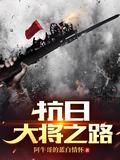 Resistance Against Japan: the Road of a General
24.6kReads9.1Score1.8kShelves
Resistance Against Japan: the Road of a General
24.6kReads9.1Score1.8kShelves
 We Talked About Military Exercises and Woke up to 1911
185Reads5.8Score—Shelves
We Talked About Military Exercises and Woke up to 1911
185Reads5.8Score—Shelves
 Cold War
10.4kReads9.2Score1kShelves
Cold War
10.4kReads9.2Score1kShelves
 Spy War: I Accidentally Became the Military Commander
23.2kReads8.9Score1.4kShelves
Spy War: I Accidentally Became the Military Commander
23.2kReads8.9Score1.4kShelves
 The Anti-Japanese Blood Is Still Not Cold
8.4kReads8.7Score742Shelves
The Anti-Japanese Blood Is Still Not Cold
8.4kReads8.7Score742Shelves
 Career Growth Game Starting with SWAT
91.9kReads9.4Score8.5kShelves
Career Growth Game Starting with SWAT
91.9kReads9.4Score8.5kShelves
 Anti-Japanese War: All-Out War Begins with the Northeastern Army
64.2kReads9.1Score5.2kShelves
Anti-Japanese War: All-Out War Begins with the Northeastern Army
64.2kReads9.1Score5.2kShelves
 Los Angeles Police: I'm Proficient in All Kinds of American Mariachi
137.5kReads9.2Score14.5kShelves
Los Angeles Police: I'm Proficient in All Kinds of American Mariachi
137.5kReads9.2Score14.5kShelves
 Anti-Japanese Iron-Blooded God of War
7Reads5.8Score—Shelves
Anti-Japanese Iron-Blooded God of War
7Reads5.8Score—Shelves
 The Eleventh Phase of Huangpu Reveals the Strongest Legend
6.7kReads6.1Score450Shelves
The Eleventh Phase of Huangpu Reveals the Strongest Legend
6.7kReads6.1Score450Shelves
 Wow, My Circle of Friends Directly Connects to the Three Realms and Affects the Future.
—Reads5.8Score—Shelves
Wow, My Circle of Friends Directly Connects to the Three Realms and Affects the Future.
—Reads5.8Score—Shelves
 Bright Sword: Taiyuan Became a God in the First Battle and Was Promoted to Commander-In-Chief
22kReads8.6Score1.3kShelves
Bright Sword: Taiyuan Became a God in the First Battle and Was Promoted to Commander-In-Chief
22kReads8.6Score1.3kShelves
 The Loyal Soul of Huangpu: from Songhu to Northern Myanmar
18kReads9.1Score1.4kShelves
The Loyal Soul of Huangpu: from Songhu to Northern Myanmar
18kReads9.1Score1.4kShelves
 Carrying a Satellite Map, I Am the God of War
279Reads5.8Score—Shelves
Carrying a Satellite Map, I Am the God of War
279Reads5.8Score—Shelves
 Anti-Japanese War: Rising from the Rookie Company Commander
9.2kReads8.8Score677Shelves
Anti-Japanese War: Rising from the Rookie Company Commander
9.2kReads8.8Score677Shelves
 Head of the Regiment: Came to the Anti-Japanese Battlefield but Was Among the Cannon Fodder
3.8kReads8.8Score181Shelves
Head of the Regiment: Came to the Anti-Japanese Battlefield but Was Among the Cannon Fodder
3.8kReads8.8Score181Shelves
 Bright Sword: the Fox of Northwest Shanxi
9.2kReads8.9Score445Shelves
Bright Sword: the Fox of Northwest Shanxi
9.2kReads8.9Score445Shelves
 I Traveled to Shanxi to Fight Against Japan
16Reads5.8Score—Shelves
I Traveled to Shanxi to Fight Against Japan
16Reads5.8Score—Shelves
 From Ordinary to Legendary
983Reads—Score106Shelves
From Ordinary to Legendary
983Reads—Score106Shelves
 Traveling Through the Long March Road, I Exchanged Steps for Supplies
2.6kReads5.8Score185Shelves
Traveling Through the Long March Road, I Exchanged Steps for Supplies
2.6kReads5.8Score185Shelves
 Anti-Japanese: the Warriors Are Mighty! Japanese Invaders Are in Disarray
4kReads7.3Score261Shelves
Anti-Japanese: the Warriors Are Mighty! Japanese Invaders Are in Disarray
4kReads7.3Score261Shelves
 The Almighty Warrior of the War of Resistance
4.9kReads6.2Score381Shelves
The Almighty Warrior of the War of Resistance
4.9kReads6.2Score381Shelves
 Anti-Japanese War: Li Yunlong Defeated Tian Banzi with His Own Body
45.7kReads9.4Score4.1kShelves
Anti-Japanese War: Li Yunlong Defeated Tian Banzi with His Own Body
45.7kReads9.4Score4.1kShelves
 War of Resistance: Unlimited Explosive Troops, Beat up the Little Devils!
9.1kReads8.3Score516Shelves
War of Resistance: Unlimited Explosive Troops, Beat up the Little Devils!
9.1kReads8.3Score516Shelves
 Anti-Japanese Special War Gunslinger
5.7kReads8.5Score573Shelves
Anti-Japanese Special War Gunslinger
5.7kReads8.5Score573Shelves
 Crossing the Beacon Fire Deserter, I Awakened the Anti-Japanese Martial Arts System
2.9kReads—Score216Shelves
Crossing the Beacon Fire Deserter, I Awakened the Anti-Japanese Martial Arts System
2.9kReads—Score216Shelves
 Entering the Beacon Fire Deserter, My Mobile Phone Has Data
9.9kReads8.8Score829Shelves
Entering the Beacon Fire Deserter, My Mobile Phone Has Data
9.9kReads8.8Score829Shelves
 Spy Codename I Am Waste Barbed Wire
196.9kReads9.5Score19.6kShelves
Spy Codename I Am Waste Barbed Wire
196.9kReads9.5Score19.6kShelves
 Guandong Little Bandit
17.2kReads9.4Score2.1kShelves
Guandong Little Bandit
17.2kReads9.4Score2.1kShelves
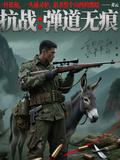 War of Resistance: Ballistic Traceless
346Reads8.2Score—Shelves
War of Resistance: Ballistic Traceless
346Reads8.2Score—Shelves
 Husband Who Protects the Country
1.3kReads5.8Score162Shelves
Husband Who Protects the Country
1.3kReads5.8Score162Shelves
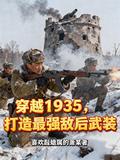 Travel Through 1935 and Build the Strongest Armed Force Behind Enemy Lines
5.4kReads7.5Score454Shelves
Travel Through 1935 and Build the Strongest Armed Force Behind Enemy Lines
5.4kReads7.5Score454Shelves
 Let's Work Together to Kill the Japanese Series
2Reads—Score—Shelves
Let's Work Together to Kill the Japanese Series
2Reads—Score—Shelves
 Let's Work Together to Kill the Japanese - Shanxi Chapter
—Reads—Score—Shelves
Let's Work Together to Kill the Japanese - Shanxi Chapter
—Reads—Score—Shelves
 Let's Work Together to Kill the Devils
10Reads—Score—Shelves
Let's Work Together to Kill the Devils
10Reads—Score—Shelves
 Complete Records of the Three Major Battles
3.3kReads9.6Score604Shelves
Complete Records of the Three Major Battles
3.3kReads9.6Score604Shelves
 The Battle on the Mountain
5.8kReads9.1Score578Shelves
The Battle on the Mountain
5.8kReads9.1Score578Shelves
 Spy Snow Fox
11.5kReads8.6Score1kShelves
Spy Snow Fox
11.5kReads8.6Score1kShelves