I recommend this book. The male protagonist traveled through time and became Huizong of the Song Dynasty. He used modern scientific and technological knowledge to build guns, cannons, hot-air balloons, salt, glass soap, etc. To strengthen the country, the army and the people, and finally unify the Central Plains. The writing is beautiful and smooth, the story has ups and downs, and the plot is rigorous and rich. It is a rare new fictional history book [Love] [Love]
"While others are writing about "proclaiming emperor", he is writing about "establishing people" - a northern epic that reconstructs China with potatoes and laws." If you open this work and expect to see the protagonist fighting for three years and proclaiming himself emperor for three years, please close the page. But if you are willing to witness a revolution that does not wash away the palace gates with blood, but completely reshapes the world; if you believe that the true kingship does not lie in burning books and harassing Confucian scholars, but in opening women's colleges, abolishing slave registration, and setting up orphanages; then, please enter this world where the sun hangs in the sky - there are no cool writing routines here, only how a potato can influence the national destiny for three hundred years. With amazing writing power, the author transforms the darkest moment after the Anshi Rebellion into an experimental field for the reconstruction of civilization. Li Qingtian did not rely on the system to defy heaven, but used the peace he had gained in exchange for the lives of four thousand soldiers to fulfill a promise: "Under my rule, the old will not be left homeless, and the young will not be left without food." So we see: Others write about war, but he writes about collecting the souls after the war: the corpses of the Yan army were burned to prevent plague, and the bones of the common people were wrapped in brocade and buried together in the "Anmin Tomb"; others wrote about power and strategy, but he wrote about establishing trust in the system: detailed public trials, dissemination of the "Edict of Loyal Ministers", and shaking up the scholarly community with "the commoner Yang family"; Others write about farming, but he writes about the recovery of people's hearts: children burying seeds beside graves, Hu Shang shouting "Peace in the north is better than Chang'an", old farmers kneeling with earth in front of them and saying "the spirit of the earth is not dead". The most shocking thing was not that the Red Flame Dragon Cavalry defeated the enemy, but that the 50,000-strong army circled the field ridge without stepping on a single spring wheat seedling. The character creation is even more unforgettable: Guo Ziyi is loyal but not stupid, and would rather borrow soldiers from the north than let He enter the pass; Pugu is gracious and sad but refuses to rebel, raising troops to clear the emperor's side but refusing to surrender to the north; Yang Mi writes in the name of "the common people of the world", and an edict can be written faster than a knife; Daizong abdicated on his deathbed, not because of coercion, but because he could not bear to shed another drop of blood in Chang'an. This book also hides a grand vision: from the Yingzhou Rebellion to the Anshi War, from Longyou and Tubo to the eastward expansion of food, the author reveals that the decline of the Tang Dynasty was not due to one thief, but because the entire system lost the ability to "make the people dare to believe in tomorrow." Li Qingtian's new policy was a response to this: opening women's colleges, abolishing slave registration, imposing potato taxes, setting up Changping free warehouses... Each policy directly targeted the root causes of the old world. Fantasy elements? The Buddha lotus in the left eye, the demon pattern in the right eye, the light sword hiding the devil's whisper - but these have never taken over the spotlight. They are just mirrors that reflect human nature: the greatest devil is never in the abyss, but in the human heart's despair for order. Finally, when Li Qingtian ascended the throne, he did not sit on the dragon throne. Instead, he stood under the jade steps and announced the five new policies. But the devil asked for a blood sacrifice, so he pushed open the palace door - outside the door was not a mountain of corpses and a sea of blood, but the lights of the Wenhua Academy, the music of the night market, and the fresh green of the potato fields. "This is my blood sacrifice - to sacrifice the death of the old world in order for all people to live in peace." This is not a cool article, this is a tragic epic about mortals remaking China. It tells us: The real destiny does not lie in the prophecies of Tui Meibi, but in the moment when children dare to bury the seeds beside the grave; the real Great Wall does not lie in the bricks and stones, but in the people's aspiration that "the northern border is the Great Wall". If you long for a work that has the coldness of "Zi Zhi Tong Jian" and the warmth of "The people are tired, but they can be well-off" in the Book of Songs; if you believe that the turning point in history often begins with a bowl of hot porridge, a new seedling, and the sentence "The north is here, the people have no worries" - then, please open this book. Because here, the gods and demons will eventually exit, but the human heart will never die! !
Ask me why I refuse to retreat even if I fight to the death? Because all the brothers under my command are buried here, so why should I bear to be alone, and why should I cherish this life.
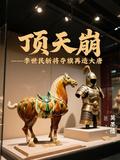 The Sky Collapses: Li Shimin Kills the Generals, Seizes the Flag, and Rebuilds the Tang Dynasty
117Reads—Score—Shelves
The Sky Collapses: Li Shimin Kills the Generals, Seizes the Flag, and Rebuilds the Tang Dynasty
117Reads—Score—Shelves
 Tang Dao Mo Dao
248Reads6.9Score—Shelves
Tang Dao Mo Dao
248Reads6.9Score—Shelves
 Greenskin Overlord
453Reads7.7Score—Shelves
Greenskin Overlord
453Reads7.7Score—Shelves
 Sima Old Thief
539Reads9.3Score—Shelves
Sima Old Thief
539Reads9.3Score—Shelves
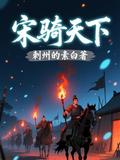 Song Qi Tianxia
11kReads7.7Score1.8kShelves
Song Qi Tianxia
11kReads7.7Score1.8kShelves
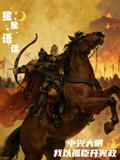 To Rejuvenate the Ming Dynasty, I Started a Constitutional Government with a Lonely Minister
—Reads—Score—Shelves
To Rejuvenate the Ming Dynasty, I Started a Constitutional Government with a Lonely Minister
—Reads—Score—Shelves
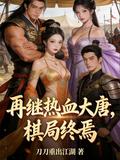 Following the Bloody Tang Dynasty, the Chess Game Comes to an End
—Reads5.8Score—Shelves
Following the Bloody Tang Dynasty, the Chess Game Comes to an End
—Reads5.8Score—Shelves
The Rivers and Lakes Are Not High-Spirited, but the Dreams After Farewell Are Slightly Cooler 104Reads—Score—Shelves
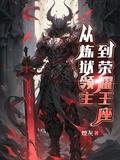 From Lord of Purgatory to Throne of Glory
4.5kReads6.1Score522Shelves
From Lord of Purgatory to Throne of Glory
4.5kReads6.1Score522Shelves
 Hunting Qin
76Reads7.0Score—Shelves
Hunting Qin
76Reads7.0Score—Shelves